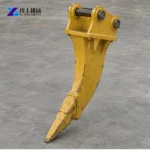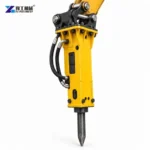

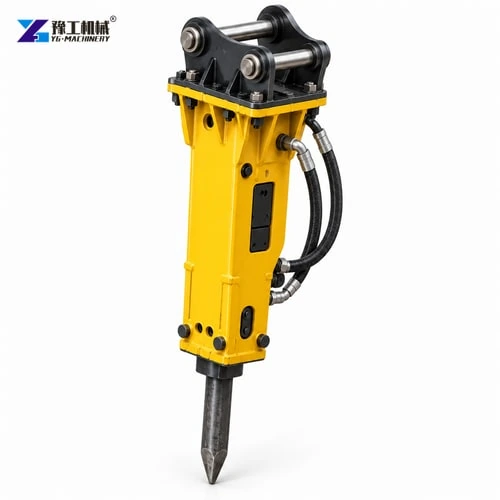
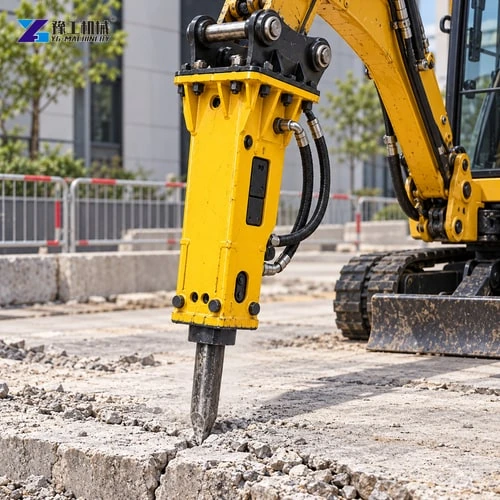
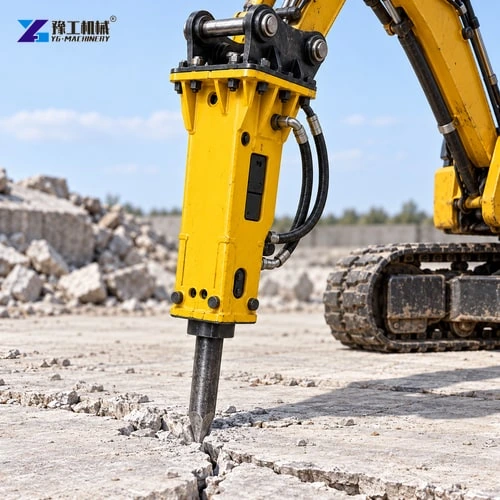
A mini excavator rock breaker turns the carrier into a compact impact tool for concrete, rock and hard pavement. It is useful where the excavator can reach a confined work face but a bucket cannot fracture the material cleanly. The breaker loosens material; a separate bucket or handling method removes the fragments.
The purchase decision starts with the job, then moves to the carrier. Material condition, access, hydraulic compatibility and mounting all affect whether the tool can work as intended. A breaker that looks suitable in a photograph still needs to be matched to the excavator and the work position.
See the YG concrete breaker attachment range for the available attachment family. The hydraulic breaker carrier guide covers the hydraulic and mounting information to check before ordering.
What Does a Mini Excavator Rock Breaker Do?
The breaker transfers repeated impacts through a steel working tool. The excavator’s auxiliary hydraulic circuit powers the mechanism, while the boom positions the tool against the selected area. Instead of digging under a hard surface, the operator applies impact at a controlled point to start and extend a fracture.
This makes the attachment useful for localized demolition, trench rock, concrete edges and repair work where the excavator’s bucket cannot break the material efficiently. It can also reduce the need to move a larger machine into a restricted space, provided the mini excavator has enough hydraulic capacity and reach for the selected breaker.
It is not a replacement for every demolition tool. A breaker does not cut reinforcement into manageable lengths, lift heavy sections, load debris or finish the surface. Decide how the pieces will be separated and removed before starting, especially when walls, buried services or traffic remain close to the work area.
How Does the Breaker Turn Hydraulic Power into Impact?
Oil from the excavator circuit drives an internal piston. The piston repeatedly strikes the tool, and the tool transfers that energy into the material. The carrier controls where the impact lands; the breaker does not choose a fracture line on its own.
For a clean working cycle, the chisel should contact the material squarely and remain supported by the work face. If the point skids, the material does not crack, or the excavator must push sideways to hold contact, pause and reconsider the position or method. Forcing the boom against the tool can place unnecessary load on the attachment and carrier linkage.
If the material stops responding, reposition the tool instead of forcing repeated impacts in one spot. Clear loose fragments before continuing and follow the attachment operating instructions.


Mini Excavator Rock Breaker Applications
A mini excavator breaker can suit curb removal, small concrete pads, localized slab demolition and rock encountered during trench excavation. The compact carrier can approach work areas that are awkward for larger equipment, while the breaker focuses impact on a limited area.
A mini excavator rock breaker is especially useful when the work is concentrated in short sections and the machine can reposition close to each break point. That keeps the operator from stretching the boom across a long reach and makes it easier to clear debris in stages.
The job becomes less straightforward when the concrete contains dense reinforcement, the rock is highly variable, or the work face is close to a structure that must remain intact. In those conditions, plan the sequence and debris handling around the material. A breaker may open the section, but a shear, pulverizer, saw, bucket or manual finishing step may still be needed for the next stage.
Access can limit the job as much as the material. The carrier needs room to approach, align the chisel and retreat without crossing unsupported edges or exposing the cab to fragments. If the boom must stay fully extended, reconsider the working position or carrier.
What Chisel Diameter Is Listed for a Mini Excavator Rock Breaker?
The compact YG breaker configurations relevant to mini excavator work use a chisel-diameter range of 35–60 mm. Treat that as a tool-size reference, not a stand-alone compatibility test. The excavator circuit, attachment mass, mounting interface and material still need to suit the proposed configuration.
A tool point that is too broad or too narrow for the fracture task can make positioning less effective. Tell the supplier whether the job involves concrete, rock or pavement and whether the priority is starting a fracture, opening a trench or reducing a section for removal. Ask which compatible tool is included rather than assuming every point fits every breaker body.
If you are comparing a breaker for a mini excavator, send the carrier details, auxiliary-circuit information, material and a photo of the work area. Those details help check the attachment and tool together.


Hydraulic and Mounting Fit for a Mini Excavator Rock Breaker
Start with the auxiliary circuit. Confirm the available flow, operating pressure, return arrangement and couplings, then compare them with the requirements for the exact breaker configuration being quoted. A general pump rating or engine description alone does not confirm that the breaker will receive suitable oil.
Next, check how the breaker connects to the excavator. The bracket must suit the coupler or pin arrangement, and the selected attachment must stay within the carrier’s permitted operating condition. If you do not have the interface measurements, provide the excavator make and model together with clear photographs of the linkage.
Then consider the working position. Attachment mass changes how the boom handles the tool, especially when reaching outward or working on uneven ground. The operator should be able to keep the chisel aligned without using the boom to force it sideways. If that position is not stable, move the carrier or choose a different work sequence.
Limits of a Mini Excavator Breaker
A compact breaker can open hard material, but it does not make the mini excavator a heavy demolition carrier. Thick reinforced sections, large boulders, long continuous breaking cycles and difficult reach may exceed what the carrier and attachment can handle efficiently. Confirm those conditions before buying instead of relying on the attachment label alone.
Breaking also creates noise, flying fragments and vibration. Keep people clear of the work zone, identify services and unsupported edges, and use the site controls required for the material and location. A smaller carrier still needs a safe exclusion area and a clear plan for debris.
Choose a configuration that keeps the chisel controlled at each break point. Reinforcement cutting, lifting and debris removal may need separate tools, so plan those steps before expecting the breaker to complete the removal.
If the work includes tight access, reinforced concrete or a long boom reach, share those conditions with the excavator details. The proposed mini excavator rock breaker can then be reviewed against the real working position.
What Should You Send for a Mini Excavator Breaker Quote?
For a mini excavator rock breaker quotation, include the excavator information, auxiliary-circuit details, mounting photos, material, work position and destination. This lets the supplier address the attachment, tool and connection package as one order rather than guessing from the machine’s size.
Provide the excavator make and model, auxiliary flow and pressure information, return-line arrangement, coupler or pin details, material, work position and destination. Photos of the arm, coupler and site access are helpful when measurements are not available.
Ask the quotation to identify the breaker configuration, compatible tool, mounting bracket, hoses, fittings, wear items and any exclusions. If a required carrier detail is unknown, mark it as unknown so the supplier can say what must be confirmed before the package is finalized.
Mini Excavator Rock Breaker FAQs
No. Carrier weight is only one input. Check the auxiliary hydraulics, mounting interface, permitted attachment mass, working reach and material as well.
No. The breaker fractures material. Plan a separate method to collect and remove fragments, and include any cutting or finishing needed around reinforcement or edges.
No. Tool diameter is only a product dimension. Carrier hydraulics, mounting, attachment mass and the work position still need to be checked.
Send the excavator information, auxiliary-circuit details, coupler photos or measurements, material, site access and destination. Ask the quotation to identify the tool and connection items included.
A suitable attachment is matched to the material and the machine that carries it. Check the tool, hydraulics, bracket and work position, then plan how to clear loosened material.