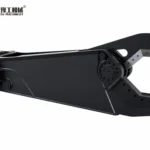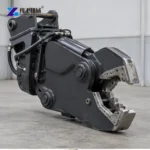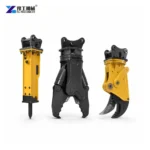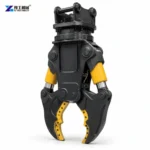
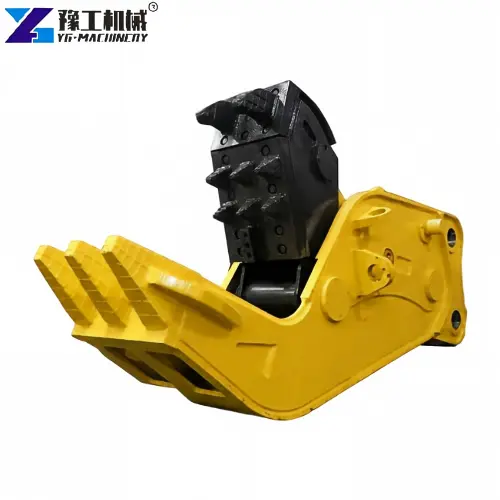
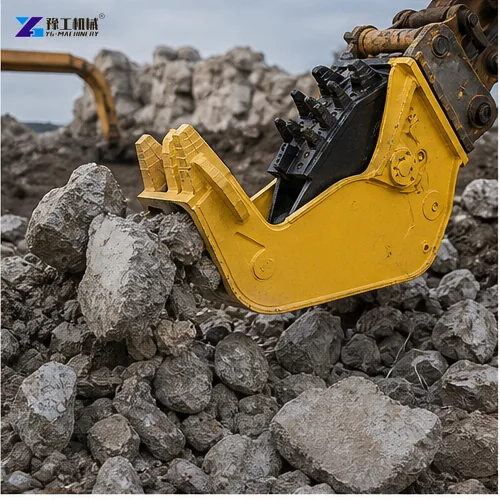
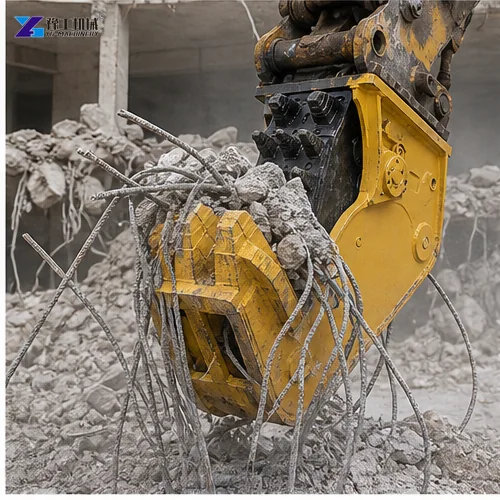
Selective demolition starts with a clear material plan: which concrete members must be reduced, how rebar will be handled and where the separated material will go next. A hydraulic pulverizer helps the operator reduce concrete at the work face while keeping the demolition sequence controlled.
The correct attachment is selected from the carrier, concrete thickness, reinforcement condition, working clearance and the next handling step. These details show whether the job needs a particular jaw opening, mounting arrangement and material-flow plan before work begins.
Selective Demolition Workflow With A Concrete Pulverizer
Start by identifying which members are being reduced and where the material will move next. A slab edge, beam and heavily reinforced element do not create the same jaw demand. The crew should plan a stable working area, an exclusion zone and a route for separated steel before the attachment begins work.
The Excavator Pulverizer should be positioned so the operator can close the jaw deliberately instead of dragging material toward the machine. A controlled sequence protects the work area, gives the crew a cleaner view of the result and helps keep the next processing operation moving.
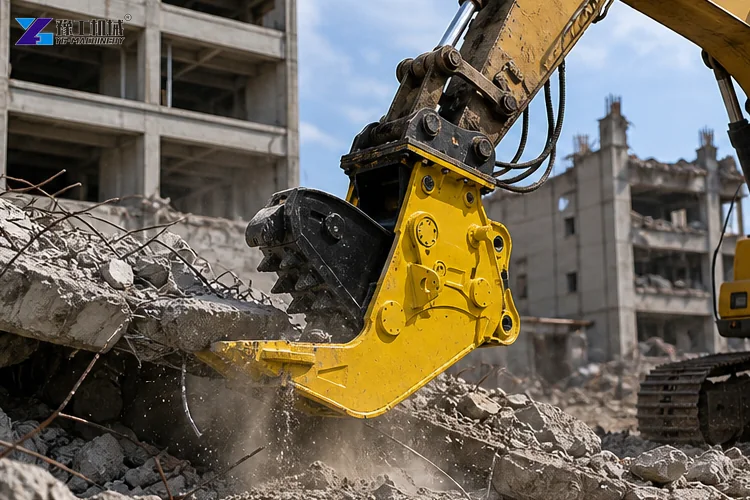
Carrier Matching Parameters For A Concrete Pulverizer
The following published YG references show how size, opening and force develop across the range. Carrier tonnage and hydraulic suitability should be confirmed together before ordering.
| Model | Carrier | Opening | Max Shear Force | Weight |
| YG400 | 6–9 t | 587 mm | 380 kN | 670 kg |
| YG600 | 10–15 t | 718 mm | 650 kN | 1350 kg |
| YG800 | 18–26 t | 890 mm | 1650 kN | 1750 kg |
| YG1000 | 26–30 t | 1029 mm | 2250 kN | 2750 kg |
| YG1700 | 50–80 t | 1400 mm | 2503 kN | 4709 kg |
The table is a buying reference, not a reason to select the largest jaw. Send the excavator model, operating weight, available hydraulic information and the main material to YG. That brief gives the technical team the details needed to match the Excavator Pulverizer to the carrier and the work sequence.
Jaw And Material Decisions For Concrete Reduction
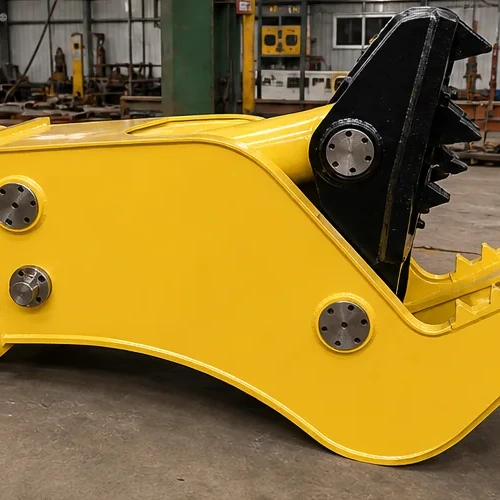
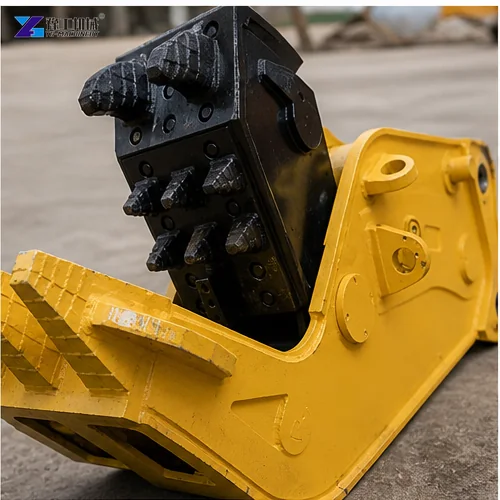
Jaw opening affects how easily the operator can approach different concrete sections, while tooth and plate condition influence how the material breaks. The job plan should define whether the priority is reduction, rebar exposure or preparing concrete for a further crusher. This avoids changing attachment strategy halfway through a planned demolition area.
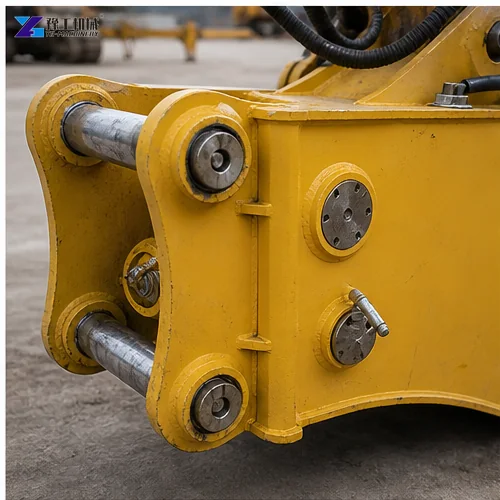
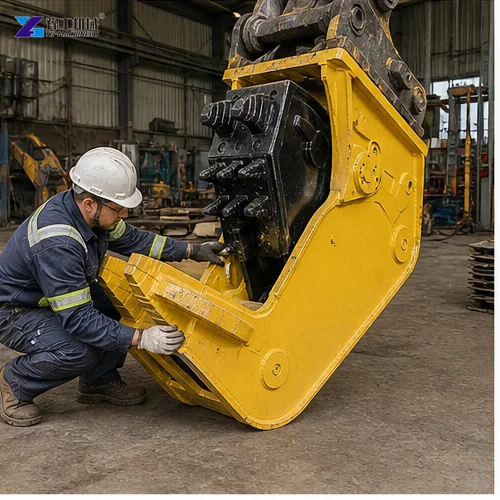
Inspect the pins, mounting points and visible jaw surfaces before each shift. A simple check helps keep the attachment ready for sustained work and makes replacement planning clearer. Good preparation is also valuable when the crew alternates between structural elements and stockpiled concrete.
Material Handling Questions After Concrete Reduction
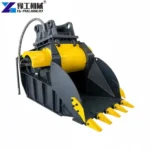
After processing, the work often continues with loading or site reduction. Review the YG excavator pulverizer product page, rock crusher bucket and mini payloader when planning the next stage.
A clear inquiry should include the carrier, concrete type, reinforcement condition, preferred attachment movement and delivery destination. That information supports a practical Excavator Pulverizer proposal rather than a generic equipment listing.
A reinforced beam needs a different plan from a stockpile. Before reducing a structural member, the team should identify how it is supported, which side gives the excavator a stable approach, and where exposed steel can be set down. These details let the operator make deliberate reductions instead of repeatedly repositioning around an unsupported section.
For stockpiled concrete, agree on the material size required by the next handling stage before work begins. The buyer can then compare jaw opening with the planned feed size, loading method and separation area. This creates a clear route from reduction to recycling and prevents concrete or rebar from blocking the work face.
A useful quotation separates information already confirmed from points YG should review. Carrier model, operating weight, pin dimensions, hydraulic data, concrete type, access and destination are the facts a buyer can supply. With that brief, YG can discuss configuration and delivery scope around the real demolition plan rather than suggest one generic attachment.
The should be reviewed against the complete attachment geometry, not carrier tonnage alone. Confirm the boom and stick combination, available pin dimensions and any coupler arrangement, because those details affect mounting and working position. A photograph of the linkage beside the excavator model information helps the technical discussion start from a real installation rather than a generic weight class.
Productivity also depends on how the crew keeps the processed material moving. Decide whether a loader will receive the concrete, whether rebar is removed in the same area, and how the operator will avoid working across an uncontrolled pile. When these decisions are set out in the site brief, the attachment discussion becomes a practical part of the demolition method.
The final selection should be confirmed against the actual carrier and job sequence. An the hydraulic attachment is most useful when the buyer can explain what will be reduced first, how the result will be handled and which project condition could change the planned approach. That focused description gives YG a sound basis for a technical recommendation.
The Excavator Pulverizer recommendation should match the carrier and the material route. Once those points are confirmed, an Excavator Pulverizer can be reviewed with YG against the buyer’s planned reduction sequence and site access.
Concrete Pulverizer Buyer FAQ
It suits controlled concrete reduction and rebar exposure at demolition sites. Match the jaw size and carrier to the actual member and access conditions.
Confirm carrier tonnage, mounting dimensions and hydraulic information together. YG can review the complete attachment fit before ordering.
The jaw can break concrete and expose reinforcement for the next handling stage. Plan the site workflow so separated material has a clear destination.
Send the excavator model, working material, site condition, desired attachment type and destination. These details support a suitable recommendation.
Selective Demolition Next Step
A focused demolition brief makes selection clearer. Share the carrier and material details with YG so the recommended configuration supports the planned sequence from first reduction through material handling.