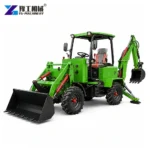
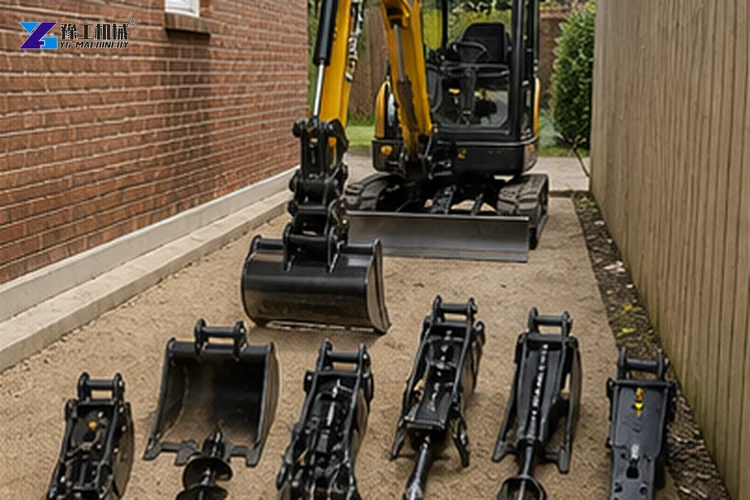
A compact excavator becomes useful on a restricted site only when its attachments stay within the carrier’s weight, hydraulic and access limits. A long catalog list does not tell the buyer which tools can pass through the gate, work at the required radius or share the available auxiliary circuit. The practical approach is to define the tasks first, then build a small attachment package that prepares ground, handles material or performs controlled demolition without overloading the machine.
Which Carrier And Access Limits Control The Attachment Package?
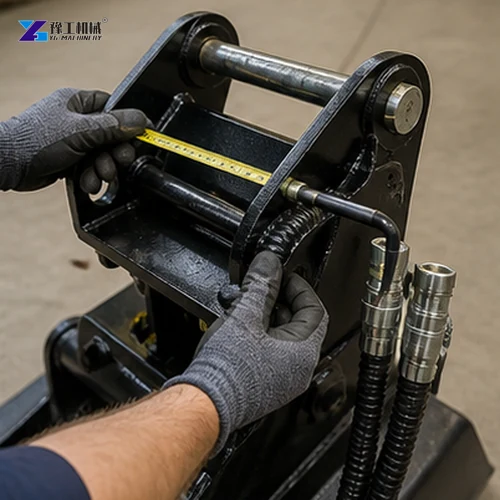
Record the excavator make, model, operating weight, boom or arm configuration and coupler. Measure pin diameter, pin-center distance and inside ear spacing when a direct pin or custom bracket is required. Obtain the auxiliary flow and pressure range, return-line arrangement and whether the machine has one-way or two-way hydraulic service. These details separate mechanically fitting attachments from tools the carrier can operate correctly.
Survey the narrowest gate, indoor aisle, turning area, overhead clearance and floor or ground capacity. An attachment that passes through an entrance may still prevent the excavator from rotating or working beside a wall. Include the attachment’s transport position and storage stand in the access plan. For indoor work, check floor loading, ventilation, noise restrictions and how debris will leave the area.
Which Mini Digger Attachments Prepare Hard Ground?
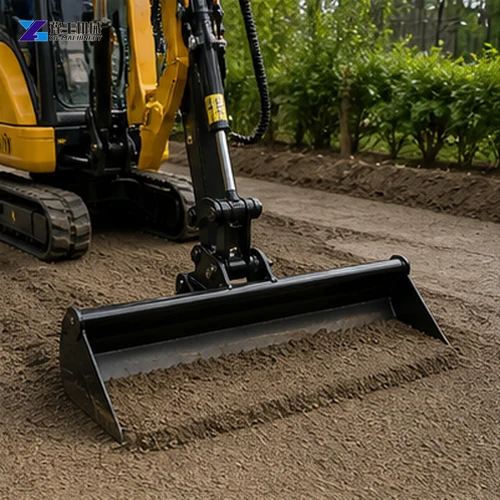
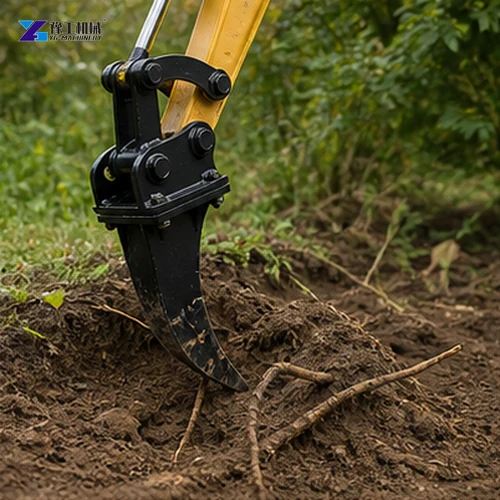
A ripper tooth concentrates force at one point to open compacted soil, roots and selected weathered material before a bucket removes it. It is useful when the bucket edge cannot begin penetration, but ground behavior must be confirmed. Competent rock with limited fracture may require a hydraulic breaker or controlled cutting tool instead. The operator should use aligned passes and avoid twisting the ripper sideways.
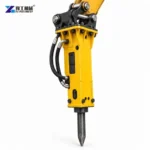
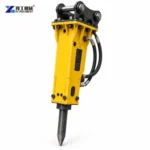
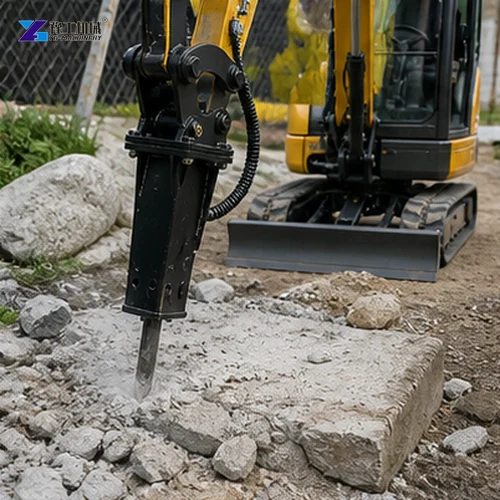
A breaker uses impact energy for concrete, trench rock and localized demolition. Selection requires carrier weight, chisel diameter, oil flow, pressure and return conditions. Small YG reference models begin with the 40 kg YG350 for 0.5–1 ton carriers at 15–25 L/min, while larger compact-carrier models cover increasing flow and pressure. Tool type should match the material and fracture method rather than being selected by diameter alone.
| Ground Task | Useful Attachment | Main Selection Checks | Do Not Assume |
| Open compacted soil or roots | Ripper tooth | Ground behavior, pin fit, tooth length, working angle | Every rock can be ripped |
| Break concrete or trench rock | Hydraulic breaker | Carrier range, oil flow, pressure, chisel, return line | Carrier tonnage proves full compatibility |
| Produce a controlled profile | Drum cutter or rock saw | Material, geometry, hydraulic power, spoil or cooling plan | Impact and cutting give the same result |
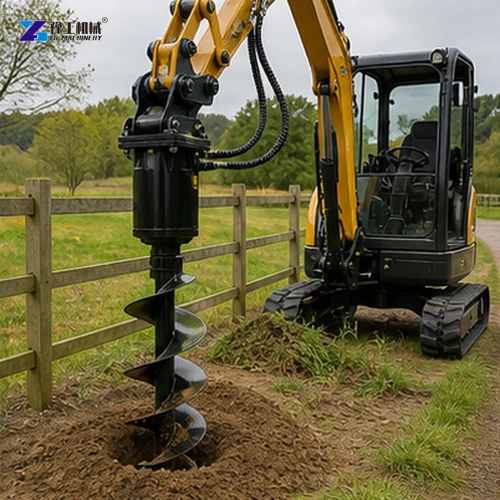
| Drill defined holes | Auger or drilling attachment | Soil, diameter, depth, torque, spoil removal | Diameter can be chosen before soil |
Send YG the carrier data, site access and task list before building a multi-tool package.
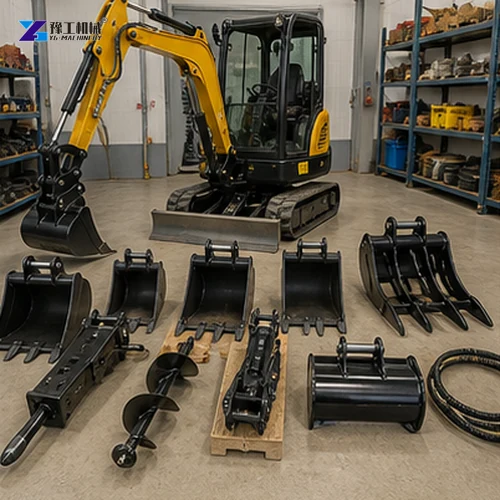
Which Attachments Handle Material On A Restricted Site?
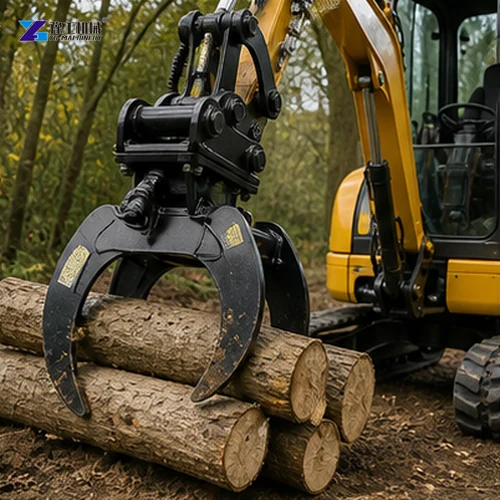
Bucket size should follow material density, carrier lift capacity and the distance between pickup and discharge. A larger bucket can reduce stability or slow the cycle when dense material is handled at reach. For sorting, logs, scrap or irregular debris, a grapple may provide better control than repeatedly trapping material against a bucket. Rotation and two-way hydraulic requirements must be checked before selection.
Where material must be reduced on site, a crusher bucket can process suitable mineral debris after steel and oversized pieces are removed. It requires enough carrier mass, oil flow, feed space and a safe discharge zone. This is different from primary demolition. A compact attachment package should not include a heavy processing tool unless the carrier and work area can support the complete loading and discharge cycle.
Which Tools Support Controlled Demolition?
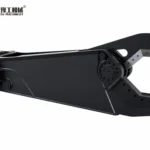
Match the attachment to the demolition stage. A breaker opens or fractures concrete; a pulverizer reduces downed concrete and exposes reinforcement; a shear cuts structural steel; and a crusher bucket processes approved clean debris. Mini excavators may only support the smaller end of these ranges, so working reach and stability need close review. One attachment should not be expected to cut steel, crush concrete and sort material with equal control.
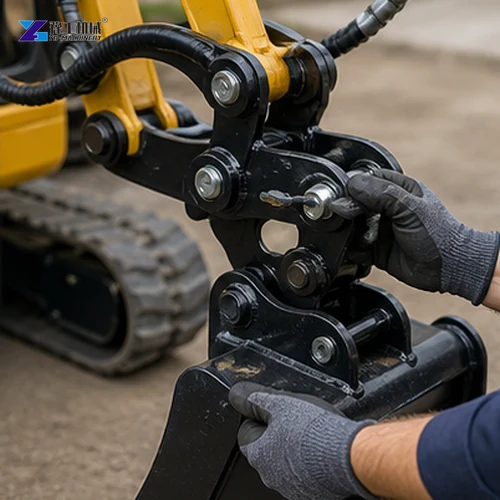
Plan where each tool is stored and how it is changed. A quick coupler can reduce changeover time, but it does not remove the need to verify attachment weight, locking procedure, hose routing and hydraulic settings. Cap connections during storage and label approved circuit settings. Reinspect the coupler and attachment after the first working period.
Need help matching the configuration to your project? Send the working conditions and YG can review the practical equipment scope for Mini Digger Attachments.
How Can Tool Changes Be Planned Without Overloading The Carrier?
Create a compatibility sheet for every attachment showing weight, center of gravity, bracket, required flow and pressure, return requirements and intended working radius. Compare it with the excavator manufacturer’s limits. The heaviest attachment is not automatically the most demanding; a lighter tool used at full reach or with continuous hydraulic demand may control the operating plan.
Sequence tasks to reduce unnecessary changes. A typical restricted-access job may use the ripper to open ground, the bucket to remove it, the breaker for isolated concrete and the grapple for sorting. Finish one zone before changing tools where practical. Keep the machine on stable ground and avoid transporting attachments loose in the work area.
| Package Check | Information To Record | Why It Matters |
| Mechanical Fit | Pins, centers, ear spacing, coupler and clearance | Prevents mounting and movement conflicts |
| Carrier Limit | Attachment weight, reach and working position | Protects stability and linkage |
| Hydraulic Fit | Flow, pressure, return, line size and rotation circuit | Prevents heat and poor performance |
| Site Access | Gate, aisle, turning area, overhead and floor | Confirms the package can reach the work |
| Changeover | Storage stand, locking check, hose caps and settings | Reduces contamination and setup mistakes |
| Task Evidence | Material, dimensions, photographs and sequence | Matches each tool to real work |
What Is A Practical Mini Digger Attachment Package?
For landscaping and utility work, a bucket, ripper and correctly matched auger may cover excavation, hard-ground opening and post or planting holes. For renovation, a bucket, compact breaker and grapple may support removal and sorting where access is limited. For controlled rock or concrete work, a cutter or saw may replace part of the breaker duty when the finished edge and disturbance limits justify it.
The package should remain short enough that every tool has a defined task and approved setup. Review the YG ripper tooth, concrete breaker attachment, drum cutter and rock crusher bucket pages according to carrier capability and job stage.
Mini Digger Attachments FAQ
Only when the coupler interface, pin dimensions, locking geometry and attachment clearance are compatible. Verify each tool.
Use the excavator specification and confirm available flow, pressure, return routing and control mode at the attachment circuit.
It may when carrier fit, floor capacity, ventilation, noise, vibration, access and debris control are addressed in the method.
Rotating grapples and other bidirectional functions commonly need two-way service. Requirements depend on the specific product.
Provide excavator model, linkage, hydraulics, access measurements, tasks, materials, working positions, destination and desired tool-change method.
Need help matching the configuration to your project? Send the working conditions and YG can review the practical equipment scope for Mini Digger Attachments.
Build The Package From Tasks And Carrier Limits
List the job in working order, identify the material and acceptance point for each stage, and provide the excavator and access data. YG can then remove unsuitable tools, confirm compatible attachments and prepare a focused package. The goal is not to own the largest number of attachments; it is to let one compact carrier complete the required work safely and efficiently.