

A hydraulic breaker lets a mini digger loosen concrete or rock with repeated, concentrated impacts. The right attachment is not simply the one that looks largest: it must connect to the excavator, work within its auxiliary hydraulic circuit and suit the material and access on your site.
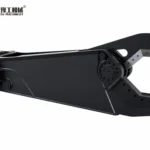
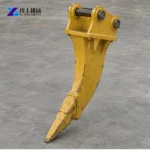
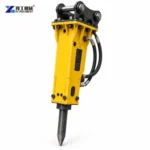
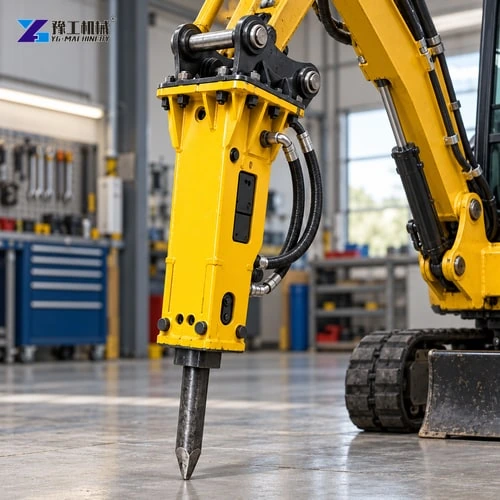
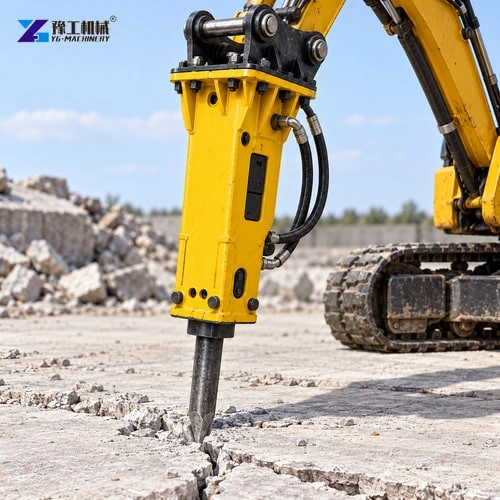
The product images are illustrative, so use them to understand the attachment layout rather than as proof of a particular supplied configuration. Before ordering, compare your carrier’s hydraulic and mounting details with the breaker package being quoted.
For the full attachment range, see the YG concrete breaker attachment range. For a closer look at carrier-side checks, use the hydraulic breaker carrier compatibility guide.
What Does a Hydraulic Breaker for a Mini Digger Do?
The breaker uses oil from the excavator’s auxiliary circuit to drive an internal piston. The piston strikes the working tool, and the tool transfers that impact into a small area of the material. The excavator supplies the position and support; the breaker supplies the impact.
This is useful when you need controlled breaking in a limited work area, but it is not a complete removal system. The breaker loosens material; the excavator bucket or another handling method moves the debris. Plan both stages so broken pieces do not block the tool’s next working position.


What Chisel Size Is Available for This Hydraulic Breaker?
The YG product page lists a chisel-diameter range of 35–60 mm for its concrete breaker attachment family. This is the single published product dimension used here; it is not a promise that every point in the range fits every mini digger or every breaker configuration.
A tool point concentrates impact differently from a broader working tool, so the right choice depends on the material, the access available and the breaker configuration. Tell the supplier what you need to break and ask which compatible tool is included. Do not choose by diameter alone or assume that an interchangeable-looking point will fit.
Check the stated tool options against the concrete breaker attachment details when comparing a quotation. If the tool option is not named, ask for it to be specified before you compare prices.
Share what the mini digger needs to break and how the tool will reach the work area. That helps narrow the suitable breaker and working point before the mounting details are finalized.
DISCUSS MY BREAKER APPLICATION
How Do You Check Mini Digger Hydraulic Compatibility?
Start with the excavator’s auxiliary circuit information, including the available oil flow, operating pressure and return arrangement. Compare those details with the requirements for the exact breaker configuration in the quotation. Engine power or the carrier’s general pump rating alone does not establish attachment compatibility.
Next, check the coupler or pin interface, the attachment mass allowed by the carrier and the boom position needed for the job. A breaker that connects physically can still be unsuitable if the carrier cannot support it safely at the intended reach. Give the supplier the excavator make and model or the measured interface details so the bracket and connection can be checked together.

Will the Breaker Reach the Work Without Restricting the Mini Digger?
Think through the actual approach, not only whether the breaker can be attached. The boom must place the tool squarely against the target while the carrier remains in a stable position. Walls, trenches, overhead obstructions and uneven ground can limit reach or make repositioning awkward.
During breaking, keep the tool aligned with the surface and avoid using the boom to force it sideways. Confirm where fragments will fall and how they will be cleared, especially near services, edges or structures. These practical checks help prevent a compact breaker from turning a restricted-access job into repeated machine repositioning.
Before operation, inspect the bracket, retainers, hose connections and tool. Follow the excavator and attachment operating instructions, keep people outside the impact area and identify buried services or unsupported edges before starting.
Which Materials and Mini Digger Jobs Suit a Hydraulic Breaker?
A mini digger breaker can be considered for localized concrete or rock breaking where the carrier can reach the target and support the attachment. The job still needs to be judged by material condition, the desired break pattern, nearby structures and the method for removing debris.
For a confined repair, check whether the machine can approach and reposition without the boom or attachment contacting walls, curbs or services. For a larger removal area, plan the sequence: break a manageable section, clear the fragments, then move to the next section. The right attachment does not replace a site-specific work plan.

What Should You Send to Get a Mini Digger Breaker Quote?
Send the excavator make and model, auxiliary-circuit details, coupler or pin information, material to be broken, access conditions and destination. Include a photo of the excavator arm and coupler if measurements are not readily available.
Ask the offer to name the breaker configuration, supplied working tool, mounting bracket, hoses and fittings, and any excluded items. If some carrier information is unknown, say so rather than guessing; the supplier can identify what must be confirmed before the package is finalized.
Send the carrier details, coupler information, material and site photos together. YG can review the attachment fit and list what is included in the proposed breaker package.
REQUEST A BREAKER CONFIGURATION
Hydraulic Breaker for Mini Digger FAQs
No. Check the auxiliary circuit, permitted attachment mass, mounting interface and working position as well as the carrier’s operating weight.
Confirm the available auxiliary flow, operating pressure, return arrangement and couplings, then compare them with the requirements for the quoted breaker configuration.
Do not assume that they are included. Ask the supplier to identify the supplied tool, mounting bracket, hoses, fittings and any excluded items in writing.
No. The chisel dimension describes the working tool, not carrier compatibility. The excavator hydraulics, mounting interface, attachment mass and job conditions still need to match.
For a suitable match, have the excavator details, mounting interface and job conditions checked against the breaker package as a whole. That gives you a clearer basis for comparing the attachment, included components and delivery scope.