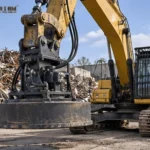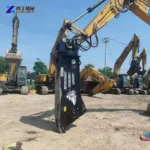
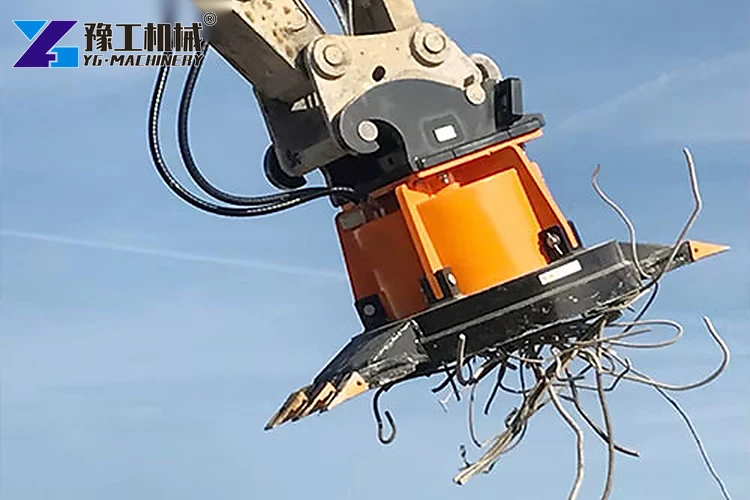
An excavator magnet for sale is useful when the job is to collect and transfer ferrous scrap rather than scoop every material in the pile. The magnetic face attracts steel, while the excavator positions the attachment above the collection and discharge areas. Scrap yards, demolition contractors and metal processors can use this combination to recover steel and organize material for the next handling stage.
A hydraulic generator arrangement converts energy from the carrier’s hydraulic circuit into electrical power for the magnet. This avoids a separate mains connection at the work area, but the excavator still supplies the energy. Cab control can reduce the need for workers to approach the pickup point; an exclusion zone and a planned discharge area remain essential because suspended scrap can shift or fall. Match the attachment and mounting arrangement to the carrier before evaluating the handling cycle.
Excavator Magnet Attachment Parameter
The following table compares the 1000T, 1200T and 1300P configurations. Read attachment weight, hydraulic flow and working pressure together: a suitable excavator weight class alone does not establish hydraulic compatibility. The generator-power and voltage rows describe electrical characteristics, while the figures expressed in gs describe magnetic field strength rather than a lifting capacity in tonnes.
| Model | 1000T | 1200T | 1300P |
| Weight | 1450kg | 1950kg | 2150kg |
| Dimension | 1000*1350*1150mm | 1200*1650*1150mm | 1300*1750*1150mm |
| Magnet Power | 7000gs | 8000gs | 10000gs |
| Work Pressure | 20Mpa | 20Mpa | 20Mpa |
| Hydraulic Oil Flow | 45L/min | 75L/min | 85L/min |
| Generator Power | 8000W | 15000W | 20000W |
| Voltage | 100-500V | 100-500V | 100-500V |
| Applied Excavator | 12-18T | 18-25T | 25-36T |
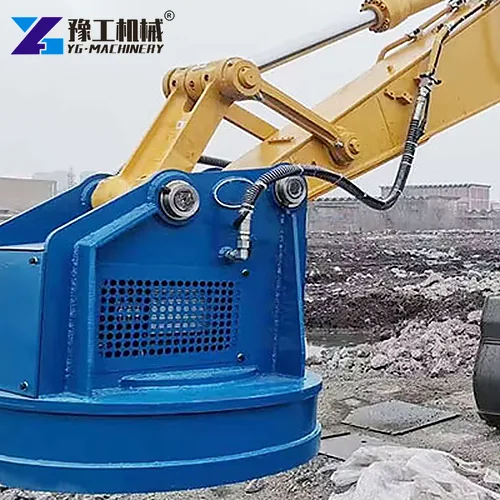
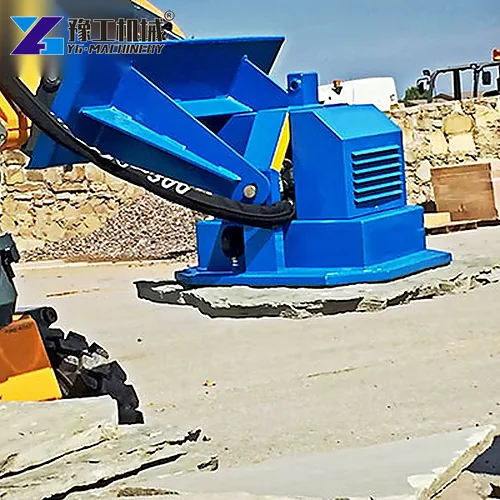
What Is a Hydraulic Excavator Magnet?
A hydraulic excavator magnet uses an energized coil and magnetic core to attract ferrous material. The carrier brings the magnet face into contact with the scrap, transfers the collected material and positions it for controlled discharge. The connection may use a suitable bracket, coupler or suspension arrangement according to the attachment design. Steel plates, loose scrap and tangled rebar create different contact conditions, so their pickup behavior should be evaluated separately.
How a Hydraulic Magnet for Excavator Works?
The energy path links four components. Each has a different role in creating the magnetic field and transferring the material:
- Magnetic core and coil: Current in the coil produces the field, and the magnetic core directs it toward the working face. Close contact between that face and ferrous material helps form the magnetic circuit.
- Hydraulic motor and generator: Carrier oil flow drives the motor, which drives the generator supplying the coil. The hydraulic circuit must provide the required flow, pressure and return arrangement while the excavator performs the planned movement.
- Electrical controls: The controller manages energizing and the release sequence. Its operating procedure and response to loss of power are important to the handling plan; the installed controller determines the available functions.
- Mounting and suspension: The bracket, coupler or suspension connects the magnet to the carrier. Attachment mass, mounting geometry and the suspended material all contribute to the load the excavator must handle.
During pickup, magnetic attraction acts across the contact area between the working face and the steel. Rust, paint, curved surfaces and gaps between loose pieces change that contact. A broad, flat plate can therefore behave differently from a basket of short offcuts even when the magnet setting is unchanged. Generator output supports the coil, but neither electrical watts nor a gauss reading gives a universal payload. Coil heating also makes the specified energizing and cooling cycle important: plan the work to the attachment’s rated duty rather than assuming uninterrupted energization.
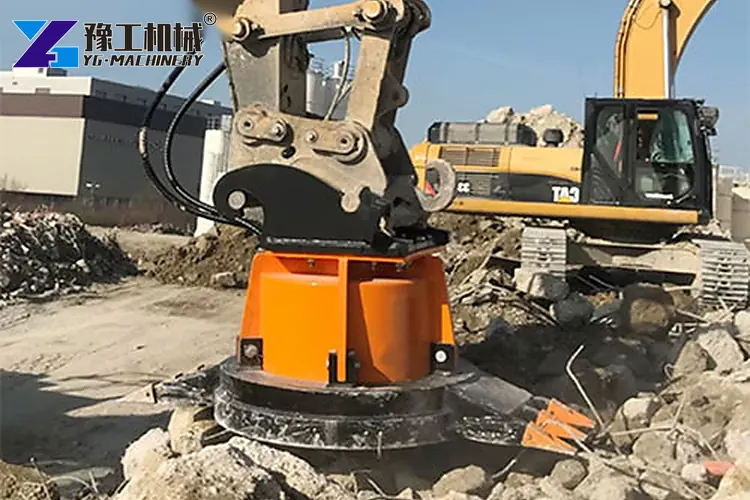
Excavator Magnet Applications In Steel Recovery
The common feature in these applications is recoverable ferrous steel. The differences are the shape of the material, the surrounding debris and where the collected load must be placed:
- Scrap yards and recycling: Collect loose steel offcuts from a prepared pile and transfer them to a sorting or loading area. Small pieces form an irregular contact layer, so pickup per cycle differs from lifting a single flat steel item.
- Demolition sites: Recover exposed rebar and steel fragments after material has been broken and spread for separation. Steel trapped in concrete or tangled with other objects needs preparation; the magnet is a recovery tool, not a substitute for demolition or cutting equipment.
- Steel mills and foundries: Collect suitable ferrous offcuts and return scrap between processing areas. The temperature, surface condition and shape of the material determine whether the proposed magnet is appropriate; hot-material handling requires a specifically suitable configuration.
- Ports and docks: Transfer suitable ferrous scrap within a planned loading area. The carrier position, discharge height and movement of the receiving container affect the working cycle and must be included in the handling arrangement.
- Railway maintenance: Recover loose ferrous fasteners and prepared steel debris from a designated work area. Long rails have different balance and contact requirements from small fasteners and need a handling method suited to their length and weight.
For each application, judge the attachment against a representative material mix. Compare collection, travel or swing, discharge and return time as one cycle. This gives a more useful picture of the labor and handling benefit than applying a single pickup claim to every kind of scrap.
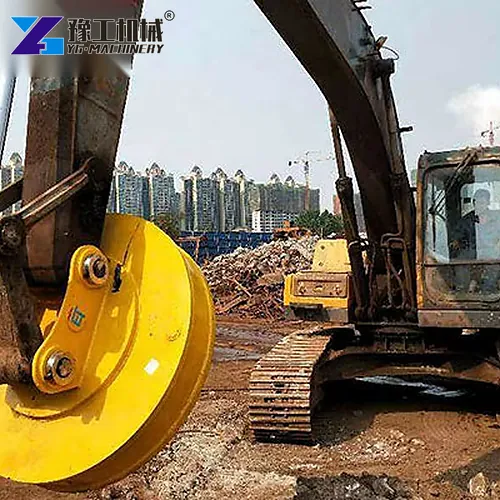
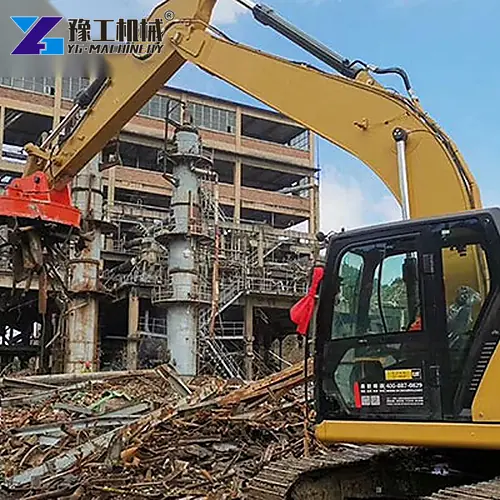
Excavator Magnet Configuration And Operating Features
The practical value of an excavator magnet comes from how its magnetic face, power supply, mounting and controls work together. Compare these features against the steel and carrier used on the job:
- Magnetic contact: Field strength and usable pickup are different quantities. Compare representative plates, loose scrap and rebar by their contact area, thickness and gaps rather than treating the table’s gauss figures as holding-force ratings.
- Hydraulic power supply: A motor-driven generator removes the need for a separate mains connection during operation. It draws energy from the excavator, so engine load, hydraulic demand and time per cycle still affect operating cost.
- Housing and working face: The enclosure protects the assembly while the working face meets the scrap. Abrasive debris and impacts make face condition, hose routing and protection of electrical connections important service considerations.
- Carrier connection: Mounting dimensions, coupler suitability and hydraulic connections govern attachment changes. A compatible interface can simplify changeover, while its actual installation procedure determines the time and work required.
- Control and protection: Compare the installed controller’s operating indications, release sequence and documented protection functions. Plan for a safe discharge zone and loss-of-power response; do not rely on an unspecified emergency or load-holding feature.
- Configuration and support: Match the electrical equipment, mounting interface and service arrangements to the proposed attachment. Include any required modifications, commissioning, warranty terms and spare-parts support in the quotation.
Before commissioning, the attachment and carrier should be checked as one system: connections, control response and the handling cycle all affect readiness for work. Include the agreed inspection or test scope, operating instructions and after-sales support in the purchase arrangement so the crew knows how the delivered configuration is intended to operate.
FAQ About Excavator Magnet for Sale
The table lists carrier ranges of 12–18 tonnes for 1000T, 18–25 tonnes for 1200T and 25–36 tonnes for 1300P. Selection also depends on attachment mass, mounting geometry, hydraulic supply and the excavator’s allowable load at the working radius.
In a hydraulic generator arrangement, a motor drives the generator supplying the magnet coil. The quotation should identify the generator, controls, connections and mounting parts included with the selected attachment so installation responsibilities are clear.
The carrier’s hydraulic pump supplies oil to a motor, which drives the generator. Electrical output then energizes the magnet coil. The carrier provides the energy, even though a separate mains connection is not required at the work area.
Inspect the working face, mounting parts, hydraulic hoses and accessible electrical connections using the operating manual’s schedule. Damage, loose connections or debris at the working face can affect operation. Isolate the equipment before maintenance and use the specified service procedures.
Delivery depends on the selected configuration, any mounting or electrical modifications and the shipment destination. Request a current production and delivery schedule with the itemized quotation rather than planning around a generic lead time.
YG Excavator Magnet For Sale – More Attachments
For an excavator magnet for sale, describe the ferrous material, carrier and intended pickup-to-discharge cycle when requesting a quotation. YG can review the attachment arrangement and supply scope against that duty. Include the destination and required support so the offer covers both equipment and the work needed to put it into service.
In addition to hydraulic magnets, we manufacture many other excavator attachments. Our range includes the double cylinder shear, high-frequency pile driver, drum cutter, pile breaker, hydraulic breaker, rock saw, crusher bucket, pulverizer, plate compactor, ripper, eagle beak shear, and car dismantling grab. We design each tool for durability and performance. Ask about our full catalog. Our team helps you find the right attachment for your project. Get in touch now and boost your excavator’s versatility.