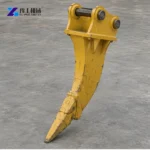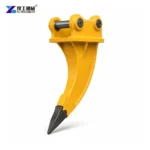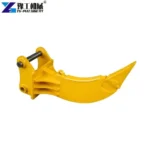
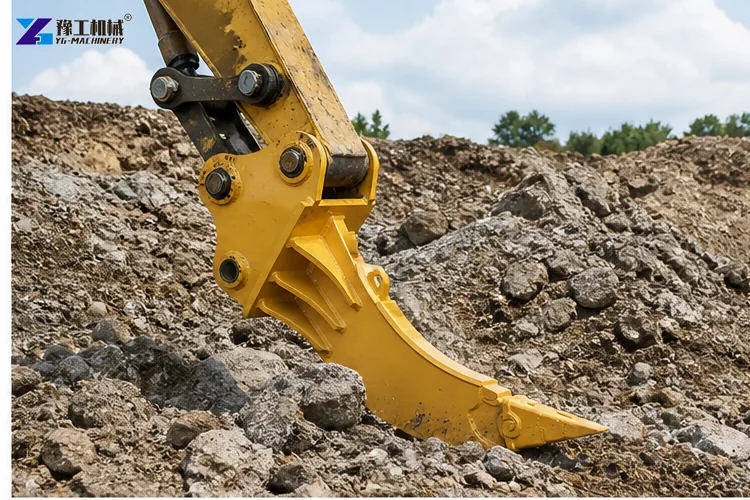
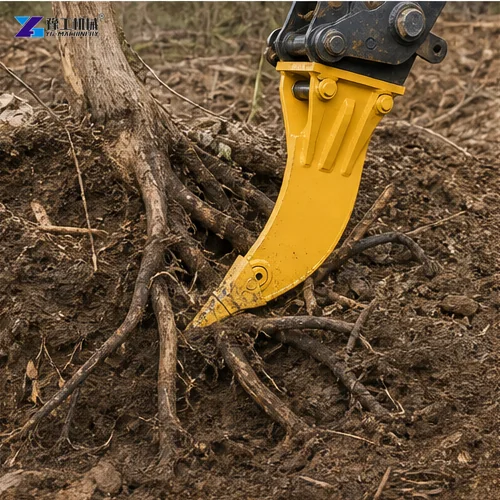
A Ripper Tooth For Excavator turns your machine into a powerful ground-breaking tool. This attachment uses a single, strong point to crack hard soils, rocks, and roots. Many operators also call it a Root Ripper For Excavator. Others simply refer to it as a digger ripper or rock ripper for short. No matter the name, its job is simple: penetrate where a bucket cannot.
YG Machinery produces a full range of these ripper teeth. We use high-quality steel and a replaceable tip system. This design helps you work faster and reduces downtime. Our models fit carriers from 1 ton to 90 tons. Contractors around the world trust our attachments for tough jobs.
In fact, choosing the right ripper tooth improves productivity on site. Next, we explain the specifications and how they work.
Ripper Tooth For Excavator Technical Parameters
Below is the parameter table for our YG series. Find the model that matches your excavator weight.
| Category | Unit | YG-00 | YG-01 | YG-02 | YG-04 | YG-06 | YG-08 | YG-08S | YG-10 | YG-14 | YG-17 | YG-20 |
| Total Length A | mm | 523 | 523 | 656 | 656 | 885 | 1080 | 1080 | 1290 | 1290 | 1500 | 1550 |
| Width B | mm | 130 | 130 | 180 | 180 | 240 | 345 | 345 | 400 | 400 | 465 | 465 |
| Thickness F | mm | 36 | 36 | 55 | 55 | 80 | 90 | 90 | 90 | 110 | 110 | 110 |
| Carrier | Ton | 1-2 | 3-4 | 4-6 | 6-9 | 12-16 | 20-23 | 23-26 | 26-30 | 30-40 | 40-52 | 50-90 |
| Weight | kg | 30 | 40 | 80 | 85 | 185 | 400 | 410 | 600 | 760 | 1030 | 1200 |
Please contact us if you need help selecting the right size. We provide tailored advice based on your carrier weight and working conditions.
Share your excavator operating weight and intended duty to shortlist a carrier band.
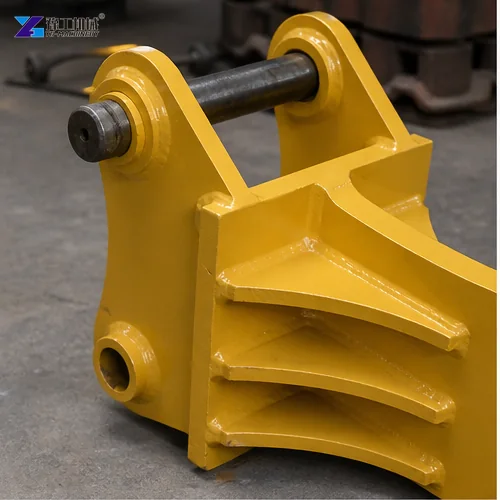
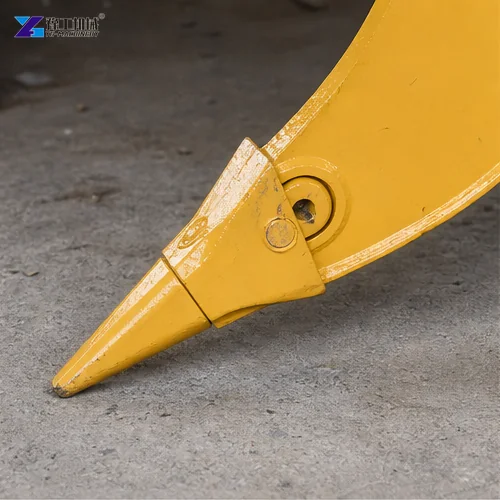
Match Ripper Mounting Dimensions Before Ordering
Start with the excavator operating-weight band, then verify the actual attachment connection. Two carriers in the same tonnage class can use different pin diameters, pin-centre distances or mounting widths. A tooth that falls within a weight band is therefore a candidate, not a confirmed installation. Supply the excavator model and a dimensioned mounting drawing, identifying whether the attachment connects directly to the dipper or through a quick coupler.
Where a coupler is fitted, check the coupler interface as well as the excavator linkage. The engagement geometry, locking arrangement and clearance through the permitted movement must suit the supplied ripper. Do not use the tooth thickness or overall shank width in the product table as a substitute for the mounting dimensions: those entries describe different parts of the assembly. Resolve the connection before comparing prices so an apparently suitable carrier band does not result in an unusable attachment.
Send the pin and mounting dimensions together with the coupler details, if fitted.
Digger Ripper Tooth Main Components and Working Principle
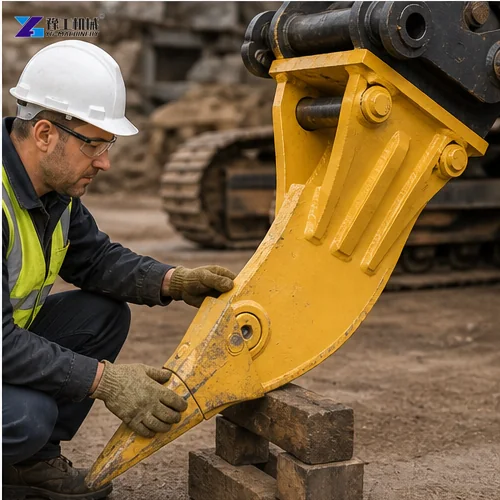
This ripper tooth consists of a few key parts.
- The main body, or shank. We forge it from tough alloy steel for high strength.
- The replaceable tip. You can swap it out when it wears down.
- The pin and retainer system. It locks the tip securely in place.
- Optional wear protection plates. These plates extend the service life even further.
So how does this tool work? The excavator arm drives the tooth’s sharp point into the ground. Then it applies leverage to rip and fracture the material. The single-point design concentrates all machine power into a small area. This makes it very effective against rock and hard-packed soil. For softer roots, the same prying action removes them cleanly. Moreover, you can easily adjust the attack angle for different tasks. Thus, whether you face frozen earth or dense stumps, the working principle stays consistent.
Root Ripper For Excavator Application Fields
Your excavator with a ripper tooth handles many tasks. Here are the main application areas.
- Land clearing. Use it as a Root Ripper For Excavator to pull out tree stumps and deep roots. It leaves the soil ready for further work.
- Rock breaking. A Rock Ripper For Excavator may loosen suitable fractured or stratified rock where the tooth can penetrate; an intact hard-rock mass needs a separate method assessment. It prepares rock for easier hauling.
- Frozen ground and asphalt. The tooth penetrates ice-bound earth and old pavement quickly.
- Trenching and demolition. It opens up hard ground for pipelines or footings. It also helps break concrete and asphalt before removal.
- Quarry and mining. Heavy models tackle primary and secondary breaking in quarries.
Many operators first discover the tool as a Digger Ripper Tooth for trench work. Soon they find it works just as well in other tough conditions. In addition, the same attachment can switch between tasks with a simple tip change.
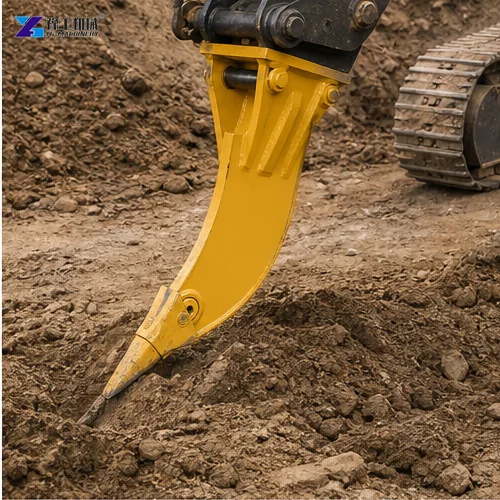
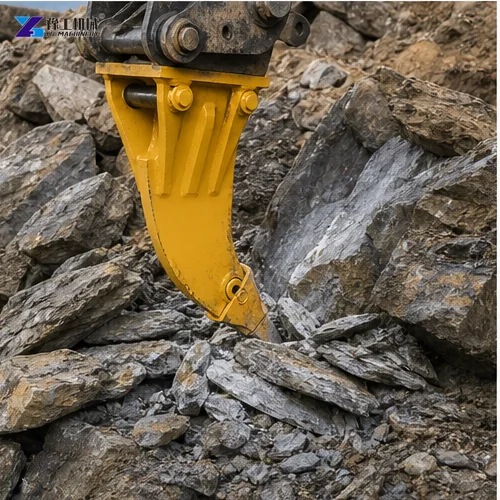
Choose A Ripper Tooth For The Actual Ground
A root-removal job, compacted soil and layered rock present different ways for the point to engage material. In soil or around roots, the useful result is loosening the obstruction so it can be removed with the appropriate handling tool. In fractured or layered ground, the tooth may exploit an existing separation. An unbroken mass of hard rock offers a different resistance; a pointed shape alone does not establish that ripping will be productive.
Describe the formation and the required result before selecting the attachment. Include whether the material has visible joints, whether the work is trench opening or local loosening, and how released material will be cleared. A ripper concentrates force through the tooth and carrier linkage; it is not an impact hammer. If the point cannot penetrate or the carrier cannot remain stable, increasing the shank size is not a complete solution. Compare the intended task with a suitable alternative method rather than treating every listed application as a performance guarantee.
Describe the ground, visible fractures and the result the tooth needs to achieve.
YG Rock Ripper For Excavator Advantages
Why choose a YG ripper tooth? Here are the key benefits.
- Superior material. We use high-strength alloy steel and Hardox wear plates. This ensures long life even in abrasive rock.
- Replaceable tip design. You can change the tip on site with simple tools. This feature makes the Rock Ripper For Excavator very cost-effective.
- Wide carrier range. Our models cover excavators from 1 to 90 tons. So there is a perfect fit for your machine.
- Optimized geometry. The tooth profile provides excellent penetration with less drag. It works efficiently as both a root and rock ripper.
- Factory-direct pricing. We manufacture all parts. You get quality without middleman costs. Our team inspects every unit before shipping.
- Certified quality. YG attachments carry CE and ISO certifications. Clients across many countries trust our products.
In short, you gain a reliable tool that boosts your project speed. Furthermore, our support team helps you with selection and after-sales service.
Confirm The Complete Ripper And Carrier Configuration
Review the selected model as one assembly. The published attachment mass, overall length and carrier range have different roles: mass adds to the load at the linkage, length changes the position of the working point, and the carrier range provides an initial machine-class screen. Their interaction must be checked with the excavator or coupler requirements. No table entry on this page is an independent digging-force rating or permission to exceed the carrier limits.
The purchase scope should identify the mounting arrangement, the tooth and retention parts actually supplied, any agreed wear protection and the information needed for replacement parts. Ask for the relevant configuration drawing rather than assuming that every photograph shows the same connection. This makes the final offer specific enough to compare without promising universal brand compatibility or a particular output in unknown ground.
For a smaller carrier, the mini-excavator ripper ground-fit guide explains the separate access and ground-use assessment; use this product table to shortlist the supplied configuration.
Request a defined model, connection drawing and supplied tooth-parts scope for your carrier.
Frequently Asked Questions About Ripper Tooth For Excavator
A ripper tooth is a single, heavy-duty point. A bucket tooth is one of several on a bucket edge. The ripper tooth concentrates force for deep penetration. It can break rock and roots that a bucket cannot handle.
Yes, you can. Many of our customers use the same attachment for both roots and rock. However, for heavy rock work, choose a model with a reinforced tip. The rock ripper configuration uses extra wear material to handle abrasion.
Match the tooth to your excavator’s operating weight. Check our parameter table. The carrier tonnage column guides you. For mixed tasks, pick a model rated for the toughest job you will face.
Absolutely. All YG ripper teeth feature a replaceable tip. You remove the locking pin, swap the tip, and resume work. This system reduces downtime and keeps your operating cost low.
Our attachments mount on all major excavator brands. We can customize the pin size and ear spacing. Simply send us your machine details when ordering, and we will ensure a perfect fit.
Get Your Ripper Tooth For Excavator Today
Ready to add a high-performance Ripper Tooth For Excavator to your fleet? Contact YG Machinery now for a free quotation. Tell us your excavator model and working conditions. We will recommend the best tooth configuration for your needs.
Besides ripper teeth, YG is your one-stop source for excavator attachments. We also supply:
- Twin-Cylinder Shear
- High-Frequency Pile Driver
- Integrated Drill and Splitter
- Rotary Drum Cutter
- Vacuum Suction Plate
- Pile Breaker
- Hydraulic Breaker
- Rock Saw
- Crusher Bucket
- Concrete Pulverizer
- Plate Compactor
- Eagle Beak Shear
- Car Dismantling Grab
Whatever your project demands, we have the right tool. Our team stands by with technical support and fast global shipping. Send an inquiry through our website or email today. Equip your excavator with reliable, field-proven attachments from YG Machinery.
Send the product configuration, application and delivery requirements for a project-specific equipment proposal.