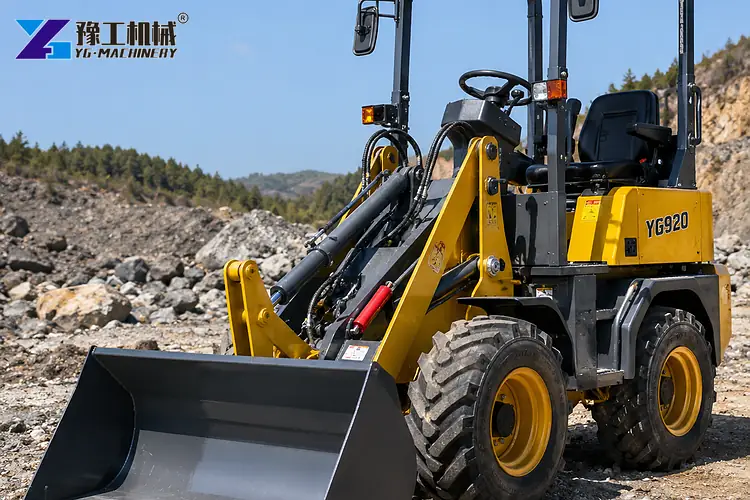
A mini payloader is a compact articulated wheel loader for scooping, carrying and unloading loose soil, sand, gravel or farm materials. Its front bucket suits repeated short transfers between a stockpile and a truck, bin or work bay. Match the configuration to the material, receiving height and access route rather than assuming that every compact loader performs the same job.
Compact Wheel Loader Configuration Parameters
Compare the transmission, gearbox, axle and engine within each column as one configuration. Dumping height describes the discharge point and bucket width describes lateral size; neither is a lifting-capacity or bucket-volume rating. Keep the dimensions and components of each column together when comparing a loading task.
| Transmission Type | Mechanical | Hydrostatic / CVT | Hydrostatic / CVT | Hydrostatic / CVT | Hydrostatic / CVT | Hydrostatic / CVT | Hydrostatic / CVT |
| Dumping Height (m)¹ | 3.2 | 3.2 | 3.2 | 3.2 | 3.5 | 3.5 | 3.5 |
| Bucket Width (m)² | 1.8 | 1.8 | 1.8 | 1.6 | 2.0 | 2.0 | 2.0 or 2.2 |
| Transmission / Gearbox | Hi-Lo | 265 Single Hi-Lo | 265 Dual Hi-Lo | 265 Dual Hi-Lo | 265 Dual Hi-Lo | 280 Dual Hi-Lo | 300 Split‑type Dual Hi-Lo |
| Drive Axle | Isuzu | Isuzu | Small Planetary Hub | Small Planetary Hub | Large Planetary Hub | Large Planetary Hub | Large Planetary Hub |
| Engine | Weifang 490 | Weifang 490 | Weifang 490 | Weifang 4102 Turbo | Weifang 4102 Turbo | Weifang 4102 Turbo | Weifang 4108 Turbo |
| Tire Size | 20.5-16 | 20.5-16 | 20.5-16 | 20.5-16 | 16.70-20 | 16.70-20 | 16.70-24 |
| Control Lever | Single-lever | Single-lever | Single-lever | Single-lever | Single-lever | Single-lever | Single-lever |
| Brake System | Oil-brake | Oil-brake | Air-brake | Air-brake | Air-brake | Air-brake | Air-brake |
| Articulation Angle (°)³ | 25 | 25 | 25 | 25 | 30 | 45 | 45 |
Differences Between a Payloader and an Excavator
A loader approaches a pile with a front bucket and carries material to a nearby receiver. An excavator reaches with a boom and arm for digging below grade or placing material at reach. Choose around the main work cycle; compact size alone does not make one machine a substitute for the other.
| Primary Function | Loading, carrying, and dumping loose materials | Digging trenches, foundations, and heavy demolition |
| Movement | Wheels, fast on paved surfaces | Tracks, better on rough or muddy ground |
| Bucket Position | Front-mounted, moves with the arm | At the end of an articulated arm |
| Best For | Material handling, stockpiling, site cleanup | Deep digging, precise trench work |
| Typical Job Site | Farms, warehouses, construction roads | Large earthworks, mining, demolition |
Check the receiver height and route before comparing a loading configuration.
Common Applications for Small Wheel Loaders
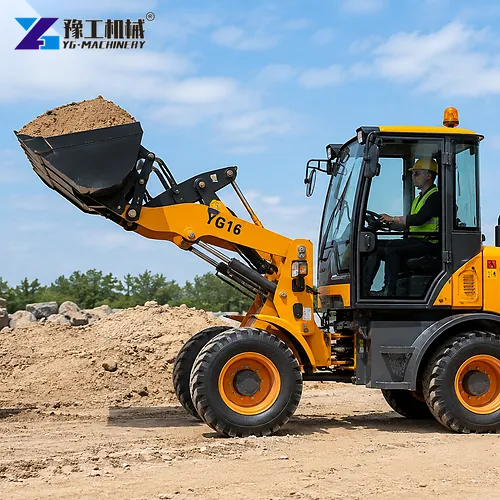
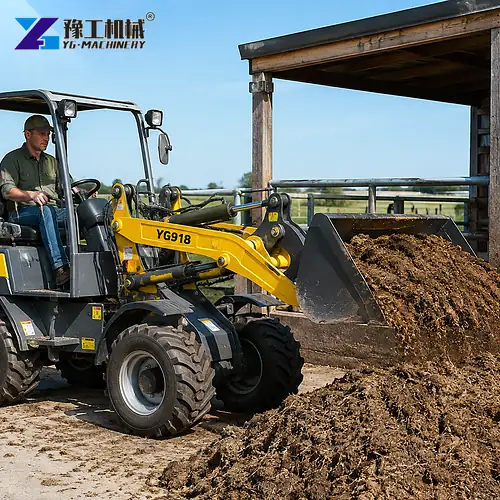
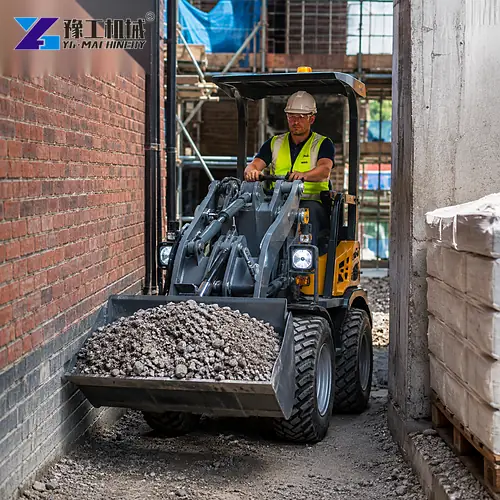
On farms, a bucket loader transfers loose feed ingredients, manure and soil around a yard. On construction sites it supplies nearby work bays with sand or gravel and gathers loose material for removal. In nurseries and stockyards it moves mulch or growing media between piles and storage areas. Each application needs a firm route, room to turn and a receiving point within the selected configuration’s limits.
A standard bucket suits loose material. Forks, bale-handling tools and snow attachments are separate functions that require compatible mounting, load limits and hydraulic arrangements; they are not established by bucket width alone.
For farm or site handling, match the bucket and any attachment to the actual material.
Plan a Short Loading Cycle for Farm and Site Materials
Repeated loading works best when the stockpile, travel route and receiving point form a clear cycle. Position the receiver so the operator can approach and unload without unnecessary reversing or crossing pedestrian routes. The material and ground conditions determine how much can be handled within the machine’s rated limits.
A wider bucket can be useful at an open pile but may be unsuitable for a narrow bay. Wet soil or dense gravel changes the load carried for the same bucket fill. Compare the real cycle instead of assuming a transmission type guarantees lower fuel use, fixed cycle times or higher profit.
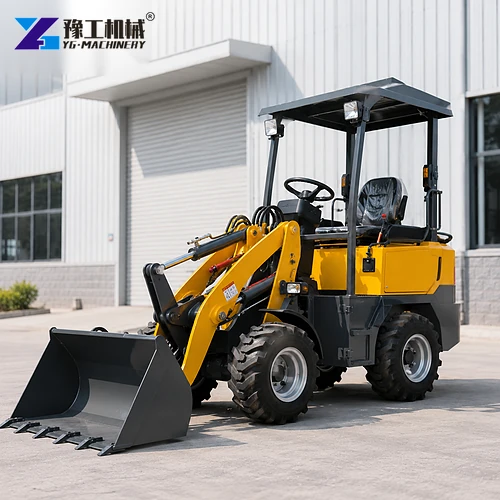
Transmission and Component Choices for a Compact Loader
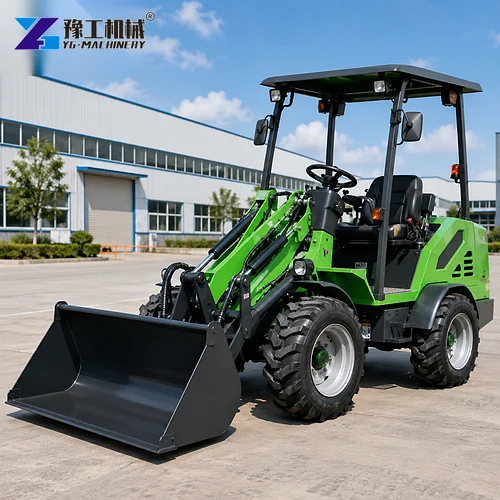
Mechanical and hydrostatic/CVT configurations combine different gearboxes, axles, engines, tyres and brakes. Evaluate those combinations against the travel route, starts and stops, receiving height and support needs rather than choosing by one component alone.
Steering articulation matters at a tight loading bay, but the angle does not give the complete turning clearance. Include machine width, bucket position and the carried material when planning access. Operator familiarization and maintenance should follow the selected configuration, not a universal training-time or uptime promise.
Select a Wheel Loader for the Material and Receiving Point
Start with the material and receiver, then assess the route. A farm feed bay, a gravel truck and an indoor storage aisle impose different loading and access conditions.
- Check material density and the selected configuration’s rated load before choosing the bucket or fill level.
- Compare dumping height and unloading geometry with the truck, hopper or storage bay.
- Measure gates, aisles and turning space using the full machine and attachment envelope.
- Assess ground bearing, slopes and traction along the loaded route.
- Confirm mounting and hydraulic compatibility for any fork, bale or snow-handling attachment.
Share the material and receiving-point dimensions to compare the selected configuration.
Mini Payloader FAQs
Compare the bucket discharge point with the receiving truck or hopper, and check the bucket width against the loading bay. These dimensions do not state rated lifting capacity or bucket volume. Check the selected machine’s load limits separately.
A front bucket can scoop feed ingredients, manure or soil and carry them between nearby stockpiles and receiving points. Handling bales or pallets requires the appropriate approved attachment and load rating; a bucket specification does not prove fork compatibility.
Suitability depends on ground bearing, traction, slope and the load. Wheel size alone does not establish safe operation on soft ground. Assess the route and operating limits before sending a loaded wheeled machine across mud or an unsupported edge.
No. The articulation angle describes steering movement, while actual turning clearance also depends on machine dimensions, tyres, bucket position and the chosen route. Check the complete machine envelope and allow room for its load.
The quotation should identify the engine, transmission, axle, tyres, bucket and any agreed cab or attachment options. Delivery timing, optional equipment and destination-side costs belong to that specific offer; they are not established by a general configuration table.
Our Small Payloader Models and Other Machinery for Sale
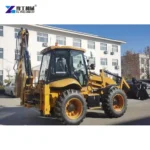
When loading and trench excavation are separate jobs, compare the small backhoe loader with the front-bucket loading cycle. For soft-ground projects, compare the tracked loader only after checking ground support and operating limits; tracks do not make every slope or muddy route safe.
For a suitable loading configuration, describe the material, receiving point and access route. These details help identify the required bucket, unloading geometry and agreed options.