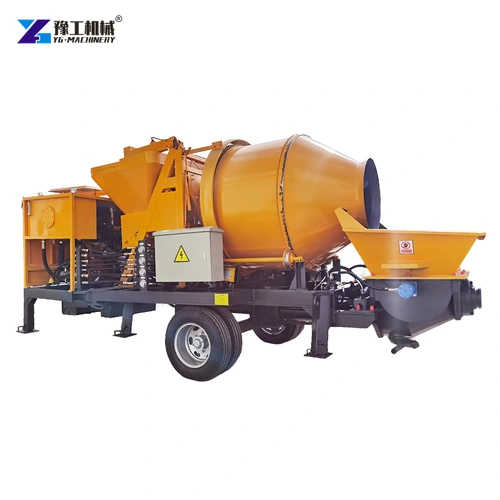
A concrete mixer and pump for sale combines batch preparation and pipeline delivery on one machine. The mixer produces fresh concrete, while the pump moves that concrete to the placing point. Buying them together simplifies the transfer between those jobs, but it does not make their capacities identical. A useful selection follows a complete batch from measured ingredients to finished placement.
For a builder producing concrete on site, the important question is whether this sequence can supply the intended pour consistently. Mixer discharge, pump demand and the placing crew must work together. The integrated machine is particularly relevant when on-site batching is part of the project; a pump receiving ready-mixed concrete answers a different supply question.
How a Concrete Mixer and Pump Links Two Different Operations
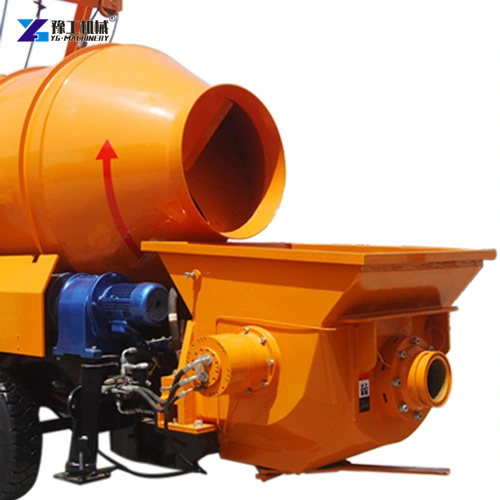
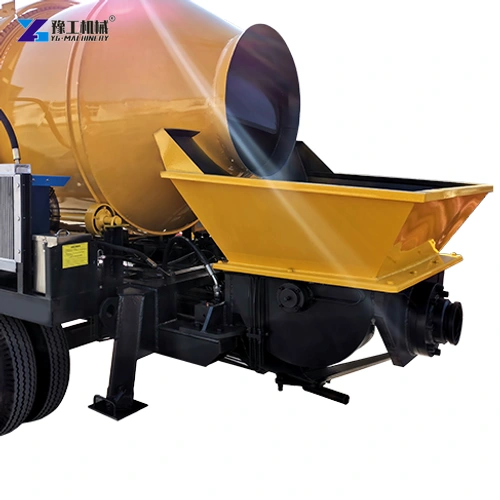
The mixer brings cement, aggregate, water and any specified additions into a uniform batch. The batch discharges into the receiving hopper, which feeds the concrete cylinders. In an S-valve piston-pumping arrangement, alternating strokes draw concrete from the hopper and push it into the delivery line, while the valve connects the discharging cylinder to the outlet. The hopper links intermittent mixing to the repeated pumping strokes.
This arrangement removes one external transfer between separate machines. It still needs controlled ingredient measurement and a concrete mixture suitable for pumping. A drum, hopper and pipeline do not automatically correct unsuitable grading or a mixture that separates during handling. The specified concrete and a representative pumping trial should guide the configuration.
The receiving hopper allows one drum discharge to feed successive pump strokes. Its useful role is to keep concrete available at the cylinder inlet while the next batch is prepared. If that replenishment stops, the pump has no new material to deliver, regardless of its available motor power. This transfer point is where the two operations become one working sequence. For prepared-concrete supply, compare the electric concrete pump arrangement.
Compare the way your project prepares concrete with the integrated mixing and pumping arrangement.
Concrete Batch Production Determines the Continuous Pumping Rate
A batch mixer works through loading, mixing and discharge. The pump can only deliver concrete that has reached its hopper. If the pump empties that supply faster than the next batch becomes available, continuous placement is interrupted even though the pump itself has unused capacity.
The reverse mismatch also matters. If mixing runs ahead of placement, fresh concrete waits within the transfer sequence. The next batch then needs somewhere suitable to go, and the working method must remain compatible with the concrete specification. A larger hopper is a buffer, not permission to store concrete indefinitely or to keep adding water to recover workability.
When comparing a concrete mixer and pump for sale, separate three quantities:
- Actual concrete production per complete batch cycle. This is the usable concrete prepared over the complete loading, mixing and discharge cycle. It differs from the table’s theoretical concrete mixing-rate figure because ingredient supply and the time between batches also affect site production.
- Pump delivery capability. This describes the pumping function under its stated conditions. It does not establish how quickly the integrated mixer can replenish the material.
- Placement demand. The concrete-placement operation must spread, consolidate or finish the delivered concrete at a compatible rate. A narrow form and an open slab can impose different demands on the same pump.
Consider a foundation pour with several confined sections. While the crew places and consolidates one section, the mixer prepares the next charge to match that progress. Increasing pump delivery alone would merely empty the hopper sooner; increasing batch frequency while the crew is occupied would leave concrete waiting. On a steadily advancing slab, the same machine instead needs regular ingredient replenishment so gaps between batches do not interrupt the concrete-placement crew. The controlling step is the slowest part of the actual sequence, not necessarily the pump.
Match the complete batch sequence to the rate at which your crew can place concrete.
YG Concrete Mixer and Pump Parameters
The YG Concrete Mixer Pump Machine combines batch mixing, a receiving hopper and an S-valve pumping arrangement. The parameters below distinguish the theoretical mixing rate, hopper size, delivery pressure and overall machine dimensions. Motor options and electrical requirements belong to the selected motor or engine configuration.
| YG Concrete Mixer Pump Machine parameter | Published value |
| Maximum theoretical concrete mixing rate | 15 m³/h |
| Distribution valve | S valve |
| Hopper volume | 600 L |
| Listed hopper height | 1080 mm |
| Concrete delivery pressure | 6 MPa |
| Machine weight | 3500 kg |
| Listed voltage | 380 V |
| Overall dimensions | 4200 × 2100 × 3300 mm |
The theoretical mixing rate describes the mixing function; site production follows the complete loading, mixing and discharge cycle. To evaluate an actual pour, compare that complete batch output with the selected pump’s delivery curve and the concrete-placement crew’s demand. Pressure is a separate measure of delivery resistance, not a substitute for pump flow. The pressure rating concerns delivery through the concrete line, where mixture behaviour, bends, diameter and elevation affect resistance. These two ratings describe different jobs within the integrated machine.
The listed hopper height is 1080 mm; it is separate from the machine’s 3300 mm overall height. The loading method must suit the actual receiving opening and its access. Space around the machine also needs to accommodate ingredient handling, inspection and cleaning. Supply voltage is one electrical requirement; frequency, protection and available supply capacity must suit the selected motor configuration.
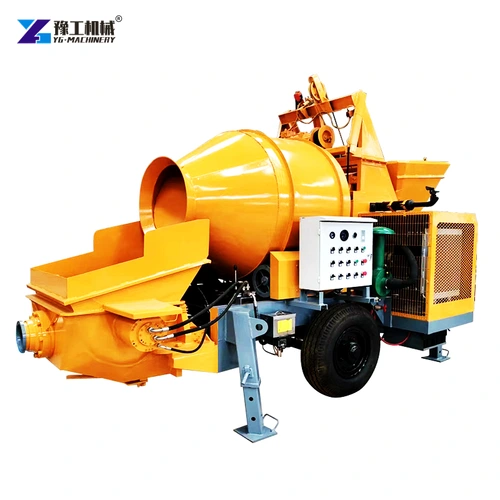
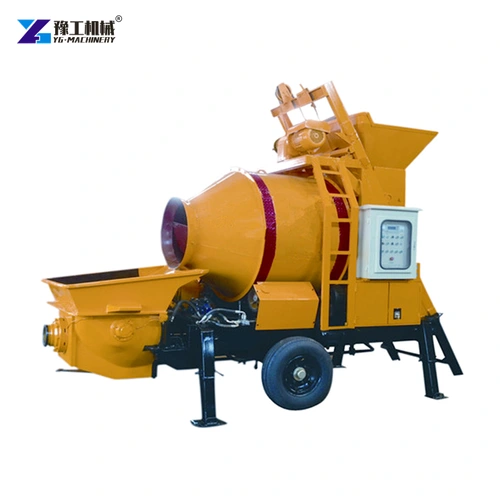
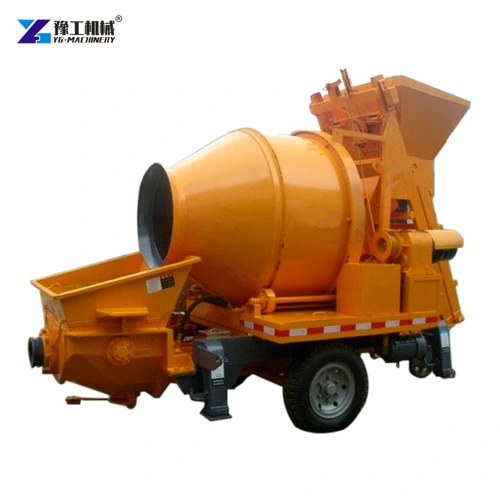
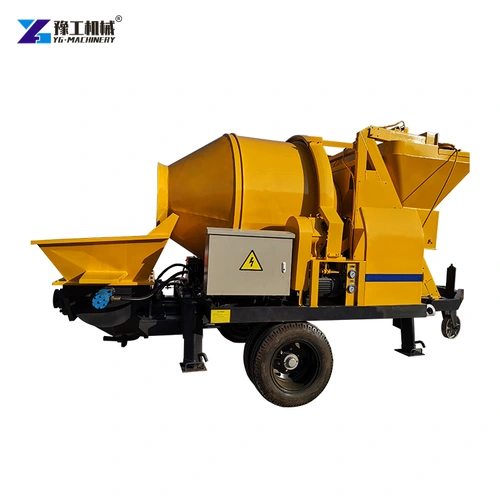
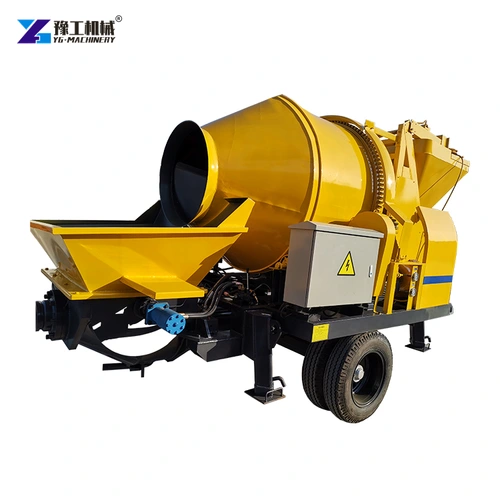
The pictured configurations place the mixing drum above the concrete-placement area, with the loading assembly at the other end of the drum. This separates ingredient loading from discharge into the pump hopper. Drum support, loading equipment and the power enclosure vary between configurations and need to suit the selected loading method and drive package.
Request a named configuration with the motor or engine configuration and concrete-handling components identified.
Concrete Mixer-Pump Applications Need Different Batch Strategies
The concrete-placement operation determines the useful batch and delivery rhythm. Foundation sections, scattered repairs and open slabs place different demands on the same mixing and pumping functions:
- Foundation beams and individual bases. Concrete is directed into defined sections of formwork. Batch and placement sequencing should follow the project’s pour plan, with consolidation coordinated at each section before the delivery point advances.
- Dispersed repair locations. Each location may need a short run of concrete followed by relocation or a change of concrete discharge point. Loading access, the amount prepared for each task and the approved cleaning sequence therefore matter alongside pumping time.
- Open slabs for small buildings or agricultural structures. The crew spreads and finishes a broader surface as placement advances. Steady batch supply supports that progression; a delivery surge can put more concrete in the concrete-placement area than the crew can distribute and finish at the intended pace.
Ingredient loading can be organised around the available handling equipment and the required batch measurement. A loading hopper transfers the prepared charge to the mixer; weighing equipment controls ingredient quantities where included in the arrangement. Specifying these as separate functions makes the proposed workflow clear before the machine is placed on site.
Buying the Integrated Machine as a Working Package
An integrated mixer-pump is most relevant where the site needs to prepare repeated batches as well as deliver them through a pipeline. Its loading arrangement feeds the mixing cycle, and its hopper receives each discharge for pumping. A ready-mixed-concrete supply already performs the preparation stage elsewhere, making a standalone receiving pump the more direct equipment comparison for that supply pattern.
Cleaning belongs to that sequence too. Both the mixer and the concrete-contact pumping components retain material after production. Their approved cleaning procedures, wash-water collection and access requirements should be considered before locating the machine. Never treat a pressurised pipeline obstruction as an ordinary cleaning task; isolation and pressure release must follow the equipment’s procedure before intervention.
For occasional short pours, compare setup and cleaning work with useful placing time. For repeated on-site batches, examine ingredient replenishment and the consistency of successive batches. These are different operating patterns, so neither a larger mixer nor a stronger pump automatically gives the better arrangement.
Balance the interfaces between the stages. If measured ingredients are ready but the loading operation is slow, a larger pump leaves that delay unchanged. If the next batch reaches the hopper before the crew can place it, the restriction is farther downstream. Follow the batch from ingredient preparation to final placement to identify which equipment or work arrangement would actually improve the pour.
Include the intended concrete and regular pour types when comparing the supplied package.
Concrete Mixer And Pump For Sale FAQs
No. It combines mixing and pumping, but the concrete still requires controlled ingredients. Automatic batching or self-loading is a separate supplied feature and should not be inferred from the presence of a drum.
The two functions have different cycles. The pump may deliver material faster than the next batch can be loaded, mixed and discharged. Sustained placement depends on that complete sequence, not the pump figure alone.
It is a receiving interface and buffer within the working sequence. Interruption limits and material handling must follow the concrete requirements and machine procedure; hopper volume does not establish a safe storage period.
The valve alternately connects the discharging concrete cylinder to the delivery outlet while the other cylinder receives concrete from the hopper. Coordinated valve and piston movement produces the repeated delivery cycle.
Loading moves a prepared charge into the mixer using the supplied handling arrangement. Measuring controls the quantities of aggregate, cement and water before they become that charge. A loading hopper can transfer material without performing the measurement; separate weighing or metering equipment provides that function when included.
Tell us how concrete will be batched and where it will be placed, together with your supply and project requirements.