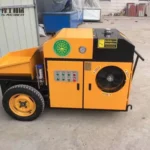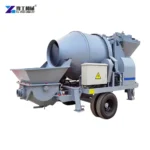
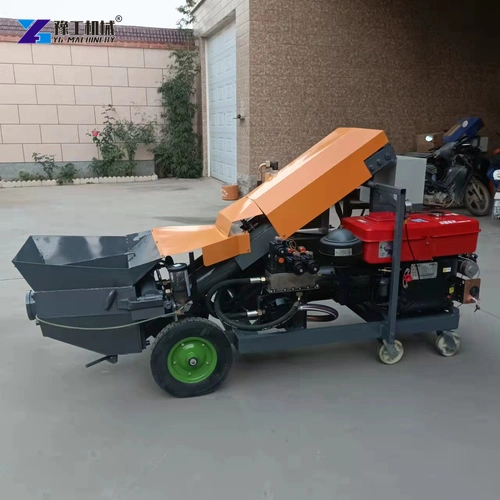
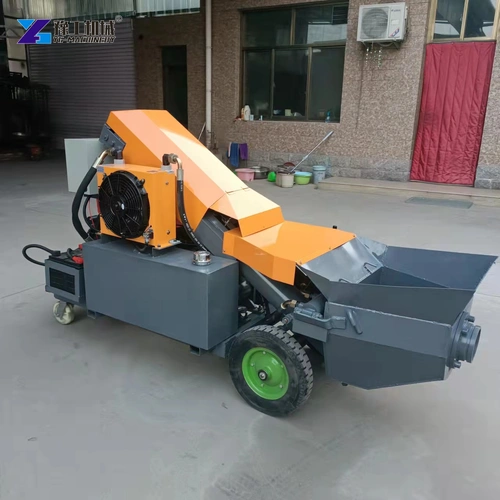
Concrete can arrive at a small construction site without being able to discharge directly into the formwork. A courtyard, an internal working area or a narrow approach may separate the delivery point from the pour. A mini concrete pump machine bridges that gap by moving a suitable mix through a connected delivery line. The pump remains at its working position while the line leads toward the placement area.
The useful comparison is not simply small equipment versus large equipment. The concrete must suit the pump, the delivery route must suit the equipment, and the placing crew must be able to receive the flow. YG compact pump configurations include different power arrangements. The electric YG-10 provides a specific small-pump reference, while compact diesel machines represent a separate configuration rather than another name for the same unit.
Three Parts of a Small Concrete Delivery System
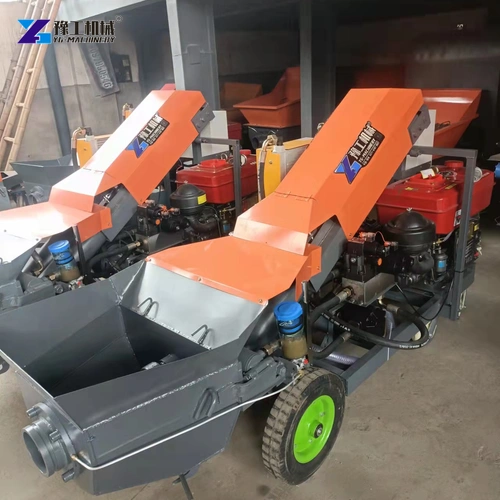
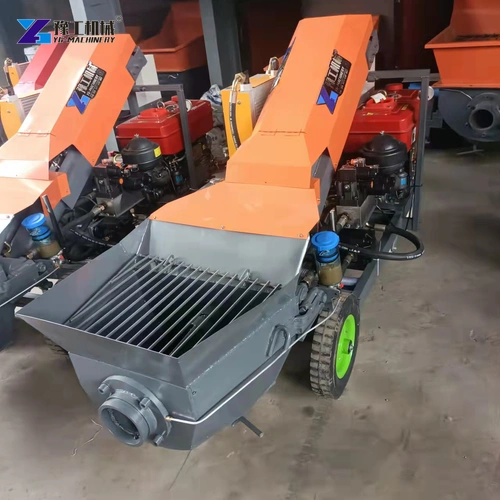
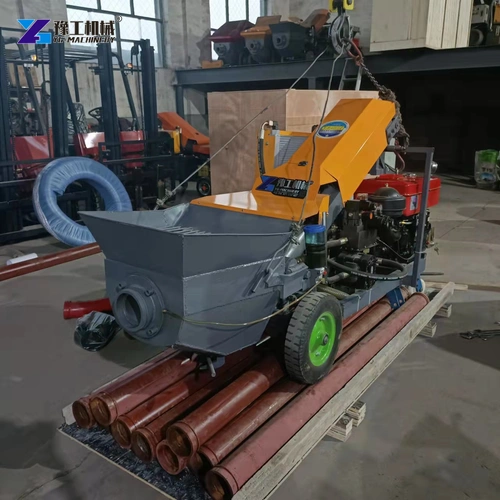
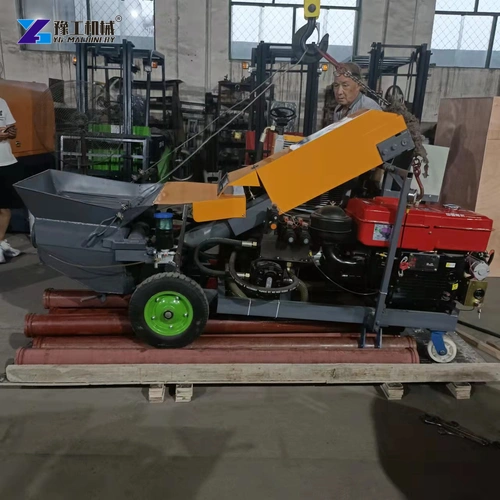
The hopper receives the prepared material, the pumping mechanism provides the delivery force, and the connected pipeline leads the material toward the pour. Each part has a different job. The hopper is not a batching plant, and the delivery line is not a boom that automatically positions concrete over the work. The crew still has to arrange the route and manage placement at the end.
This makes a mini concrete pump machine useful when direct unloading is awkward but the required mix and quantity suit a compact system. Instead of moving the entire pump as the pour advances, the placing arrangement uses the pipeline and appropriate end equipment. The machine, connections and delivery components must be treated as one pressure-rated system rather than assembled from unrelated hoses.
The material also has to arrive in a usable condition. A pump transfers a suitable mix; it does not repair a poorly proportioned or segregated batch. Reliable supply to the hopper supports the delivery process, while an interrupted supply can interrupt the pour even when the machine itself is operating correctly.
YG-10 Mini Concrete Pump Machine Specifications
| Specification | YG-10 |
| Motor power | 15 kW |
| Work efficiency | 6 m³/h |
| Maximum pressure | 15 MPa |
| Working pressure | 10 MPa |
| Aggregate size | 0.5–1.5 cm |
| Vertical conveying distance | 20 m |
| Horizontal conveying distance | 50 m |
| Conveying pipe diameter | 80 mm |
| Machine weight | 600 kg |
| Dimensions | 1800 × 700 × 1100 mm |
Maximum pressure and working pressure are different values, not interchangeable operating targets. The conveying distances describe separate delivery directions and should not be combined into a promise for every mixed horizontal-and-vertical route. Actual suitability depends on the material, the line arrangement and the operating conditions.
The YG-10 is an electric configuration; a compact diesel pump needs its own matching engine and operating specifications. When comparing a mini concrete pump machine, keep its power unit, dimensions and pumping limits together instead of borrowing favorable values from different configurations.
Describe the concrete mix and the intended horizontal and vertical route so YG can assess the electric YG-10 against the actual delivery task.
Fine Aggregate Concrete Needs More Than a Small Stone Size
Aggregate size is one important boundary, but pumpability also depends on the overall concrete mix. The material must move through the delivery system without being treated as dry loose aggregate. A pump chosen for fine-aggregate work should not be expected to handle every ordinary concrete batch solely because both materials are called concrete.
The YG-10 aggregate range helps define the kind of material being considered. It does not replace the mix design or establish an acceptance test for every project. The intended concrete and its working properties must be compatible with the selected equipment and line. Adding water without an approved mix adjustment is not a sound way to solve a delivery problem.
The distinction also separates a mini concrete pump machine from other transfer equipment. A mortar pump addresses a different material task. Similar-looking hoses or hoppers do not make mortar specifications suitable for a concrete placement, particularly when coarse particles and the required delivery components differ.
Where a Compact Concrete Pump Fits a Small Pour
On a residential improvement project, the truck may remain at an accessible unloading point while a delivery line reaches a rear working area. This changes material movement across the site, but it does not remove the need to organize access for the placing crew. The line route and the remaining work area have to coexist rather than blocking the same narrow passage.
For a small slab or secondary structural pour, the demand is different from continuous high-volume placement. A mini concrete pump machine can be considered when the required rate, material and route suit its capacity. An equipment choice based on the largest advertised output would miss the actual issue: whether the complete delivery and placing process can run at a manageable pace.
An internal placement adds other constraints. The pump’s working location, electrical supply or engine exhaust, personnel access and cleaning arrangement must be evaluated for the chosen configuration. Compact dimensions do not establish that a machine can be used inside every building. Diesel and electric layouts need different site arrangements, even when their material-delivery purpose is similar.
Electric and Diesel Power Change the Setup
An electric pump needs a supply appropriate to its motor and control equipment. Available voltage, electrical capacity and the connection arrangement should be checked before delivery. A compact diesel pump carries an engine, but that introduces its own fueling, ventilation and maintenance requirements. Independent engine power does not eliminate the need for a suitable operating location.
Power choice should follow the site rather than appearance. A mini concrete pump machine positioned beside an established electrical supply has a different setup from a unit used on an unpowered project. The selected configuration also determines which service items the operator needs to manage. Do not transfer electric-model ratings to a diesel unit that happens to share its hopper layout.
The concrete equipment guides cover machines performing other stages of construction. Mixing, conveying and spraying are distinct functions. Choosing a compact pump for delivery should not assume that the same unit also batches the concrete or sprays it onto a surface.
Coordinate the Hopper, Pipeline and Placing Crew
The three working points need a shared pace. Concrete supply at the hopper, pump delivery and the crew receiving the material must fit one another. If the receiving crew cannot place the material as it arrives, increasing pump output does not improve the completed pour. If the hopper supply is intermittent, the line cannot provide a steady delivery independently of that supply.
Plan the work around these connected responsibilities:
- Supply suitable material to the hopper without exposing personnel to the moving pumping components.
- Arrange compatible delivery components and keep the route coordinated with access and the work area.
- Establish communication between the pump operator and the receiving crew before starting placement.
- Include the manufacturer’s pressure-release, cleaning and shutdown procedure in the work plan. Never open a pressurized connection to investigate a suspected blockage.
The pump is one part of the placing process, not a substitute for it. The practical value of a compact system comes from matching its delivery task to the actual pour, including the work needed after the material leaves the hose.
A proposed pump position, delivery route and placing schedule help YG discuss a complete small-pour equipment arrangement.


Mini Concrete Pump Machine FAQs
A dedicated concrete pump transfers a prepared compatible mix. A mixer-pump is a different configuration that combines mixing and pumping functions, so those functions should not be assumed from the hopper alone.
YG-10 has a specified aggregate range and operating limits. The complete concrete mix must be suitable for that equipment and the delivery route; the product name alone does not establish compatibility.
The maximum and working pressures are separate specification values. Operation must follow the selected machine’s requirements rather than treating its maximum rating as a general continuous target.
Changing the delivery line changes the system the pump has to serve. Length, elevation, component arrangement and material all need to be assessed together rather than extending the route without review.
Diesel-powered pumps are separate configurations. Their engine, controls and operating requirements must be checked for the actual unit instead of assigning the electric YG-10 specification to them.
Choose for the Complete Small-Pour Task
A suitable mini concrete pump machine connects prepared concrete to a placement point that is otherwise awkward to reach. Start with the material and the pour, then match the pump, power supply, line and receiving crew. That produces a useful equipment choice without confusing a compact delivery pump with a mixer, sprayer or full-size boom pump.
Include the concrete mix, planned delivery route, available power and pour size for a suitable compact-pump proposal.