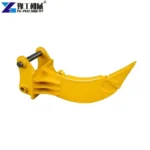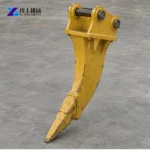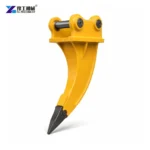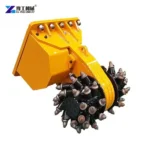
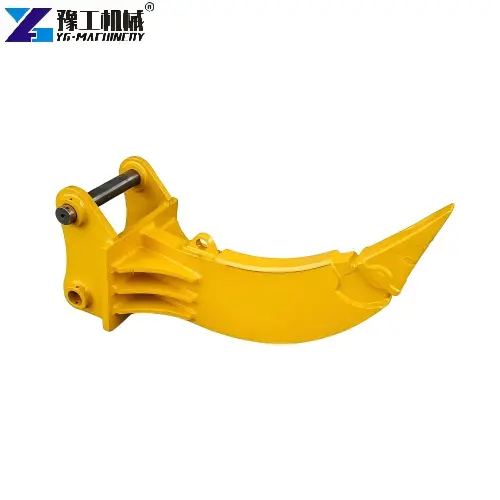
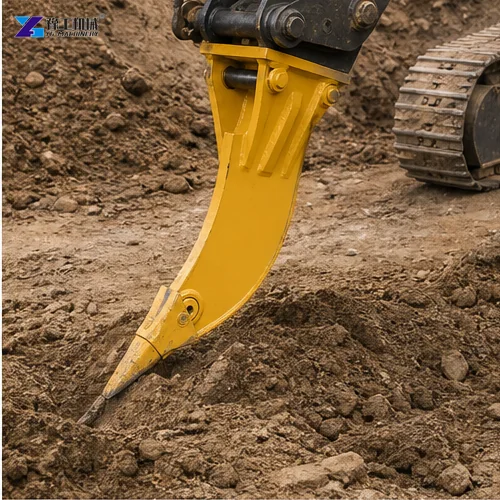
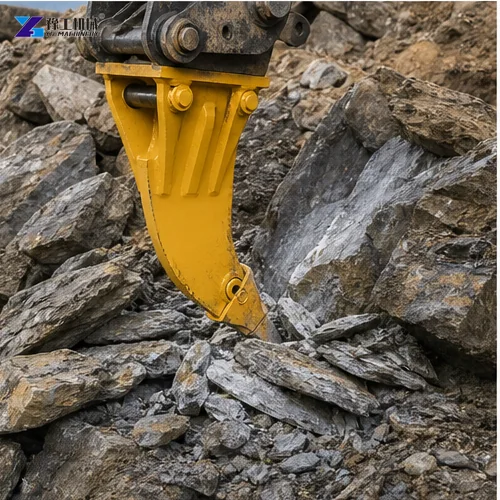
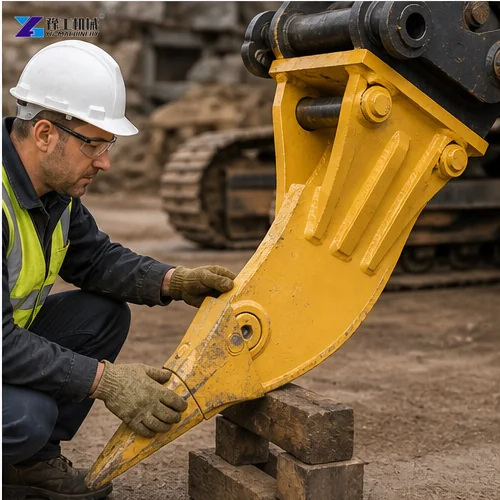
A ripper tooth is often the first attachment used when a trench route crosses hard soil, roots, weathered rock or compacted fill. Its single working point concentrates the excavator’s breakout force, loosening the ground before the operator returns to a bucket for removal. This sequence is useful when the site needs controlled penetration rather than broad scooping.
Selection should begin with four facts: the excavator’s operating weight, the pin and ear measurements, the resistance of the ground and the depth the crew must reach. These details determine the bracket, point profile and working method, so a quotation can be matched to the actual excavation instead of a machine name alone.
Ripper Tooth Excavator Carrier Matching
Begin with the excavator’s operating weight, then confirm the attachment bracket against the boom and linkage. Carrier tonnage is the fast way to narrow the range, while pin diameter and center distance protect the final fit. A correctly matched Ripper Tooth Excavator gives the operator a stable working angle and avoids an improvised mounting decision at the jobsite.
The material plan matters at the same time. Roots and hard clay call for a different working rhythm from continuous rock loosening. Describe whether the attachment will be used for utility trenches, agricultural clearing, demolition preparation or quarry access so YG can check the tip, plate and mounting arrangement against the actual duty.
Measure The Excavator Before Ordering A Ripper
Photograph the existing linkage from the side and record the pin diameter, the distance between pin centres and the inside ear spacing. This simple measurement set is more useful than a machine name alone when the excavator has had a quick coupler, arm or linkage change. It lets YG compare the proposed bracket with the current working end and helps avoid losing time on a preventable fit correction.
Include the available hydraulic layout only when a quick coupler or other accessory changes the clearance at the arm end. The point is not to make the quotation complex; it is to make sure the working position remains practical when the attachment is raised, curled and set into the ground through the full operating arc.
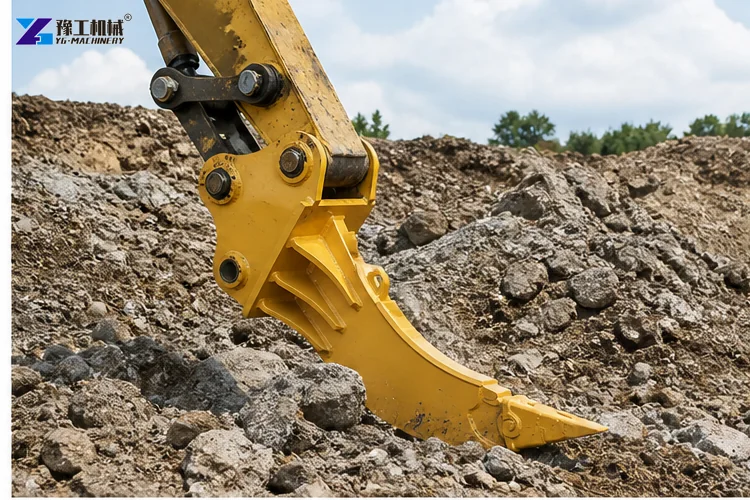
Ripper Tooth Excavator Size And Ground Selection
The table lists 11 separate excavator ripper tooth models, from YG-00 for 1–2 t carriers to YG-20 for 50–90 t carriers. They are model-specific bands, not one attachment that fits every excavator across 1–90 t. First match the excavator’s operating weight to a listed band; then compare the model’s length, width and thickness with the arm-end dimensions and the ground being loosened. Carrier weight narrows the choice, while pin spacing and ear width complete the mounting check.
| Model | Carrier | Length | Width | Thickness | Weight |
| YG-00 | 1–2 t | 523 mm | 130 mm | 36 mm | 30 kg |
| YG-01 | 3–4 t | 523 mm | 130 mm | 36 mm | 40 kg |
| YG-02 | 4–6 t | 656 mm | 180 mm | 55 mm | 80 kg |
| YG-04 | 6–9 t | 656 mm | 180 mm | 55 mm | 85 kg |
| YG-06 | 12–16 t | 885 mm | 240 mm | 80 mm | 185 kg |
| YG-08 | 20–23 t | 1080 mm | 345 mm | 90 mm | 400 kg |
| YG-08S | 23–26 t | 1080 mm | 345 mm | 90 mm | 410 kg |
| YG-10 | 26–30 t | 1290 mm | 400 mm | 90 mm | 600 kg |
| YG-14 | 30–40 t | 1290 mm | 400 mm | 110 mm | 760 kg |
| YG-17 | 40–52 t | 1500 mm | 465 mm | 110 mm | 1030 kg |
| YG-20 | 50–90 t | 1550 mm | 465 mm | 110 mm | 1200 kg |
Choose the smallest configuration that genuinely matches the carrier and job demand; the goal is controlled penetration, not an oversized attachment. For repeated rocky work, include photos of the ground and the current bucket linkage. They help the technical team evaluate the point profile and wear arrangement before a final quote.
Use Ground Evidence To Select The Working Point
A site photograph should show whether the resistance comes from compact fill, old pavement, roots, weathered stone or a mixed trench route. The operator’s target depth is useful as well. Those facts shape the working point recommendation more reliably than a generic description of hard ground, and they help the buyer compare an attachment proposal against the work that must be completed after delivery.
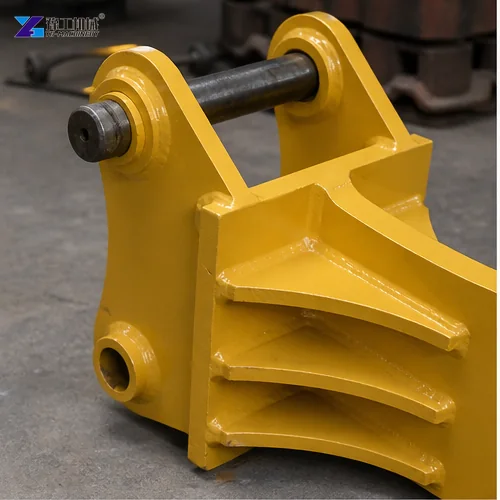
Ripper Tooth Excavator Use Sequence
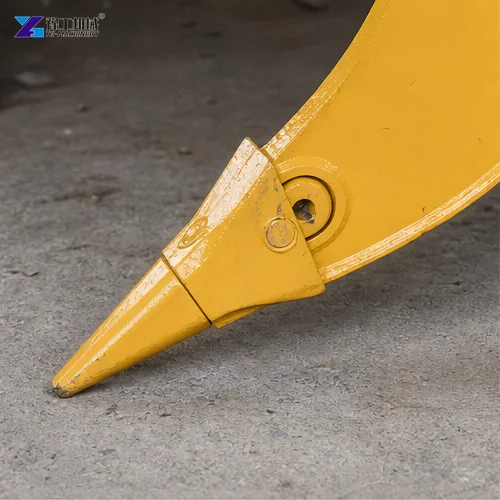
The operator should establish a safe entry point, use short controlled pulls and lift away broken material before making the next pass. This keeps the attachment working as a penetrator rather than using it as a bucket. A Ripper Tooth Excavator is most effective when the work pattern follows the ground condition instead of forcing one deep movement across the entire line.
Routine inspection protects availability. Check the pin connection, tooth retainer, adapter plate and visible wear before starting. A replaceable point makes planned maintenance more straightforward, while a clear inspection routine helps the crew decide when to service the attachment before it affects the next job.
Ripper Tooth Excavator Links And Buyer Questions
Where the job moves from loosening into cutting or processing, the adjacent attachment should match the next task. See the YG ripper tooth product page, excavator rock saw and rock crusher bucket for related equipment paths.
For a useful quotation, send the excavator model, operating weight, pin dimensions, ear spacing, target ground condition and destination. Those details allow YG to prepare a Ripper Tooth Excavator recommendation around fit and working purpose rather than a generic attachment listing.
Ripper Tooth Excavator FAQ
A ripper tooth is a single heavy-duty point for penetration, while bucket teeth form the cutting edge of a bucket. The ripper is used first to loosen resistant ground.
Confirm operating weight, pin diameter, pin-center distance and ear spacing. Sharing these details lets YG check the mounting arrangement before ordering.
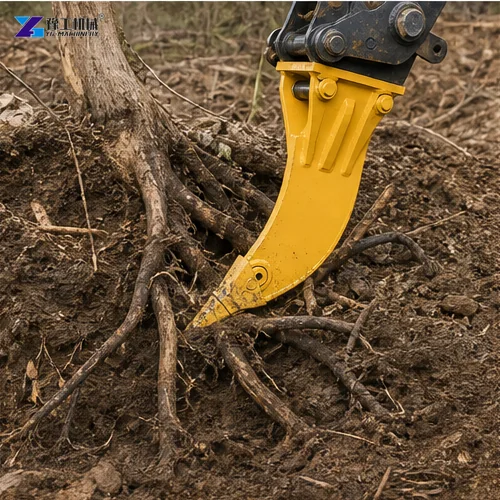
Yes, a suitable ripper can loosen rooted ground before excavation. Work in controlled pulls and inspect the point when the ground contains stones or buried material.
Replace the point when visible wear changes its penetration profile or the retainer no longer holds it securely. Planned replacement helps maintain a predictable working result.
Ripper Tooth Excavator Next Step
A clear carrier and ground brief gives YG the information needed to match the mounting, tooth size and working purpose. Send those details before ordering so the attachment arrives ready for the excavator and the task ahead.