An excavator plate compactor price covers a vibrating attachment, but the useful purchase is an attachment that works on the buyer’s excavator and reaches the intended fill. A wider plate, a larger vibration unit and a different mounting bracket change what is supplied. The lowest attachment-only figure can therefore be a poor comparison with an offer that includes the correct bracket, hoses and installation equipment.
For a backfilling contractor, the central question is where the money produces useful capability. More plate area can reduce repositioning on open fill, while a confined trench may prevent that plate from reaching the work at all. Compare the vibration assembly and plate dimensions first, then connect them to the carrier and the actual duty. This separates a justified larger purchase from paying for capacity the site cannot use.
What the Plate Compactor Assembly Adds to the Price
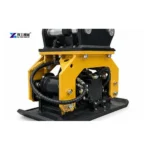
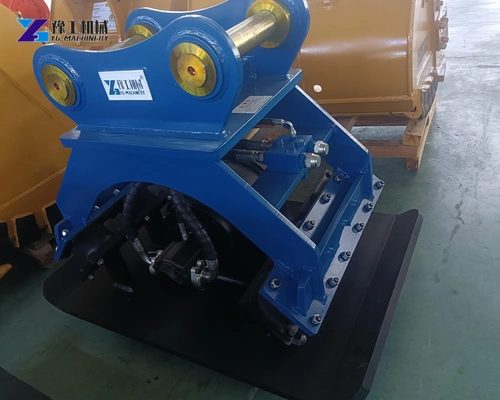
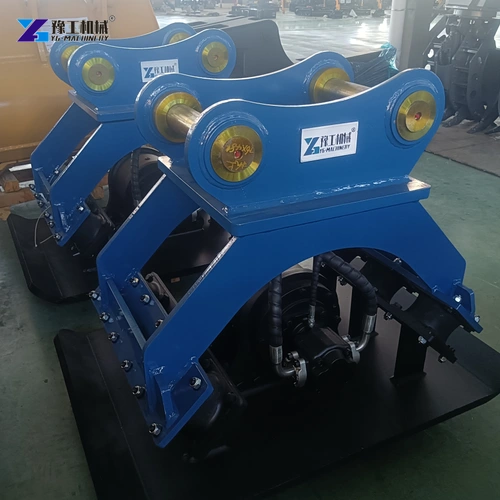
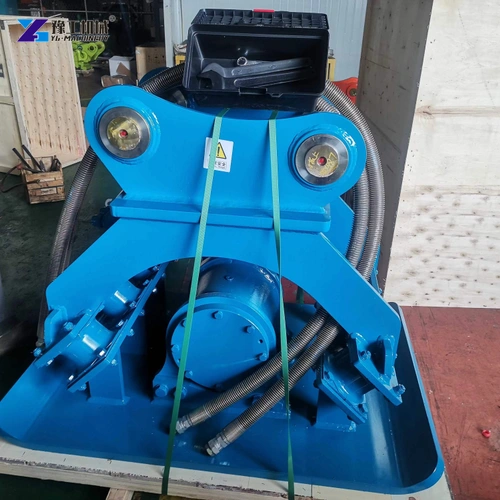
The hydraulic motor drives the vibrating mechanism. Its rotating unbalanced mass generates repeated excitation that passes into the base plate and the material below. The upper mounting structure connects the assembly to the excavator, while isolation elements separate the vibrating lower assembly from the supporting structure. These are different functional parts of the purchase, not simply a steel plate with a hydraulic connection.
The plate footprint controls the area contacted at one position. Its shape and the surrounding frame also affect access near walls and other obstructions. Increasing footprint changes the physical assembly and can require a larger drive and support arrangement. The relevant comparison is the complete size class rather than the thickness or colour of the plate in a photograph.
Isolation mounts are important to the working arrangement because the lower assembly must vibrate while the carrier positions it. Their condition, fastening and replacement specification belong in the service plan. A quotation that identifies these service parts is easier to maintain than an apparently similar attachment for which the buyer cannot obtain the correct replacements.
None of these features establishes an accepted fill density by itself. Soil grading, moisture, thickness of each placed soil layer and the approved working method remain part of compaction. Purchase decisions should therefore connect the assembly to the intended duty rather than treating a vibration-force figure as a guaranteed depth or density result.
Review plate size and vibration assembly for the regular backfill task.
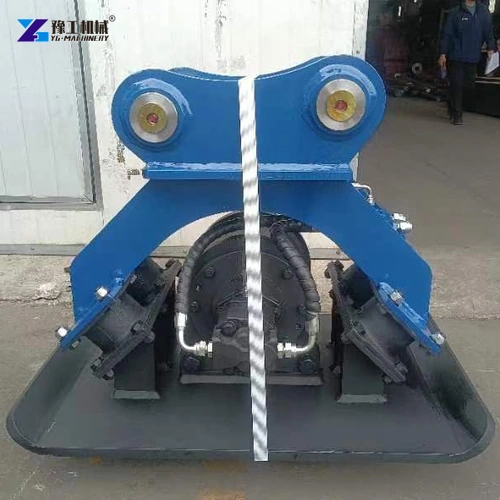
YG Excavator Plate Compactor Parameters
The following YG configurations distinguish the main attachment sizes. The base footprint, mass and maximum flow need to be read together; selecting the largest vibration-force entry without considering the carrier creates an incomplete comparison.
| YG plate compactor model | YG-32 | YG-50 | YG-80 | YG-107 |
| Listed vibration force | 40 kN | 65 kN | 110 kN | 150 kN |
| Working pressure | 15 MPa | 15 MPa | 15 MPa | 15 MPa |
| Maximum flow | 60 L/min | 100 L/min | 160 L/min | 160 L/min |
| Suitable excavator class | 4–9 t | 10–18 t | 20–27 t | 30–40 t |
| Attachment mass | 380 kg | 550 kg | 920 kg | 1050 kg |
| Listed base footprint | 900 × 550 mm | 1160 × 700 mm | 1350 × 900 mm | 1350 × 900 mm |
Read footprint and access together. The YG-32 lists a 900 × 550 mm base, while the larger listed bases occupy more ground at each position. A narrower base can be useful where the trench or working space limits plate contact, whereas open fill allows a broader pattern of adjacent positions. Force, mass and carrier class remain separate selection factors even when two models share a footprint.
Maximum flow is a limit in the published configuration, not an instruction to run every machine at that flow. The selected attachment needs its proper operating settings and return arrangement. Those details connect the motor to the carrier; they should be settled as part of installation rather than improvised after delivery.
Compare the named model with the carrier and working width.
Carrier Installation Can Change the Installed Cost
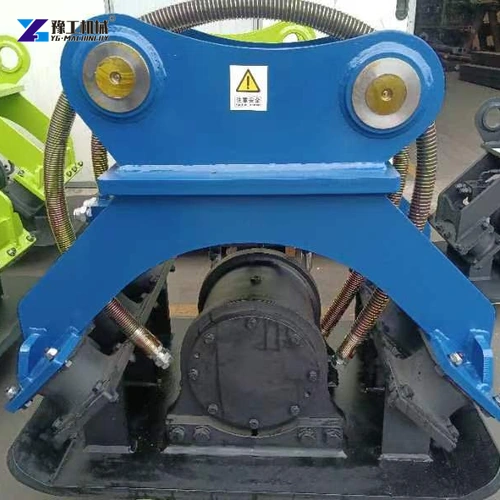
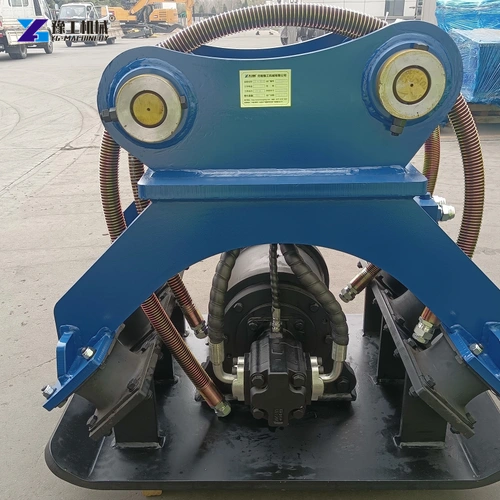
A pin-on bracket and a quick-coupler-compatible bracket are different physical interfaces. The supplied pin dimensions, spacing and bracket width must suit the chosen connection. An attachment that is inexpensive to buy but requires an unplanned replacement bracket has not delivered the saving suggested by the original figure.
The hydraulic connection is a second task. Hoses must reach the carrier connections through the permitted attachment movement without being pulled tight or trapped. Fittings, protection and any necessary circuit work add to the installed arrangement. Existing auxiliary hydraulics are useful only when their operating range and return conditions suit the vibration motor.
Distinguish three purchase boundaries:
- Attachment body. Identify the exact YG configuration, base assembly, motor and mounting supplied with the quoted unit.
- Carrier connection. Identify bracket or coupler compatibility, pins, hoses, fittings and the work required to connect the attachment to the named excavator.
- Installation and handover. Identify who checks the settings, routing and function, and which operating and service information accompanies the attachment.
These boundaries make a local installation quotation comparable with a factory equipment quotation. They also show where existing equipment reduces the purchase: a compatible bracket and suitable circuit can simplify the job, while a mismatch creates a separate modification task. The excavator plate compactor guide explains the related working-fit questions.
Compactor Value Changes Between Narrow Trenches and Open Fill
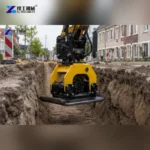
A trench contractor may work beside chambers, trench-box supports and changes in width. Here the plate must enter the trench or other working space and contact the intended layer. A large footprint that bridges an obstruction leaves an unworked area; its theoretical coverage does not compensate for the missing access. The excavator must also position the assembly flat without bringing it into contact with protected structures.
On broader backfill, repositioning becomes a different part of the working cycle. A larger suitable plate can contact a wider area at each position, but the crew still needs controlled soil-layer thicknesses and an accepted compaction-pass pattern. Moving more quickly between positions is valuable only when the material receives the required treatment. Area per hour therefore needs site evidence rather than a calculation from plate dimensions alone.
In a narrow trench, compare the clear width along the whole working path, not only at the access point. The plate and surrounding frame must reach each part of the fill with the intended contact. On open fill, the coverage pattern instead depends on how adjacent positions join: gaps leave untreated strips, while excessive overlap repeats work. These are access and pass-planning differences, not just different amounts of available ground.
The excavator plate compactor price should thus be evaluated against the regular work, not an exceptional job used to justify the largest model. A mixed fleet may benefit from different sizes on different carriers. One large attachment is not automatically a replacement for every smaller unit in confined work.
Match the plate footprint to trench access and the planned coverage pattern.
YG-80 or YG-107: What the Larger Compactor Purchase Changes
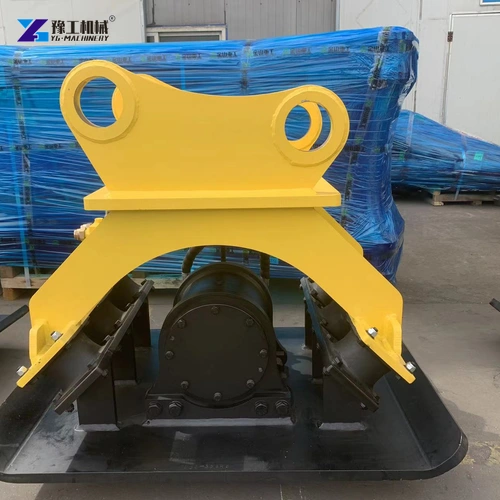
Choosing between YG-80 and YG-107 changes the vibration assembly rather than the working width. Their shared 1350 × 900 mm base and maximum flow of 160 L/min accompany different listed forces, 110 and 150 kN, and masses, 920 and 1050 kg. For a buyer considering a higher-priced option, the relevant question is whether the job and suitable carrier need that different force and mass, not whether the larger model contacts a wider strip.
Their carrier classes also differ: 20–27 t for YG-80 and 30–40 t for YG-107. If the purchase would require a different carrier rather than use an existing suitable excavator, that additional excavator purchase or allocation is part of the investment decision. Transport and installation remain separate costs, but the main selection is whether the intended fill and carrier call for the heavier vibration assembly.
Ownership also includes keeping the vibrating assembly serviceable. Isolation elements let the lower assembly vibrate relative to its support; fastenings and hydraulic connections must remain in their prescribed condition. Correct replacement parts and inspection access matter because a stopped attachment also interrupts the carrier assigned to it. Compare that service provision with actual utilisation rather than assigning a fixed daily output to either model.
Define the installed compactor package before comparing offers.
Excavator Plate Compactor Price FAQs
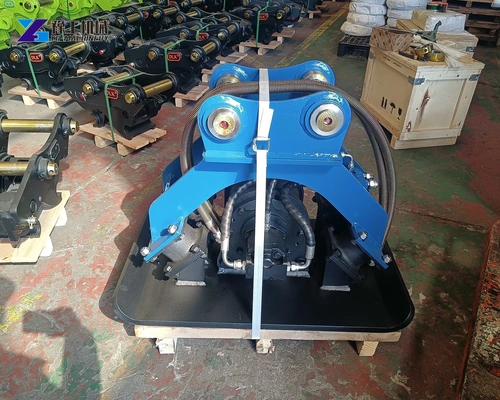
The drive, vibration assembly, upper frame, isolation elements and mounting can differ even when the base dimensions look alike. Compare the named configuration and its supplied components rather than the visible plate alone.
Width must also suit the trench or other working space. A plate that cannot enter a trench or reach beside an obstruction does not provide useful coverage there. Carrier compatibility and working access are separate selection conditions.
Their inclusion depends on the offer. State the actual carrier connection and identify pins, bracket, hose lengths and fittings in the supply. This avoids comparing a bare attachment with an installed package.
No. Material, moisture, thickness of each placed soil layer and the working method affect the result. Use the project’s required acceptance test and a suitable working trial rather than translating force directly into a depth guarantee.
Identify isolation elements, relevant fastenings and the hydraulic service requirements for the actual model. Availability of the correct parts matters more than an unspecified promise to supply generic spares.
Send your excavator model, connection details and regular backfill duty to discuss the compactor and installed compactor equipment package.