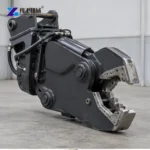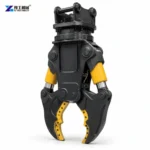
When choosing hydraulic shears for excavator for sale, do not assume the attachments are interchangeable just because the carrier weight looks right. The jaw must reach and open around the material, the mounting point must suit the excavator, and the auxiliary circuit must meet the shear’s working-flow and pressure range. YG’s Eagle Beak shear uses a long cutting jaw for planned steel and scrap separation. This guide explains how that attachment works, what its model figures mean, and what to confirm before ordering.

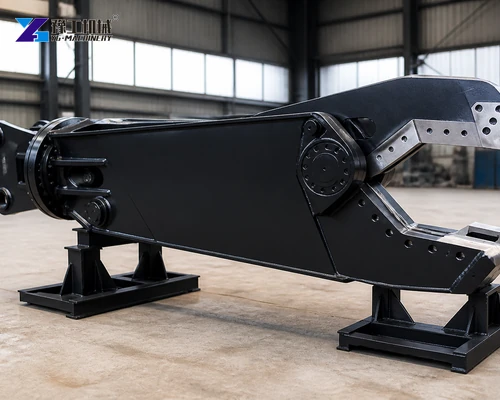
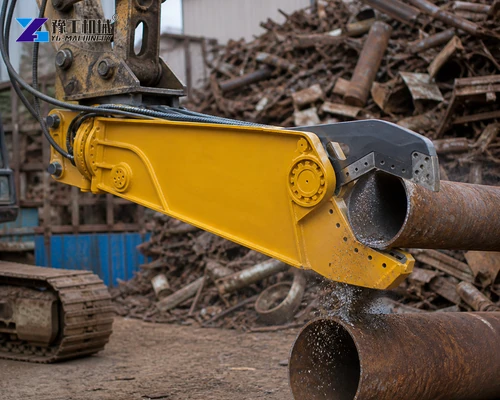
The job photos in this article are illustrative views of the Eagle Beak shear family, not a record of a particular customer delivery or a promised cutting result. The offered model, mount, color and included equipment should be confirmed against your excavator and material.
What Does a Hydraulic Shear for an Excavator Do?
An excavator shear is a powered attachment with opposing jaws. The excavator supplies hydraulic oil to the attachment; a cylinder moves the jaw so its cutting edges close on a selected section. The operator positions the tool with the boom and arm, then makes controlled cuts that help separate steel members or scrap for further handling. The exact motion and rotation arrangement depend on the shear configuration.
YG’s Eagle Beak design has an elongated jaw suited to reaching and cutting selected steel sections. It is not a bucket for moving bulk material, and it is not a pulverizer whose main task is crushing concrete. A shear can be considered for beams, pipes, tanks and scrap, but material shape, wall thickness, hardness, access and the required cut all affect suitability. Ask the supplier to assess the actual section rather than treating a broad material label as a capacity rating. A listing for hydraulic shears for excavator for sale does not reveal whether the jaws suit your target section.

How Does the Excavator Shear Cutting Cycle Work?
The carrier positions the open jaw around an accessible part of the target section. Hydraulic force closes the cutting edges; the operator then repositions the attachment for the next cut and moves the separated piece into the planned sorting or removal sequence. A rotating head can help orient the jaw when the selected configuration includes rotation, but it does not make an obstructed cut safe or eliminate the need to plan the material’s movement.
For controlled work, decide where the section will be supported, where it can move as the cut releases, and how the excavator can hold a stable position. Keep people outside the fall and swing area, and follow the site’s isolation and demolition procedures. The shear’s published opening and cutting-force values describe equipment limits; they do not guarantee a cut through every grade, profile or thickness.

Which Excavator and Hydraulic Shear Size Should You Match?
Start with the excavator make, exact model, operating weight, boom or arm installation point and attachment interface. Carrier tonnage is only a first screen: attachment mass changes the load at reach, while the hydraulic circuit must deliver compatible working pressure and flow. Confirm the return line, rotation circuit if required, hose ends, coupler and any case-drain requirement with the supplier before shipment.
The YG table below gives selected published model ranges for shortlisting. ‘Arm installation’ and ‘boom installation’ are separate carrier ranges, not one combined excavator-weight rating. The listed working-flow range and opening are also different measures: flow describes a hydraulic requirement, while opening describes the jaw geometry. Review the complete current specification for the exact model and configuration.
| Model | Arm installation | Boom installation | Working pressure | Working flow | Weight | Opening |
| YG180RT | 13–17 t | 10–12 t | 250–300 bar | 90–110 L/min | 1,100 kg | 375 mm |
| YG280RT | 18–27 t | 14–18 t | 250–300 bar | 180–220 L/min | 2,100 kg | 485 mm |
| YG380RT | 28–39 t | 20–28 t | 320–350 bar | 200–250 L/min | 3,500 kg | 620 mm |
| YG580RT | 51–65 t | 40–50 t | 320–350 bar | 275–375 L/min | 5,800 kg | 780 mm |
| YG980RT | 91–110 t | 66–90 t | 320–350 bar | 600–700 L/min | 9,800 kg | 950 mm |
These figures are a model-range screen, not a complete carrier approval. For example, an opening dimension does not state the maximum thickness of every steel section the shear can cut. Ask the supplier to check the excavator’s lift chart at the working radius, attachment mass, hydraulic flow and pressure together. If a model is being considered for boom mounting, verify that exact installation option rather than assuming the arm-mounted configuration transfers unchanged.
Send your excavator model, mounting point and hydraulic flow/pressure readings to check which shear range is worth comparing. Include the material dimensions so the jaw opening is assessed against the actual work.
CHECK MY EXCAVATOR AND SHEAR FIT
What Material and Cut Should an Excavator Hydraulic Shear Handle?
Describe the material in measurable terms: section type, outside dimensions, wall or web thickness, material grade if known, and whether it is straight, bent, bundled or attached to a structure. A round pipe, an I-beam and mixed scrap present different jaw-access and support conditions even when their outside dimensions are similar. Photograph the section from more than one angle and mark the cut location.
A shear is most useful when the planned cut creates a manageable piece for the next step. Consider how the separated length will be supported, lifted and sorted; cutting force alone does not establish that the excavator can safely hold a long or unstable piece. If the required finish is a precise, clean edge rather than separation for demolition or recycling, discuss whether a shear is the right tool for that result.
What Should Hydraulic Shears for Excavator for Sale Include?
A clear offer should identify the shear model, jaw configuration, rotation arrangement, mounting bracket, pins, hoses and couplings. State whether the hydraulic rotation circuit or any separate line is required, and list the items included, optional or supplied by the buyer. If blades are replaceable, ask how spare blades are specified and whether the offer includes a spare set; do not assume consumables are part of the machine price. Listings for hydraulic shears for excavator for sale are not directly comparable until these items and the mounting arrangement are named.
Check packing dimensions and gross weight against the delivery route and unloading plan. Ask the supplier to separate the attachment price from packing, freight, insurance, local charges, commissioning and any site support. Compare offers with the same shear model, mounting point and inclusions; otherwise, a lower headline price may simply cover a narrower supply scope.

How Should You Inspect a Used Excavator Shear Before Buying?
When considering used hydraulic shears for excavator for sale, request clear photographs of both jaws, cutting edges, pivot areas, cylinder rods, hoses, rotation head and mounting ears. Ask about repairs, leakage, looseness, visible cracks and the service history, and arrange an inspection suited to the transaction. A photograph can reveal visible wear but cannot verify internal condition or remaining service life.
Check that the model plate and supplied configuration match the listing. Confirm the exact included bracket, pins, hydraulic connections and any replacement blades, then compare the machine’s mass and circuit requirements with your excavator. Do not treat a similar-looking shear as a confirmed fit: mounting dimensions and hydraulic details can differ between models.

What Information Helps You Buy the Right Hydraulic Shear?
A useful enquiry lets the supplier check the carrier, attachment and cut together. Send the excavator make and model, operating weight, arm or boom installation point, auxiliary flow and pressure, hose/coupler details, material type and section dimensions. Add the target cut, access limits, delivery destination and any attachment components you already own.
- Excavator make, model, operating weight and lift-chart information at the intended reach
- Arm or boom mounting point, coupler details and available auxiliary hydraulic flow and pressure
- Material type, profile, outside dimensions, wall or web thickness and planned cut location
- Required rotation, hoses, couplings, mounting bracket, pins and spare-blade requirements
- Site access, unloading limits, destination and the target date for delivery
- A list of included, optional and buyer-supplied items for each quotation
For a model overview, review the YG excavator shear attachment range. If your main task is vehicle recycling, the excavator shear guide for car dismantling explains how carrier fit and the sorting sequence affect that application. For quote scope rather than product selection, see the hydraulic shear price comparison guide.
Share the carrier data and a photo with dimensions of the section to be cut. YG can then review the jaw range, installation option and quoted package against your stated requirements.
REQUEST A HYDRAULIC SHEAR QUOTE

Hydraulic Shears for Excavator for Sale FAQs
No. Check the installation point, attachment mass, lift chart, hydraulic flow and pressure, mounting interface, jaw opening and material dimensions together. Buyers comparing hydraulic shears for excavator for sale should evaluate the whole carrier-and-material match.
No. Opening describes jaw geometry. It is not a universal cutting-thickness rating; confirm material type, profile, dimensions and model-specific limits with the supplier.
YG presents this shear family for steel sections and scrap work. Suitability still depends on the exact section and carrier configuration, so provide dimensions and request a model check.
Not necessarily. Ask the seller to name the bracket, pins, hoses, couplings, rotation components and optional items in the written supply scope.
Appearance alone cannot verify cylinder, pivot, hydraulic or structural condition. Request service details and arrange an appropriate inspection before purchase.
Provide excavator model and hydraulics, mounting point, material dimensions, target cut, delivery location and the package items you need.
The right hydraulic shear is the one whose jaw, carrier fit and hydraulic requirements match the material and work sequence—not simply the largest opening or highest force figure. When comparing hydraulic shears for excavator for sale, check the model, package and job details side by side before you choose.