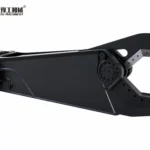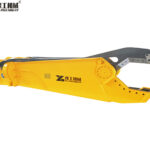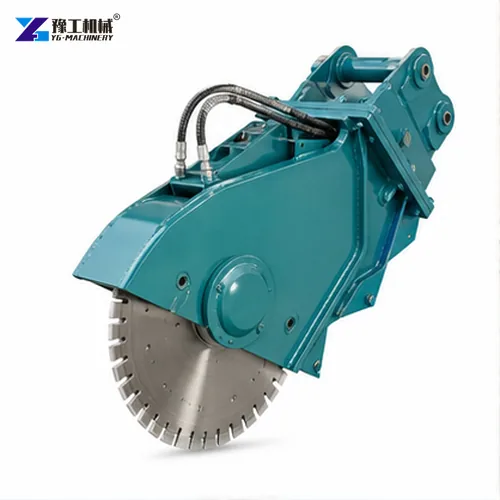
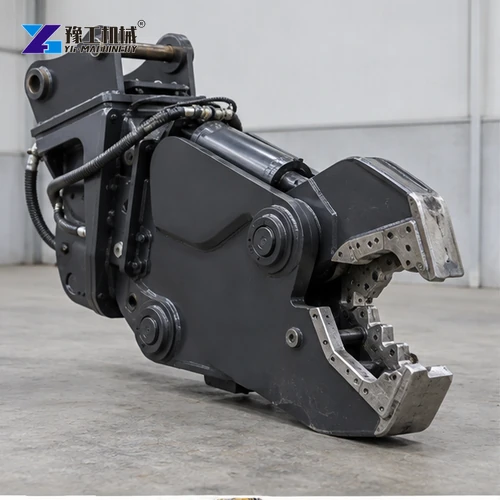
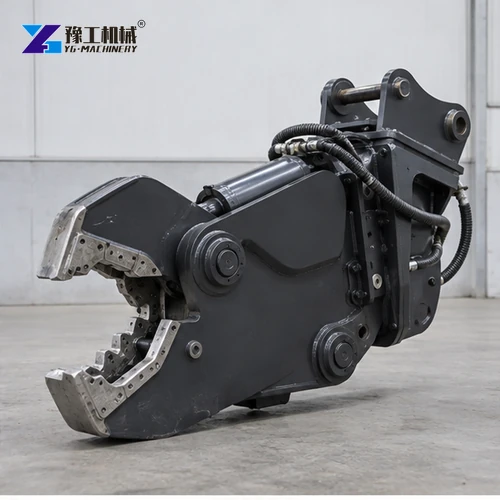
An excavator shear uses powered jaws to make planned cuts in vehicle structures. Its value in a recycling yard depends on access to the target sections, a compatible carrier and a safe depollution-to-sorting workflow.
Related product information: excavator shear attachment and excavator attachments.
How Does an Excavator Shear Fit a Car-Dismantling Line?
An excavator shear is a powered attachment with cutting jaws designed to separate metal sections under the force of its carrier. In a vehicle-recycling yard, its useful role is to make planned cuts that support the next handling and sorting step—not to process every vehicle component indiscriminately.
Choose an excavator shear around the vehicle sections the yard needs to cut, the jaw access, carrier hydraulics and sorting sequence. Rotation, boom or arm mounting and blade options vary by configuration, so compare the exact package against the intended work rather than assuming one shear fits every scrap task.
Compare Excavator Shear Models for Car Dismantling
| Model | Arm Carrier (t) | Boom Carrier (t) | Pressure (bar) | Flow (L/min) | Weight (kg) | Opening (mm) |
|---|---|---|---|---|---|---|
| YG180RT | 13–17 | 10–12 | 250–300 | 90–110 | 1100 | 375 |
| YG280RT | 18–27 | 14–18 | 250–300 | 180–220 | 2100 | 485 |
| YG380RT | 28–39 | 20–28 | 320–350 | 200–250 | 3500 | 620 |
| YG580RT | 51–65 | 40–50 | 320–350 | 275–375 | 5800 | 780 |
| YG980RT | 91–110 | 66–90 | 320–350 | 600–700 | 9800 | 950 |
Use the carrier ranges to shortlist a shear, then compare jaw opening, hydraulic pressure and flow against your excavator and the vehicle sections you need to cut. Confirm whether the unit mounts to the arm or boom, and which rotation circuit, blade set and hoses are included. See the excavator shear attachment options when assembling a package for your yard.
Define the Vehicle and Recovered Material
List the vehicle types, size range, body construction and the pieces the yard needs to recover. Cutting a body shell into handling sections is a different task from separating thick frame members, axles or mixed scrap. Identify whether the downstream buyer needs sorted steel, non-ferrous parts or mixed feed.
The site must first follow its own depollution and hazardous-component procedure. Fluids, batteries, gas struts, airbags and stored energy are not ordinary shear feed. State which components are removed before mechanical cutting and which equipment or licensed process handles them.
Separate vehicle families and target sections in the request. A compact passenger-car body, a heavy commercial chassis and a mixed scrap pile do not present the same access or cutting geometry.
Share the vehicle types, sections to be cut, recovered-material priorities and excavator model; those factors help match the shear jaw, mounting and hydraulic arrangement to the dismantling line.
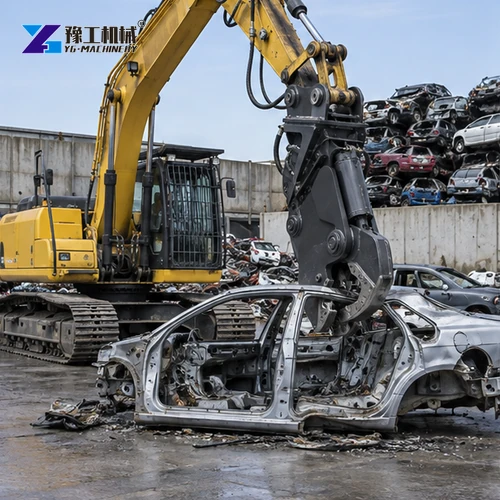
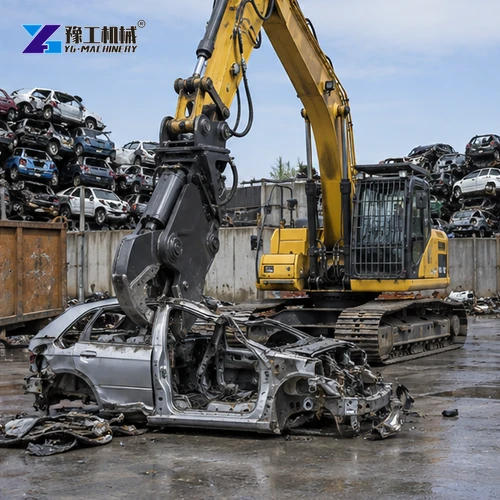
Choose Shear Jaw Reach and Cutting Geometry
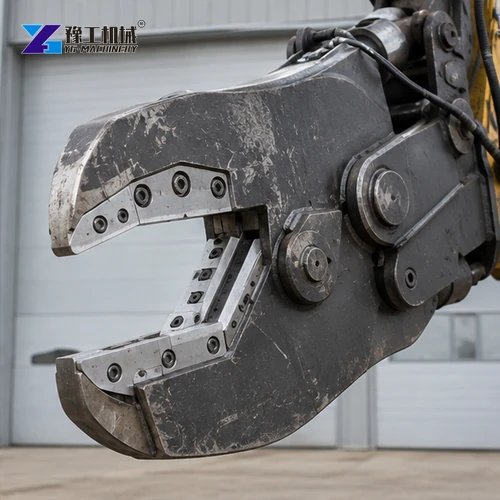
Compare the jaw opening, throat depth, blade arrangement and access angle with the vehicle sections to be cut. A jaw that reaches the outer body may not line up with a chassis member once the excavator boom, cab and stockpile restrict approach.
Ask the supplier to identify whether the offered model is a car-dismantling shear, a general scrap shear or another demolition attachment. Rotation, cylinder arrangement and blade options vary by configuration; do not assume a feature is standard unless it appears in the exact model offer.
Measure the required reach and jaw entry path on a representative vehicle. If a shear must turn to align with members, ask which rotation configuration is offered and verify its hydraulic requirements.
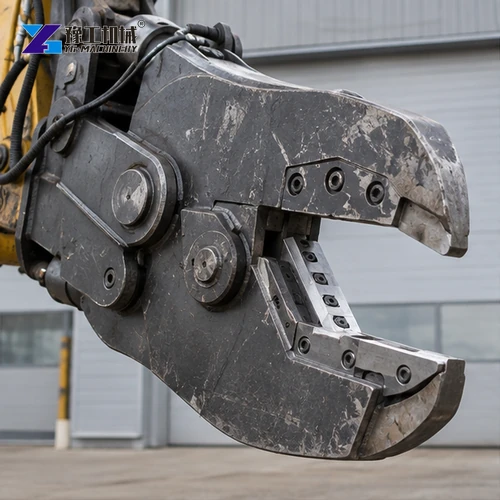
Verify Excavator Hydraulics and Mounting
Provide the excavator make, model, operating configuration, auxiliary flow and pressure, return requirements, coupler or pin measurements and hose connections. The carrier must support the attachment at the planned reach and working angle, including its mass and the material held in the jaw.
Check control circuits and rotation supply where the selected configuration uses them. Confirm hose routing through the full operating arc, bracket geometry, pin retention and service access. A compatible mounting width alone is not proof that the excavator can power or safely handle the shear.
A shear only works as intended when its hydraulic demand matches the excavator’s auxiliary circuit. The return line, couplers and pin dimensions must also suit the mounting position, while operating reach affects how the attachment can approach the vehicle. Confirm these details for the exact carrier-and-shear combination before ordering a bracket.
For a shear package suited to your dismantling line, provide the excavator model and hydraulic data, target vehicle sections, required jaw opening, yard access limits and destination. These details help determine the mounting, hoses, blade set and options to include in the quotation.
Plan a Safe Dismantling and Sorting Sequence
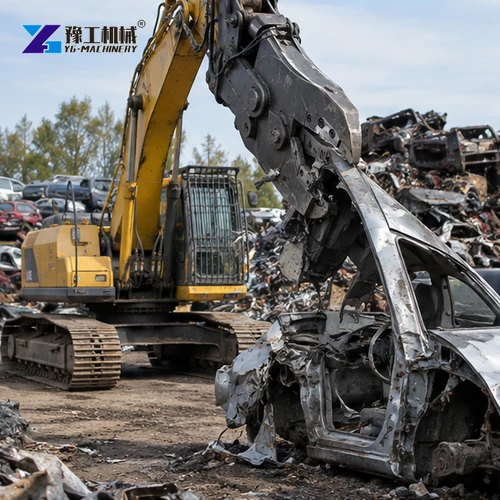
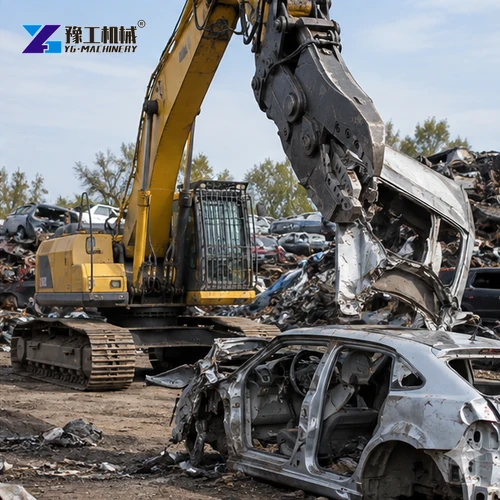
Set a repeatable flow from receiving and depollution through cutting, separation, inspection and loading. Position vehicles and bins so the shear can reach the intended section without people entering the cutting or swing zone. Use the site method to stabilize material before the operator closes the jaws.
Keep recovered fractions separated if the downstream process values clean steel or non-ferrous components. A shear changes the material size and shape; it does not identify alloys, remove contaminants or guarantee a resale grade. Coordinate with the receiving processor before choosing the cut size.
The yard layout should leave room for the excavator to reposition, the operator to see the jaw and workers to remain outside the exclusion area. Bins and vehicle supports belong in the work plan.
Compare a Car-Dismantling Shear Package
Request an itemized offer for the shear, carrier bracket, hydraulic hoses, rotation circuit if required, blade set, fasteners, wear parts, service tools, documents, packing and commissioning. State the excavator data, vehicle envelope, target cut sections, work hours and destination.
Ask how blades are inspected, rotated or replaced and what consumables are included. Separate the attachment supply from excavator modifications, depollution equipment, yard layout, lifting, scrap handling and local compliance so the delivered scope is unambiguous.
A quote should distinguish the shear itself from spare blades, hoses, installation, carrier changes and service support. This lets the buyer compare complete operating packages rather than only the attachment headline.
Send the excavator model and hydraulic details, intended boom or arm position, target vehicle sections, required jaw opening, yard access and destination. This gives the supplier the information to match the shear and blade package to your dismantling work.
Set Blade Inspection and Acceptance Checks
Before a trial, confirm blade condition, fasteners, jaw alignment, pin retention, hose routing and any rotation function supplied with the model. Inspect the attachment after the first representative cuts and document wear or interference before running a full shift.
Test the shear on an approved representative vehicle section after depollution and stabilization. Record the section, cut orientation, carrier setup, handling time and resulting material form; do not treat one test as a promised rate for every vehicle.
Agree what the buyer will accept at delivery: model identity, mounting dimensions, included blade set, control arrangement, manuals, packing and any factory test record. Keep the site’s depollution and operator authorization process separate from product acceptance.
Before comparing jaw capacity claims, identify the heaviest section the yard intends to cut and how it will be restrained. The shear must reach a sound cutting position without the excavator pulling against an unsecured vehicle or dragging material into the operator’s blind zone.
Blade service is part of the production plan: ask which edges can be rotated or replaced, how the attachment is isolated for service and which fasteners or wear parts are supplied. These details affect downtime and the quality of the cut, but they do not replace the yard’s vehicle depollution or material-sorting process.
Excavator Shear for Car Dismantling: Match the Work FAQ
Follow the yard’s depollution and hazardous-component process, stabilize the vehicle, confirm the approved cut sequence and keep personnel outside the shear and excavator swing zones.
No. Jaw reach, opening, blade geometry, carrier hydraulics and the intended metal sections vary. Ask the supplier to confirm the exact shear model against the vehicles and carrier data.
Send excavator model and hydraulic data, mounting dimensions, vehicle types, target sections, required rotation or control options, blade expectations, yard access and destination.