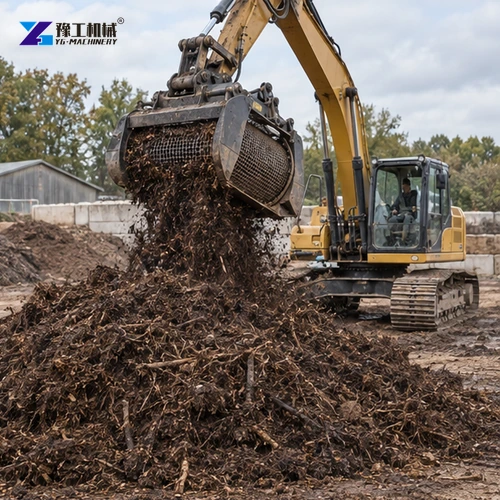
A rotary screening bucket grades incoming material by passing the selected fraction through a rotating screen and retaining larger pieces. For topsoil or compost, moisture, feed size and the required finished fraction determine whether the bucket is suitable; it does not wash soil, identify contaminants or certify a growing medium.
Related product information: rotary screening bucket and excavator attachments.
How Does a Rotary Screening Bucket Separate Topsoil?
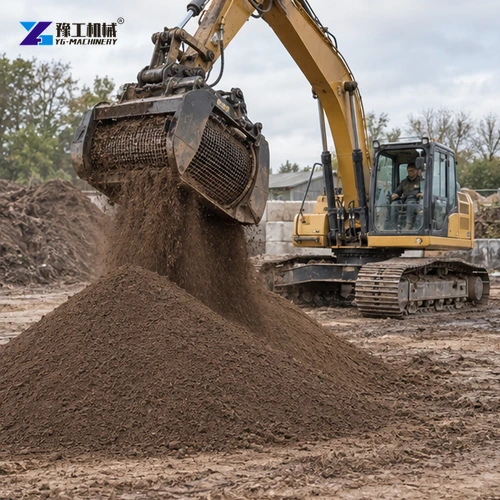
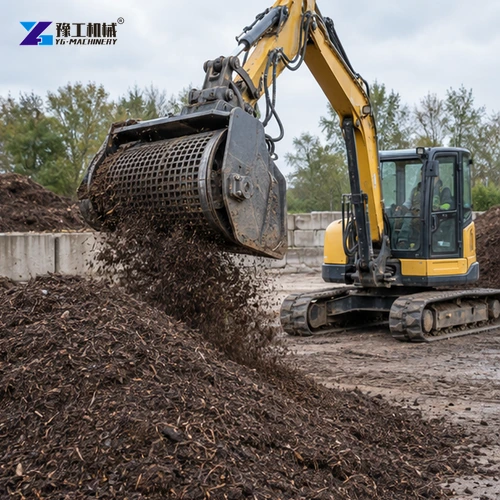
A rotary screening bucket uses a powered drum or screening element to agitate feed material. Fines that fit through the selected openings pass through the screen, while larger pieces remain in the bucket for separate discharge. The bucket therefore grades by physical size; it does not identify soil chemistry or remove every contaminant.
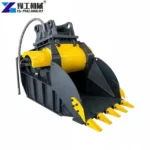
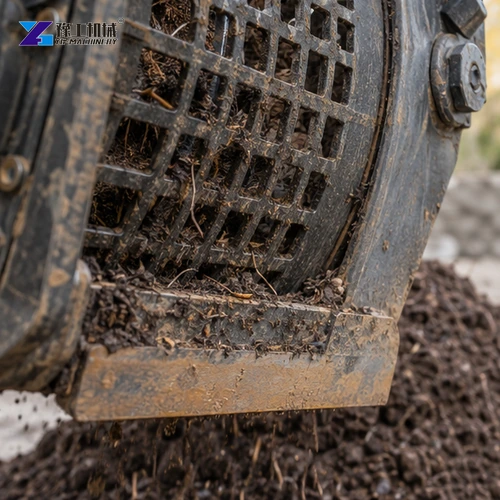
The working assembly includes the carrier interface, bucket frame, rotating screen, drive and replaceable or serviceable wear parts according to the offered configuration. Screen opening and drum arrangement should be specified for the required finished fraction. Ask the supplier to state which screen is installed and whether alternate panels, hoses or couplers are included.
Topsoil and compost can behave differently from dry aggregate. Moisture, clay, roots, fibres and overlarge feed can coat or obstruct a screen, while excessive fill reduces material movement inside the drum. A representative trial is the practical way to judge the selected bucket against the intended product and operating cycle.
Define the Finished Topsoil or Compost
State the required screen opening, acceptable oversize and how the screened material will be used. Landscaping topsoil, pipe bedding and compost finishing do not have the same target. A visual description such as fine soil is not enough for model selection.
Measure the incoming material for moisture, clay, roots, stones, wood, plastic and maximum lump size. The bucket separates by size; it does not identify contaminants or guarantee a finished soil specification.
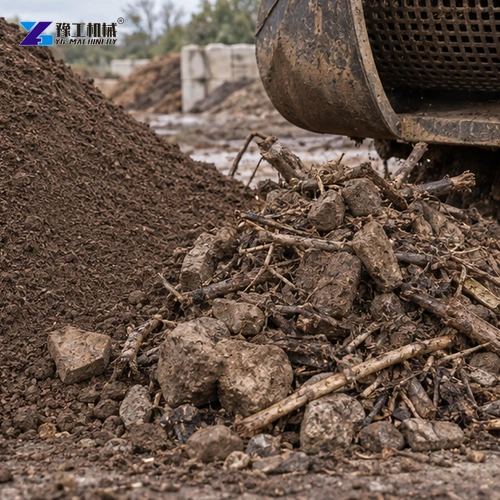
A rotary screening bucket separates material by opening size: particles small enough to pass can drop through, while larger clods, roots and debris usually remain in the oversize. If oversized clods dominate, pre-sort the feed or trial another opening; any chemical contaminants still need a separate test or removal step.
For a first-pass screen choice, share the target fraction and a representative feed sample, including its usual moisture and largest clods; these determine whether the opening is likely to separate the material cleanly.
How Does Moisture Affect a Rotary Screening Bucket?
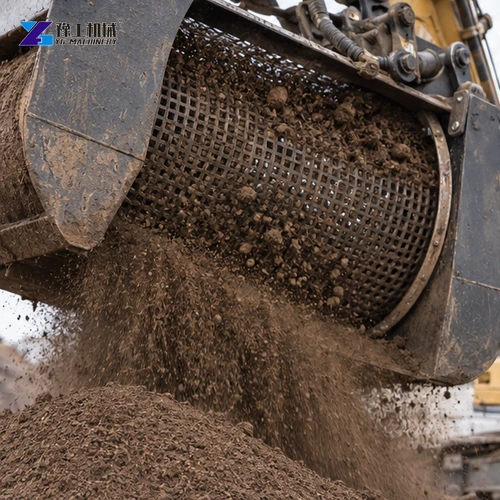
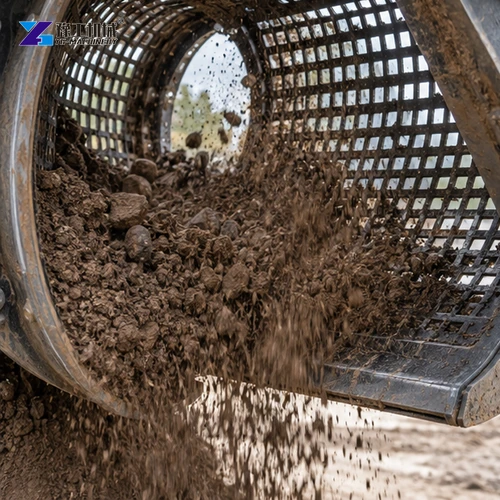
Feed moisture changes how a rotary screening bucket separates soil and compost. Dry, crumbly material can tumble across the screen; wet clay or saturated fines may cling to openings, while roots and fibres can bridge them. Judge the bucket using the wettest material the crew routinely expects, not only a dry sample.
When damp fines smear over screen openings, particles that could pass by size may travel with the oversize instead. That lowers the effective open area and can increase carryback and cleaning time, so a dry sample alone may overstate how consistently the bucket will produce the target fraction.
Run a representative feed at a controlled fill level and note screen blinding, carryback, cleaning stops and the condition of both the screened and retained fractions. If a dry trial works but wet feed blinds the drum, the result shows a material limit—not a guaranteed production rate for every season.
Match Screen Opening and Drum Configuration
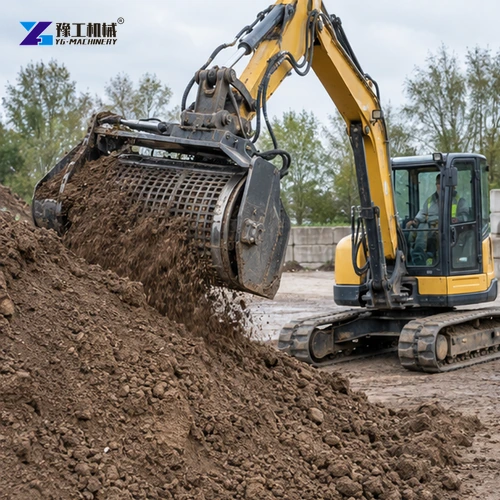
Select the opening from the required finished fraction and the incoming particle shape. Large clods, roots or debris wider than the opening will remain in the oversize; smaller openings may improve size separation but can reduce throughput and increase cleaning, especially with damp or fibrous feed.
Ask the quotation to identify the installed screen, optional openings, wear components and replacement method. Do not combine screen sizes or capacities from different models into one configuration.
Match a Rotary Screening Bucket to the Excavator
Check the excavator’s auxiliary flow and pressure against the screen drive, then verify coupler dimensions, pins and hose routing against the offered bucket. A matching pin pattern alone does not prove that the hydraulic drive suits the rotating screen.
Plan loading and discharge positions so the operator can keep the bucket visible and avoid striking the carrier or nearby workers. The work platform must support repeated swing and screening cycles.
Check the lift chart for the bucket plus retained material at the planned working radius. Reaching over a stockpile or truck increases the leverage of that load; the carrier must remain within its lifting and stability limits at the actual reach.
Prepare a Rotary Screening Bucket Trial and Quote
Use the material the crew expects to process, not a hand-picked dry sample. Before the run, record moisture, feed size, target fraction, opening and fill level; keep the feed and cycle conditions representative of the planned shift.
During the run, time screening cycles and cleaning stops, then collect representative samples of both the screened product and oversize. Compare them with the agreed target and note blinding or carryback; this helps distinguish a material limit from a configuration problem.
For a quotation, specify the target fraction, installed opening, expected moisture range, excavator model and working radius. Ask for the bucket, optional screens, coupler, hoses, wear panels and spare parts to be itemized so the quoted package matches the feed and work plan.
Inspect Screening Results and Bucket Condition
Sample the screened product at several points and compare particle size, contaminants and moisture with the job requirement. A clean-looking surface sample can hide oversize material lower in the pile. Agree how samples are taken before the trial so operator choice does not determine the result.
Inspect the retained fraction as well as the product. Excess usable soil in the oversize may indicate overfilling, short screening time or blinded openings. Too much unwanted material in the product may indicate damage, an unsuitable opening or feed pieces that break during tumbling.
At shift checks, clean the drum by the approved method and inspect panels, bolts, edges, bearings or drive elements, hoses, coupler and guards. Do not strike or burn blocked material from the screen. Plan safe access because stored material and a raised attachment can move unexpectedly.
Set the acceptance limits before the trial: the required finished fraction, tolerable oversize and acceptable cleaning interruptions. Record samples and run conditions against those limits; without an agreed basis, a demonstration may be judged only by appearance.
If separation changes during a shift, check moisture, feed size, fill level and screen openings for blinding or damage before changing the configuration. Compare trial results only when these operating conditions are recorded.
Train the operator to maintain a controlled fill, keep people clear of the discharge area and stop before cleaning or inspection. Record the approved carrier settings and screen so another crew does not change speed or install an opening that exceeds the agreed material and finished-product plan.
Rotary Screening Bucket for Topsoil and Compost FAQ
It separates material mainly by whether particles pass through the installed screen opening. It does not determine soil chemistry or remove every contaminant, so define the acceptable product and oversize separately.
It may handle some moist feed, but sticky fines and fibres can coat or block openings and reduce useful throughput. Test representative material at its normal moisture and record cleaning interruptions as well as the visible product.
Provide the target fraction, moisture range, maximum feed size, roots or debris, expected oversize, excavator model, hydraulic supply and coupler details. Include a representative sample or photos for a screening trial.