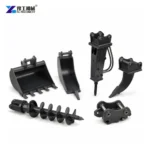
A demolition carrier rarely needs one universal tool. The attachment used to open a structure is not automatically the best tool for reducing concrete, separating rebar, cutting steel or processing debris for reuse. Expecting one attachment to perform every stage slows production and increases wear. A better purchasing decision maps each material and work stage to a specific tool, then confirms that the excavator hydraulics and coupler can support the planned sequence.
What Must Happen During Primary Demolition?
Primary demolition creates safe, manageable sections from the standing structure. The contractor should identify concrete thickness, reinforcement, steel members, working height, exclusion zones and the required direction of collapse. A hydraulic breaker can open concrete and fracture selected areas, while a shear can cut structural steel. The correct first tool depends on what carries the load and how the separated section will be controlled.
Carrier stability and reach are critical. Record whether the attachment mounts on the arm or boom, the maximum working radius and the weight permitted at that position. Long-reach work can reduce allowable attachment mass even when the base excavator tonnage appears suitable. Plan hose protection, operator visibility and the route used to lower material; production should not rely on dropping uncontrolled pieces into a crowded work zone.
Which Attachment Reduces Concrete After It Is Down?
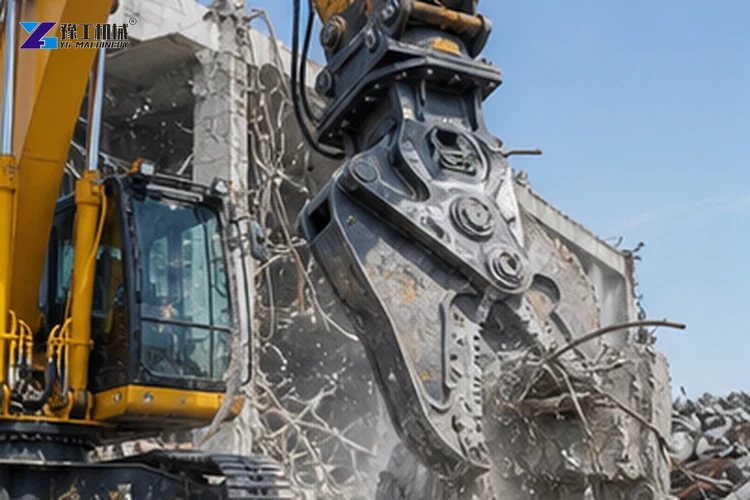
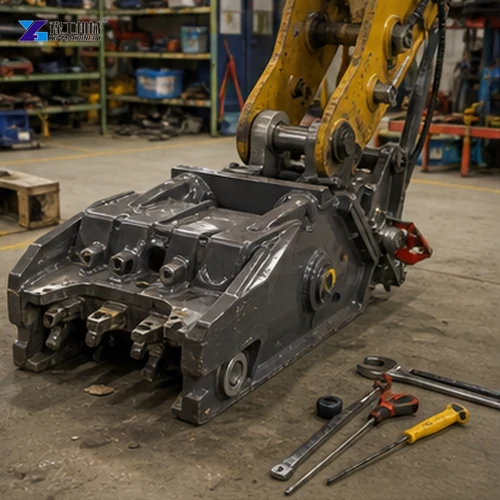
A pulverizer applies closing force through jaws to reduce concrete and expose reinforcement. It is suited to secondary processing because material can be positioned on the ground where the operator has better control. Jaw opening must accept the typical member, while blade area, crushing force and carrier match determine whether the tool can work through the expected concrete. Excessively large pieces should be pre-reduced rather than forced into the jaw.
YG reference models include the 800 kg YG-180 for 9–16 ton carriers with a 590 mm opening and 65 ton crushing force; the 1600 kg YG-280 for 18–30 ton carriers with an 810 mm opening and 95 ton force; and the 2100 kg YG-380 for 32–40 ton carriers with a 910 mm opening and 120 ton force. These figures screen the range, but mounting, oil supply, member geometry and working position still require confirmation.
Pulverizer Model
Carrier
Weight
Opening
Blade
Crushing Force
YG-180
9–16 t
800 kg
590 mm
130 mm
65 t
YG-280
18–30 t
1600 kg
810 mm
230 mm
95 t
YG-380
32–40 t
2100 kg
910 mm
230 mm
120 t
Send YG the demolition sequence, carrier data and representative member sizes so the attachment package can be matched to real work stages.
Which Tool Separates Rebar And Cuts Structural Steel?
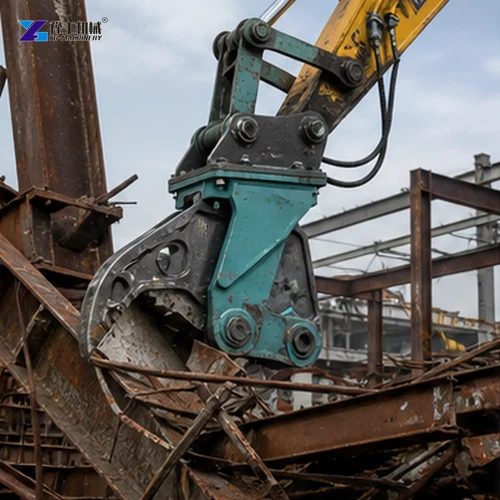
Concrete pulverizers expose and separate reinforcement during secondary reduction, but structural steel requires a shear designed for cutting metal. Describe beam, plate, pipe or tank dimensions and the maximum section rather than asking only for a shear by excavator tonnage. Opening and cutting depth must fit the work, while working flow, pressure and installation position determine whether the carrier can cycle the jaw effectively.
The YG shear range illustrates the difference between arm and boom installation. For example, YG180RT covers 13–17 ton arm installation or 10–12 ton boom installation, with 250–300 bar pressure and 90–110 L/min working flow. Larger models extend to heavier carriers and much higher flow. The technical review should use the intended mounting position, working reach, scrap geometry and rotation demand.
Shear Model
Arm Installation
Boom Installation
Pressure
Working Flow
Opening
YG180RT
13–17 t
10–12 t
250–300 bar
90–110 L/min
375 mm
YG280RT
18–27 t
14–18 t
250–300 bar
180–220 L/min
485 mm
YG380RT
28–39 t
20–28 t
320–350 bar
200–250 L/min
620 mm
YG580RT
51–65 t
40–50 t
320–350 bar
275–375 L/min
780 mm
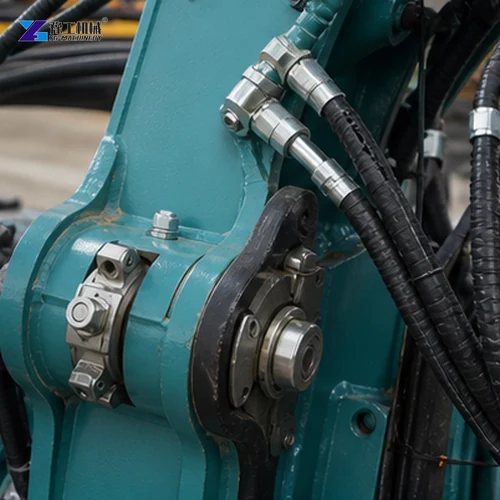
Demolition Attachment Hydraulic Inspection
Demolition Attachments Shipment
Where Do Breakers And Crusher Buckets Fit The Workflow?
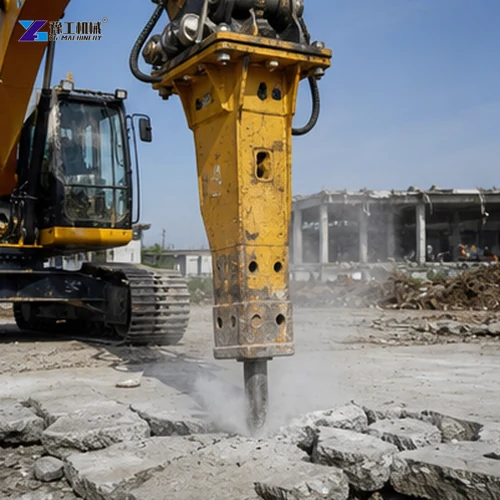
A breaker remains useful for opening slabs, removing foundations and reducing isolated concrete that cannot be positioned in a pulverizer. Tool diameter, carrier range, oil flow, pressure and working access must be matched. It should not be used as a substitute for steel cutting or controlled rebar separation. Repositioning and correct tool alignment protect both breaker and carrier during repeated work.
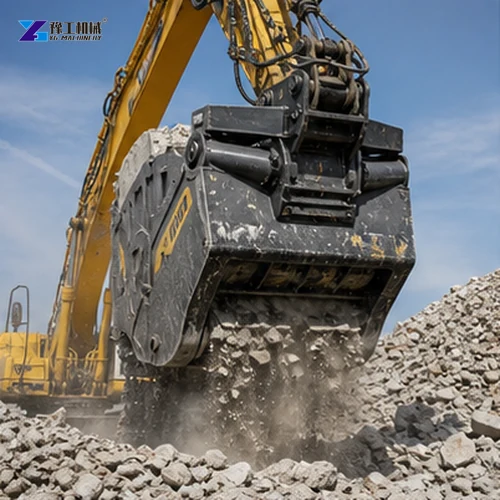
A crusher bucket belongs later in the process when suitable mineral debris can be reduced and screened for reuse or transport. Feed must be free from unsuitable steel and oversized pieces. Output setting, bucket capacity, oil flow and carrier weight affect the processing cycle. Site logistics matter because the excavator needs a safe feed pile, discharge area and route for finished aggregate.
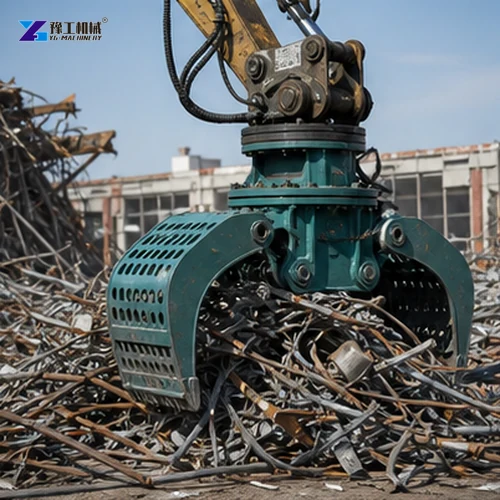
Demolition Grapple Sorting
Eagle Beak Shear Steel Cutting
How Should The Attachment Sequence Be Planned?
Write the sequence from standing structure to final material streams. One practical flow may use a breaker or shear for primary separation, a pulverizer for concrete and rebar separation, a shear for steel sizing, and a crusher bucket for approved clean concrete. The exact order changes with structure and recycling target. Assign each tool a defined task and acceptance point so operators do not use the nearest attachment for unsuitable material.
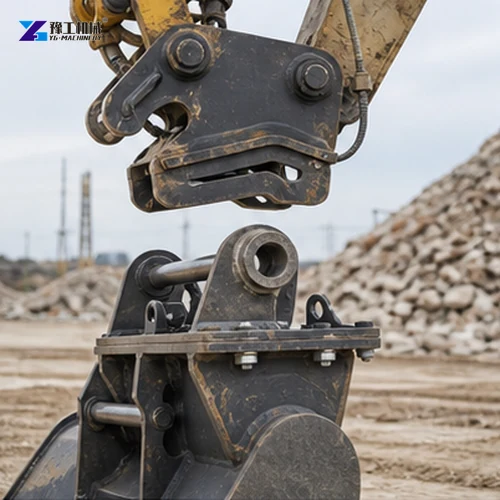
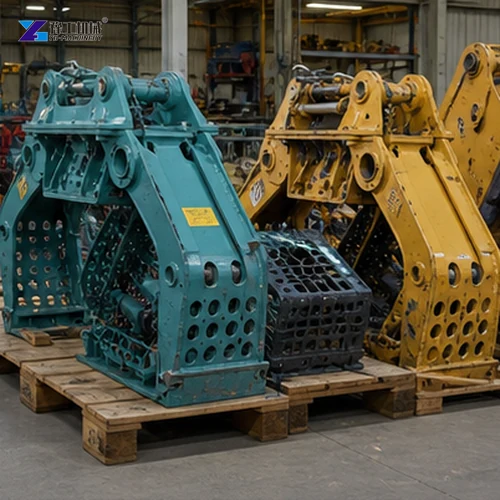
Check whether the carrier will change tools through a quick coupler and whether every attachment shares compatible hydraulic lines. Record attachment weights, bracket dimensions, flow and pressure settings so a changeover does not introduce the wrong circuit configuration. Plan storage stands, hose caps, lifting points, grease and wear parts. Efficient changeover depends on preparation, not simply coupler speed.
Can One Excavator Use Several Demolition Attachments?
Yes, when attachment weight, mounting, hydraulic flow, pressure, return conditions and coupler compatibility are checked for every tool.
What Is The Difference Between A Shear And A Pulverizer?
A shear cuts structural metal. A pulverizer crushes concrete and helps expose or separate reinforcement during secondary processing.
When Is A Crusher Bucket Useful?
Use it after unsuitable steel and oversized material are removed, when clean mineral debris can be processed safely for reuse or transport.
Which Attachment Should Be Used First?
The first tool follows the structural plan, material and controlled-removal method. Primary concrete breaking, steel cutting and secondary processing require different tools.
What Information Is Needed For A Package Quote?
Provide structure drawings, materials, member sizes, carrier data, reach, hydraulic settings, coupler, recycling target, site access and destination.
Hydraulic Breaker Slab Demolition
Quick Coupler Attachment Change
Build A Demolition Package Around Work Stages
Send YG the carrier list, structure and intended material streams. Mark which tasks happen at height, on the ground and in the recycling area. This allows the technical team to recommend attachments as a coordinated sequence, confirm hydraulic and mounting requirements, and prepare a quotation that avoids buying one tool for work it cannot perform efficiently.