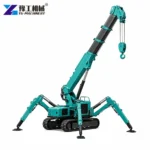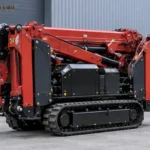
A tracked mini crane can carry a lifting setup through access routes that may be difficult for a larger mobile crane, then use its boom and winch to position equipment or materials near the work point. For indoor glass and HVAC installation, the deciding question is not just whether the crane can enter: its load chart must cover the load at the working radius, and the floor and outrigger positions must support the lift.
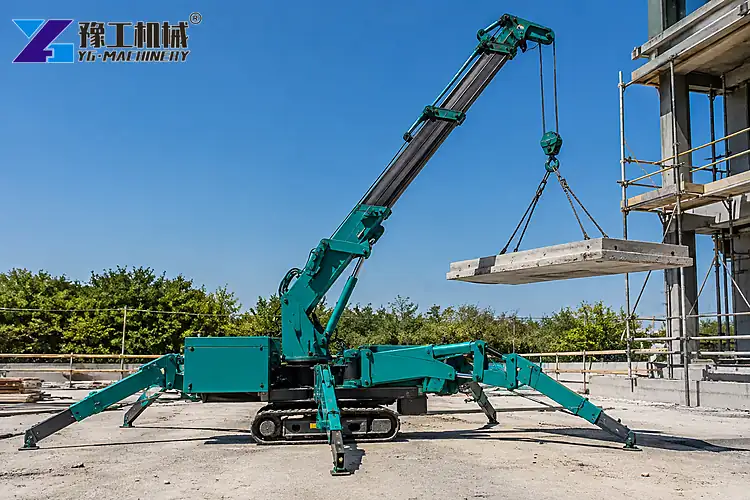
Before comparing tracked mini cranes, identify the load, pick point, landing point and route through the building.
REVIEW MY INDOOR LIFTHow Does a Tracked Mini Crane Work in a Confined Site?
Rubber tracks move the crane between the access point and the setup location. For a lift, the operator parks the carrier, deploys the outriggers and uses the boom and hoist to raise and position the load. Travel support and lifting support are different: the tracks help the machine move, while the deployed outriggers establish the working base.
That distinction matters inside a building. A crane may travel along a floor yet still be unsuitable at the final lift point if the floor cannot take the outrigger reactions, the boom cannot clear overhead services, or the load must pass through a restricted opening. Plan the complete route and set-up footprint, not just the doorway.
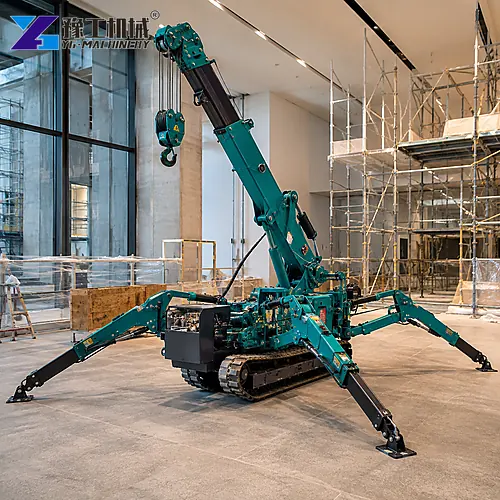
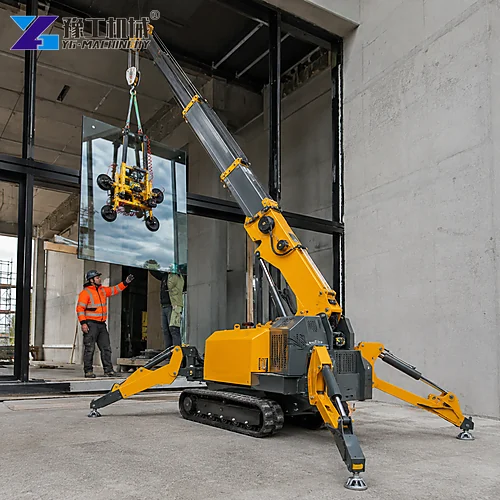
When Is a Tracked Mini Crane Useful for Glass or HVAC Lifting?
The compact tracked format is useful when a glass panel, air-handling unit or other building component must be moved close to its installation point and conventional crane access is limited. Its boom can place the load from a nearby setup position, reducing the need to handle the item manually across a long route. Whether that saves time depends on access, rigging, visibility and the landing sequence.
Glass lifts need particular attention to the panel’s dimensions, center of gravity, vacuum or clamp equipment, turning space and the path past frames or façade members. HVAC lifts add questions about the unit’s lifting points, casing protection and final orientation. The crane is only one part of the lift system; confirm that the lifting attachment and rigging suit the load.
For a glass or HVAC lift, a route sketch and load drawing reveal obstructions that a weight figure alone will miss.
CHECK THE LOAD PATHHow Should You Read the Tracked Mini Crane Capacity Range?
The standard tracked mini crane range includes 3 t, 5 t and 8 t capacity classes. The values below let you compare lift envelope, access size and transport weight; capacity at a working radius must still be checked on the selected crane’s load chart.
| Parameter | 3 t class | 5 t class | 8 t class |
|---|---|---|---|
| Rated capacity | 3 t | 5 t | 8 t |
| Maximum working radius | 8.83 m (0.15 t listed load) | 14 m (0.5 t listed load) | 16.5 m |
| Maximum lifting height, as listed | 9.9 m (0.7 t listed load) | 16.8 m | 18 m |
| Transport dimensions (L × W × H) | 2950 × 980 × 1560 mm | 5000 × 1500 × 1900 mm | 5000 × 1600 × 2180 mm |
| Machine weight | 2700 kg | 6200 kg | 7200 kg |
| Travel speed | 0–2.5 km/h | 0–2.5 km/h | 0–2.5 km/h |
Radius and height figures are not interchangeable with rated capacity. For an indoor glass or HVAC lift, check the selected crane's load chart at the actual radius and boom position, then compare its transport dimensions with the whole access route. These are standard series specifications for initial comparison. The final specification sheet should match the configuration selected for your job before ordering.
For a real lift check, use the weight of the complete suspended load, including rigging and lifting attachments, then compare it with the chart at the required reach and boom position. Review the crane’s product information and the related spider crane capacity and working radius before sizing a lift. The load chart—not the headline class—decides whether the proposed lift is within capacity.
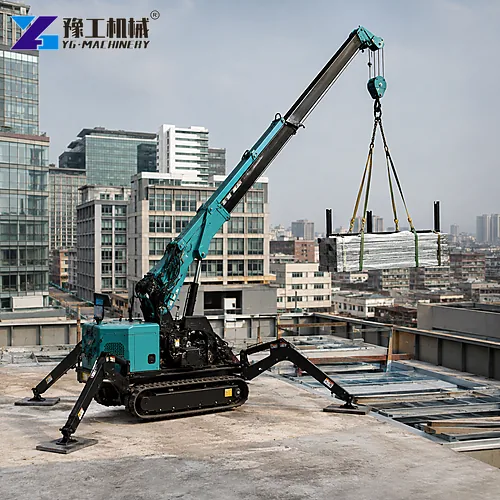
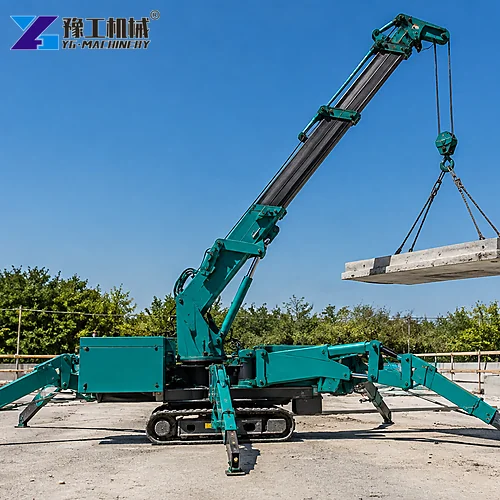
What Should You Measure Before Bringing the Crane Indoors?
- Narrowest doorway, corridor turn and clear height along the full travel route.
- Floor construction and allowable support at the travel path and each outrigger position.
- Load dimensions, lifting points, route through the opening and final landing orientation.
- Boom clearance around ceilings, beams, pipes, glazing and people working nearby.
Do not assume a crane fits an elevator or that protective mats make an unverified floor safe. Check the building restrictions and support information for the exact route. The indoor access planning for compact spider cranes explains why route width and the final setup position need to be reviewed together.
When Is Another Lifting Arrangement a Better Choice?
A tracked mini crane may not be the right answer when the load chart cannot cover the required radius, when the floor cannot accept the outrigger reactions, or when the boom cannot reach around an obstruction. A larger crane, gantry, material lift or a revised installation sequence may be more appropriate. Choosing a different method early is safer than forcing a compact crane into an unsuitable setup.
If the load is close to the crane's chart limit or the floor support is uncertain, send the lift plan for a configuration check.
ASK FOR A LIFT-PLAN REVIEW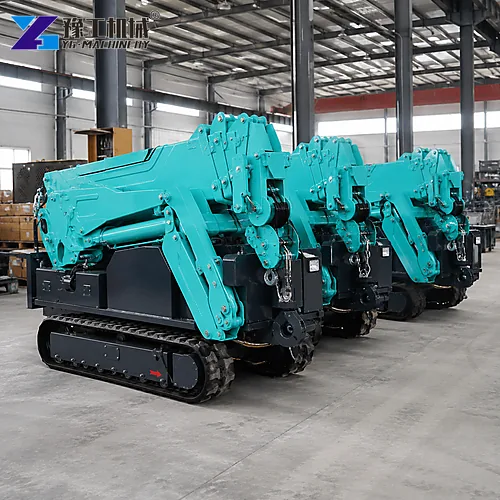
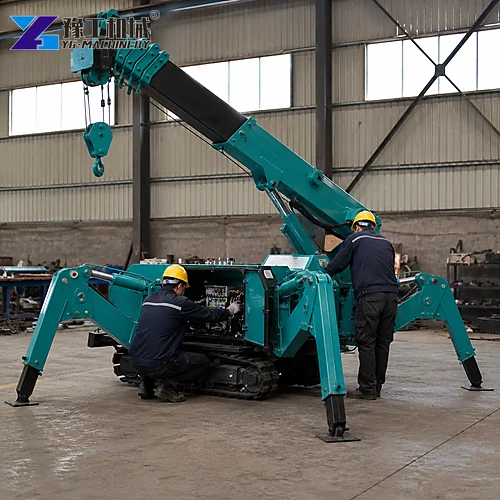
A load drawing and access measurements let the crane selection reflect the actual indoor lift, not just the nominal capacity.
CHECK MY CRANE CONFIGURATIONWhat Do Indoor Buyers Ask About Tracked Mini Cranes?
It can be considered when the crane, lifting device and rigging fit the access route and the load chart covers the lift. Confirm floor support, outrigger positions, overhead clearance and panel handling before mobilization.
No. Capacity depends on the selected crane's load chart and boom configuration. Check the permitted load at the actual radius, hook position and rigging arrangement.
Do not rely on the tracks alone to protect a floor. Confirm the floor construction, travel path and outrigger reactions, and specify suitable surface protection for the site.
Provide the unit weight and dimensions, lifting-point drawing, pick and landing locations, route measurements, floor restrictions and required working radius.
Request a Tracked Mini Crane Review
Send the load details, access measurements and planned setup location so the crane and lift arrangement can be checked together.