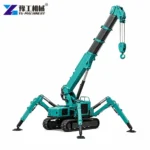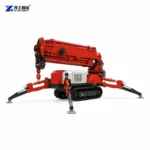
A compact spider crane can enter spaces that exclude a conventional mobile crane, but indoor access is only the first decision. The buyer must confirm that the machine can travel to the work point, deploy its outriggers, carry the load at the real radius and remain within the floor’s concentrated-load limits.
This guide organizes those checks for factories, shopping centers, glazing work and equipment installation. It uses the current YG model range for preliminary screening. The responsible lift planner must still approve the final configuration, load chart, rigging and support method.
Survey The Complete Access Route
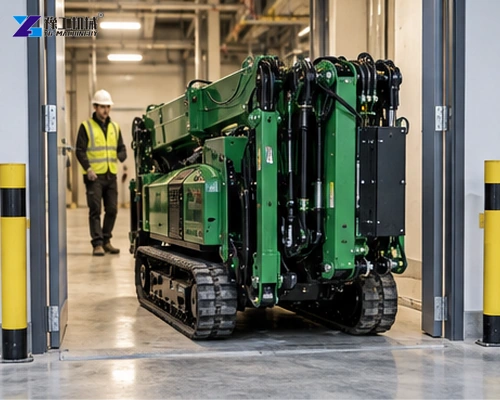
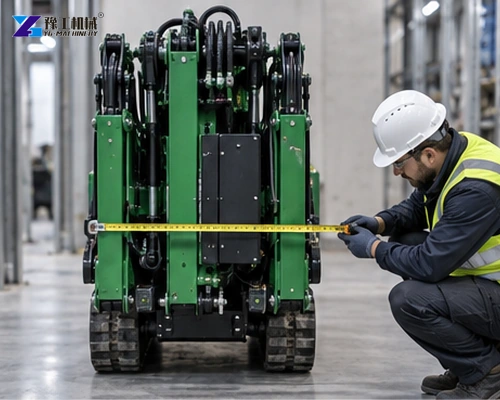
Measure every doorway, corridor, corner, ramp, threshold and overhead obstruction. Use the crane’s folded transport dimensions with attachments and hook secured. A straight doorway width is insufficient if the machine cannot turn immediately beyond it or if a ramp changes clearance under the chassis.
Record floor levels, lift capacity, loading docks and any temporary protection. Finished tiles or resin floors may need protective mats, but those materials must not create a slippery travel surface. Plan how the crane will be recovered if power is lost in a narrow area.
Choose A Site-Compatible Power Mode
Electric or battery operation can reduce local exhaust and noise. It does not change the load chart or eliminate ventilation, charging and electrical-safety requirements. Confirm voltage, phase, frequency, cable routing, protective devices, battery duty and whether charging during operation is permitted.
Diesel may remain useful for outdoor travel and setup. If a machine offers more than one power source, define where each mode will be used and how changeover is controlled. The operating plan should include emergency lowering and travel after a power interruption.

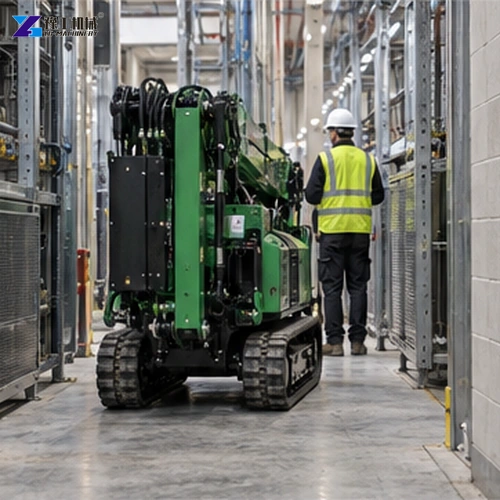
Published Compact Spider Crane Parameters
The tracked mini crane range below supports access screening. Rated capacity is not available at every radius; always read the configuration-specific load chart.
| Model | Rated capacity | Hook speed | Walking speed | Transport dimensions | Weight |
| YG-3 | 3 t | 0–8 m/min | 0–2.5 km/h | 2950×980×1560 mm | 2700 kg |
| YG-5 | 5 t | 12 m/min | 0–2.5 km/h | 5000×1500×1900 mm | 6200 kg |
| YG-8 | 8 t | 12 m/min | 0–2.5 km/h | 5000×1600×2180 mm | 7200 kg |
The 980 mm transport width of the YG-3 may suit narrow routes, but operating clearance is larger once outriggers are deployed. Compare the full setup envelope, tail swing and boom path with the site drawing before choosing on access width alone.

Floor Capacity And Outrigger Reactions
During lifting, load transfers through individual outrigger feet. Reactions vary with boom direction, radius, load and outrigger geometry, so machine weight divided by four is not a design value. Obtain the maximum relevant reaction and have the slab or ground checked at the proposed foot positions.
Mats spread load only when they are strong, flat and fully supported. Account for slab edges, pits, basements, buried services and recent repairs. If any foot settles or the crane loses level, stop the lift and correct the support rather than using jacks to chase continuing movement.

Verify Radius, Hook Height And Load Path
Calculate gross load from the item plus hook, slings, spreader, vacuum lifter and other rigging. Measure horizontal radius to the load center at pickup, throughout the movement and at placement. The working-radius guide explains why headline capacity cannot be applied at full reach.
Draw plan and elevation views. Include columns, ceiling services, sprinklers, process equipment and people routes. Check boom-tip clearance and the space needed to rotate a long load. The most restrictive point may occur midway through the lift rather than at either endpoint.

Controls, Staffing And Commissioning
Remote control allows the operator to choose a clear viewing position outside pinch zones. Confirm proportional movements, emergency stops, rated-capacity indication and communication with the signaler. Indoor work often requires tighter exclusion-zone management because other operations continue nearby.
Before the production lift, test travel, setup and unloaded movements, then conduct the checks required by the lift plan. Record the approved crane position, outrigger pattern, mats, chart reference and power mode so a later shift does not change a critical condition.

Procurement Evidence And Indoor Lift Readiness
Request the load charts for every outrigger position and boom configuration being considered. Confirm whether the control system recognizes leg position, limits unsafe movement and displays current allowable load. Safety devices support a planned lift; they do not turn an unverified radius or floor into an acceptable setup.
The quotation should identify crane model, power system, batteries or cable equipment, remote control, hook block, mats, transport accessories, manuals, certificates, training and commissioning. Verify machine mass and dimensions in the shipped configuration, including removable counterweights or attachments required before travel.
Plan delivery from the site entrance to the setup area. Indoor projects may restrict delivery hours, floor protection, noise and pedestrian access. A trial route with a dimensioned machine outline can reveal a corner or threshold conflict before freight arrives. Define where packaging and transport frames will be stored or removed.
Before the first lift, inspect the crane, rigging and support area; test controls at low speed; establish communications and exclude unrelated personnel. Monitor outrigger seating and level through the operation. If the load, route, crane position or support changes, repeat the affected planning checks.
Send YG the load drawing, verified weight, rigging list, pickup and placement radii, required hook height, access survey, floor assessment, power limits and destination. These facts support a model comparison based on the actual indoor job instead of the largest capacity printed on a product page.
Indoor Constraints That Change The Lift Plan
Fire alarms, sprinklers, clean-room controls and production schedules may restrict when the crane can enter or operate. Coordinate with the building owner before selecting a power mode. Battery charging and temporary mains supplies may require permits or protected locations.
Long or fragile loads need more than adequate crane capacity. Check center of gravity, rotation clearance, tag-line use and suitable below-the-hook equipment. Glazing and machinery installation may require millimeter-level final placement, so slow proportional control and an unobstructed operator view matter.
Floor transitions deserve special attention. A loading dock, elevator threshold or temporary ramp may govern travel even when the operating slab is strong. Verify gradient, break-over angle and load capacity for the complete machine mass.
Record lessons after the first lift and use them for repeated picks. If the setup remains unchanged, a controlled checklist improves consistency. If any geometry changes, return to the load chart and support review instead of assuming the earlier approval still applies.
Acceptance Checks Before Indoor Deployment
Measure the actual delivered crane in folded condition and compare it with the surveyed route. Include hook block, guards, cable reels and any component that remains fitted during travel. Test slopes and turns within approved limits and confirm that emergency recovery can be performed without blocking the building.
Exercise every permitted outrigger configuration and verify position indication. Test rated-capacity warnings, movement limits, emergency stop and remote-control response according to the manufacturer’s procedure. Keep the correct load chart available to the operator for each approved setup rather than relying on one headline chart.
Review charging or mains-power equipment, connectors, protective devices and cable management. Confirm battery state indication, expected duty and the procedure after low voltage. For hybrid configurations, test the planned transition between outdoor and indoor power modes.
The final handover should include manuals, inspection records, certificates, parts list, training and the site lift documents. Conduct a controlled trial with representative rigging before production work. Any change in load, radius, support or operating envelope requires a fresh check.
Compact Spider Crane FAQ
No. The operating footprint, floor reactions, lift radius, hook height and boom clearance must also be verified.
No. Power mode affects emissions and utilities, while allowable capacity remains governed by the model load chart and setup.
No. Individual outrigger reactions change with load, radius and boom direction. Use configuration-specific reaction data.
Provide gross load, pickup and placement geometry, access measurements, floor information, power availability, site photos and destination.