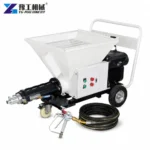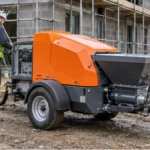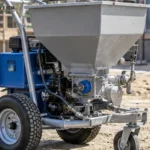
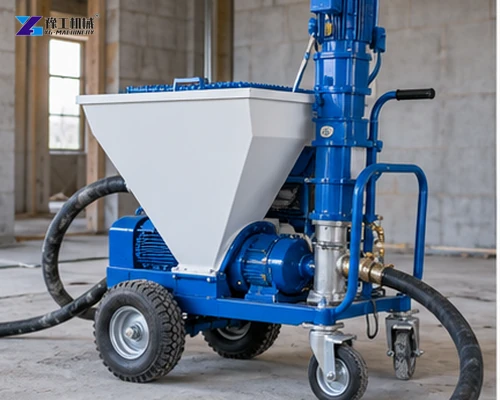
Select a cement mortar spraying machine from the mix and delivery route outward. The useful buying question is whether the machine, hose, air supply and nozzle can handle your aggregate, consistency, distance and lift as one package. This guide shows what to document before comparing models.
YG reference limits are model-dependent: capacity 3–4 square metres per hour; maximum material pressure 3 MPa; maximum particle size 4–8 mm; horizontal delivery 30–50 m; vertical delivery 20–30 m; hose diameter 32 mm; hopper 60–100 L. These are screening boundaries, not guaranteed results on every mix or wall.
See the mortar sprayer machine overview for the wider product family. This guide narrows the decision to compatibility, route and quotation evidence.
Send the mix description and aggregate size so YG can screen the machine before preparing a quotation.
Start with the mortar acceptance brief
Record cement type, sand or aggregate source, additives, mixing method, water-control method and application. A material that looks pumpable in a bucket may segregate, bridge at the hopper or change after a pause. Note whether the work is render, plaster, repair or filling, because finish and nozzle handling differ.
Write down the aggregate limit. The supplied 4–8 mm maximum is model-dependent; it does not mean every recipe at 8 mm will run equally well. Grading, angularity, moisture and fines change friction and consistency. Ask the supplier to check a representative sample and identify any screening or mix adjustment.
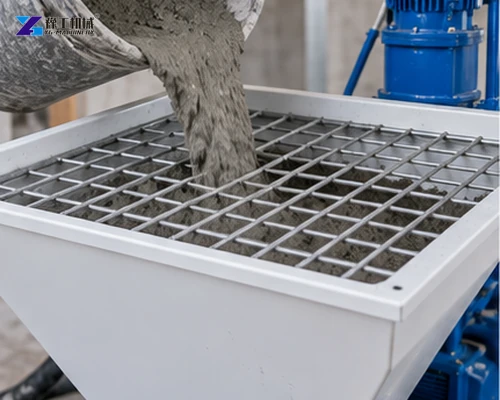
Consistency is a machine-input decision
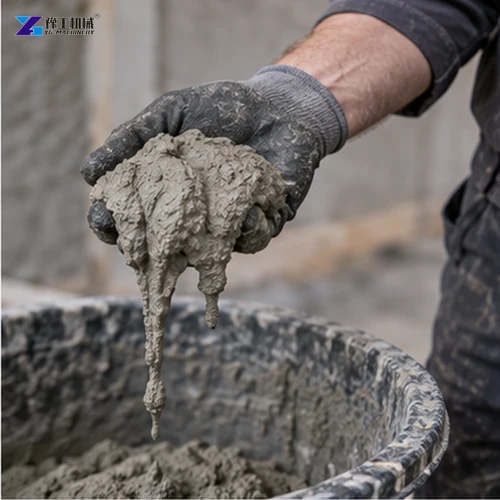
The crew needs a repeatable feed condition, not an instruction to make mortar wet enough. Record batching sequence, mixing time, rest time, water additions and the field check. If the mix thickens during a break, the restart test matters as much as first discharge.
Check consistency at the hopper or hose discharge using the agreed method. Water changes can affect adhesion, rebound, surface texture and pressure demand, so water should not be added casually to recover a slow or blocked line.
Share your material notes and route sketch for a preliminary compatibility and delivery-range review.
Read the verified parameter range as a package
The complete supplied screening data is below. Confirm the exact model, included hose, nozzle arrangement and utility requirement; the upper end of one range is not a promise that every other limit is also available.
| Parameter | YG verified reference | Buyer confirmation |
| Capacity | 3–4 m²/h | Does the figure include pauses and repositioning? |
| Maximum material pressure | 3 MPa | Selected model’s operating and relief limits |
| Maximum particle size | 4–8 mm | Grading, aggregate shape and screening |
| Horizontal delivery | 30–50 m | Developed length, bends and elevation |
| Vertical delivery | 20–30 m | Actual lift to the nozzle |
| Hose diameter | 32 mm | Hose, couplings and nozzle compatibility |
| Hopper | 60–100 L | Refill rhythm and loading access |
Shortlist the smallest suitable package, then compare a larger option only when it solves a documented constraint. A larger hopper may reduce refills but increase handling. A larger boundary may not improve finish if mix or nozzle is the limitation. Mark every quotation value as reference, included item or project confirmation.
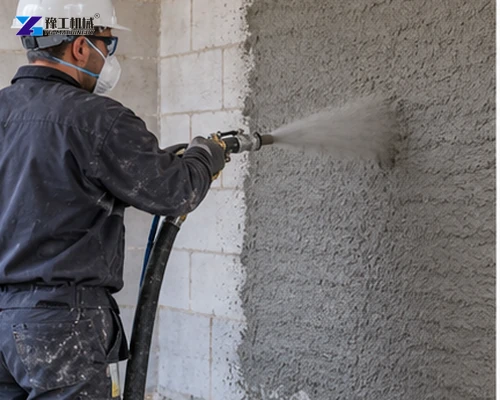
Measure hose distance and vertical lift
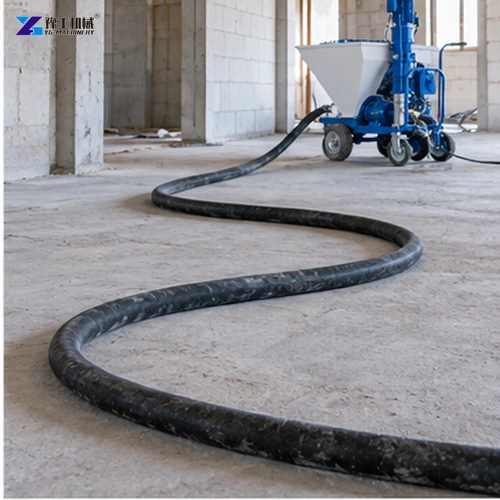
Measure the hose along its actual path from machine to nozzle. Include horizontal runs, rise, bends, loops and final working position. The 30–50 m horizontal and 20–30 m vertical references are model-dependent. A short plan-view route can still be demanding when it climbs, turns sharply or is poorly supported.
Keep the line direct and avoid tight kinks. Mark supports, operator position and safe isolation points. Match the 32 mm reference with compatible couplings and nozzle package; changing one component without checking the others can increase pressure loss or handling difficulty.
For operating-sequence planning, review mortar pump output and site planning to relate nominal area per hour to refill and crew timing.
Choose the compressor and nozzle together
Spraying quality depends on the air-assisted end as well as the material pump. Confirm nozzle type, orifice and coupling arrangement; a generic gun is not automatically equivalent. Evaluate the compressor for nozzle air demand, duty cycle, hose arrangement and site power. A compressor that starts the gun but cannot sustain air will produce an inconsistent fan.
Request pressure, air delivery, power and accessories for the chosen nozzle in the quotation. The air compressor guide for a mortar sprayer can organize that discussion. Keep material pressure and spraying air separate: they solve different process requirements.
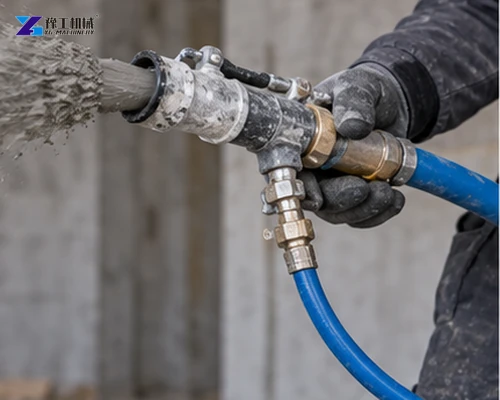
Tell us the target surface, hose route and available power so the machine and air-side accessories can be quoted together.
BUILD THE PUMP-AIR-NOZZLE PACKAGE
Use a test panel to protect the decision
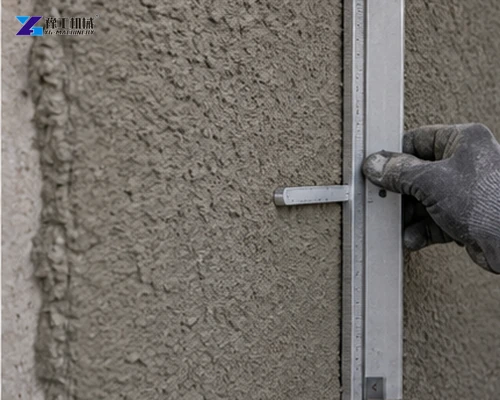
Define a representative trial using the intended mortar, aggregate, hose length, lift, compressor and nozzle. Record start-up, continuous flow, interruptions, surface texture, coverage and cleanup. Photograph the result and note operator changes. A shorter hose or different mix demonstrates the pump, not necessarily the buyer’s application.
Set acceptance checks: material passes the particle-size check; feed is stable; the route reaches the work point; the nozzle produces the required pattern; and the crew can repeat it after a controlled pause. Do not turn 3–4 m²/h into a guarantee unless the specific trial supports it.
Compare quotations by included scope
A useful offer states model, material limits, pressure reference, hopper, hose diameter and delivery boundary. It also identifies nozzle, compressor or air requirement, couplings, clamps, cleaning tools, wear parts, electrical assumptions, shipping basis and commissioning. Ask for exclusions explicitly.
Attach mix and aggregate details, route length and lift, site photos, power, working hours and test method. This lets YG distinguish verified references from model-specific confirmations. A low headline price is not low if it omits the air package or hose needed at the work face. Include the wall or substrate condition, expected application thickness, access restrictions and the number of operators available. Ask whether the quoted delivery limit assumes a straight hose, and request the supplier’s recommended setup for bends and vertical support. The more precisely the route and material are described, the less likely a nominal capacity will be mistaken for a site result.
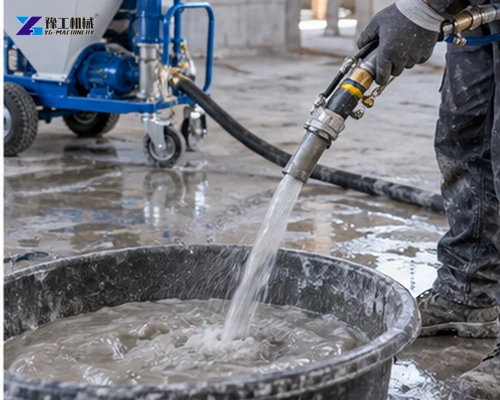
Plan cleaning before the first shift. Confirm how quickly the line must be flushed after a pause, where wash water and residual mortar will be collected, and which wear parts the crew can inspect. A quotation should identify cleaning tools and recommended spare hose, seals or nozzle components. These details affect uptime and site housekeeping as much as the pump specification.
Check the working rhythm as well. Hopper volume is a 60–100 L reference, so the mixer, loader and nozzle operator should be positioned around a realistic refill cycle. If the mixer produces material faster than the sprayer can accept it, holding mortar may change consistency. Put the batching and spraying sequence into the trial record.
Separate hard constraints from preferences in the final comparison. Hard constraints include aggregate size, route length, vertical lift, electricity, access and finish. Preferences include hopper size, wheel arrangement, accessory stock and operator convenience. This ranking helps the supplier propose an alternative while keeping the purchase tied to evidence.
Send the project brief, mix details and route measurements for an itemized cement mortar spraying machine proposal.
Cement Mortar Spraying Machine FAQ
YG supplies a model-dependent reference of 4–8 mm maximum particle size. Confirm grading, moisture, shape and screening.
References are 30–50 m horizontally and 20–30 m vertically. Measure the developed route, bends and lift.
No. It is a reference range affected by mix, route, nozzle, refills, pauses and surface method.
No. Match air demand, duty cycle, pressure, power and nozzle; request the air-side requirement.
The 32 mm reference must suit material, couplings and nozzle. Kinks or mismatch increase difficulty and pressure demand.
Send mix, particle size, application, route, lift, hose plan, power, work pattern, photos and acceptance method.
Before purchase approval, compare every quotation against the same test panel and route sketch. Confirm who supplies the compressor, hose couplings, nozzle set, wear parts, cleaning tools and electrical protection. Record the actual mortar batch, aggregate grading, water addition, horizontal distance, vertical lift, number of bends and operating pauses used during the trial. Ask the supplier to identify exclusions and model-dependent limits in writing. This evidence lets production, maintenance and procurement review the same configuration, prevents accessories from disappearing behind a low base price, and creates a practical commissioning checklist for the first site.