

When you ask for a cement plaster spray machine price, the quoted machine is only one part of the decision. A lower equipment figure may exclude the hose, spray gun, material handling items or commissioning support that another offer includes. More importantly, a sprayer that cannot convey your prepared mortar to the work face or pass the material you use will not become economical just because its purchase price is lower.
Start by describing the wall area, material, planned working distance and power available. Then compare the equipment scope line by line. This guide separates those price drivers from product fit, uses the YG-311 parameters as a concrete reference, and explains what information helps turn an initial figure into an itemized quotation. For the product family, see the cement spray machine and the cement plastering machine for wall finishing.
What a cement plaster spray machine quotation should include
A comparable quotation identifies the machine configuration and the items needed to put it to work. Ask the supplier to separate the sprayer itself from the spray gun, material hose, connections, cleaning tools, wear parts and any optional accessories. Also ask which electrical supply the quoted configuration requires, what is included in the package, and whether transport, setup or operator instruction is part of the offer. Do not assume two prices cover the same bundle because both use the phrase “mortar sprayer.”
The project conditions belong in the same comparison. Give the supplier the wall area and finish sequence, the distance from the machine to the farthest working point, floor changes or access restrictions, and the mortar type and maximum particle size. These inputs explain whether the proposed machine’s pressure and conveyance range are relevant. They also reveal whether the crew will need to move the unit repeatedly, stage material nearby or plan around a limited power supply.
When reviewing freight and service, keep them separate from the machine price. Record the delivery destination, unloading responsibility, spare-parts list, warranty scope and any local electrical or installation work. The result is a practical landed-package comparison rather than a misleading comparison of two equipment-only figures.
Share the plaster type, particle size and job location to receive an itemized machine-scope quotation.
REQUEST AN ITEMIZED SPRAYER QUOTE

Match the sprayer to mortar, particle size and wall distance
Material compatibility is the first technical screen. Check the intended mortar formulation and the largest particle expected after mixing, not only the average texture in the bucket. Oversized lumps or a mix that starts to stiffen during handling can interrupt feed and create repeated cleaning. Keep the mixing and spraying sequence coordinated so prepared material reaches the hopper at a workable consistency; a spray machine does not correct a poorly mixed batch.

Next, map the conveying route. Measure the horizontal run from the machine to the farthest wall point and note vertical lift, bends, doorways and hose movement. A straight run with an accessible work face is different from a long route with several turns, even when the total distance appears similar. The operator must also be able to move the gun steadily and keep a consistent stand-off and pass pattern. If the crew frequently relocates the machine, the time spent repositioning and managing the hose can matter as much as the nominal machine rate.
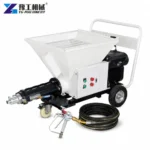
The YG-311 is a useful reference for a compact electric setup. Its 380 V supply requirement, 4 kW motor and 3 MPa working pressure help check site power and the pumping system together. The particle limit and listed conveying distances narrow the material and hose-route fit; the unit dimensions and mass help with access and relocation. None of these figures means every mortar mix can be pumped to the farthest point without checking the actual route.
YG-311 cement plaster spray machine specifications
The values below show the parameters that most directly narrow an initial fit discussion. They do not replace checking the actual mortar recipe, work path or included package; those details determine whether a quoted machine can work in the planned sequence.
| Parameter | YG-311 |
| Product model | YG-311 |
| Voltage | 380 V |
| Main motor power | 4 kW |
| Working pressure | 3 MPa |
| Particle size | ≤4 mm |
| Horizontal conveying distance | 30 m |
| Vertical conveying height | 20 m |
| Machine dimensions | 1750 × 450 × 800 mm |
| Machine weight | 160 kg |
Use the distance figures as a route screen, not as a reason to add hose without checking bends and the material. A long hose route increases the need for steady feeding and planned cleaning. The particle limit likewise means the prepared feed must be screened or mixed appropriately; it is not a recommendation to force larger material through the pump.
Provide the wall area, access route and hose path so the YG-311 configuration can be checked against the job.
CHECK THE YG-311 AGAINST MY WALL ROUTE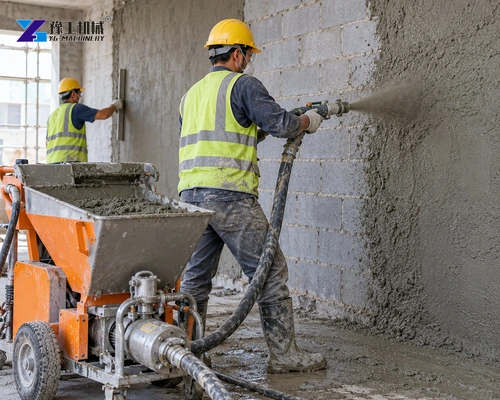
Estimate the work package before deciding whether the price is competitive
Build a short scope sheet before comparing offers. Capture the job details that change equipment fit and the work package:
- Total wall area, separated by floor or work zone
- Spraying sequence and the longest horizontal and vertical hose route
- How often the machine must be relocated, including stairs, lifts or narrow access
- Mortar type, mix-preparation method and largest expected particle
- Required finish and the handoff to the finishing crew
With these details, the supplier can distinguish equipment capability from work that still depends on the mixing crew, surface preparation and finishing trade.
Do not convert a catalogue throughput into a promised project duration unless the conditions are defined. Actual progress changes with batching, interruptions, hose relocation, access, wall geometry and the finishing method. Instead, ask which measured assumptions support any quoted output estimate and what is excluded. If quotations use different area assumptions or include different accessories, normalize those items before judging the price.
For an existing building, also describe the available power, stair or lift access and the route from unloading to the work zone. A machine that fits the wall distance but cannot pass through the access route creates extra handling or may be impractical. Share a simple floor sketch and a few site photographs to make that constraint visible before the equipment is ordered.
Send the material datasheet and the longest horizontal and vertical delivery runs for a compatibility review.
REVIEW MY WALL AREA AND ACCESS ROUTE
Keep cleaning, wear parts and service in the total cost comparison
Spraying does not end when the final pass is complete. Mortar left in the hopper, pump path, hose or gun can harden and make the next start difficult. Ask which steps the operator should follow to clear the machine, which cleaning items are supplied, and how long the hose and spray components should be inspected during a normal shift. Follow the actual machine instructions for isolation and cleaning; do not open a pressurized line to clear a blockage.
The quotation should identify routine wear items and how replacements are obtained. Check whether the supplier lists the part names and quantities, whether the package includes initial spares, and whether support is available for setup questions. This is not a reason to assume frequent failures; it is a way to compare what each seller means by “complete machine.” A clear support and parts list helps a contractor plan the equipment beyond its first wall.
List the gun, hoses, power supply and delivery destination so the written offer covers the package you need.
COMPARE THE INCLUDED PARTS AND SUPPORTCement plaster spray machine price FAQs
The price depends on the selected machine configuration and the package scope, including the spray gun, hose, accessories, spare parts, freight and support. Compare itemized quotations against the same wall area and material route.
No. Its listed particle passage is up to 4 mm, so the prepared material must suit that limit and remain workable through the pumping route. Confirm the actual mix and application before ordering.
Measure the actual hose route to the farthest wall point, including vertical rise and bends. Compare it with the machine’s listed horizontal and vertical limits, then ask the supplier to review the complete route and material.
Do not assume that it does. Ask the supplier to list the gun, hose length and diameter, connections, cleaning items, wear parts and any optional items separately in the quotation.
Not by itself. Mixing, feed continuity, access, hose relocation, wall geometry and finishing work all affect progress. Use site-specific assumptions rather than treating a maximum product figure as a guaranteed project rate.
Send the wall-area plan, mortar type and particle size, maximum hose distance and lift, available power, site-access photos, destination and the package items you want included.
Make the price comparison useful for your actual wall project
Send the same job description to each supplier: material, wall area, farthest delivery point, power and requested accessories. Then compare the equipment, transport and support scopes separately. That makes it easier to identify which cement plaster spray machine quotation is suited to your work rather than choosing by an incomplete headline price.