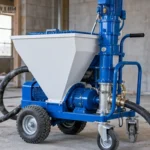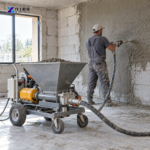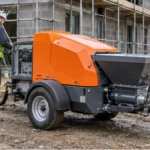
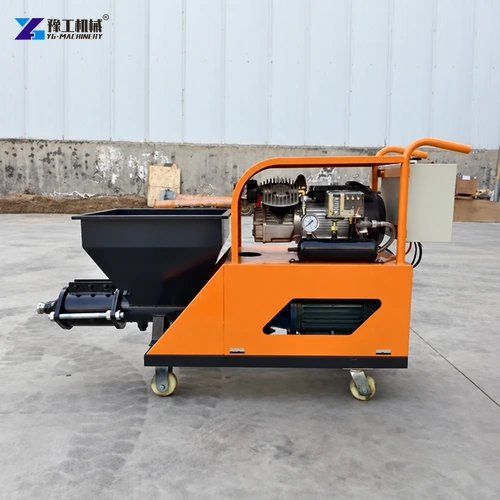
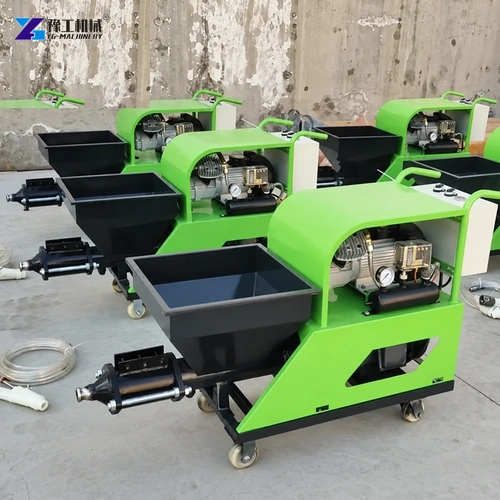
A cement spray machine pumps prepared cement-based material through a hose and combines it with the selected spray arrangement at the nozzle. It can support wall renovation, internal and external plastering and compatible repair materials when the mix, particle size, route and cleaning plan fit the chosen model.
The cement spray range covers electric and diesel configurations for wall plastering, repair mortar and compatible cement-based spraying work. Model selection starts with the material particle size and power supply, then checks pressure, hose distance, vertical lift, required output and transport weight as one working package.
Send the project material, dimensions and working conditions for an initial review.
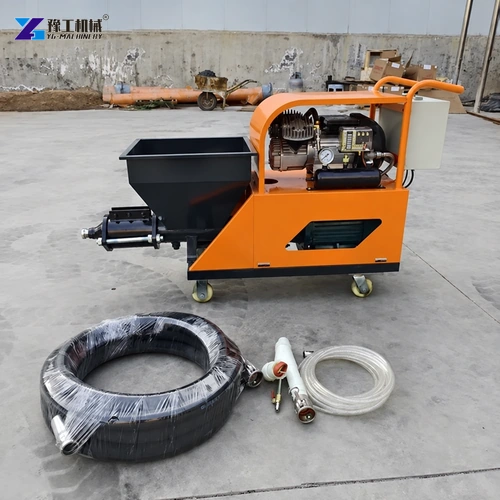
Match Cement Material to the Spray Machine
The cement spray machine must be matched to the material that will actually enter the hopper. Record the mortar or repair-product name, cement and sand proportion, maximum aggregate size, fibre or additive content, mixed consistency, working time and required layer thickness. Particle size determines whether the material can pass through the pump, hose and nozzle; consistency affects pumping stability, rebound and the ability of the sprayed layer to remain on the wall.
Screen out oversized particles and hardened lumps before feeding. Keep the water ratio and mixing time consistent from batch to batch. Material that is too dry can increase pressure, pulsation and blockage risk, while material that is too wet can sag, reduce build thickness and change the finished surface. Adding water at the machine to clear a difficult batch hides the real compatibility problem and makes quality impossible to control.
Run a representative trial with the planned hose length, vertical lift and nozzle. Accept the combination only after the machine feeds continuously, pressure remains stable, the spray pattern is even, rebound is controlled and the cured test area meets the required thickness, bonding and finish. The trial result then determines the model, hose, nozzle and crew method used for the project.
Match Particle Size and Pressure by Model
YG-311 handles particles up to 4 mm at 3 MPa and is suited to shorter hose routes, with 30 m horizontal and 20 m vertical conveying. YG-511 handles 3–4 mm particles at 6 MPa and extends the route to 50 m horizontally and 30 m vertically. The diesel configuration handles particles up to 10 mm at 6 MPa and reaches 60 m horizontally and 30 m vertically.
YG-711 uses 7.5 MPa pressure, a 60 m horizontal conveying distance and a 30 m vertical lift, with an area output of 80–100 m²/h. Its 3 kW power and 180 kg machine weight suit projects that need a longer material route while retaining an electric drive. The diesel version is selected where a 12 hp engine and larger particle passage are more practical than a fixed 380 V supply.
Pressure alone does not determine compatibility. Compare particle grading, consistency, hose diameter, route bends and nozzle with the selected model, then run the project material through the complete hose route. Stable feeding, controlled rebound and an even layer are the acceptance points for the machine-and-material combination.
| Parameter | YG-311 | YG-511 | YG-711 | Diesel version |
| Power | 4 kW | 7.5 kW | 3 kW | 12 hp |
| Particle passage | ≤4 mm | 3–4 mm | — | ≤10 mm |
| Pressure | 3 MPa | 6 MPa | 7.5 MPa | 6 MPa |
| Horizontal distance | 30 m | 50 m | 60 m | 60 m |
| Vertical height | 20 m | 30 m | 30 m | 30 m |
| Area output | 60–80 m²/h | 80–100 m²/h | 80–100 m²/h | 100 m²/h |
| Machine size | 1750×450×800 mm | — | 1600×500×700 mm | 1800×580×950 mm |
| Weight | 160 kg | 350 kg | 180 kg | 280 kg |
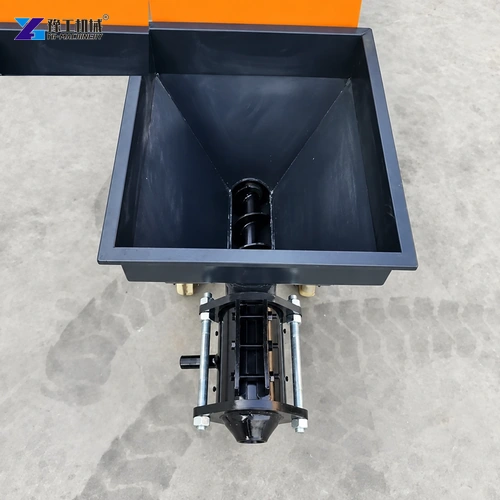
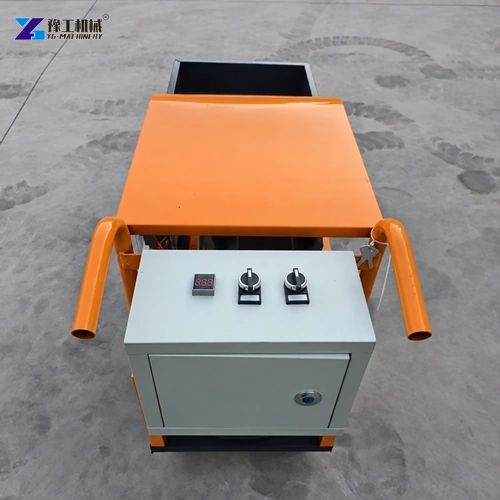
Measure Horizontal and Vertical Conveying
Draw the hose route, including bends, floor changes and support points. Horizontal conveying distance ranges from 30 to 60 m and vertical conveying height ranges from 20 to 30 m, depending on the selected model.
These references require compatible material and the final hose package. Keep couplings accessible, protect the hose and plan safe depressurization before clearing any obstruction.
Plan Wall Renovation Output and Finish
Inspect the existing wall for loose plaster, dust, oil, cracks and moisture before spraying. Remove weak material, repair the substrate and apply the project-approved bonding treatment. Define the required layer thickness, flatness tolerance, texture and curing method before selecting the nozzle and work sequence.
Organize the crew around the machine output: one person controls mixing and feeding, one controls the nozzle, and finishers follow only as fast as the sprayed area can be levelled without cold joints. Corners, openings, scaffolding moves and hose repositioning reduce practical output, so the model area figure must be balanced with finishing capacity.
Approve a measured trial panel before full production. Check continuous feed, spray pattern, rebound, wet thickness, adhesion, surface flatness and the finish after curing. Record the mix, hose length, pressure setting, nozzle and crew method from the accepted panel so later wall areas can repeat the same conditions.
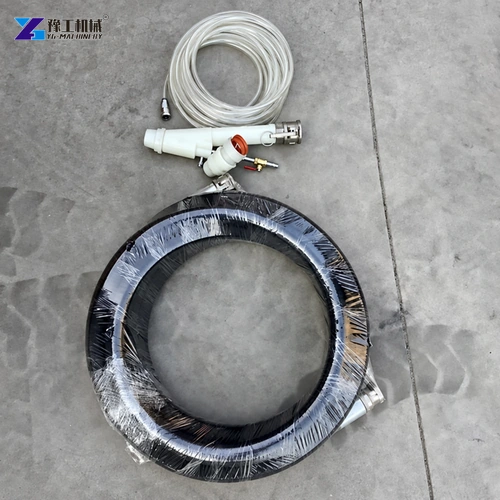
Request a Complete Cement Sprayer Package
Prepare the quotation file with the material specification, maximum particle size, required layer, total wall area, hose route, vertical lift, electrical supply or diesel requirement, spray-air arrangement, mixing method, cleaning water and destination.
The equipment list should separate the machine, delivery hose, spray gun, nozzle set, compressor requirement, mixer, control cable, cleaning tools and wear parts. State hose lengths and connection sizes so every supplier quotes the same working scope instead of a bare main unit.
Use the selected model, included accessories, packing, commissioning, training and spare-parts list as the comparison basis. Final acceptance should cover a material trial, stable pressure, complete hose delivery, safe cleaning and the wall-quality criteria agreed for the project.
Cement Spray Machine for Wall Renovation Projects FAQ
No. Particle size, consistency, working time and additives must fit the selected machine and trial.
No. Route, layer, rebound, pauses and finishing capacity affect accepted output.
YG-711 and the diesel configuration both list 60 m horizontal conveying and 30 m vertical lift; choose between them by material, power supply and required particle passage.
Provide material, thickness, wall area, hose route, lift, utilities, cleaning plan, destination and daily target.