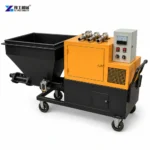
The price of an automatic wall plastering machine makes sense only after the buyer understands the work it performs. The YG-800 guides a repeated mortar-application pass along suitable wall sections; it does not prepare uneven masonry, mix every material or complete every edge and finish by itself.
For a real comparison, separate the machine’s working range from the supplied mortar equipment and from the building work around it. The following sections explain how the machine works, where crews use it, what the published YG-800 and YG-1000 data mean, and which scope items actually change the project cost.
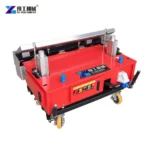
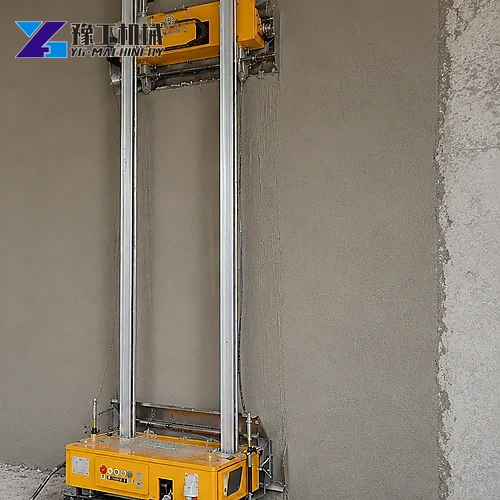
How the YG-800 Applies a Repeatable Wall-Plastering Pass
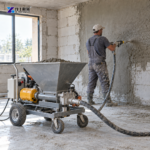
An automatic wall plastering machine supports a controlled application pass along a wall rather than relying only on a plasterer to spread each section by hand. The YG-800 is positioned beside the work, aligned to the surface and operated so its working assembly travels vertically while prepared mortar is applied. The crew still handles material preparation, machine placement, edge work and finish checks; “automatic” describes the guided application movement, not a fully unattended wall-finishing plant.
That distinction explains both the machine’s value and its limits. On a long, relatively consistent wall, a guided pass can make the main application movement easier to repeat from one section to the next. If the masonry bows, changes plane, contains deep recesses or has loose material, the machine cannot correct the substrate. The wall must first be made suitable for the specified coat, and the operator must adapt the setup where openings or corners interrupt the run.
For a price comparison, it is therefore important to understand what is physically included. The plastering frame and moving assembly are not necessarily the same thing as a complete mortar preparation and delivery package. Confirm which pump, hose, feed equipment and accessories are supplied; otherwise two quotations may describe different working systems even if both use the same product name.


Where an Automatic Wall Plastering Machine Is Used
The strongest application is repetitive wall work where a crew can keep the machine close to the next section and repeat a similar vertical pass. That includes interior wall runs in apartment blocks, office buildings, schools and factory buildings, as well as suitable rooms in residential construction. The relevant advantage is not simply the building type: it is the amount of continuous wall, access for repositioning, and similarity of the substrate and coat across the work area.
YG lists cement, brick, concrete, hollow-brick and lightweight-brick walls among potential substrates, and lime, cement mortar, foam mortar and gypsum among rendering materials. Each combination behaves differently. A more absorbent block, a smoother concrete surface or a change in mortar consistency affects adhesion and how material spreads. The crew should follow the material specification and confirm a representative section before repeating the same settings throughout a building.
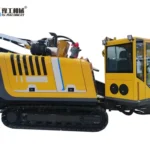
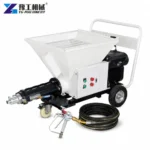
This equipment is less attractive for isolated patch repair, very congested rooms or surfaces that change profile every few metres. In those cases, time spent moving, realigning and finishing around details can outweigh the benefit of a repeated machine pass. A separate cement spray machine serves material delivery or spraying tasks; do not assume that a separate sprayer or mixer is included with the wall-plastering machine.
- Apartment, office and school interiors with repeated wall sections and manageable access.
- Factory and workshop walls where the substrate and coat remain consistent over a useful run.
- Suitable brick or concrete wall areas using a compatible lime, cement, foam-mortar or gypsum rendering mix.

YG-800 and YG-1000: Published Working Range and Parameters
The YG-800 and YG-1000 differ most clearly in their listed wall-height range. The table keeps each figure attached to its official model; it does not imply that a higher reach automatically makes the YG-1000 the better choice for every project. Room access, wall height, electrical supply and the selected material still determine which configuration is practical.
| Parameter | YG-800 | YG-1000 |
|---|---|---|
| Plastering height | Below 4 m | Below 5 m |
| Plastering thickness | 2–30 mm | 2–30 mm |
| Machine weight | 270 kg | 290 kg |
| Power | 1.5 kW | 1.5 kW |
| Voltage | 220 V / 380 V optional | 220 V / 380 V optional |
Treat height and thickness as the published equipment range, not a guarantee of finished flatness or output per shift. Wall preparation, mortar formulation, obstructions and the project’s acceptance method still govern the result. A coat near the upper end of the range should be assessed using the actual material and wall condition rather than inferred from the machine specification alone.
For the wider product family, see the YG automatic wall plastering machine range. The cement spray machine range is a different product task and should only be compared when the project also needs that material-delivery function.


A representative wall test is more useful than a building-wide guess: it shows whether the machine can repeat its working pass on your substrate and mortar.
REVIEW A WALL-PLASTERING CONFIGURATIONWhat Determines Automatic Wall Plastering Machine Price?
The first price component is the machine configuration itself: the named model and its reach, the chosen electrical version and the equipment supplied with the main assembly. If a quotation includes a separate mortar pump, hose set or additional working components, those items should be listed rather than hidden inside a broad “complete machine” description. The same applies to spare wear parts or tools that may be optional.
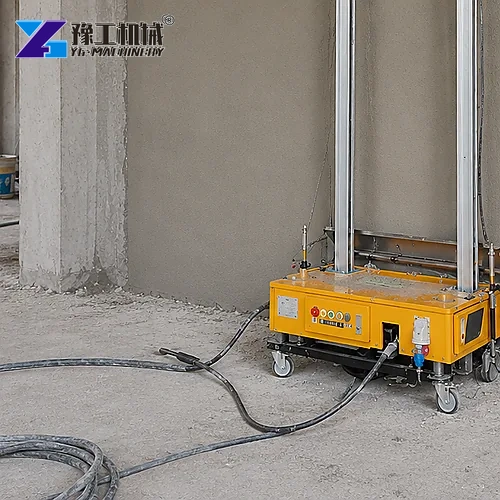
The second component is delivery scope. Packing, inland transport, export freight, insurance, unloading and on-site setup can sit outside the machine price. A 270–290 kg machine also needs a practical path from the unloading point to the work area. A building with lift access and clear corridors is a different delivery job from a site where equipment must be carried through narrow stairways or a partially completed structure.
The third component is the project work itself. Mortar material, substrate preparation, power availability, room sequencing and finishing around openings affect how much usable work the machine can complete. These are not necessarily line items on the supplier invoice, but they affect the buyer’s total project cost. Compare quotations on one basis: same model, same included equipment, same destination and the same delivery or commissioning responsibility.

When the YG-800 Fits the Wall Work You Actually Have
The YG-800 is most convincing when a project has repeated interior wall sections below its listed height, a compatible rendering material and enough open work area to reposition the machine efficiently. It is not a substitute for substrate preparation or skilled finishing. Instead, it mechanizes a repeated part of wall application so the crew can organize material supply and surface checks around a more controlled pass.
A useful evaluation is to compare a representative wall before committing to the full building. Confirm the height and planned coat, prepare the substrate as required, use the intended mortar and observe how the machine is positioned and fed. Check the resulting surface with the project’s specified straightedge, thickness or finish method. If the test section needs extensive correction, solve the substrate or material issue before assuming a larger machine or faster setting will fix it.
This is the practical way to judge price: pay for the configuration and equipment that can complete the actual wall sequence, not for a headline capacity detached from site conditions. If the building offers long, repeatable runs, the guided work cycle may be useful. If the project is mainly small repairs, difficult access or highly irregular surfaces, conventional tools or another application method may be the more suitable choice.
Automatic Wall Plastering Machine Price FAQs
The YG-800 is a guided wall-plastering machine for applying prepared rendering material over wall sections. The crew still prepares the surface, supplies compatible mortar and finishes details around openings.
YG lists the YG-800 for wall heights below 4 m. The YG-1000 is listed below 5 m; compare the actual wall section with the selected model rather than assuming the heights are interchangeable.
YG identifies lime, cement mortar, foam mortar and gypsum among its rendering materials. The selected material must be prepared and delivered in a consistency compatible with the machine and the required finish.
The named model, voltage version, included mortar-feed equipment, accessories, packing, freight and commissioning scope can change the quoted total. Compare like-for-like packages rather than machine-only figures.
No. It can guide repeated wall application, but corners, openings, irregular substrates and final surface checks may still need preparation or manual finishing.
Request a Project-Specific Quotation
Tell us the product configuration and the work it needs to perform so the team can review the scope against your project.