Buying construction generators is partly a decision about how power will be organised across the site. One central generating set can supply several work areas through a designed distribution system. Separate sets put generation close to individual work groups. These arrangements can serve the same total connected load yet behave differently when a machine starts, a crew relocates or one supply stops.
For a contractor comparing construction generators for sale, the useful starting point is the work-area layout and the activities that must remain independent. The largest engine is not automatically the best site arrangement. A suitable plan connects the generator’s expected operating hours and load, the cables and distribution equipment, simultaneous work and service access. Several machines supplying separate areas must not be treated as an improvised parallel system.
A Central Generator Shares More Than Its Rated Power
A central set concentrates fuel handling, routine checks and generating equipment at one position. The distribution network then carries power to the working areas. This can suit a project where equipment stays in predictable zones and the temporary distribution layout remains relatively fixed during that construction stage. The generator becomes one element in a coordinated site supply rather than a machine parked beside every tool.
The shared connection also creates shared consequences. Starting a large motor changes the demand seen by the central set while other equipment is operating. Sensitive controls and lighting can experience a disturbance if the supply and distribution have not been designed for that event. This is a different question from whether the sum of running kilowatts is below the nameplate rating.
Physical distance adds another layer. Cable routing, voltage drop, protection and mechanical exposure belong in the electrical design. Moving the generator closer to one work area can lengthen the route to another. The engineer designing the temporary installation should assess the complete network; choosing a larger generator alone does not correct an unsuitable cable or protection arrangement.
Consider which work areas can share a supply and which need independence.
Separate Generator Sets Supply Independent Work Areas
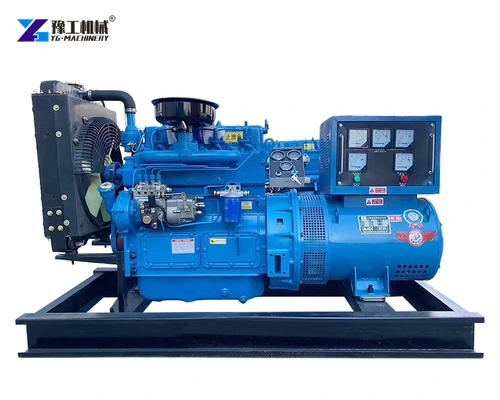
Independent sets can follow separate crews or support isolated work areas. A distant pump installation, a temporary workshop and a frequently relocating crew may have little reason to share one central supply. Local generation shortens the physical supply route and allows one group to stop its engine without necessarily interrupting another.
This independence has a cost. Each set needs fuel management, inspection, servicing and appropriate placement. Several lightly loaded engines can represent a less suitable duty pattern than one well-used set, depending on their ratings and the work schedule. Additional machines also require separate handling and transport arrangements. The comparison should include how many sets actually run at the same time, not just the purchase price of the fleet.
Separate sets should remain electrically separate unless a purpose-designed synchronising and protection system is supplied. Sharing a site does not make their outputs compatible for direct connection. Parallel generation is a separate engineered capability involving controls, switchgear and operating procedures, not a way to add nameplate ratings with ordinary leads.
Describe the separate crew locations and their operating schedules.
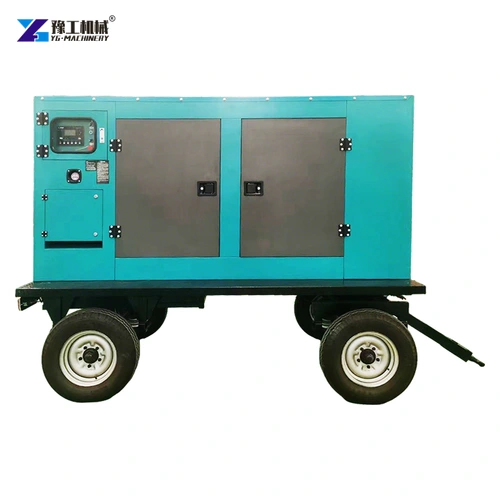
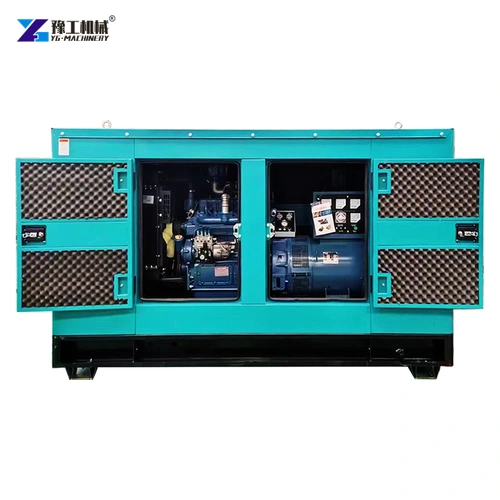
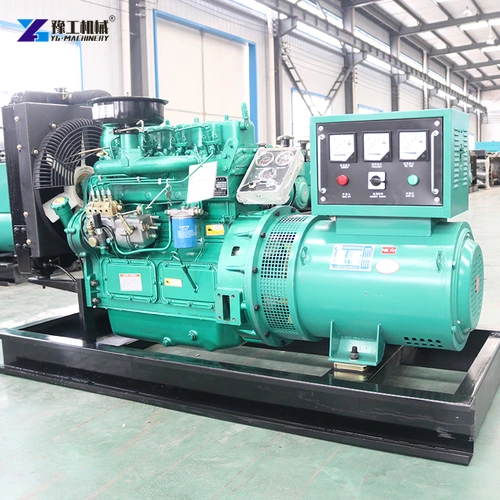
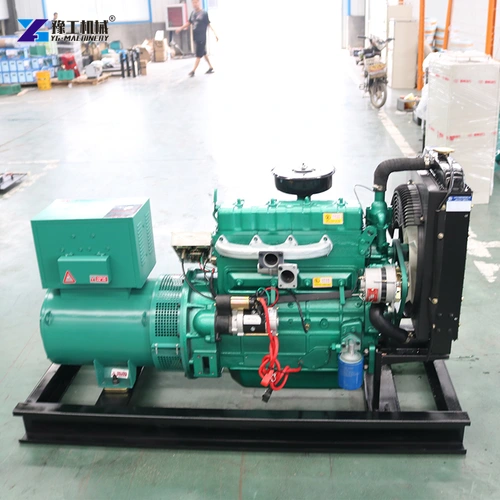
YG Diesel Generator Electrical Parameters
The following published YG output configurations illustrate different electrical classes within the diesel-generator range. They provide a consistent basis for discussing the individual supply units; the final selection also needs the applicable duty rating and load response for the offered configuration.
| Published output configuration | 30 kW | 100 kW | 200 kW |
| Voltage | 400/230 V | 400/230 V | 400/230 V |
| Frequency | 50 Hz | 50 Hz | 50 Hz |
| Engine speed | 1,500 rpm | 1,500 rpm | 1,500 rpm |
| Electrical arrangement | Three-phase, four-wire | Three-phase, four-wire | Three-phase, four-wire |
| Listed current | 54 A | 180 A | 360 A |
The 400 V line-to-line and 230 V line-to-neutral ratings describe a three-phase, four-wire supply. Connected equipment must match the offered voltage and 50 Hz frequency. At the same supply voltage, a higher output configuration has a higher listed current, which affects the distribution equipment required. Prime or standby duty rating, temperature and altitude also belong in the selection; a kW column alone does not define unlimited continuous operation.
Use the table to identify the intended supply class, then connect it to the real equipment schedule. The commercial diesel generator range provides the product context. The separate generator load calculation guide addresses the running and starting-demand calculation; this article addresses where those loads should be supplied together or independently.
Match the offered electrical configuration to the site equipment and supply requirements.
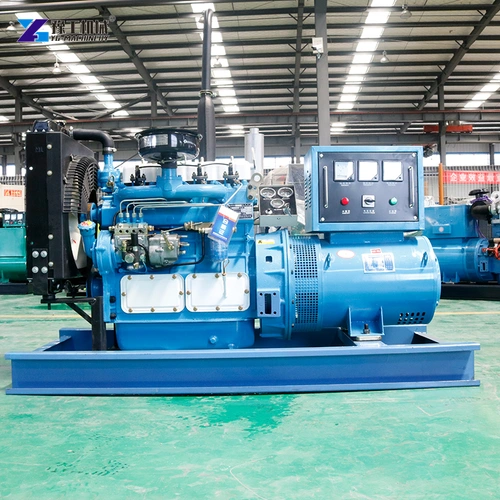
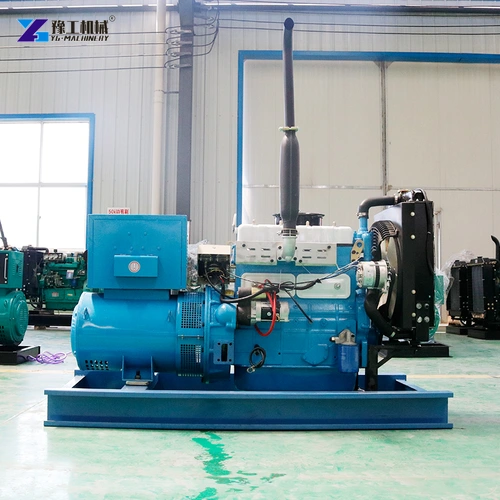
Four Site Conditions That Change The Generator Arrangement
- Work areas that move independently. A crew progressing along a long route may benefit from a local supply that moves with its equipment. A stationary central set becomes less convenient if the distribution must repeatedly be rebuilt to reach the crew.
- Equipment with a shared operating sequence. Machines that work together in one production area may suit a coordinated central supply. Their actual starting and operating sequence should be reviewed as a group rather than assuming all connected equipment behaves like one steady load.
- Tasks that must survive an interruption elsewhere. An essential pumping or control duty may need a separately designed continuity arrangement. A second generator sitting on the site is not automatically a working backup; transfer, capacity and the supported load still have to be defined.
- Restricted generator placement. Exhaust discharge, cooling airflow, noise exposure and refuelling access can limit suitable positions. These conditions may favour a particular distribution layout even before the generator power class is chosen.
The practical decision is often a combination: one defined supply for a stable work area and separate equipment for distant or changing duties. This is not a recommendation to multiply sets indiscriminately. Each independent unit should have a clear operating purpose that justifies its additional service and handling requirements.
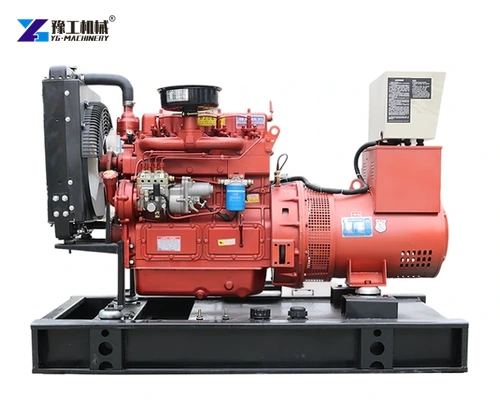
Compare The Working Fleet, Not Just The Generator Count
A useful comparison follows a representative working day. Identify which work groups operate together, which change position and which can stop when another task is idle. Then consider the effects of refuelling, scheduled service and a generator fault on those groups. This reveals whether a central supply creates an acceptable shared dependency or whether selected duties need independence.
For example, a fabrication workshop may remain in the compound while an installation crew moves along a pipeline route. A stable workshop supply can stay connected to its designed distribution; the moving crew can be assessed as a separate duty with its own equipment and operating hours. Moving one generator between both tasks repeatedly interrupts one group to serve the other. Conversely, crews working beside the same compound on the same schedule may suit a coordinated central supply instead of several separately maintained sets. The distinction follows location and timing, not a fixed rule that one arrangement is always cheaper.
When requesting construction generators for sale, describe the proposed power arrangement as well as the load list. The offer should identify the generating configurations, their duty ratings, any distribution or transfer equipment included, and the responsibilities for installation design. This makes the quotation comparable without implying that a generating set alone constitutes a complete temporary electrical installation.
Provide the site layout and equipment schedule for a defined generating package.
Construction Generator FAQs
Not by simply joining their outputs. Parallel operation requires compatible generating equipment and a designed synchronising, control and protection arrangement.
No universal saving applies. Compare the actual load schedule and manufacturer fuel data for the offered sets, including the hours each engine would operate.
Distance, repeated relocation and a different operating schedule can make local generation more practical than extending a shared distribution network.
No. The supported load, availability, connection and transfer arrangement must be designed before the spare can provide the intended continuity.
Provide the work-area layout, equipment list, operating and starting sequence, relocation pattern and duties that must remain independent during an interruption.
Send the site layout, connected equipment, starting sequence and relocation pattern to discuss an appropriate generating arrangement.