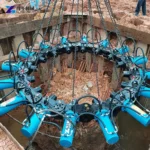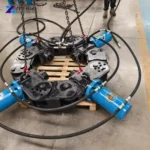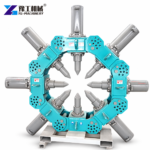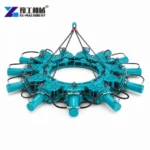
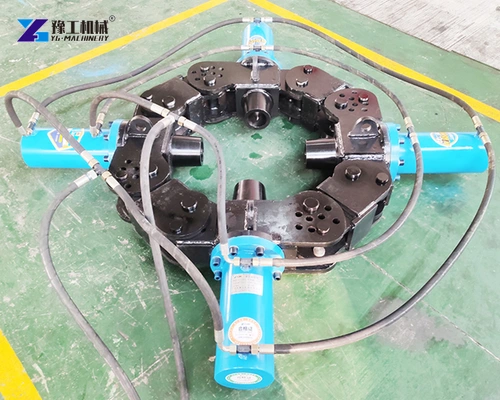
A hydraulic pile breaker price depends on the ring that must surround the pile, the equipment that powers and handles it, and the work programme over which that purchase will be used. A small module group and a larger assembled ring are different supplies. A quotation for the breaker alone is also different from a proposal that includes a hydraulic power arrangement and the equipment needed to mobilise it.
For a foundation contractor, the purchase should follow the actual groups of pile heads. A repeated diameter allows one suitable assembled ring to remain in use; changing diameter groups can introduce reconfiguration, handling and downtime between groups. The comparison therefore needs both the equipment bought and the sequence in which it will work, including broken-concrete removal and the required finished pile-head condition.
Price the Required Breaker Ring, Not One Loose Module
A modular hydraulic pile breaker assembles working units around the concrete pile head. The units, their structural connections and hydraulic arrangement make up the operating ring. Buying individual modules is not the same as buying a complete assembly ready for the specified handling and operating arrangement.
Pile diameter affects the opening that the assembled ring must surround. The working modules and their connections establish where force acts around that opening, while their combined mass determines part of the handling load. A quotation for a larger diameter group therefore changes the physical assembly being purchased, not simply the quantity of identical loose parts in a delivery.
Reconfiguration is useful only within an approved assembly design. The relationship between the units determines where the cutting elements act around the pile and how the assembly is connected. Spare modules in a crate do not establish that any desired ring can be built. Cost comparisons should identify permitted combinations rather than extrapolating from the price of one unit.
The existing hydraulic pile breaker configuration guide explains the diameter-selection task. A purchase comparison takes the next step: it identifies which complete combinations, connection equipment and replacement supply are included for the project.
Identify the complete ring combinations needed for the pile groups.
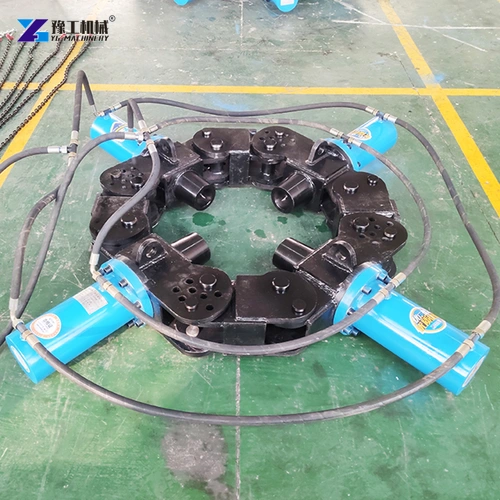
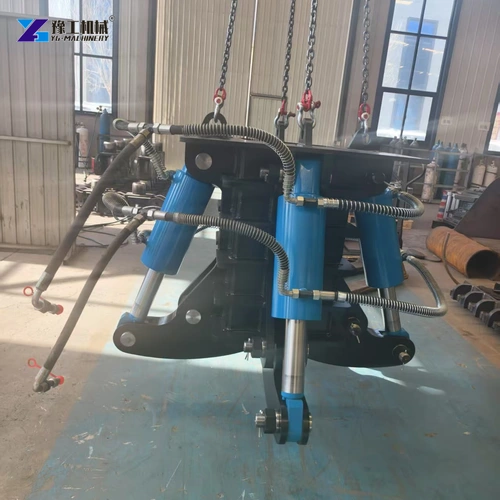
YG Hydraulic Pile Breaker Ring Parameters
These YG modular ring configurations pair a listed pile-diameter range with a complete assembly mass. The number of modules changes the ring geometry and the equipment mass that the handling arrangement must carry.
| YG modular pile breaker configuration | Listed pile-diameter range | Published combined mass |
| 8-module ring | 600–800 mm | 2640 kg |
| 9-module ring | 800–1000 mm | 2970 kg |
| 10-module ring | 1000–1150 mm | 3300 kg |
| 12-module ring | 1300–1500 mm | 3960 kg |
| 14-module ring | 1650–1800 mm | 4620 kg |
| 18-module ring | 2360–2500 mm | 5940 kg |
For example, the 8-module assembly lists 2640 kg and a 600–800 mm diameter range; the 12-module assembly lists 3960 kg and 1300–1500 mm. The larger combination changes both access around the pile and the load on the handling equipment. Ring dimensions, suspension equipment and the carrier arrangement must therefore be assessed together before the larger assembly enters a project.
Diameter boundaries require attention because neighbouring published bands can meet at the same value. The measured pile head and exact ring geometry determine the intended arrangement. A project with nominally identical piles can also expose irregular concrete after excavation, so the purchasing schedule should use the relevant pile-head conditions rather than only the foundation drawing’s nominal size.
The hydraulic circuit operates the module cylinders, while the suspension or mounting arrangement carries and positions the ring. Each needs its own specified limits. Use the operating requirements for the actual ring and power source when making hydraulic connections; assembly mass and pile diameter do not determine those settings.
Compare the specified ring and its handling requirements.
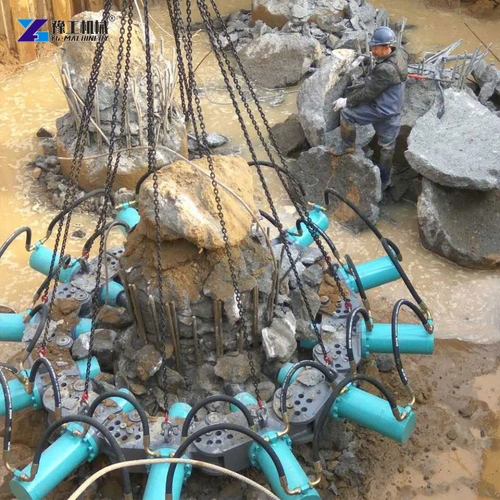
Hydraulic Power and Breaker-Ring Lifting Equipment Are Separate Investments
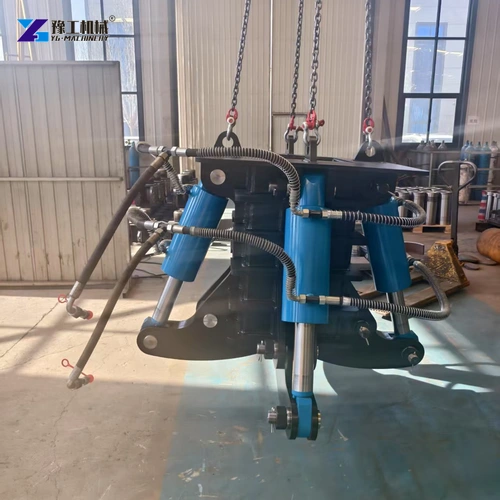
The breaker needs hydraulic energy to operate its cylinders and a suitable means of positioning the assembled tool. A carrier may participate in one or both functions, depending on the supplied arrangement. A separate power station changes the package again. These functions must be identified rather than assumed from a photograph of a ring hanging beside an excavator.
An existing machine can reduce new equipment purchases when it is suitable for the specified work. However, its availability matters as well as its technical compatibility. A carrier assigned to the breaker cannot simultaneously perform unrelated excavation or concrete removal elsewhere. That opportunity cost can affect project planning even when no additional excavator is purchased.
The handling arrangement includes the actual assembly mass, suspension or mounting provision and movement required at the work position. Access around pile groups, excavation support and exposed reinforcement can restrict that movement. A larger ring can therefore change mobilisation and positioning requirements alongside the module purchase itself.
Compare these arrangements as alternatives for the same work sequence. One project may already have a compatible carrier available throughout the pile-head programme; another may need a dedicated power and handling solution. Their total investments will differ even if the breaker rings are identical. Neither case can be judged from attachment price alone.
Repeated Pile Groups Change Ownership and Service Costs
A programme of repeated pile heads can spread mobilisation and setup work across many similar operations. A project with small, widely separated groups may spend more time moving and repositioning equipment relative to active breaking. Count those movements when comparing purchase, hire or subcontract alternatives, rather than assuming that every working hour produces the same number of completed heads.
Three maintenance and equipment-availability questions make the comparison more practical:
- Cutting elements and concrete contact. The working elements transmit the module action into the concrete. Their condition affects that contact, while concrete condition and duty influence wear. The replacement-parts list should identify the actual elements fitted so worn parts can be renewed without changing the intended assembly.
- Hoses, seals and keeping the hydraulic system in service. Several working modules form one connected assembly. A component requiring hydraulic service can interrupt use of the complete ring, so accessible connections, correct service parts and a planned repair arrangement matter to the pile-group schedule.
- Service continuity for an assembled ring. A replacement module or component needs a defined role in the supplied assembly and an approved replacement procedure. Identifying it before work begins makes the spare useful when a fault occurs; unassigned extra components leave the repair team to determine compatibility while the ring is unavailable.
A service plan should connect the component list to the people and work needed to restore the ring. Fault identification, obtaining the correct part and carrying out the prescribed repair are different tasks. Keeping that sequence clear helps distinguish a practical plan for keeping the breaker in service from an unspecified box of accessories.
Service cost therefore includes both replacement parts and equipment downtime. A ring awaiting repair can also leave its assigned carrier unavailable for the planned pile sequence. Component identification and a workable repair arrangement support availability; the value of that availability depends on how regularly the assembly is used.
Plan compatible service parts for the actual pile-head programme.
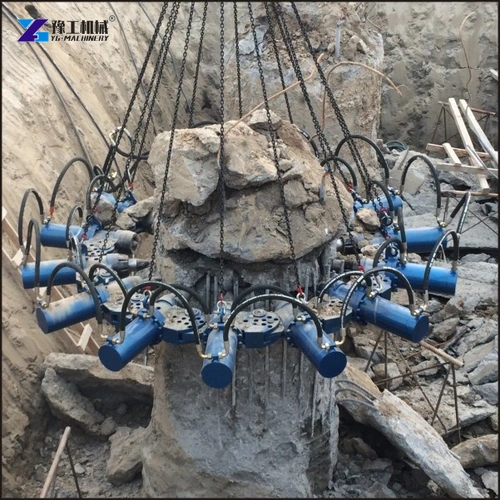
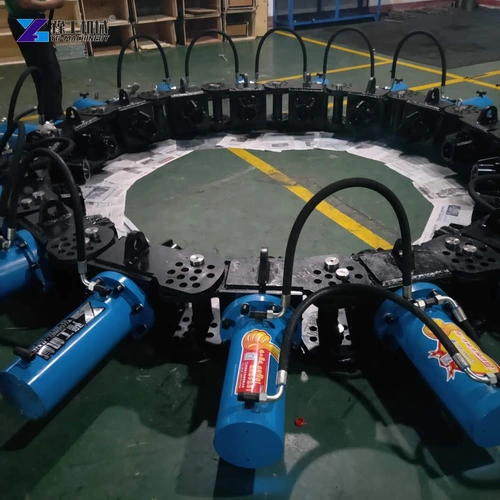
One Reconfigured Pile-Breaker Ring or Separate Assemblies
Where pile groups follow one another in a clear sequence, an approved reconfiguration may let one equipment set serve more than one diameter group. The cost comparison includes the change work and the interval before the next group can begin. Where different groups must progress independently, a separate assembly changes availability but also creates another handling and service commitment.
Compare both arrangements against carrier availability. Two breaker rings do not create two working positions if only one suitable carrier or power arrangement is available. Conversely, keeping one ring permanently assembled can be useful on a long repeated run. The investment decision combines ring configuration, the machines available to operate it and the planned work sequence.
Then include the stages after breaking: fragment removal, reinforcement protection and inspection at the specified cut-off level. If those stages limit progress, another ring alone will not increase completed pile-head output. Observed work on comparable pile groups provides a better basis for purchase, hire or subcontract comparison than module count alone.
The useful hydraulic pile breaker price is the investment needed to keep the chosen pile groups moving through that complete sequence. Choose between reconfiguration and separate assemblies around the diameter schedule, handling resources and service arrangement, while retaining the finished-head requirements of the foundation design.
Define the ring, power and handling scope for your foundation work.
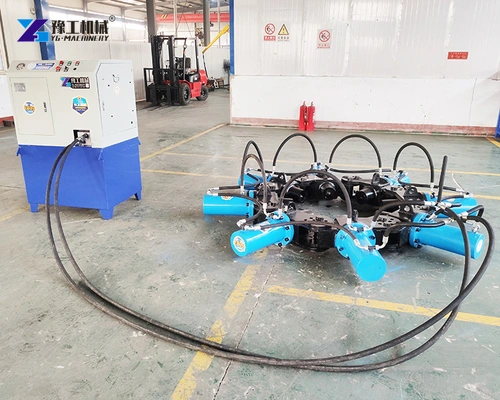
Hydraulic Pile Breaker Price FAQs
Not necessarily. The operating assembly also needs its specified structural connections, hydraulic arrangement and handling provisions. Identify the complete ring and included equipment before treating module prices as a complete breaker-system quotation.
Only its approved configurations define the working range. Different pile groups may require prescribed reconfiguration or another assembly. A stock of additional modules does not establish arbitrary diameter compatibility.
It can reduce new purchases when the machine suits the defined hydraulic and handling arrangement. Installation, connections, availability and the effect on other work still need to be considered.
They identify equipment characteristics, not the complete site cycle. Exposure, access, concrete handling, reinforcement and acceptance work affect the completed result. Use evidence from comparable pile groups for that calculation.
It should name the relevant cutting elements, hydraulic service components and any planned spare modules for the actual assembly. Their purpose and compatibility are more useful than an unspecified allowance for accessories.
Send the pile groups, diameter ranges, access and available carrier or power equipment for a complete breaker proposal.