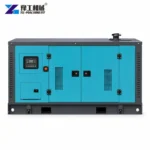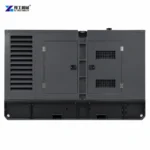
An industrial diesel generator converts fuel energy into an electrical supply through a coupled diesel engine and alternator. The engine supplies shaft power; the alternator produces alternating current. Controls, cooling, lubrication, fuel delivery and protection allow that conversion to remain useful as the connected load changes.
For construction equipment and other independent power duties, understanding those functions is more valuable than choosing by a kW figure alone. The generator must support the electrical characteristics and operating pattern of the load while remaining within its mechanical and environmental limits. The following sections explain the equipment itself, using YG’s published electrical configurations as the reference.
Industrial Diesel Generator Engine And Alternator Operation
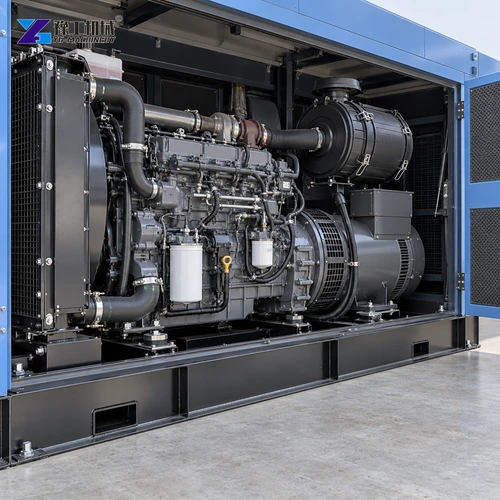
Inside the diesel engine, compressed air becomes hot enough for injected fuel to ignite under the intended operating conditions. Combustion drives the pistons, and the crankshaft turns the coupled alternator. The alternator’s rotating magnetic field induces voltage in its windings. Mechanical shaft power and electrical output are therefore linked, but they are not the same quantity: losses and the equipment’s rated operating conditions matter.
An isolated generator set needs control of both speed and voltage. The engine governor regulates fuel delivery to maintain the appropriate speed as mechanical demand changes. The automatic voltage regulator controls excitation in the alternator to support its output voltage. These controls have different functions; an AVR does not replace the engine’s speed regulation or give an undersized engine unlimited load capacity.
For the synchronous generating-set arrangement discussed here, frequency relates to rotational speed and alternator pole arrangement. The YG configurations below list 50 Hz at 1,500 rpm. A buyer should select equipment designed for the destination voltage and frequency rather than assume the speed setting can simply be changed to obtain any desired supply. Electrical protection and the connected machinery must match that supply as well.
The controller monitors operation and provides the functions specified for the actual package. Alarms and protective shutdowns are intended to identify conditions requiring attention; repeatedly resetting a fault does not correct its cause. Automatic start, transfer equipment and remote monitoring are separate capabilities that should be identified rather than assumed from the presence of a digital display.
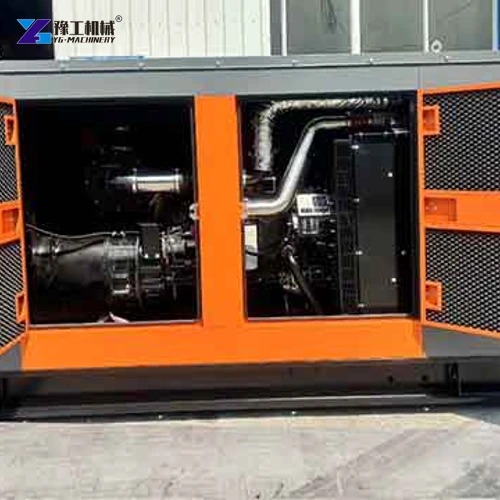
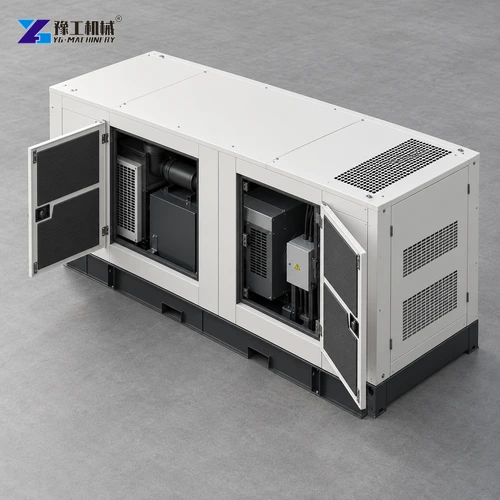
The generating set is thus an engine, an electrical machine and a control system working together. Its enclosure may change weather exposure, acoustics and access, but does not change those basic roles. The YG commercial diesel generator range provides the related product-family context.
The engine, alternator and controls need to support the intended electrical duty together.
Industrial Diesel Generator Load Changes And Starting Demand
The load does not always draw power steadily. A motor starting, a pump accelerating or a group of machines being connected can create a demand different from their later running condition. The generator’s engine and alternator respond over time, and voltage or frequency may change temporarily during that response. Acceptable behaviour depends on the loads and the actual generating-set specification.
Motor starting deserves particular attention because the starting method affects the electrical demand. Direct starting, soft starting and variable-speed drives do not present identical conditions. A list of running kW values alone cannot describe them. The actual equipment data and operating sequence should inform selection rather than applying one universal multiplication factor to every motor.
The distinction between kW and kVA also matters. Real power describes useful energy transfer, while apparent power relates to the electrical loading of the supply. Power factor and the character of the connected equipment affect their relationship. An engine may have adequate real-power capacity while the alternator or voltage response still needs attention for a particular load.
On a three-phase supply, the distribution of single-phase loads also requires proper design. A large total rating does not permit arbitrary loading of one phase. Sensitive electronics and nonlinear loads introduce further electrical considerations. These are reasons to assess the actual load schedule with the responsible electrical professional, not reasons to promise that a larger engine cures every supply-quality problem.
The construction generator load guide explains the associated sizing task. The set should be evaluated for the sequence that actually occurs: starting the largest relevant load, adding subsequent equipment and operating through the intended duty. Starting performance and sustained output are distinct parts of that evaluation.
Starting conditions and running loads are separate parts of the supply requirement.
YG Industrial Diesel Generator Electrical Configurations
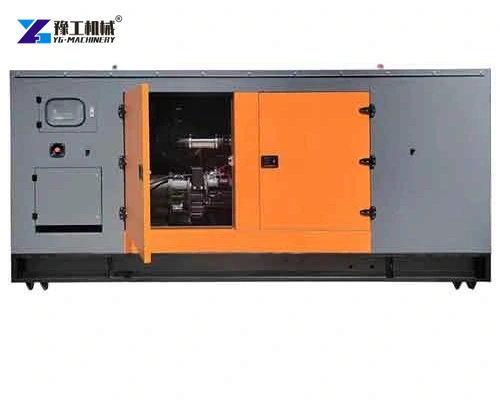
The table identifies six YG configurations by published power. These are product-family electrical figures, not invented alphanumeric engine models or a guarantee of output under every temperature, altitude and duty.
| Configuration | 30 kW | 100 kW | 150 kW | 200 kW | 300 kW | 400 kW |
| Cylinders | 4 | 6 | 6 | 6 | 6 | 6 |
| Voltage | 400/230 V | 400/230 V | 400/230 V | 400/230 V | 400/230 V | 400/230 V |
| Frequency | 50 Hz | 50 Hz | 50 Hz | 50 Hz | 50 Hz | 50 Hz |
| Rotating speed | 1,500 rpm | 1,500 rpm | 1,500 rpm | 1,500 rpm | 1,500 rpm | 1,500 rpm |
| Cylinder bore × stroke | 100 × 115 mm | 105 × 125 mm | 105 × 130 mm | 126 × 130 mm | 126 × 155 mm | 135 × 160 mm |
| Rated current | 54 A | 180 A | 270 A | 360 A | 540 A | 720 A |
| Phase arrangement | Three-phase four-wire | Three-phase four-wire | Three-phase four-wire | Three-phase four-wire | Three-phase four-wire | Three-phase four-wire |
Voltage, frequency and phase arrangement establish the kind of supply before the power column is selected. The rated-current row belongs to the published configuration and must not be interpreted as a rating available independently on every phase or at every voltage connection. The selected unit’s electrical diagram and nameplate govern the actual installation.
The applicable duty rating must also be established. Standby use during interruptions and extended prime-power operation are not interchangeable descriptions. Environmental conditions can require an output adjustment, so the relevant rating and site conditions should accompany any load comparison. No fixed derating percentage is asserted here without the chosen unit’s data.
Engine cylinder count and displacement-related dimensions provide useful configuration information but do not establish fuel use at every load. Nor do they prove a particular emissions approval or alternator brand. An industrial diesel generator offer should identify the engine, alternator, controller and duty together, keeping published family figures separate from features of the selected package.
Industrial Diesel Generator Cooling And Air Filtration
The engine converts only part of the fuel’s energy into shaft work. Heat must leave through the cooling system, exhaust and other surfaces. The alternator also produces heat while supplying the load. Effective cooling therefore remains necessary even when the electrical demand is below the headline rating.
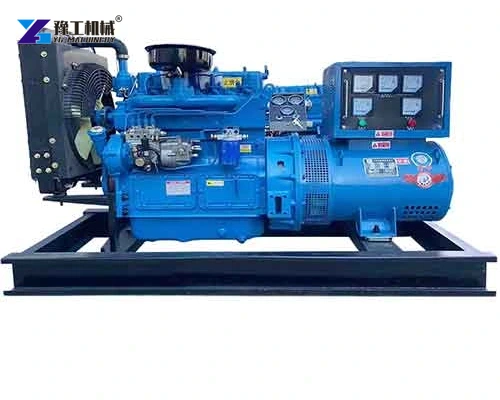
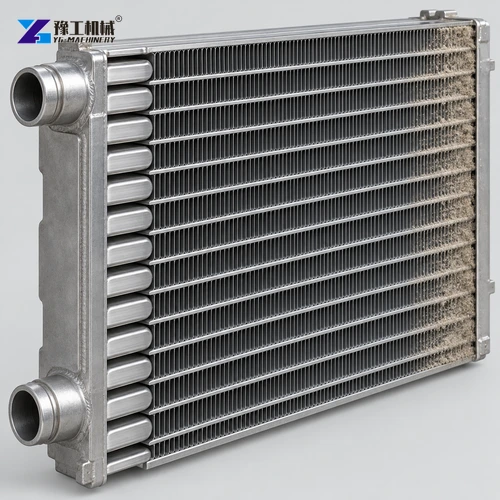
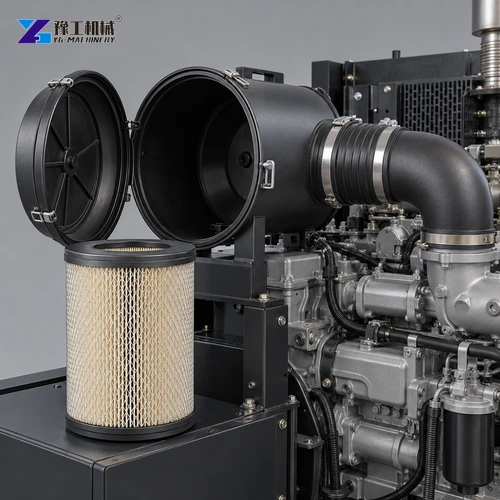
Engine combustion air and cooling air have different paths. The engine intake filter protects the air entering the combustion process. The radiator and other heat-transfer surfaces need airflow to release heat. Cleaning or replacing an intake element cannot correct a blocked radiator, and an unobstructed enclosure louvre does not prove that the engine’s intake element is in good condition.
Hot discharge air must not be drawn back into the inlet. Nearby walls, temporary storage or acoustic barriers can cause recirculation and reduce the cooling system’s ability to reject heat. The permitted installation arrangement and clearances come from the actual package. Improvised coverings, mesh or ducting can introduce restrictions that were not present in its design.
Dust adds both restriction and maintenance demand. Material collecting on heat exchangers affects cooling, while contamination at the engine intake can affect air supply and wear protection. The correct cleaning and filter-replacement routine depends on the equipment and conditions. Removing a filter or modifying an opening to keep the set running is not an acceptable substitute for addressing the cause.
Exhaust is a separate safety system. An apparently open cooling-air route does not make exhaust discharge safe near occupied spaces or building openings. Installation and carbon-monoxide risk need competent assessment. A diesel set must not be treated as safe for an enclosed or occupied space simply because its cooling fan moves air.
The cooling and filtration arrangement must suit the working environment.
Industrial Diesel Generator Fuel, Lubrication And Maintenance
Fuel delivery, lubrication and cooling protect different parts of the engine. The specified fuel system needs clean, suitable fuel and maintained filtration. Lubricating oil supports moving surfaces and carries heat and contamination toward the appropriate control systems. Coolant condition and circulation support heat removal. One satisfactory fluid level does not establish that the other systems are healthy.
The correct grades, capacities and service intervals belong to the selected engine and package instructions. A general generator-family article should not prescribe one oil quantity or coolant mixture across all six configurations. Temperature, duty and the manufacturer’s requirements determine those details. Water, dirt or an incorrect product can create problems even when a tank or reservoir appears full.
Starting reliability also depends on the battery, charging arrangement, connections and the specified starting system. A generator reserved for standby duty still needs its prescribed inspections and tests. Long periods without a real operating assessment can conceal problems that become apparent only when the set is needed. Testing should follow a documented procedure appropriate to the actual installation and load.
Maintenance requires a stopped and properly isolated machine, including prevention of automatic starting where fitted. Hot cooling systems, moving parts, stored electrical energy and fuel hazards remain relevant. Accessible service panels make correct maintenance easier; they do not permit reaching into a running set or opening a hot pressurized system.
The generator quotation scope guide helps distinguish supplied equipment from installation work. A useful industrial diesel generator package combines the required electrical performance with maintainable mechanical systems and clear documentation. Reliable output comes from that complete relationship, not only from selecting a higher kW column.
Identify the selected engine, alternator and maintenance requirements in the equipment scope.
Industrial Diesel Generator FAQs
The governor regulates engine speed through fuel control in the isolated generating-set operation discussed here. The AVR controls alternator excitation to support voltage. They perform different jobs.
No. Starting demand, apparent power, phase loading, supply quality and operating duty also need consideration using the actual load data.
No. The combustion-air intake and cooling-air paths are separate. Each needs the inspection and maintenance appropriate to its function.
No. They describe different operating duties. The selected unit’s applicable rating and environmental conditions must be used in the load comparison.
No. The enclosure does not make combustion exhaust safe. The installation needs suitable exhaust routing, ventilation and carbon-monoxide risk controls assessed by competent personnel.
Tell us the destination supply, connected equipment and operating duty to discuss a suitable generating-set configuration.