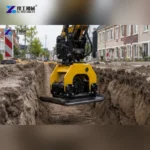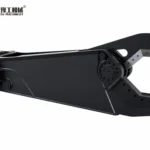
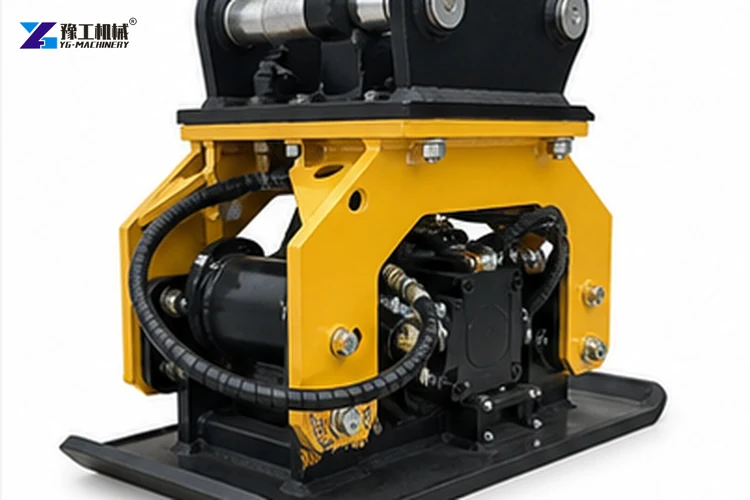
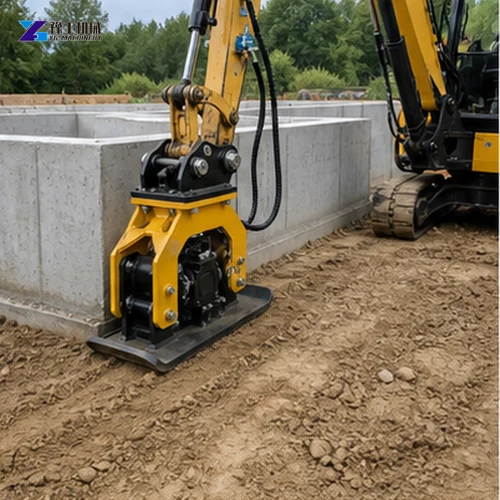
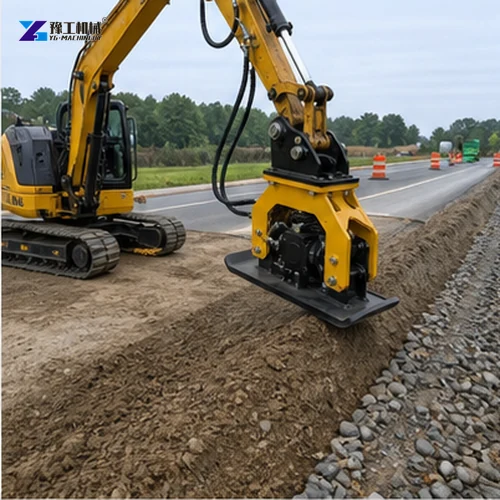
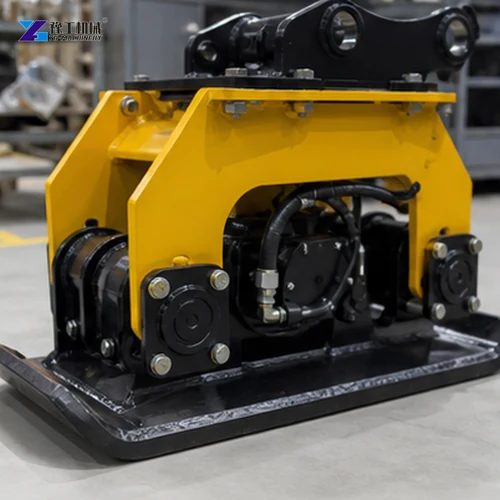
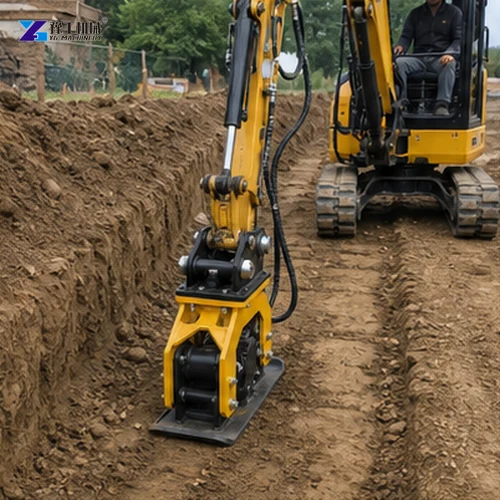
An Excavator Plate Compactor lets the carrier compact trench backfill, foundation edges and slopes without placing a worker beside a handheld plate. The attachment still has to match the excavator, hydraulic circuit, working width and soil method. Carrier tonnage alone cannot determine whether the plate will enter the trench, remain flat at depth or deliver an accepted density.
This guide converts the job into a practical selection brief. It explains plate width, vibration, hydraulic fit, lift thickness, pass planning and mounting. Buyers can use it to compare proposals and send the information YG needs to review an excavator vibrating plate compactor for the actual working position.
Which Plate Size Fits The Working Area?
Measure the narrowest trench, pipe clearance, open backfill area and obstacles. A wide plate covers open ground quickly but may bridge uneven fill or fail to enter a narrow trench. A smaller plate reaches confined zones but needs more overlapping passes.
Include working depth and reach. The carrier must hold the attachment square to the surface at the farthest point without losing stability. On slopes, define machine position, direction of compaction and edge distance.
How Is The Attachment Matched To Excavator Hydraulics?
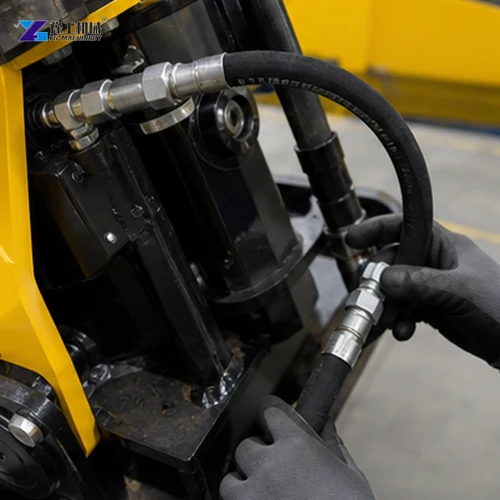
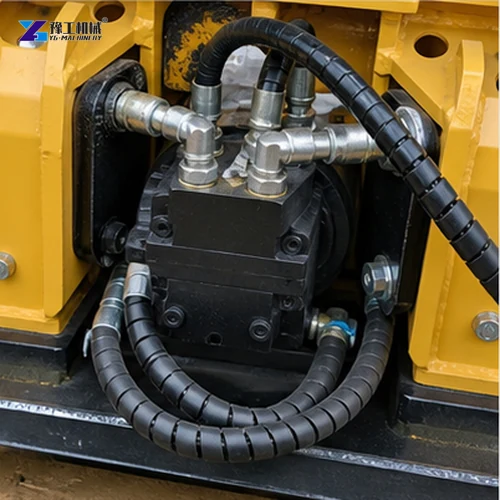
Provide excavator model, operating weight, auxiliary flow, pressure, return arrangement and coupler dimensions. Flow must remain within the vibration motor range; excessive flow can create heat, while low flow reduces compaction action.
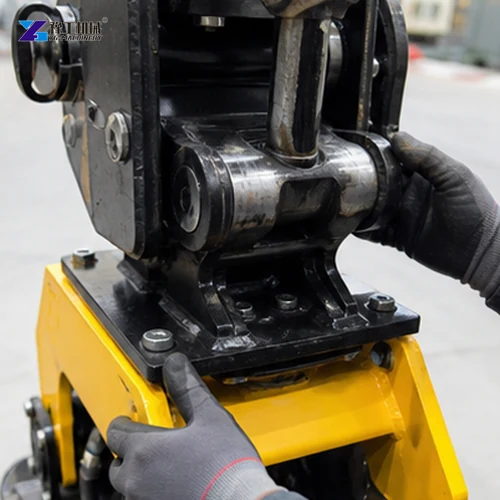
Check hose length through full boom movement and prevent rubbing or tension. The bracket should let the plate sit flat under controlled down force. Excessive boom pressure can unload the carrier or stop the plate from moving naturally over the surface.
Not sure which configuration fits your project? Send the working conditions and YG can review a practical Excavator Plate Compactor configuration for the actual job.
What Soil And Lift Data Control The Compaction Method?
Describe soil grading, moisture and confinement. Granular fill rearranges under vibration differently from cohesive soil. Place material in controlled lifts and establish pass count from the project specification and field test, not from attachment operating time alone.
If the surface pumps, ruts or remains soft, review moisture and lift thickness before adding unlimited passes. Record material, lift, passes and test location. Density or stiffness acceptance turns compaction into a controlled quality process.
| Specification | Buyer Must Confirm | Why It Matters |
| Carrier | Model and operating weight | Stability and attachment range |
| Hydraulics | Flow, pressure and return | Motor speed and temperature |
| Plate | Width, length and weight | Access and coverage |
| Compaction | Frequency and force | Soil response |
| Mounting | Pins, ear spacing or coupler | Physical fit |
| Method | Soil, lift and acceptance test | Required passes and result |
Compaction acceptance must be agreed before choosing the attachment. Specify lift thickness, moisture window, required density or stiffness test, test frequency and the person responsible for approval. The plate should then be evaluated in a trial area using the intended excavator, soil and working reach. This links the attachment choice to a measurable result instead of a vibration claim.
The operator also needs a repeatable sequence. Place material in controlled lifts, keep the plate flat, overlap passes and avoid striking pipework, trench boxes or structures. If the excavator works at long reach, reduce aggressive movement and confirm stability. Record the successful lift and pass pattern so later sections are compacted under comparable conditions.
Include trench geometry and support equipment in the quotation. A wide plate may cover open fill efficiently but cannot work cleanly between trench-box struts or close to a chamber wall. A narrower attachment may require more passes yet produce a safer, more consistent result in restricted sections. Confirm plate clearance at the deepest planned working position.
Which Specifications Should Be Confirmed Before Ordering?
Ask the supplier to state carrier range, attachment mass, plate dimensions, vibration frequency, centrifugal force, required flow and pressure, mounting interface and hose package. The complete data table below is a quotation checklist because verified model values must match the final YG configuration.
Compare all proposals with the same carrier and soil assumptions. Include the coupler, pins, hoses, spare isolation mounts and service items in the commercial scope.
Not sure which configuration fits your project? Send the working conditions and YG can review a practical Excavator Plate Compactor configuration for the actual job.
What Should Be Sent For An Excavator Plate Compactor Quote?
Send excavator details, linkage drawing, hydraulic data, trench dimensions, soil, lift thickness, required test, working depth, slope, destination and daily area. Add photos showing access and pipes or structures.
Review the YG excavator quick coupler, excavator ripper and excavator attachment range when planning the sequence from loosening to backfilling and compaction.
Excavator Plate Compactor FAQ
No. Trench width, obstacles and required coverage control practical plate size.
It depends on soil, moisture, compaction energy and the project specification; confirm it through testing.
Yes in suitable applications when clearance, pipe support and the approved method prevent contact or damage.
Provide auxiliary flow, pressure, return arrangement, fittings and adjustable settings.
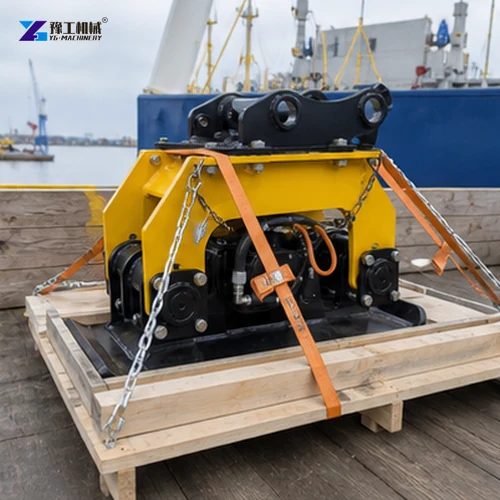
Attachment, bracket or coupler, hoses, service parts, packing, delivery and technical support should be identified.
Prepare The Project Information For The Next Step
Before requesting a final offer, confirm the application, material or ground, required capacity or dimensions, carrier or power data, site access, destination and expected working schedule. A complete brief allows YG to review compatibility, included equipment, wear parts, transport and support without relying on assumptions.
Send the measured project conditions with photographs or drawings. The technical and sales teams can then prepare a configuration and quotation that reflects the actual work rather than a generic product listing.
Not sure which configuration fits your project? Send the working conditions and YG can review a practical Excavator Plate Compactor configuration for the actual job.