
A utility-pole auger package is a hydraulic drive, carrier interface and earth bit selected for a specified bore schedule. The useful comparison is whether the tool can make the required hole through the expected layers while the excavator maintains alignment and clears spoil—not simply whether a listing says auger attachment.
Related product information: excavator auger attachment and excavator attachments.
How Does an Excavator Auger Attachment Drill a Pole Hole?
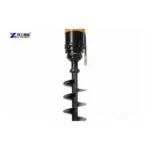
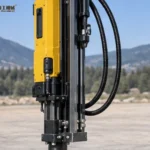
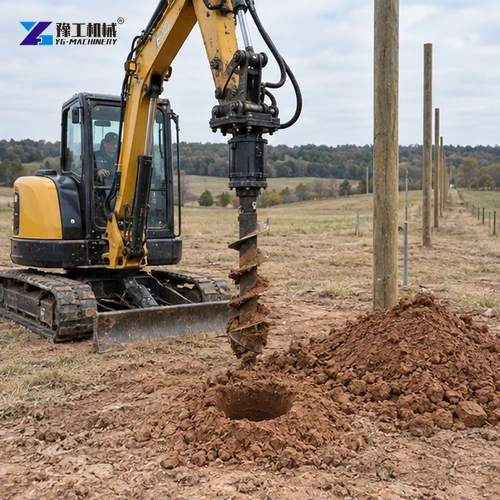
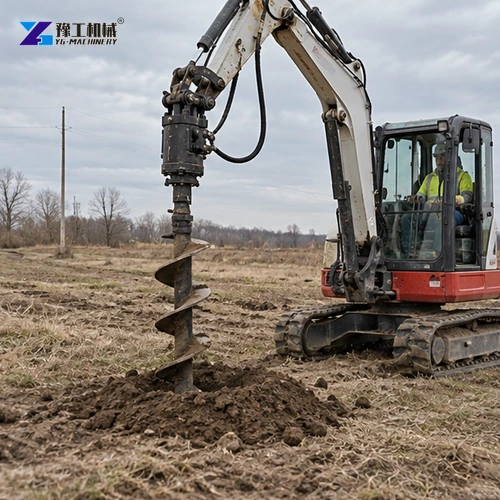
An excavator auger attachment converts the carrier’s auxiliary hydraulic supply into rotation at a drive unit. The drive turns a central shaft and helical flighting; the pilot point starts the bore while the cutting teeth loosen soil and the flights carry spoil toward the surface. The selected drive, bit and carrier therefore form one working set, rather than three independent catalogue choices.
The attachment package normally needs a carrier interface, hydraulic drive, auger bit and the correct hoses or couplings. Extensions, alternative bits and wear teeth are configuration choices that depend on the required depth and ground. Confirm the exact included items in the offer because a photograph of a complete auger assembly does not establish what is standard.
For pole work, the useful product test is whether the selected bit can make the specified hole in the expected layers while the excavator holds alignment and removes spoil safely. Diameter, depth, soil, groundwater and access all affect the result; the article’s selection checks should be read as a project review, not a universal production promise.
Define the Pole Hole Schedule Before Choosing an Auger
List every pole location, required finished diameter, drilled depth, tolerance and spacing. Add the pole base, backfill method and any bell or enlarged section. This separates a repetitive utility-pole program from occasional post-hole work and gives the supplier a measurable drilling task.
Mark overhead lines, buried services, property limits, traffic zones and excavator standing positions. The attachment can drill only where the carrier can approach, remain stable and keep the mast or auger clear. A narrow verge may make access and spoil handling more important than theoretical torque.
A schedule should group poles by hole geometry and ground profile. If pole bases, embedment depth or backfill change along the route, split the schedule into work groups so the crew does not assume one bit and one drilling method suit every location.
Share the pole layout, hole diameter and embedment depth, expected ground and excavator model; these details help match the auger drive, bit and extension to the actual hole schedule.


Match Auger Teeth and Flighting to the Ground
Describe each layer as fill, topsoil, clay, sand, gravel, cobble, weathered rock or competent rock. Soil teeth, pilot points and rock teeth are not interchangeable answers to every bore. Send photographs or a geotechnical log when refusal risk is high.
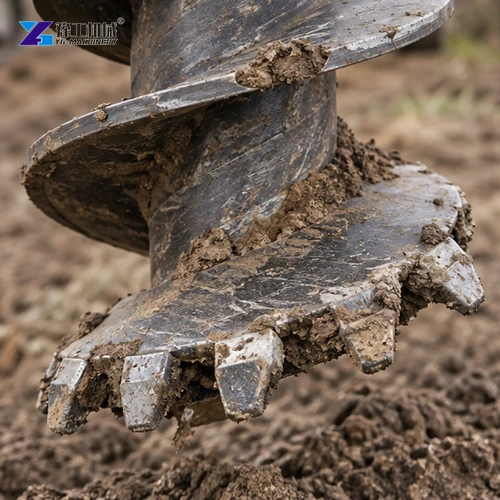
The flight diameter must reflect the finished hole and the way loose material expands during extraction. Sticky clay may remain on the flights, while loose sand can fall back into the hole. Plan cleaning, spoil placement and any casing or stabilization separately from attachment selection.
Tooth position, pilot condition and flight shape influence how the auger starts and clears material. Look for wear or damage that makes the bit track off center, and specify replacement tooth type from the matching bit drawing rather than mixing visually similar parts.

Match Excavator Auger Hydraulics and Coupler Geometry
Provide carrier make, model, operating weight, auxiliary flow, relief pressure, coupler type, pin dimensions and hose connection. The drive must fit the available hydraulic envelope without exceeding the excavator or attachment limit.
Confirm lift capacity with the drive, extension and largest bit installed. Longer tooling increases leverage and can reduce control near the ground. The coupler and suspension joint must allow the auger to hang plumb while the excavator remains on a stable working platform.
Ask for the drive’s required flow and pressure range and compare them with the excavator’s auxiliary circuit data. Also check case drain or return requirements where applicable, connector type, hose routing and coupler dimensions against the exact carrier model; a pin fit alone does not establish hydraulic compatibility.
Provide the excavator make and model, hydraulic flow and pressure, required hole diameter and depth, and the expected soil or rock. These determine the auger drive, bit, extension and carrier fit.

Control Hole Alignment, Depth and Spoil Removal
Set a visible center mark and begin at low speed until the pilot point is established. Keep the tool vertical from two directions, advance without forcing it, and lift periodically so spoil can clear. Excess crowd force can stall the drive, polish the teeth or pull the hole off line.
Measure depth using the approved site method rather than counting revolutions. Stop if the auger encounters an unknown obstruction, buried service, unstable wall or material outside the agreed ground description.
If the bit repeatedly lifts soil without deepening, check whether the ground is compacted, sticky or obstructed and whether spoil is clearing from the flight. Stop and inspect instead of forcing rotation, which can increase torque load and make alignment harder to recover.
Prepare the Utility Pole Auger Quotation
Send the hole schedule, ground information, carrier data, coupler drawing, bit diameters, maximum depth, extensions, hose requirements, destination and expected quantity per shift. Ask for the drive, bits, teeth, pilot, extensions, pins, hoses, tools, spares and packing on separate lines.
Do not treat output as a fixed promise. Cycle time depends on travel, positioning, alignment, ground, extraction, spoil clearing and inspection. A useful trial confirms the complete hole and handling process.
A useful offer states the drive, bit diameter and type, extension, mounting interface, hydraulic hoses, spare teeth, documents, packaging and test scope. Ask suppliers to identify exclusions so transport, carrier preparation and site work are not silently treated as included.
For a utility-pole auger quotation, include the pole schedule, hole diameter and depth, spacing, ground conditions, excavator model, access limits and delivery destination. This lets the supplier match the drive and bit to the actual hole pattern.
Inspect the Completed Pole Holes
Inspect diameter, depth, verticality, loose material and water before the pole crew accepts a hole. Record any refusal, collapse or enlargement by location because one successful hole does not prove the whole route has uniform ground. Keep spoil far enough from the edge that it cannot fall back or overload weak ground.
Coordinate drilling with pole delivery and installation. Open holes create hazards and may deteriorate in rain or loose soil, so the sequence should minimize the time between drilling, inspection and placing the pole or approved protection. Barricades and covers follow the site method, not an attachment sales assumption.
Plan consumable inspection around the actual ground. Worn pilot points and teeth reduce penetration and can increase heat or wandering. Check the drive, fasteners, pins, hoses and bit connection at the defined interval, and keep the correct replacement teeth for each bit style instead of mixing parts by appearance.
For acceptance, run representative holes in the hardest expected layer and one restricted location. Record carrier settings, bit, extension, depth, cycle stages and any cleaning time. This evidence gives the buyer a realistic operating plan and a repeatable baseline for future crews.
Compare the quotation against the same hole schedule. One supplier may include a drive and one bit while another includes several bits, extensions, hoses and spare teeth. Separate standard and optional items, confirm pin dimensions and request packing dimensions and gross weight for freight planning.
At commissioning, train operators to recognize stall, excessive vibration, tooth wear, hose damage and unstable ground. Keep the approved bit and carrier combination with the job record so later crews do not substitute a larger tool or deeper extension without another stability and hydraulic review.
Excavator Auger for Utility Pole Holes FAQ
Provide the required hole diameters and depths, ground layers, pole spacing, excavator model and auxiliary hydraulic data. Add access limits and the bit or extension needed so the drive and tooling can be checked as one set.
No. Soil, gravel, cobbles and weathered rock place different demands on the pilot and cutting teeth. Confirm the bit against the expected layers and use a representative trial where refusal or hole collapse is possible.
Ask for the hydraulic drive, carrier interface, bit diameter and type, extensions, hoses and couplings, replacement teeth, spares, documents, packing and test scope. Confirm exclusions such as excavator preparation and site services.