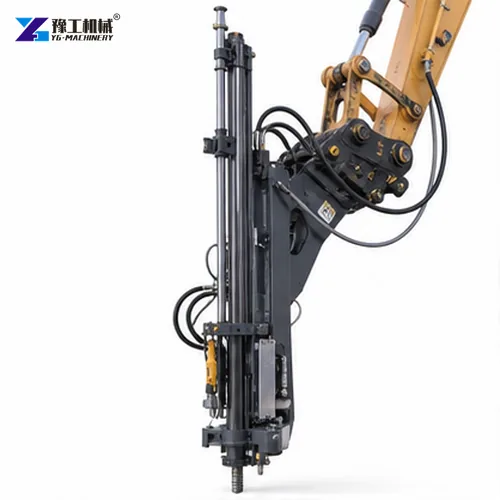
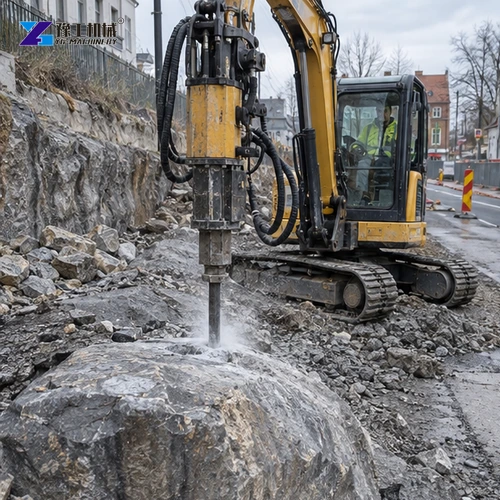
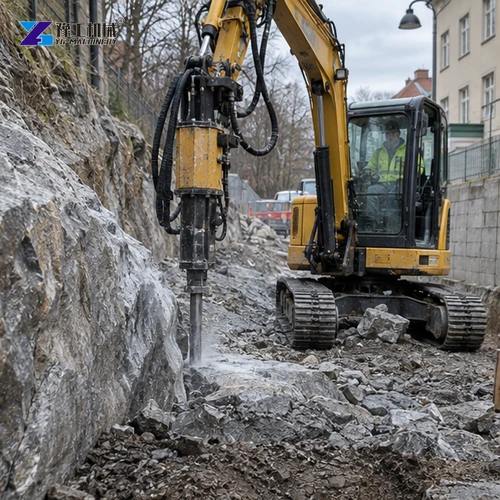
An integrated rock drill and splitter performs two linked operations: it drills a prepared hole, then applies splitting force through a compatible tool. In an urban excavation, product fit depends on the rock face, free space for the crack, excavator access and the approved removal sequence; the attachment alone cannot promise a vibration result or complete the excavation.
Related product information: integrated rock drill and splitter and excavator attachments.
What Does an Integrated Rock Drill and Splitter Do on Site?
A drill-and-splitter attachment combines two stages of controlled rock breaking: drilling a prepared hole and applying splitting force through a compatible tool. The drilling assembly establishes the hole; the splitter then acts on the rock mass. The job depends on the order, tool interface and space for a crack to open, not simply on excavator reach.
The package can include a mounting frame, drill components, splitting tools, hydraulic connections and wear items. Buyers should identify which components are integrated, exchanged or supplied separately on the offered model. This prevents a drawing of the complete system from being mistaken for the delivered scope.
This equipment is relevant where a project needs a controlled alternative to bulk breaking, but the machine does not set vibration limits, design temporary support or remove the broken fragments. Rock structure, a free face, the approved hole plan and an excavator matched to the attachment determine whether a trial is appropriate.
Confirm Why Controlled Rock Breaking Is Required
Urban work often limits blasting because of nearby structures, utilities, traffic, noise windows or permit conditions. Record the exclusion zone, vibration requirement, allowable working hours and the structure nearest the rock face before selecting equipment.
A drill-and-split system creates a hole and then applies internal splitting force. It does not remove broken material, design temporary support or replace the project engineer. Excavation, lifting and disposal still need a separate method.
Write the reason for choosing controlled breaking into the work method: nearby structures, utility corridors, restricted work hours or limits on vibration and noise. These constraints affect the sequence and monitoring plan; they are not machine specifications.
Provide the rock face, nearby structures or utilities, excavation boundary and excavator model; those constraints show where drilling and splitting can fit the required low-disturbance sequence.
Describe the Rock Mass and Planned Free Face
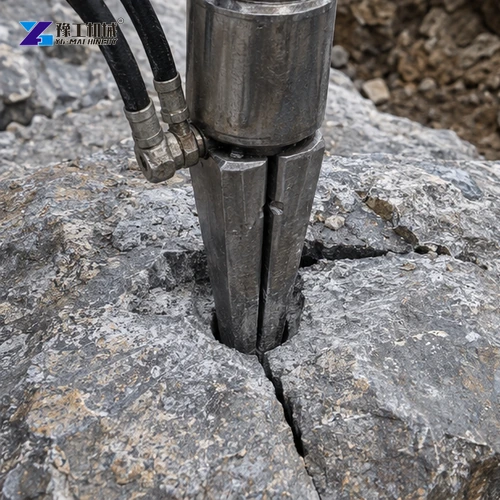
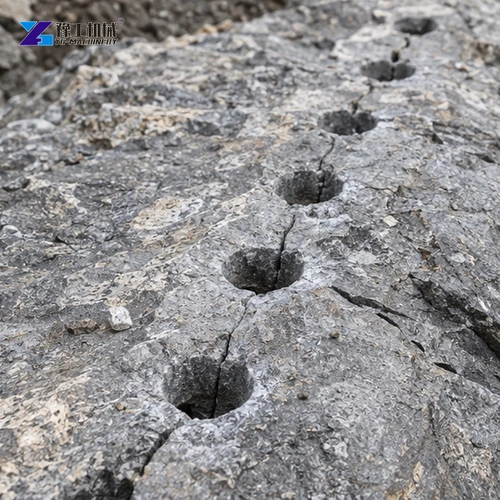
Provide rock type, weathering, joint spacing, bedding direction, block size and photographs of the exposed face. Splitting needs room for the crack to open; a confined mass without a free face may require staged excavation or a revised hole pattern.
Define the target fragment size from the excavator, loading route and disposal plan. Smaller fragments can require more drilling and handling. The practical target is material that can be safely removed, not the smallest possible piece.
A face, joint or bedding plane can direct a crack away from the intended line. Mark the planned free face and protected boundary on the site drawing, then have the project team review the approach before drilling near foundations or buried services.
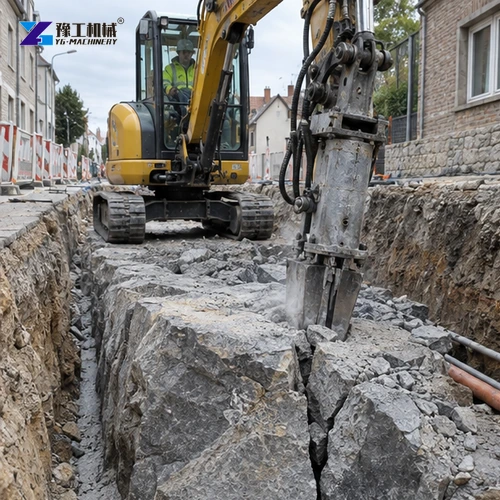
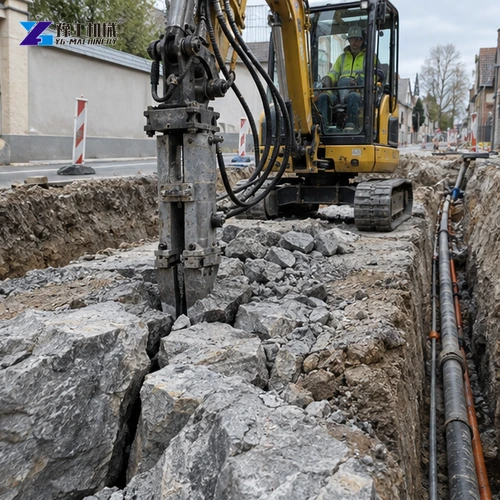
Plan Drilling Depth, Spacing and Split Direction
The project method should specify hole diameter, depth, spacing, row sequence and split direction after trial work. Hole geometry must suit the installed drill and splitting tool; values from another machine or rock type are not a safe recipe.
Start with a controlled trial area and inspect the crack path, nearby surfaces and fragment stability. Adjust one variable at a time and keep a record of rock condition, hole pattern and result.
Hole spacing and depth depend on rock condition, tool geometry and the selected fragmentation target. Use an approved trial to confirm whether the crack follows the intended direction; do not transfer a pattern from a different rock mass as a guaranteed recipe.
For a rock drill and splitter package, specify the excavator model and hydraulic circuit, rock type and structure, required excavation dimensions, access limits and nearby services. These determine attachment fit, drilling arrangement and where controlled splitting can be used.
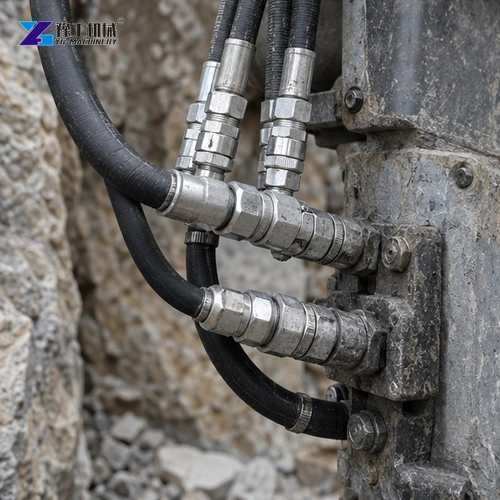
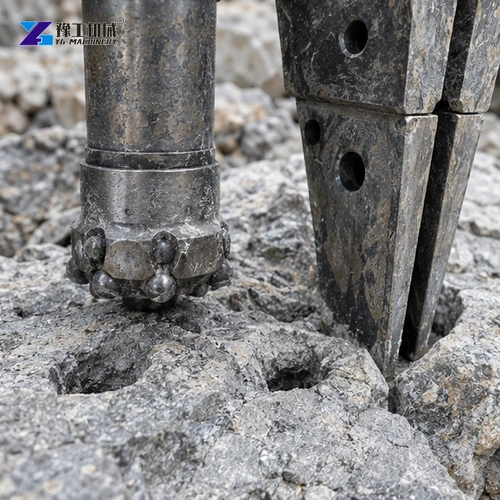
Match the Rock Drill and Splitter to the Excavator
Send excavator model, operating weight, boom arrangement, auxiliary flow, pressure, return-line limits and coupler details. Check reach at the actual face and stability with the attachment positioned sideways or below grade.
The work area also needs safe hose routing, visibility and access for inspection. Protect hoses from sharp rock and do not let the excavator track over them.
Confirm whether the carrier can hold the drill perpendicular at the target position and maintain the required hydraulic supply through the complete cycle. Hose protection and tool clearance matter in a confined excavation where the attachment may contact a wall or debris pile.
Build an Urban Excavation Equipment Package
List the integrated attachment, mounting bracket, drill consumables, splitting tools, hoses, controls, lubrication items, spare wear parts, manuals, packing and commissioning scope. Keep excavator work, rock removal and site protection outside the machine quotation unless specifically included.
Send drawings, quantities, access limits and destination with the enquiry. YG can then review whether the machine and carrier form a workable drilling-and-splitting package.
Separate the attachment package from project services such as excavation support, fragment handling, monitoring, dust control and disposal. A clear responsibility list prevents the buyer from assuming the attachment quotation includes site engineering or compliance work.
A complete urban excavation package should name the drill-and-splitter attachment, carrier bracket, drill consumables, splitting tools, hoses, controls and wear parts. Compare each item with the intended rock-breaking sequence; site protection, spoil removal and excavator work remain separate unless included in the offer.
Control the Excavation Sequence and Acceptance
Divide the rock mass into manageable stages so drilling, splitting and removal do not interfere. Loose blocks must be scaled or supported before the excavator works below them. The next row should not begin until the previous fragments and exposed face have been inspected under the project safety method.
Monitor the items required by the project, which may include vibration, noise, movement at nearby structures and condition of buried services. The attachment is selected to support controlled breaking, but compliance depends on how the whole operation is planned and recorded.
Inspect drill steel, bits, splitting wedges, guides, pins, fasteners and hydraulic lines at the specified intervals. Abrasive rock and poor hole alignment can accelerate wear. A dull bit or damaged guide changes the hole and can make a correctly sized splitting tool perform poorly.
Acceptance should demonstrate a complete cycle in representative rock: position, drill, clear the hole, split, make the fragment safe and remove it. Record cycle constraints and consumables separately from theoretical machine limits so the quotation and production plan remain realistic.
Compare quotations on the same rock description, carrier and working package. Confirm which drill tools, splitting elements, bracket, controls, hoses, spares and commissioning services are included. A low attachment-only price is not comparable with a package prepared for controlled urban work.
Plan operator training around positioning, drilling alignment, tool change, hose protection and safe response to a stuck tool or unstable fragment. The approved sequence should be available at the machine, with site engineering controls kept separate from manufacturer operating instructions.
Rock Drill and Splitter for Urban Excavation FAQ
The drill makes a prepared hole, then the compatible splitter applies force inside that hole to open a controlled fracture. Broken rock still has to be checked, handled and removed under the site method.
No. The method may support controlled breaking, but vibration and movement depend on the rock mass, hole pattern, sequence, equipment and nearby structures. Set monitoring and acceptance limits through the project team; do not treat the attachment as a guarantee.
Send exposed-face photos or geology, joint direction, target fragment size, free-face location, trench dimensions, excavator data, access limits and any monitoring or work-hour requirements.