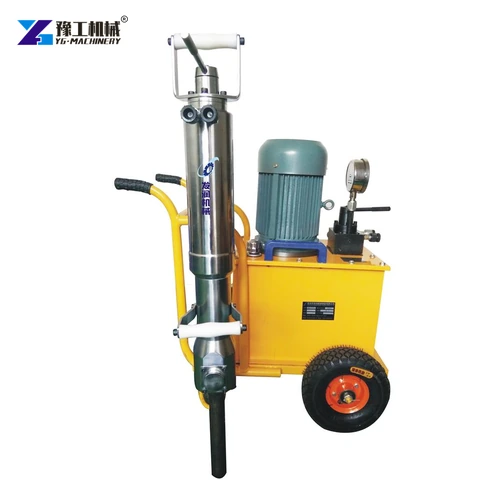
A hydraulic rock splitter machine creates controlled cracks from predrilled holes using a pump station, hoses and one or more splitter guns. It is used where the work plan favors localized breaking with limited impact over uncontrolled fragmentation. The system still requires a suitable drilling method, a safe hole pattern, access for the power unit and a planned sequence for removing the separated material.
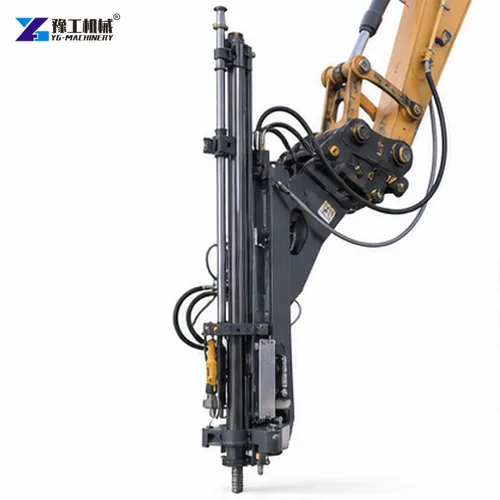
This page covers the standalone YG-250, YG-350 and YG-450 splitter-gun system. It is different from an excavator-mounted integrated drill-and-splitter machine. Buyers should identify rock condition, block dimensions, free faces, required fragment size, drilling capacity, available power, hose route and daily sequence before choosing the gun and pump package.
Continue the selection with the integrated rock drill and splitter, hydraulic rock splitter price, and hydraulic rock splitter for sale where those pages match the project task.
Send the project dimensions, material and working conditions for an initial configuration review.

Confirm the Rock and Free Face before Splitting
Map the rock mass, visible joints, bedding, weathered zones and the direction in which the material can move. A splitter expands inside the hole, but the crack still follows the available weakness and relief. Work that has no free face may need an opening cut or staged hole sequence before useful separation can occur. Mark services, unstable edges and exclusion zones before drilling begins.
Define the required result as removable blocks, trench excavation, foundation trimming or secondary breaking. Record the largest practical fragment for lifting and hauling. This result changes hole spacing and sequence. A large uncontrolled block may create extra handling even when the initial split succeeds, while excessively close holes add drilling time without improving the final workflow.

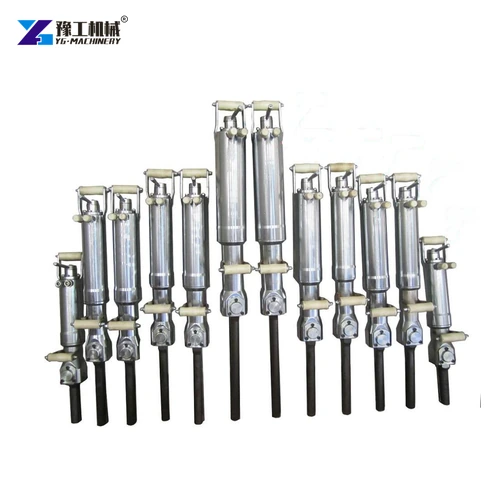
Match Hole Diameter and Depth to the Splitter Gun
Drill straight holes using the diameter and minimum depth required by the selected model. Clean cuttings and standing water from each hole and check that the full wedge section can enter without forcing the cylinder or coupling against the rock. An oversized, shallow or curved hole reduces contact and can make the wedge set load unevenly.
Prepare a trial pattern in representative material before setting the full production spacing. Record hole diameter, depth, angle, spacing, free-face distance and splitting sequence. If the crack does not develop as planned, review geology, relief and hole quality before simply increasing pressure or adding more guns. The machine should operate inside its specified system, not compensate for an unsuitable bore pattern.
Share the working range and test conditions so the product can be matched to the real job.
Compare YG Hydraulic Rock Splitter Machine Models
Select one model from the complete parameter row and keep its wedge, stroke, drilling requirement, force and weight together. The table is for preliminary matching; the final gun quantity, pump station, manifold and hose package also depend on how many holes will be activated in one sequence and how the crew can move through the site.
| Parameter | YG-250 | YG-350 | YG-450 |
| Wedge length | 250 mm | 350 mm | 450 mm |
| Piston stroke | 90 mm | 220 mm | 220 mm |
| Required drilling depth | >500 mm | >700 mm | >900 mm |
| Drilling diameter | 42 mm | 46 mm | 46 mm |
| Typical crack width | 10–20 mm | 10–20 mm | 10–20 mm |
| Splitting time | 10–15 s | 10–15 s | 10–15 s |
| Splitting force | 500 t | 800 t | 800 t |
| Machine weight | 240 kg | 250 kg | 260 kg |


Configure the Pump, Hoses and Splitter Guns
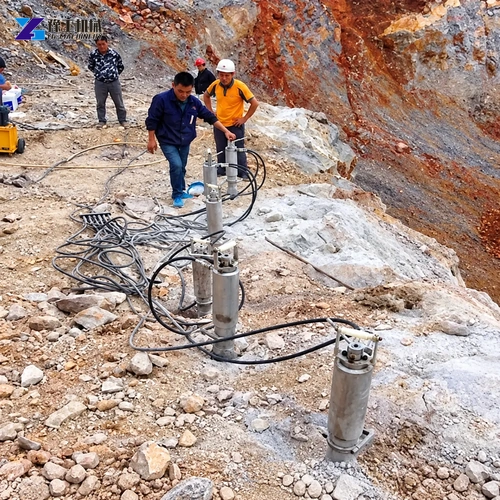
Place the pump station on stable ground outside the immediate split and material-handling path. Route hoses away from sharp edges, vehicle tracks, falling rock and pinch points. Inspect couplings, hose covers, cylinders and wedge sets before connecting the package. Where several guns are used, the manifold and pump must be supplied for that quantity rather than assembled from unrelated components on site.
Insert each gun only after the hole is clean and checked. Orient the wedge set to encourage the intended crack direction, keep personnel clear of the projected split and operate the agreed sequence. Stop if a gun cocks, a hose leaks or the rock movement threatens the equipment. Depressurize the system before repositioning, disconnecting or inspecting any hydraulic part.
Send the site layout and required operating sequence for a practical package review.
Plan the Controlled Rock-Breaking Sequence
Coordinate drilling, splitter placement, pump operation, lifting and spoil removal so one activity does not expose another crew. Number the holes and identify primary and secondary splits. Monitor whether the actual crack follows the intended relief and update the next row from the observed result. This measured approach is more reliable than applying the same spacing across changing rock.
Keep a daily record of holes drilled, guns used, split time, abnormal conditions, hose or wedge wear and fragment handling. The data helps refine the next section of work and supports maintenance planning. Replace damaged wedges, seals or couplings with compatible parts; mixing worn and new components without inspection can create uneven loading and downtime.

Request a Complete Hydraulic Rock Splitter Package
Send rock type and photographs, working dimensions, free-face condition, required fragment size, hole diameter and drilling depth, available drill, power preference, gun quantity, hose distance, access, destination and target schedule. State whether the system will work in a trench, quarry, foundation or confined area.
Request the selected splitter model, pump station, number of guns, manifold, hose lengths, couplings, wedge sets, tools, wear parts, manuals, packing and functional test as separate lines. A complete scope lets the buyer compare operating packages rather than comparing one pump price with another supplier’s pump-plus-gun system.
Provide the destination, schedule and accessory list for an itemized quotation.
Hydraulic Rock Splitter Machine for Controlled Breaking FAQ
No. The standalone system uses predrilled holes made with a suitable separate drilling method.
Yes when the pump station, manifold, hoses and operating sequence are configured for the selected gun quantity.
Relief gives the expanding wedge a practical direction for crack development and material movement.
Provide rock, hole, free-face, fragment, power, gun quantity, hose, access, destination and schedule information.