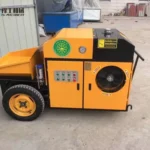
A small concrete line pump solves a particular delivery problem: getting prepared fine-aggregate concrete from a hopper to forms that are inconvenient to feed by barrow or direct discharge. Its advantage on narrow foundations and local repair pours is not simply speed. The line separates the material-receiving point from the placing point, so the mixer can remain outside the congested work area while concrete reaches individual sections.
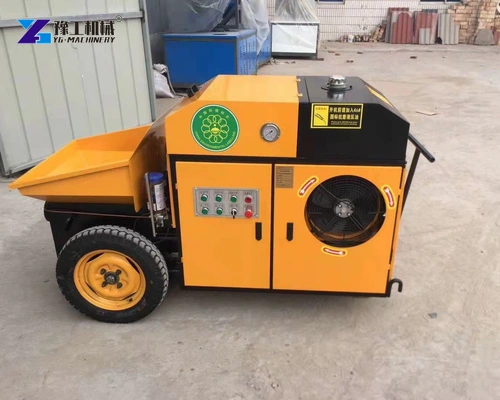
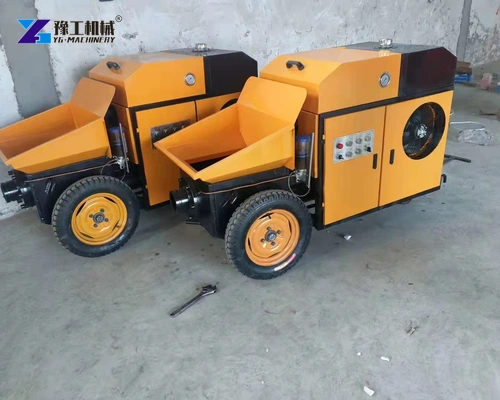
The electric YG-10 is a fine-aggregate configuration rated at 6 m³/h. That specification provides a starting point for small-job assessment, with its material range, delivery pipe and working conditions checked together. It is not a boom pump, a concrete mixer or a promise that every small pour can be completed continuously at the rated output.
Fine-Aggregate Concrete Placement in Narrow Reinforced Sections
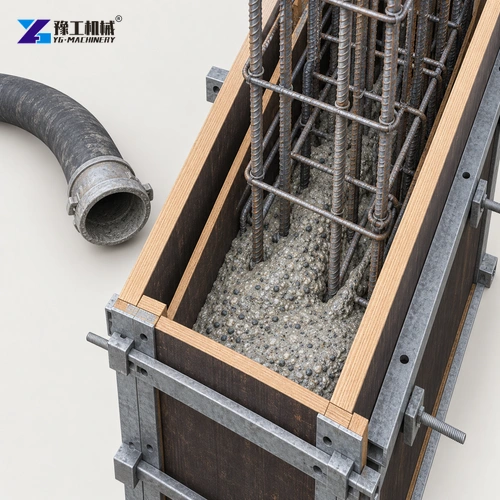
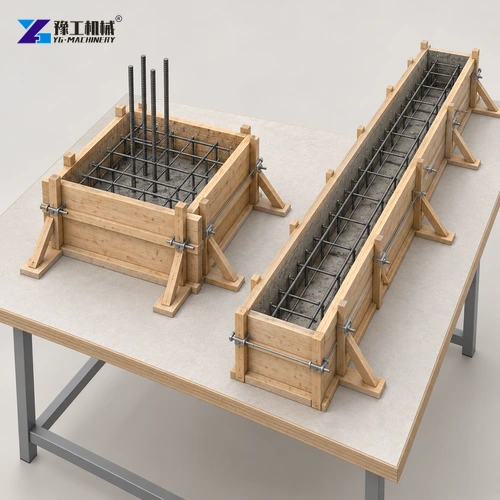
Narrow reinforced forms restrict more than the hose position. Concrete must pass between bars and reach corners without leaving unfilled pockets. A mix that travels through the delivery line can still be unsuitable for a heavily congested element: line passage and movement through reinforcement are different restrictions. The project’s concrete specification therefore remains the starting point, even when the pump’s aggregate entry appears compatible.
Consider two small pours of equal volume. An open equipment base gives the crew several accessible placing positions; a slender reinforced strip may offer only a limited path for the outlet and compaction equipment. The second task can require more deliberate distribution even though it uses no more concrete. A small concrete line pump should support that controlled receiving rate, not overwhelm the form with the maximum available delivery.
Define how the crew communicates a pause or a change in position. Follow the equipment instructions for operating, stopping and managing the line. Do not treat pulling a hose or obstructing its outlet as a substitute for proper pump control. A suitable equipment package supports the intended placement method rather than relying on improvised handling at the receiving end.
Compare the pump with the concrete and receiving conditions in the narrow sections.
Fine-Aggregate Concrete Must Remain Cohesive in the Delivery Line
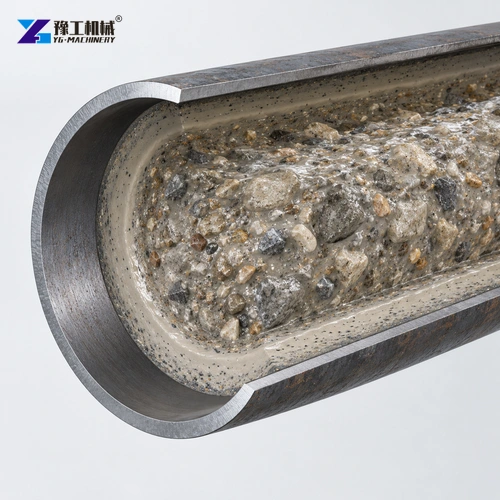
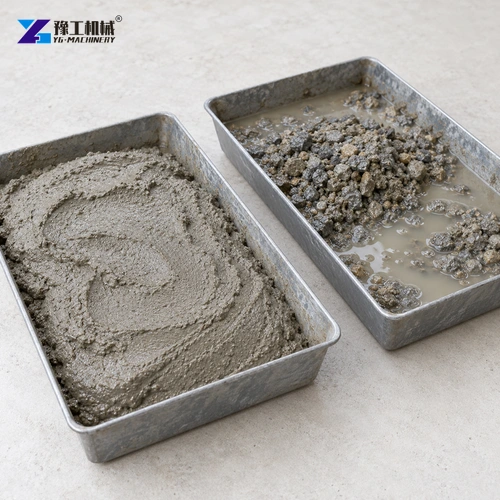
Concrete is a suspension of solid particles in a mortar phase, not water moving through an empty hose. Pumpability depends on the mix moving cohesively rather than separating into a stiff aggregate concentration and escaping liquid. The YG-10’s 0.5–1.5 cm aggregate entry identifies a material-size range, but does not describe grading, paste content or consistency by itself. Two mixes with the same largest stone size can behave differently in a line.
The mortar-rich layer at the pipe wall helps the bulk concrete move through the line. Bends, transitions and an inconsistent feed can disturb the conveying conditions; extra pressure is not a substitute for a suitable mix. When ordering a small concrete line pump, describe the intended concrete as well as its aggregate size. Do not alter an approved concrete mix by adding water merely to make pumping easier.
The pump is a conveying machine, not a corrective stage for unsuitable concrete. Do not use its pressure rating to justify a mixture outside the approved aggregate range or an unsuitable placing specification. Material approval and pump compatibility need to be established before the placement begins.
YG-10 Small Concrete Line Pump Parameters
The following values belong to the electric YG-10 configuration. Keep these figures together when comparing equipment. They should not be combined with the capacity, engine or material range of a larger diesel trailer pump.
| Parameter | YG-10 electric configuration |
| Motor power | 15 kW |
| Listed work efficiency | 6 m³/h |
| Maximum pressure | 15 MPa |
| Working pressure | 10 MPa |
| Aggregate size entry | 0.5–1.5 cm |
| Vertical conveying distance entry | 20 m |
| Horizontal conveying distance entry | 50 m |
| Delivery pipe diameter | 80 mm |
| Machine weight | 600 kg |
| Dimensions | 1800 × 700 × 1100 mm |
The listed horizontal and vertical distances are separate specification entries. They do not define an approved combined route for every concrete mix, bend arrangement or site. The maximum pressure is also not a target operating setting. Confirm the proposed configuration and delivery route against the actual material and manufacturer’s limits.
An electric configuration needs a suitable supply and installation. For a separate discussion of that choice, see the electric concrete pump site-power guide. This article concentrates on placement and receiving-end coordination rather than electrical design.
Retain the verified YG-10 electric fine-aggregate configuration in the proposal.
Bends and Section Changes Affect the Delivery Route
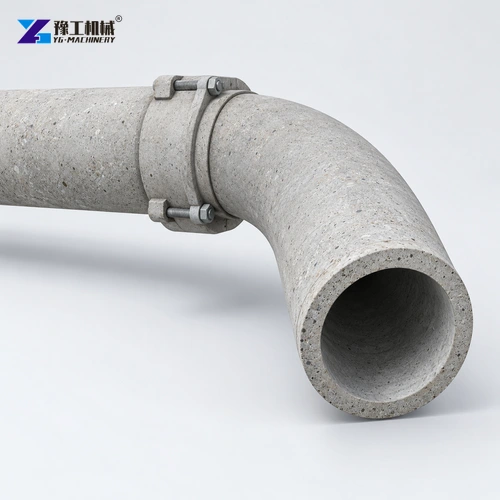
A route with several changes in direction is not equivalent to a straight run of the same length. Concrete changes direction through bends, while each coupling and transition becomes another component that must suit the pressure and material. A hose arranged in unnecessary loops can therefore be less useful than a direct compatible line, even where both layouts fit inside the listed horizontal-distance entry.
A small concrete line pump should be selected with the delivery components it needs. Pipe diameter, hose type, connections and pressure compatibility form part of that package. A machine’s outlet size does not prove that any locally available hose can be connected or operated at the listed pressure.
For isolated machine bases, line movement between forms may occupy more time than actual delivery. For a continuous narrow strip, the limiting activity may instead be distributing and compacting each portion. These are different reasons for selecting the same small concrete line pump. The quotation should identify a compatible line arrangement for the actual job; the approved operating procedure must govern any stopping, relocation or pressure release.
Match the line, couplings and route to the intended concrete.
Why Six Cubic Metres per Hour Is Not the Small-Pour Completion Rate
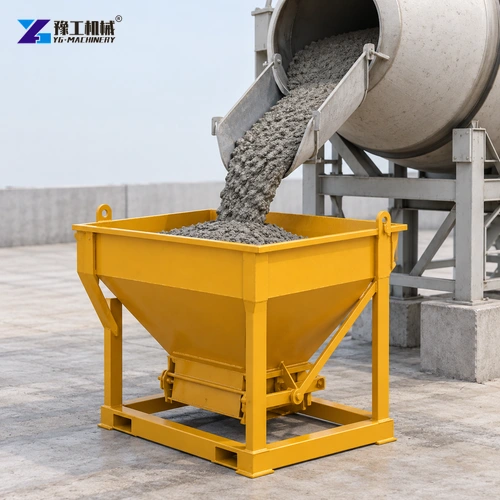
The listed 6 m³/h is a machine output figure, whereas an order is completed through mixing, feeding, conveying, placing, consolidation and finishing. If prepared concrete arrives in separate batches, the hopper cannot maintain continuous delivery between them. If the form fills faster than the crew can consolidate it, more pump output does not remove that bottleneck. Neither condition is solved by choosing a higher maximum-pressure rating.
The work also continues after the last section is filled. Establish the permitted cleaning and residual-material handling arrangement, following the equipment instructions and local site requirements. Leave access to the hopper, controls and relevant service points. Do not plan the pump into a space that can be reached for delivery but cannot be managed properly afterward.
End-of-pour work also belongs in the comparison. Concrete remains in delivery components after the last form is filled, and its handling must follow the manufacturer’s cleaning procedure and the site’s containment arrangements. A short repair pour may produce relatively little finished concrete while still requiring a complete setup and cleaning cycle. This is why repeat small placements can have a very different working pattern from one uninterrupted pour.
When the YG-10 Fine-Aggregate Configuration Fits the Pour
The YG-10 belongs in a comparison where the specified material fits its fine-aggregate configuration and a separate prepared-concrete supply is available. It is not a substitute for a coarse-aggregate pump merely because the job volume is small. Nor does it replace the mixing stage. The mini concrete pumping guide explains that wider hopper, pump and line relationship.
A small concrete line pump can improve delivery to individual bases or narrow sections when manual carrying is the awkward part of an otherwise suitable placing process. Where the real constraint is an incompatible mix, restricted consolidation or unreliable batch supply, the pump alone cannot solve it. Selecting the YG-10 should connect its verified material and conveying limits to that specific bottleneck.
Compare the complete conveying package with the actual small-pour bottleneck.
Small Concrete Line Pump FAQs
No. The configuration described here conveys suitable prepared concrete. Mixing is a separate supply stage.
Not by itself. Supply intervals, the delivery route and the receiving crew can limit the usable rate at the form.
No. Hose, connections and pressure compatibility must match the approved delivery package. Diameter alone is not sufficient.
They are separate listed entries, not approval for a combined route. Confirm the actual layout, material and equipment limits.
Movement between sections, access for placing and end-of-pour work can govern the equipment arrangement even when the total volume is small.
Include the concrete specification, section sizes, supply arrangement and proposed delivery route.