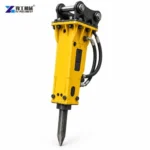
A small hydraulic breaker is an excavator attachment that fractures suitable material through repeated impacts at a working tool. In a confined foundation area, its useful fit depends on more than whether the carrier can lift it. The attachment and excavator need room to approach the concrete, maintain an appropriate tool position and remove broken material as the work progresses.
For contractors working around small footings, local foundation repairs or narrow excavation zones, the practical question is how the complete machine can reach and work at the target surface. The YG small-model range provides several carrier bands and hydraulic requirements. Match those values with the approved demolition scope and physical working envelope before choosing the attachment.
A Small Hydraulic Breaker Needs Concrete That Can Open and Fracture
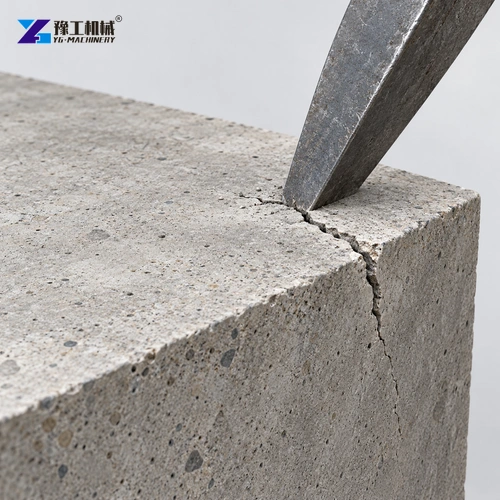
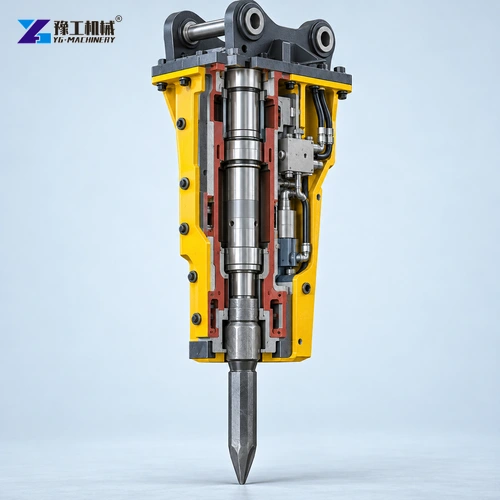
The breaker piston transfers repeated impacts through the working tool into a local contact area. Concrete removal then depends on cracks developing and pieces separating, not on the tool acting like a saw. An exposed edge gives fragments somewhere to move; a confined mass surrounded by retained concrete presents a different fracture problem. This is why similar-looking footings can respond differently to the same attachment.
For a small hydraulic breaker beside retained concrete, the boundary matters because impact-induced cracks do not stop automatically at a marked line. Precise separation and bulk breaking may therefore be different stages in an approved removal method. A smaller attachment is not inherently a precision cutting tool, and reducing its size does not by itself make impact acceptable beside a sensitive structure or service.
The machine should be selected after that task is clear. A compact attachment cannot make an unsuitable demolition method acceptable simply by producing smaller blows. Define the material, the retained boundaries and the access conditions, then compare the available attachment configuration with the approved work.
Match impact breaking to the concrete and retained boundary.
Breaker Alignment Depends on Boom Position, Not Just Entry Width
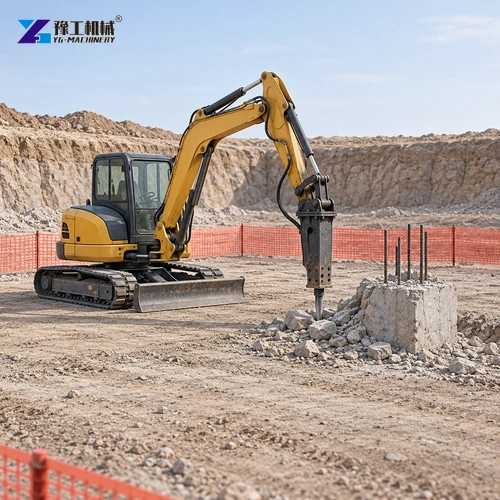
Passing through a gate only proves transport access. At the footing, the dipper and breaker must position the tool so impact can be transmitted along its intended axis. An overhanging slab or the wall of a deep excavation can obstruct the attachment body before the point reaches the target. A longer-looking tool does not necessarily solve that restriction; its approved geometry and the carrier’s reach determine the working envelope.
Side loading changes the task from transferring impact to bending the tool and loading its guides. The breaker is not designed to substitute for a pry bar. For a small hydraulic breaker, a workable alignment can consequently matter more than choosing the largest chisel diameter the excavator can carry. Carrier stability and permitted operating positions remain part of that comparison, not something attachment size can resolve.
Consider a concrete remnant at the bottom of a narrow excavation. The approach must accommodate both the tool and the boom position needed to reach it, while the carrier remains in an assessed supported location. The same remnant in an open yard presents a different equipment problem. Compare those positions before assuming that a small attachment will work in either setting.
Moil Points and Chisels Concentrate Breaker Impact Differently
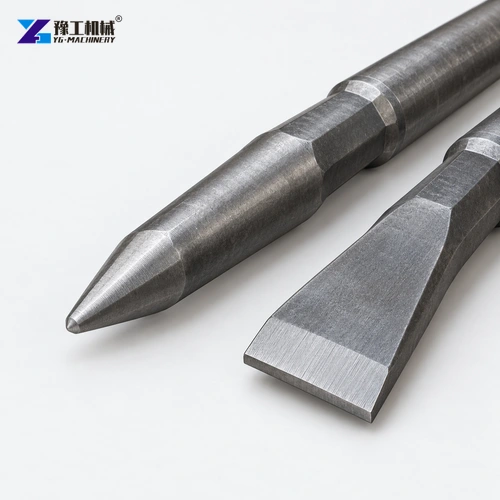
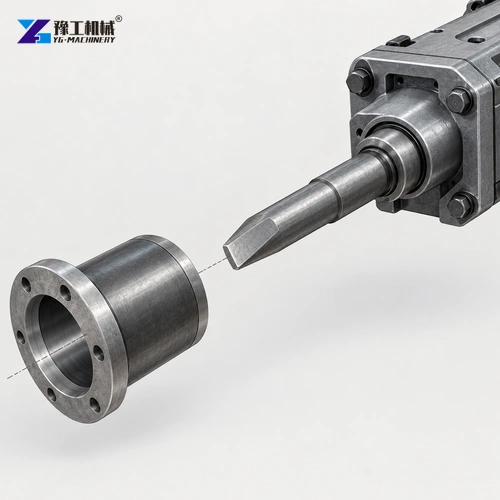
A pointed tool concentrates contact around its tip, while a wedge-shaped chisel introduces a directional splitting geometry. A blunt tool transfers impact without the same penetrating wedge action. These different contact shapes explain why tool selection changes with the material and removal task. They do not establish that all tool types are supplied for every YG model; the breaker manufacturer’s approved options determine availability and fit.
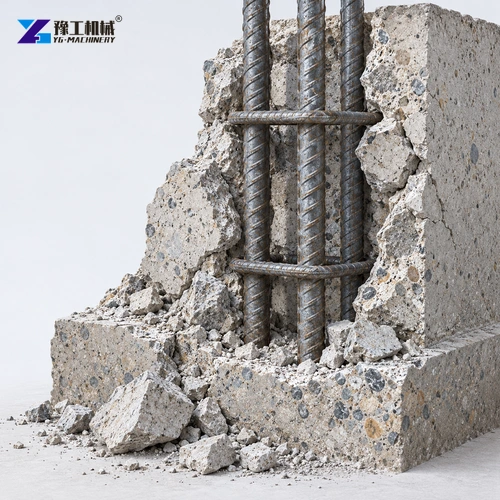
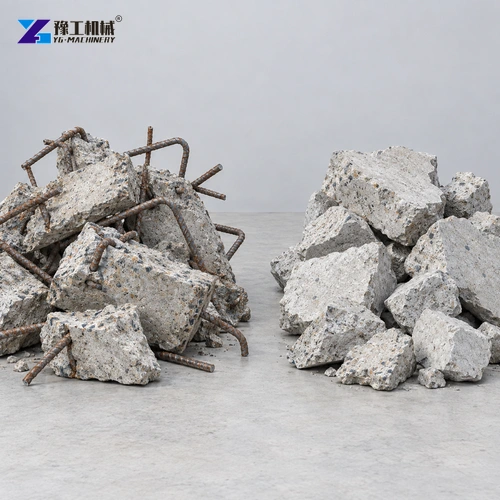
In reinforced concrete, a fragment can crack yet remain tied into the mass by steel. Further blows do not turn the attachment into a reinforcement cutter. The small hydraulic breaker and the subsequent steel-separation method serve different functions. That distinction is important in foundation work where part of the reinforcement or adjoining structure must remain: the approved removal scope determines both operations.
The distinction is useful when comparing alternative methods. A breaker delivers impact, a cutting tool separates along a cutting path, and other attachments may crush or shear material. Choose the function that fits the approved job rather than using one attachment name to cover every stage of foundation removal.
Select an approved working tool for the actual material and contact geometry.
Small Hydraulic Breaker Model Parameters
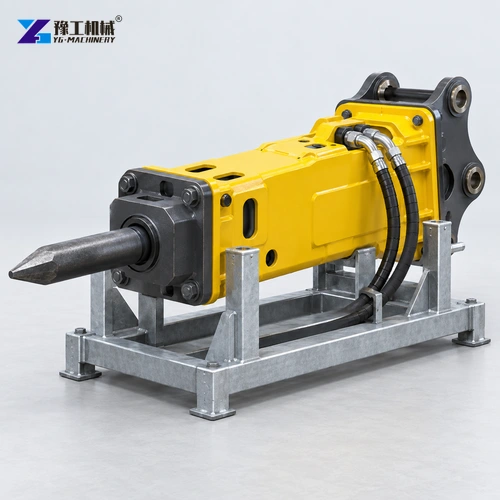
The table groups five small YG configurations from the published breaker range. Carrier weight bands are a starting point, not a complete compatibility approval. Mounting details, hydraulic settings and the carrier manufacturer’s permitted attachment arrangement must also agree.
| Model | Chisel diameter | Carrier band | Main body weight | Operating pressure, published kg/cm² | Oil flow | Blow frequency | Hose diameter |
| YG350 | 35 mm | 0.5–1 t | 40 kg | 90–120 | 15–25 L/min | 800–1300 bpm | 1/2 inch |
| YG400 | 40 mm | 1–3 t | 53 kg | 90–120 | 15–25 L/min | 800–1300 bpm | 1/2 inch |
| YG450 | 45 mm | 1.2–3.0 t | 67 kg | 90–120 | 20–30 L/min | 700–1200 bpm | 1/2 inch |
| YG530 | 53 mm | 2.5–4.5 t | 85 kg | 90–120 | 25–50 L/min | 600–1100 bpm | 1/2 inch |
| YG600 | 60 mm | 2–5 t | 140 kg | 90–120 | 25–50 L/min | 600–1100 bpm | 1/2 inch |
The main-body weight is not necessarily the installed attachment weight with bracket, coupler and tool. Include the complete fitted assembly when reviewing the carrier’s limits. Likewise, matching the flow band alone does not establish a suitable pressure, return arrangement or mounting interface.
For the broader attachment relationship, review the hydraulic breaker carrier-compatibility guide. Confirm the exact attachment configuration against the actual excavator rather than treating a carrier-tonnage band as a universal fit.
Check the model against the actual carrier hydraulics and attachment limits.
Fragment Size and Clearing Determine Foundation-Removal Progress
Breaking time is only part of a footing-removal cycle. Fragments can cover the next contact surface, remain linked by reinforcement or exceed the receiving bucket’s useful handling size. The clearing stage then limits progress even while the breaker itself has sufficient hydraulic supply. Faster blows do not necessarily shorten the complete task if the work repeatedly stops to expose the next surface.
The breaker is not a material-handling bucket. Plan the handover to the equipment or approved method used for fragment removal. Where the carrier changes attachments, establish the compatible coupling arrangement and the space needed for that change. Do not assume that a quick coupler or auxiliary hydraulic function is included with the breaker.
The model table also shows why blow frequency alone is a poor buying shortcut. YG350 and YG600 occupy different body-weight, tool-diameter and flow bands while their listed frequency ranges overlap. Frequency is not a published energy-per-blow value or a concrete production rate. Compare the complete approved attachment and the material response rather than rank the models by the largest bpm number.
Compare Small Breaker Models by Hydraulic Demand and Working Geometry
The overlapping carrier bands make a useful comparison possible. A 2.5 t excavator appears within several listed bands, yet YG400 specifies a 40 mm tool and 15–25 L/min, while YG530 specifies a 53 mm tool and 25–50 L/min. The shared carrier weight does not erase those different hydraulic demands or attachment geometries. Neither choice can be approved without the actual carrier and mounting information.
A small hydraulic breaker should therefore be chosen for a defined impact task, not as the smallest product in a catalogue. The useful configuration can reach an approved contact position, work within the excavator’s hydraulic and attachment limits and leave a practical way to clear the fractured material. That is a different objective from buying the highest frequency or largest tool diameter available.
Compare the fitted attachment with the complete breaking and clearing task.
Small Hydraulic Breaker FAQs
No. Mounting, the complete installed weight, hydraulic requirements and the excavator manufacturer’s limits also need to match.
Not necessarily. The bracket, coupler, working tool and other fitted components affect the installed assembly.
It is an impact tool for breaking suitable material. Cutting reinforcement is a separate task requiring the approved equipment and method.
The carrier may enter while boom movement or attachment position remains obstructed. Review the complete working envelope at the target surface.
No. Material, tool contact, carrier fit, access and fragment removal affect the operation. Compare the actual task with the complete configuration.
Include the excavator model, attachment interface, material and access conditions.