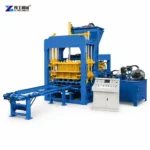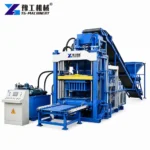
A concrete hollow block making machine forms the outside of a masonry block and the openings within it during the same production cycle. The mould defines the shape, the filling system distributes the concrete around the cores, and vibration with the compaction head consolidates the material. The freshly formed block must then leave the mould without losing that shape. These stages explain why a machine’s headline output is only part of a useful comparison.
How the Hollow-Block Mould Forms Shells and Webs
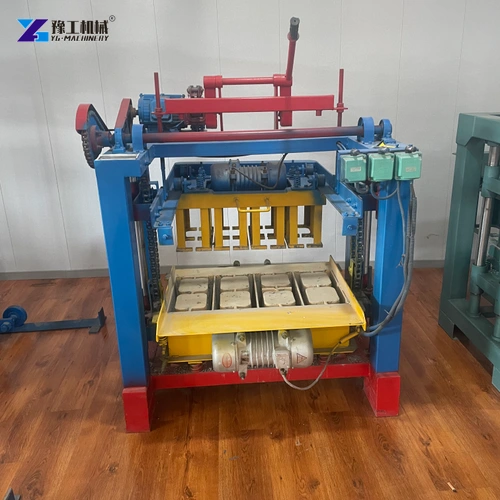
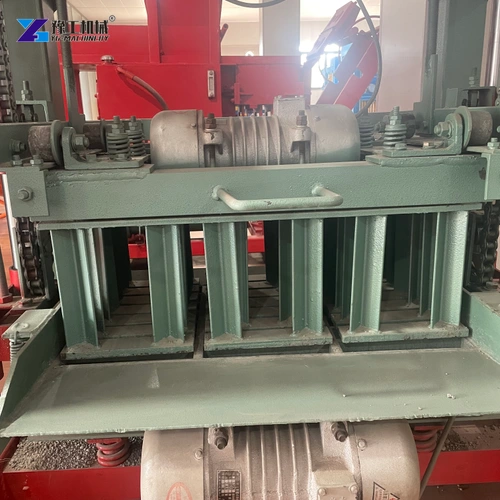
The mould box defines the external boundaries of the block. Internal cores occupy the spaces that will become its openings. Concrete fills the spaces between the cores and mould walls, producing the outer shells and connecting webs. Those narrow passages make hollow-block filling different from simply filling an open tray.
The compaction head must match the mould geometry. Its working surfaces act on the concrete sections rather than covering the openings as though the product were a solid brick. A new block design can therefore require matching mould and head components, not merely a different external box. The product drawing should define the finished length, width and height along with the openings, shells and webs.
This geometry also explains why two moulds with the same number of blocks per cycle need not behave alike. A layout with narrower passages or a different distribution of concrete changes the filling task. The appropriate aggregate grading and mix must suit those passages and the selected production process; no universal recipe follows from the machine’s model name.
Match the block drawing and its openings to the mould and compaction-head arrangement.
Filling Uniformity Comes Before Hollow-Block Compaction
Vibration can consolidate material already in the mould, but it cannot reliably compensate for a section that has not received enough concrete. Material must distribute around the cores and reach each cavity. Uneven filling can leave different amounts of concrete beneath different parts of the compaction head.
Three observations help distinguish the underlying issues during a controlled production trial:
- Variation between mould positions. Repeated differences between blocks made at different positions can point toward distribution or mould-related issues rather than a single overall cycle setting.
- Variation within one block. Poorly formed webs or local corners deserve examination of the corresponding filling passage, mix behaviour and tooling condition.
- Variation between successive cycles. Changing material supply or mix condition can affect repeatability even when the mould and product drawing remain unchanged.
Comparing blocks by mould position, location within the block and successive cycle separates local filling issues from changes affecting the whole batch. That comparison gives the production team a specific part of the forming sequence to investigate through the machine’s approved trial procedure.
Vibration and the Compaction Head Have Different Jobs
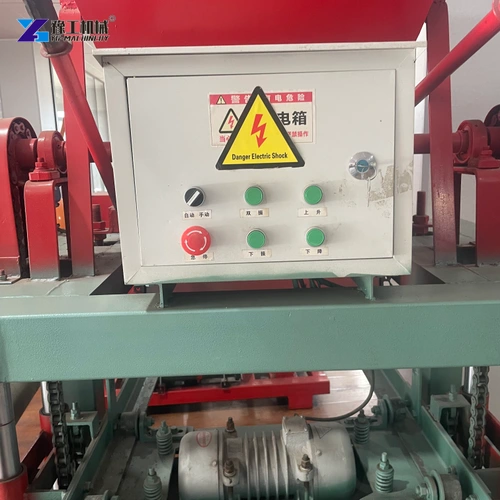
Vibration helps aggregate particles rearrange and settle into a denser structure. The production board supports the block from below, while the mould walls and cores hold its outer shape and openings. The compaction head applies force to the exposed concrete surfaces from above. These parts act together: vibration encourages particle movement, and the head controls the upper surfaces as the material consolidates within the tooling.
The head must descend evenly onto the matching shells and webs. Tooling alignment and a consistently supported board help the machine form repeatable heights without distorting the fresh product. Aggregate grading and moisture affect how readily the particles rearrange and how well the block retains its shape when the mould releases. Curing then develops hardened properties; finished-block strength is assessed separately from the machine’s hydraulic operating pressure.
Review the forming equipment and material trial as one production task.
How Hollow Blocks Are Released From the Mould
At demoulding, the mould and core surfaces separate from the shaped concrete, leaving the fresh blocks supported on the production board. In a typical board-based vibropress sequence, the mould lifts clear while the head helps retain the product during release, then withdraws so the board can leave the forming position. The exact machine sequence controls those movements. The edges and thin webs need enough fresh cohesion to remain intact as the tooling releases them.
Board condition matters because the board provides the common support surface beneath the moulded products. Damage or inconsistent support can affect the forming and transfer process. The specified board material, dimensions and working condition belong to the selected machine arrangement, not an interchangeable accessory list.
After release, the board carries the fresh products to the product-transfer and curing area. Smooth support and controlled transfer help protect corners and webs during this vulnerable stage. The next board must also reach the forming position in time for the following cycle, connecting product protection directly to repeatable machine operation.
Concrete Hollow Block Making Machine Mould and Cycle Parameters
The YG Hollow Block Making Machine examples below compare products made with different mould arrangements. Read each product’s dimensions, pieces per mould and cycle together. These are mould-specific production parameters; the selected machine also determines the drive, board system and material-handling arrangement.
| YG Hollow Block Making Machine product example | Product dimensions | Pieces per mould | Listed moulding cycle |
| Hollow block | 400 × 200 × 200 mm | 6 | 15–20 s |
| Hollow block | 400 × 150 × 200 mm | 7 | 15–20 s |
| Porous block | 240 × 115 × 90 mm | 15 | 15–20 s |
| Paver | 225 × 112.5 × 60 mm | 15 | 20–25 s |
A six-piece mould for the first hollow-block example forms six units in one completed cycle. A different product layout changes the occupied board area, the concrete volume in each unit and the spaces around its cores. Comparing pieces per hour without those geometry differences can therefore favour the smaller product even though it does not meet the same masonry requirement. Product changes need the matching tooling and machine setup.
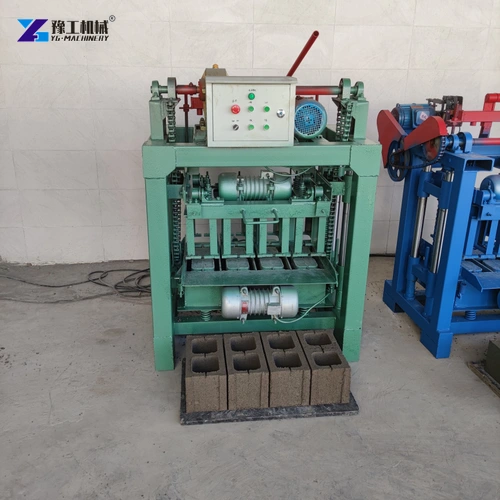
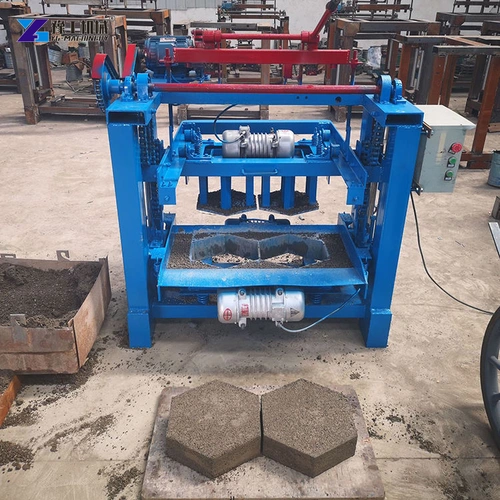
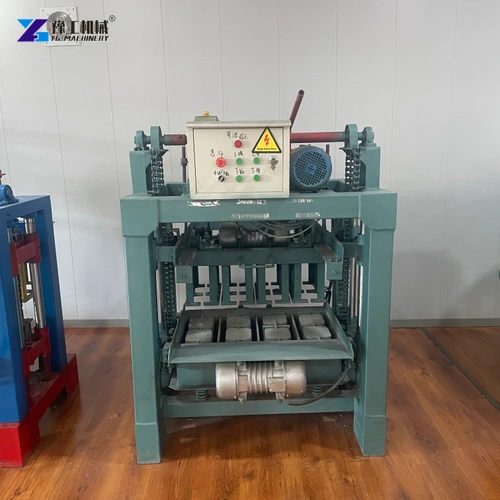
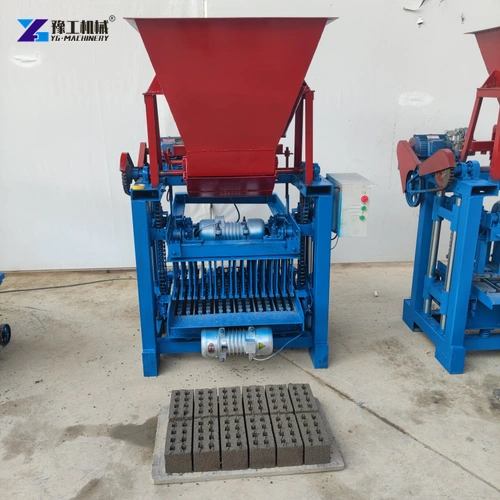
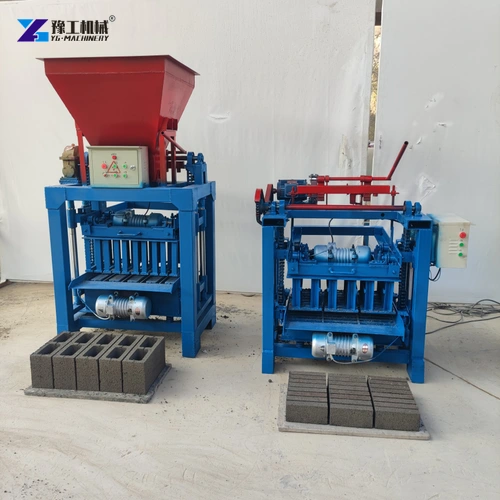
The compact machines pictured use different mould arrangements, including hollow-block and paving shapes. Tooling for those products has different concrete passages and head-contact surfaces, so each shape needs its matching forming components.
Cycle time is also different from usable shift output. The machine needs material and production boards, while fresh blocks need a clear transfer route to the curing area. Interruptions, changeovers and rejected pieces affect the quantity that can ultimately be sold. Use a demonstrated production sequence for the intended product rather than assuming continuous operation at the shortest listed cycle.
The product drawing, matching mould and compaction head, and production board together define the forming arrangement. Mixing, pallet transfer and curing then connect that arrangement to the rest of the plant. These additional stages are covered in the concrete brick machine price guide.
Specify the intended block dimensions and mould-specific production requirement.
Matching a Hollow-Block Machine to the Product Range
The main product should determine the initial tooling choice. A plant making one masonry size regularly has a different changeover task from a plant alternating between hollow blocks and paving units. These are three practical production situations rather than interchangeable names for the same duty:
- One regular hollow-block size. A dedicated mould and matching head keep the shell thickness, web layout and filling passages consistent. With the same board and product arrangement, material distribution and the release sequence can be adjusted around a repeatable job rather than reset for a new geometry each shift.
- Several hollow-block widths. A wider cavity occupies more of the forming area, changing how many blocks fit on a board and where the cores and head surfaces sit. Each width needs its corresponding mould and head. The board arrangement and transfer equipment must also accommodate the new product layout without disturbing fresh edges.
- Hollow blocks and surface-finished pavers. Paver tooling shapes a solid wearing surface rather than deep openings. A two-layer paver process also needs separate face-material feeding when that finish is required; it is a different supply arrangement from a single-mix machine. Changing product families therefore affects feeding and compaction as well as the mould itself.
A useful changeover plan connects the tooling change to the first boards leaving the machine. The new mould and head establish geometry; material distribution and compaction establish a consistent fresh shape; board transfer protects that shape until curing. Comparing samples from different mould positions shows whether the changeover is producing uniform blocks. Hardened strength and suitability for the intended masonry application are evaluated after the specified curing and testing.
These observations make hollow-block machine selection more specific. Instead of asking only for the highest output, identify the product range and examine how the offered moulds, forming equipment and fresh-product handling work together. The YG concrete brick making machine provides the product-family context, while the final proposal should identify the exact supplied arrangement.
Describe the regular product range to discuss suitable tooling and handling.
Concrete Hollow Block Making Machine FAQs
The mould box, cores and compaction head must match the new shells, webs and openings. Product width can also change the number and position of blocks on the board. Matching these components keeps the filling spaces, head-contact surfaces and lower support aligned for the new shape.
All positions need enough material around their cores before compaction. Comparing shell and web formation across the board helps reveal uneven filling or differences during release. Examine the fresh shape first, then assess hardened properties after the specified curing and testing; a consistent appearance alone does not establish strength.
Filling distributes a charge around the mould cores and into the webs. Vibration and the compaction head then consolidate that material within the mould boundaries. Consistent filling gives each section enough material to form repeatably.
Fresh blocks remain supported on the board as the tooling withdraws and during subsequent transfer. The board must suit the machine and remain in the specified working condition so it provides the intended support.
No. A moulding cycle describes the forming step under the stated configuration. Material availability, board supply, product changes, interruptions and rejected units affect actual usable production.
Tell us the block dimensions, opening layout and intended product range so we can discuss the machine, moulds and compatible handling equipment.