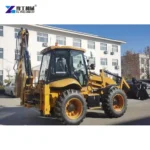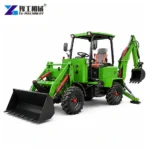
A contractor who opens drainage trenches in the morning and moves stockpiled material later in the day has two different equipment demands. Digging below ground requires a working reach and a way to support the machine during excavation. Loading and short-distance handling require a practical travel cycle between the pile and the receiving point. A backhoe loader vs skid steer comparison becomes useful when those demands are considered together.
The backhoe combines a front loader with a rear excavating assembly. The skid steer concentrates its working equipment at the front, using independently controlled left and right travel to turn. Neither layout wins every mixed construction job. The better purchase follows the work that occupies the machine most often, the attachments it must operate and the space available while that work takes place.
Backhoe Loader and Skid Steer Work Cycles
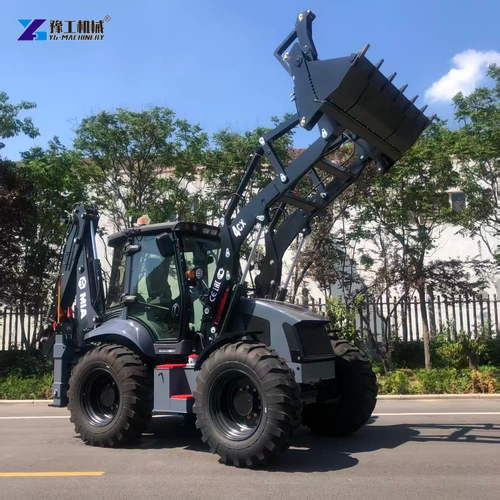
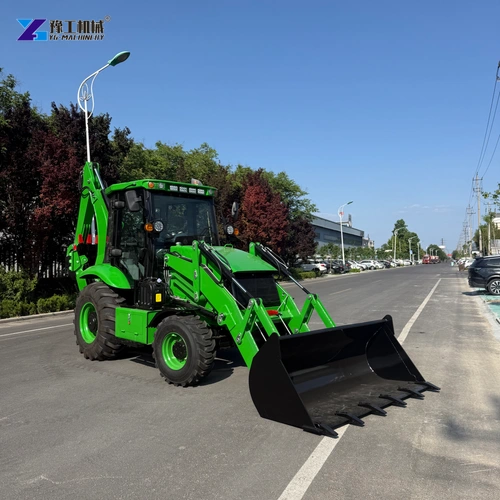
The two working ends of a backhoe loader provide different movements. At the front, lift arms raise the bucket; curling the bucket back helps retain material, while tipping it forward discharges the load. At the rear, the boom, dipper and bucket position the cutting edge below or beside the machine. During trench excavation, the stabilizer legs support the chassis in the working position specified for that machine. The rear equipment can then dig within its reach before the machine needs repositioning. Preparation for travel and the load-carrying position follow the machine’s instructions.
Changing from digging to front loading changes the machine’s support and operating position. The rear boom and bucket move into their designated travel position, and the stabilizer legs return from ground support to their travel position before the machine moves. The operator then uses the front loader for collecting and carrying material. The exact securing and control sequence follows the machine manual. The practical advantage is having both working ends on one chassis; the changeover still occupies time between excavation and loading.
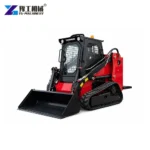
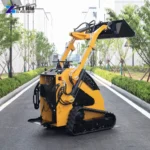
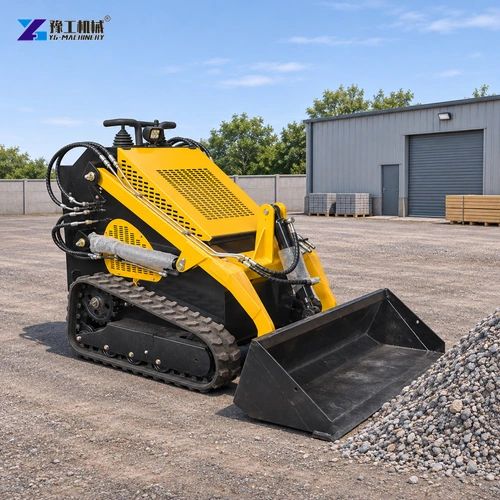
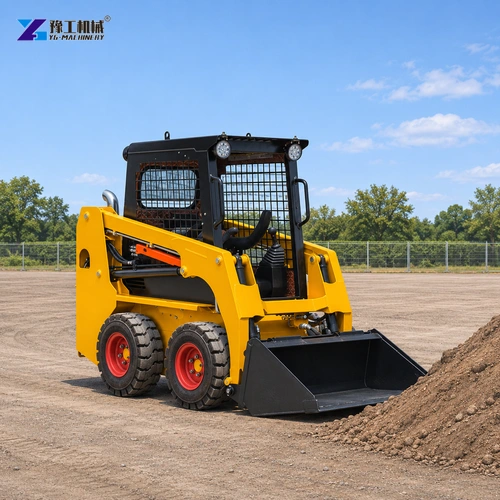
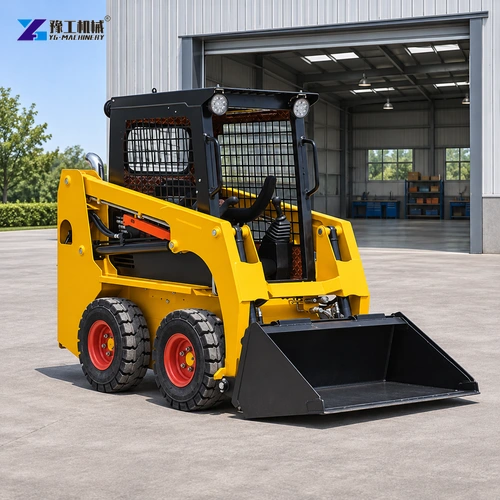
A skid steer’s lift arms and front tool perform the primary handling work. Independent travel on the two sides allows direction changes through a difference in wheel or track movement. That can shorten the movement needed to face a nearby pile or receiving point, although the tool, rear of the machine and ground surface still occupy space during a turn.
The distinction is clear in a loading cycle: approach the material, fill the bucket, travel with the load in the specified position, then raise and discharge at the receiving point. That front-tool sequence is central to a skid steer’s everyday role. A backhoe-loader comparison must account for the rear excavation demand as well, rather than comparing only front bucket appearance.
Choosing Around Trenching, Loading and Backfilling
The work mix determines how valuable the additional rear excavating assembly will be. Consider three recurring patterns rather than choosing solely from machine size:
- Trenches followed by local backfill. A backhoe loader can use its rear equipment to open the trench and its front bucket to handle loose spoil or return suitable backfill. The site must accommodate the change of operating position and the complete machine. This is a strong reason to compare a backhoe when excavation is a regular part of the workload.
- Repeated loading between close work points. A skid steer can suit a job dominated by collecting loose material, travelling a short route and discharging it. The receiving height, bucket reach and turning surface shape the cycle. Adding an occasional digging attachment does not change the fact that the base machine is primarily arranged around a front tool.
- Cleanup and maintenance with front attachments. A crew may use a bucket to collect loose material and then change to a compatible broom for surface cleanup. A loader organised around these front-tool changes can serve that recurring routine. Each powered attachment also requires a compatible hydraulic and control arrangement; mechanical attachment fit alone does not establish that the machine can operate it.
A mixed project may include all three patterns. The important distinction is frequency and duration. A machine that can perform an occasional task may still interrupt the dominant daily cycle when it is moved, supported or reconfigured for that task. The complete backhoe-loader arrangement explains the two working ends, while this comparison asks whether that arrangement matches the regular workload.
Identify the recurring digging task and the material that must be moved afterwards.
How Supports, Turning and Attachments Change the Choice
A rear excavating arm reaches away from the chassis, so digging loads act at a distance from the machine’s body. The stabilizer legs transfer part of those loads to the ground and help keep the chassis steady during excavation. Their deployed width and the ground beneath their feet are therefore part of the working area. Ground conditions beside the trench and the position of buried services affect where the legs and machine can be placed.
A skid steer changes direction through its running gear. On some surfaces, repeated skid turns can disturb the ground or mark a finished surface. Tracks, tyres, steering inputs and the surface condition influence that interaction. A machine described as compact still needs room for the rear body and installed tool to sweep during turning. Its overall width alone cannot describe the full movement envelope.
Attachments add another difference. A backhoe has a dedicated rear digging assembly as part of the complete arrangement. A skid-steer digging attachment introduces a separate tool and operating setup. Its digging range, supports where provided, controls and permitted loads belong to that attachment-and-loader combination. It should be compared as an actual package, rather than assuming every skid steer becomes equivalent to a backhoe after a tool change.
For either machine, choose attachments by their required operation. A mounting interface holds the tool; auxiliary hydraulics provide power; controls command the function. Those three jobs must align. The YG skid-steer equipment guide develops the front-tool arrangement in more detail.
Describe the travel surface, working width and attachment changes on the job.
YG Compact Skid-Steer Loader Parameters
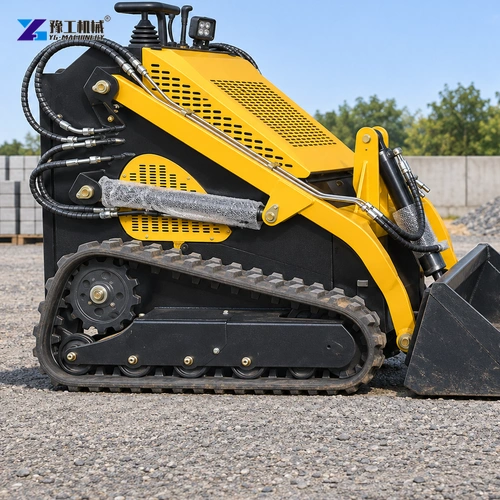
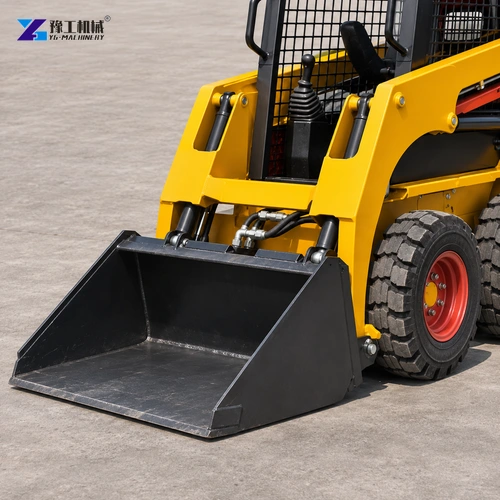
The YG280, YG380 and YG380C compact skid-steer configurations below illustrate dimensions relevant to loading and access. This table compares three skid-steer configurations; backhoe-loader digging depth, rear reach and front-loader dimensions are separate specifications for the proposed backhoe. The practical comparison is whether each machine can reach the trench, pass through the available access and discharge at the receiving point required by the job.
| Parameter | YG280 | YG380 | YG380C |
| Overall width | 800 mm | 1,160 mm | 1,160 mm |
| Bucket width | 820 mm | 980 mm | 980 mm |
| Maximum dumping height | 1,386 mm | 1,488 mm | 1,488 mm |
| Maximum bucket-pin height | 1,803 mm | 1,884 mm | 1,884 mm |
| Length with bucket | 2,210 mm | 2,206 mm | 2,430 mm |
Bucket width and overall width answer different questions. A bucket can project beyond parts of the chassis, while a wider running-gear arrangement can occupy more space than the bucket. Check the complete machine and installed tool together when assessing a gate, storage aisle or route between obstacles.
Dumping height is also different from bucket-pin height. The pin describes the lift-arm connection at its specified position; the dumping dimension concerns material discharge. A receiving body must allow the bucket to reach over its edge and discharge without interference. Height by itself does not describe horizontal reach, the bucket’s tipped position or the receiving vehicle’s clearance.
For a backhoe loader vs skid steer purchase, use the named configuration’s dimensions for each task. Compare the proposed backhoe’s digging depth and rear reach with the trench, then compare its front bucket with the same access route and receiving point used to assess the skid steer. This keeps both choices tied to the contractor’s work while preserving the differences between compact loaders and larger machines.
When One Machine Fits and When Separate Machines Help
One backhoe loader can be attractive when excavation and loading occur in successive stages and the machine can move between those stages without delaying another crew. For a short drainage trench, the rear bucket excavates within reach from each supported position; after excavation, the front bucket can collect and move suitable loose material for backfilling. This uses the two working ends in sequence, with time allowed to fold the rear equipment, retract the legs and change the operating position.
Separate machines become relevant when the tasks must happen at the same time. If excavation must continue while spoil is removed or backfill is supplied elsewhere, a single machine cannot occupy both work positions simultaneously. The useful comparison is then the total work arrangement, including operators, access, transport and how the machines will avoid obstructing one another.
A skid steer can be the more direct choice when the recurring work is front-bucket loading, cleanup or operating a compatible broom or other front attachment, with substantial excavation handled by other equipment. For example, a crew clearing loose material around several nearby work points repeatedly uses travel, bucket fill and discharge rather than a rear digging arm. A backhoe can be the more direct choice when the same crew regularly excavates a drainage trench and later returns suitable backfill along it. These two patterns explain the choice more usefully than a universal fuel-saving percentage or payback claim.
List the principal tasks in their actual order before selecting the package. Where the sequence repeatedly calls for dedicated rear excavation, compare a backhoe configuration. Where it repeatedly calls for compact loading and front-tool changes, compare a skid steer. Where the work overlaps in time, evaluate the fleet arrangement rather than forcing one machine to replace two simultaneous jobs.
Send the receiving height and actual site access for a loader configuration review.
Backhoe Loader vs Skid Steer FAQs
Only an appropriate digging attachment and loader combination can be assessed for that task. Compare its digging envelope, supports, controls and working setup with the complete backhoe; a front bucket alone is not equivalent to rear excavating equipment.
No. Independent travel permits tight direction changes, but the body and installed tool still sweep through space. The surface and the loader’s actual turning envelope affect the usable route.
They describe different geometry. The pin is a lift-arm connection, while dumping height concerns discharge from the bucket. The receiving body also needs suitable horizontal clearance and reach.
Compare the full work arrangement. A single machine may suit sequential tasks, while simultaneous excavation and handling can justify separate equipment. Operators, transport and delays affect the overall comparison.
The regular excavation duty, dominant loading cycle, working and support space, intended attachments and whether tasks overlap in time are the most useful starting points.
Describe your excavation, loading and backfill work to discuss a complete loader configuration.