Skid-steer and compact tracked loaders combine independent left-right travel control with hydraulic lift arms and an interchangeable work tool. Their compact movement makes them useful around construction, landscaping and material-handling work, but travel, lifting and attachment power are different functions. Understanding those functions makes new skid steers for sale easier to compare than a list of bucket sizes or accessories.
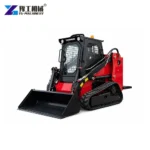
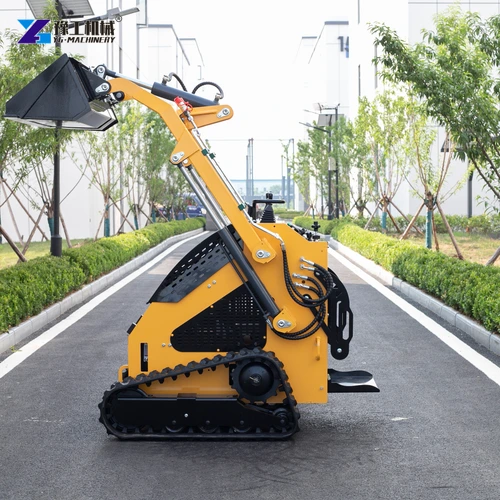
The YG compact configurations below include tracked and wheeled running gear. Their published dimensions explain the loading envelope; the selected machine’s actual capacity and hydraulic data remain separate requirements. A product-family photograph should not be used to identify an exact table configuration merely by appearance.
How Compact Skid Steers Drive And Turn
Skid steering changes direction by controlling the two sides of the running gear differently. When one side moves faster than the other, the machine turns. The tyres or tracks must accommodate sideways movement against the ground during a tight turn, rather than following the same steering action as a conventional front-steered vehicle.
This creates useful manoeuvrability but also resistance and surface disturbance. A compact loader can work around a restricted material pile without requiring a long steering arc, yet a tight turn on finished paving or turf can scrub the surface. The practical movement needs to suit the ground and load; a short machine is not automatically harmless to a finished landscape.
Tracks and tyres change the contact with the surface. A track arrangement can spread the machine’s load over a different contact area and provide useful traction in suitable conditions. Actual ground pressure still depends on weight and contact geometry. Rubber tracks do not make every soft edge stable or eliminate the need to assess ground support.
The travel system also operates while the load changes the machine’s balance. A bucket carried close and low has a different effect from a raised load moved away from the body. Turning or stopping adds dynamic effects that do not appear in a static outline drawing. Operation must follow the selected machine’s load and travel instructions rather than treating compact steering as permission for abrupt movements.
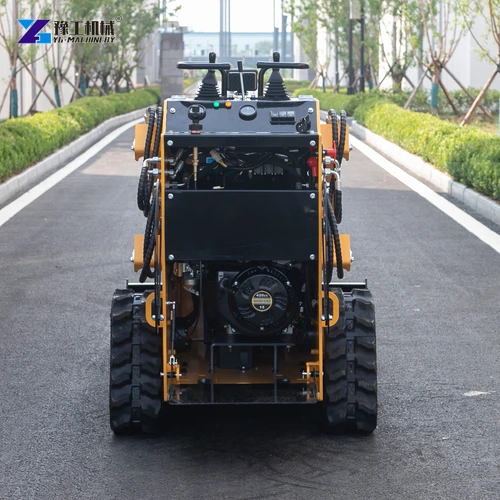
For new skid steers for sale, distinguish the running gear and operator arrangement actually supplied. Compact machines can have different control stations and protective provisions. The YG skid-steer loader range provides related equipment context without implying that every mini loader has the features of a larger enclosed-cab machine.
Choose the running gear and control arrangement for the intended working surface.
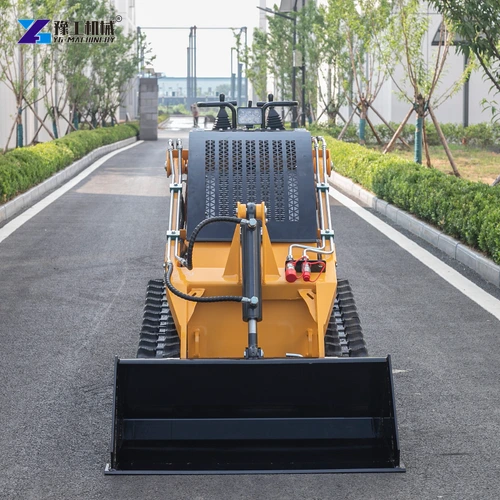
Skid-Steer Lift Arms, Bucket Curl And Load Position
Hydraulic cylinders raise the lift assembly and change the bucket angle. Raising positions the load vertically, while curling helps collect and retain it or rotate it for discharge. These motions interact with the linkage geometry, so the bucket’s useful position is not described by one maximum height alone.
During loading, the cutting edge approaches and enters the material while the machine supplies traction and the linkage controls the bucket. Loose soil, coarse aggregate and bulky vegetation behave differently. A bucket full of low-density material is not equivalent in mass to the same volume of dense aggregate. Bucket volume therefore cannot be used as a payload rating.
The attachment itself also contributes to load. A heavier bucket or a tool that carries material farther forward changes the effect on the machine. Forks holding a load at distance from the mounting interface do not create the same condition as material close inside a standard bucket. The approved machine-and-tool operating limit is what matters, not whether the mounting plate can be made to connect.
At the receiving point, dump height and forward reach work together. A bucket can rise above an edge yet still lack a useful discharge position if the receiving structure projects toward the machine. Conversely, greater forward reach does not automatically provide more vertical clearance. Pin height, dump height and dump distance need their correct definitions.
When assessing new skid steers for sale, this explains why a raised-bucket display is not a complete loading demonstration. The actual sequence—collecting, retaining, travelling and discharging—must remain within the selected machine’s instructions and limits. Good geometry helps perform the movement; it does not replace the capacity assessment.
The bucket, load position and receiving point need to work within the machine’s limits.
YG Compact Skid-Steer Loader Geometry
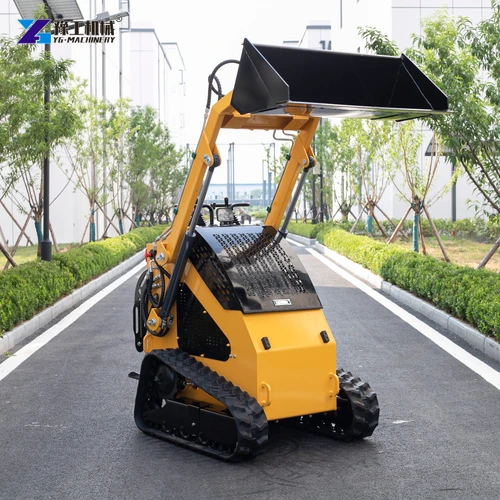
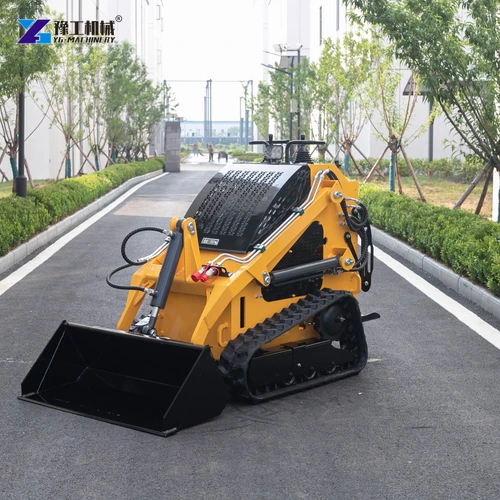
The table compares published dimensions for YG280, YG380 and YG380C. These are loading and machine-geometry figures, not verified payload or powered-attachment ratings.
| Parameter | YG280 | YG380 | YG380C |
| Running gear | Rubber track | Chevron tyre | Chevron tyre |
| Maximum working height | 2,065 mm | 2,143 mm | 2,143 mm |
| Bucket pin height | 1,803 mm | 1,884 mm | 1,884 mm |
| Dump height | 1,386 mm | 1,488 mm | 1,488 mm |
| Dump distance | 471 mm | 348 mm | 348 mm |
| Dump angle | 32° | 30° | 30° |
| Overall width | 800 mm | 1,160 mm | 1,160 mm |
| Bucket width | 820 mm | 980 mm | 980 mm |
| Length with bucket | 2,210 mm | 2,206 mm | 2,430 mm |
| Ground clearance | 123 mm | 118 mm | 118 mm |
The YG280 has a lower listed dump height but a longer dump distance than the two wheeled configurations. This is a genuine geometry difference, not a universal ranking of better and worse. The receiving edge and the intended bucket movement determine which combination is useful for the task.
Overall width and attachment width also describe different envelopes. A narrow body does not establish that every tool or carried load will pass through the same opening. The complete working arrangement may include the bucket, hoses and permitted operating clearance. Width should not be interpreted as a safe operating passage without those considerations.
For new skid steers for sale, ask for the selected machine’s applicable operating capacity, duty and attachment specification separately. No capacity is inferred from these dimensions. A maximum working height is a geometric point, while rated operating capacity is an operating limit established under defined conditions. Treating one as evidence of the other creates a misleading machine comparison.
Hydraulic Attachments On Compact Skid Steers
A powered attachment adds a hydraulic duty beyond raising and tilting a bucket. Its motor or cylinders need flow and pressure within the permitted range. Flow influences operating movement or speed, while pressure relates to the resistance the system must overcome. A physically compatible coupling does not establish that those operating conditions match.
Different tools also use that power differently. An auger turns a drilling tool against ground resistance; a trencher drives a cutting chain; a broom rotates a sweeping element. These are examples of attachment functions, not a claim that every YG configuration is approved for every tool. Each proposed combination needs the relevant machine and attachment data.
Mechanical attachment fit remains necessary. The mount, locking arrangement, tool mass and load position must suit the carrier. Some powered tools also require a particular return path, case drain or electrical control connection. Those provisions cannot be replaced by an unverified high-flow label or by fitting an adapter that only solves the mechanical interface.
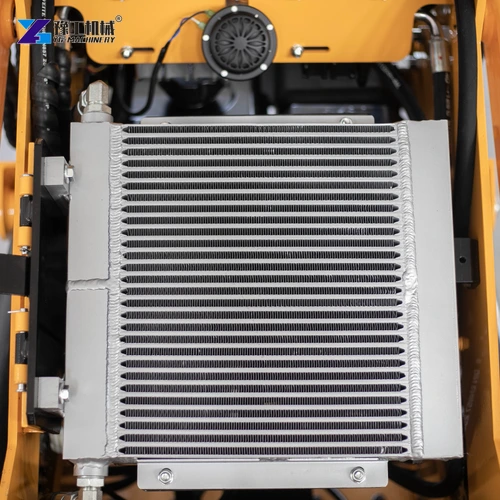
Duty cycle matters because extended powered-tool work can create a different thermal load from intermittent bucket operation. Hydraulic oil and cooling provision must remain within the machine’s operating conditions. A tool that initially rotates does not prove that the combination can sustain the intended shift without overheating or excessive restriction.
For new skid steers for sale with future attachments in mind, the useful product information is the actual auxiliary circuit and compatible tool list. Hose routing must accommodate the full permitted lift and tilt movement without trapping or stretching. Attachment changes require the specified isolation and pressure-release procedure rather than assuming stopped movement means an unpressurized connection.
Match the exact powered tool with the loader’s confirmed auxiliary circuit.
Skid-Steer Running Gear And Hydraulic Care
Running gear works in direct contact with soil, stone and debris. Tracks, rollers and drive components need their specified cleaning and inspection, while tyres need the condition and pressure appropriate to the selected machine. Accumulated material or damaged components can change travel behaviour even where the engine and lift functions appear normal.
Track tension should follow the actual undercarriage instructions. An overly loose or tight arrangement is not simply a matter of appearance; it can affect engagement, wear and reliability. The correct adjustment method and inspection limits belong to the machine, so no universal tension value or service interval is prescribed across the configurations here.
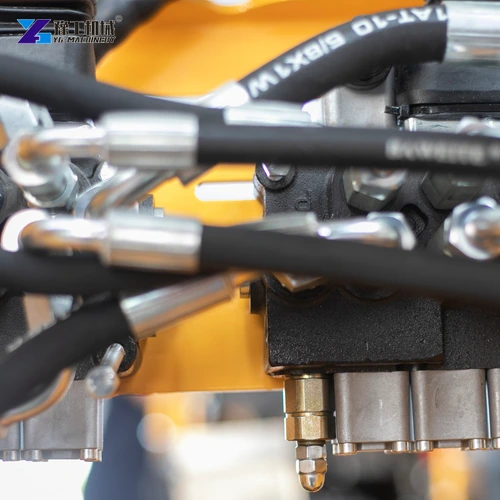
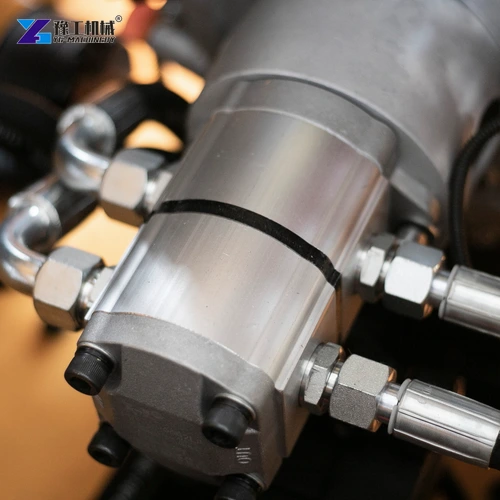
Hydraulic cleanliness protects pumps, valves, motors and cylinders. Dirty couplings can introduce contamination when attachments are changed, and unsuitable fluid or replacement filters can create problems beyond the component being serviced. The specified fluid, filtration and maintenance procedure should be followed for the exact loader rather than selecting parts only by external resemblance.
Leaks, unusual noise, changing response or rising temperature deserve investigation. Continuing to work around a fault by changing controls can conceal its cause. Hydraulic leaks must not be checked with a bare hand, and lift-arm maintenance requires the prescribed support and isolation arrangements. A raised attachment must never be assumed safely supported by hydraulic pressure alone.
The practical comparison of new skid steers for sale therefore joins compact travel, useful bucket movement, verified attachment power and maintainable running gear. That is a more complete product understanding than counting accessories. The machine should perform its intended repeated work with a compatible tool and clear operating limits, not merely look versatile in a raised-bucket photograph.
Identify the loader, compatible work tool and maintenance information in the equipment package.
New Skid Steers For Sale FAQs
Direction changes through different left-right travel speeds, with sideways scrub at the ground during tight turns. It does not rely on the same steering geometry as a conventional front-steered vehicle.
No. Material density, tool mass, load position and the machine’s approved limits determine a suitable load. Equal volumes can have very different weights.
No. They describe different positions in the raised assembly and bucket movement. Discharge also depends on forward reach and the receiving edge.
No. Locking, weight and load position must match, and powered tools add flow, pressure, return, drain and possible control requirements.
No. The actual undercarriage design and manufacturer’s procedure determine the setting and inspection limits. Do not transfer an adjustment value from a different machine.
Tell us the material-handling task, working surface and intended tools to discuss an appropriate compact-loader configuration.