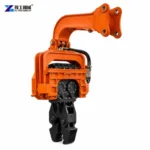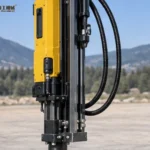
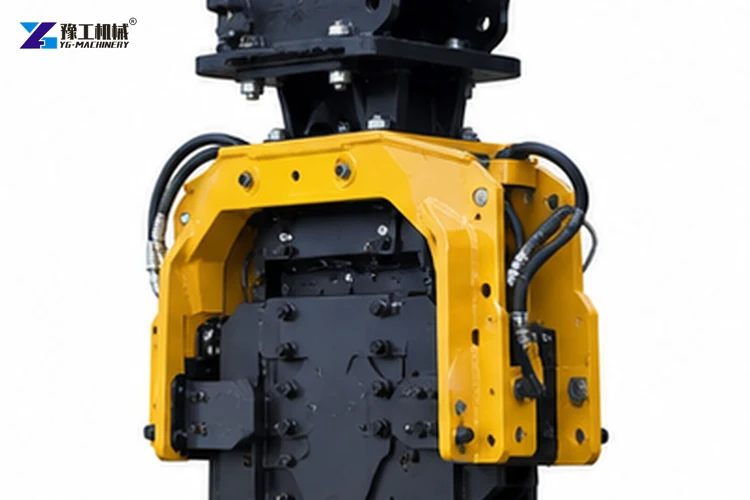
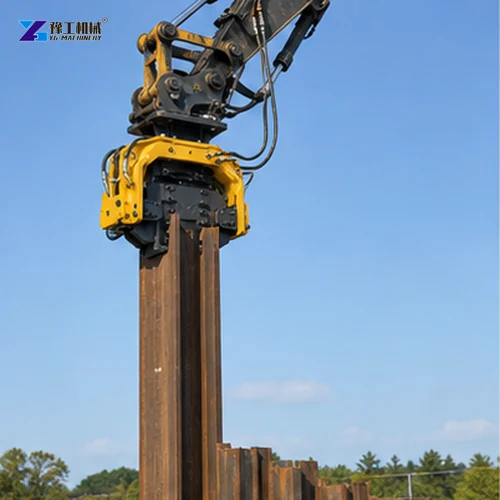
A Sheet Pile Driver For Excavator must grip the specified pile securely while the carrier controls alignment and vibration. The decisive information is the pile profile, length, weight, installation depth, extraction requirement and available working space. Choosing only from excavator tonnage can leave the clamp unable to hold the pile or the carrier unable to position it safely.
This guide compares top-grip and side-grip work, hydraulic matching, pile handling and site constraints. It helps marine, trench-support and retaining-wall contractors prepare a quotation that covers the driver, clamp, mounting, hoses and operating method as one system.
Which Pile Profile And Handling Method Must Be Defined?
Provide sheet-pile section, width, thickness, length, unit weight, interlock type and steel grade. State whether piles arrive single, paired or preassembled and whether the same unit must extract them. Clamp jaws must contact the intended area without damaging an interlock or slipping under vibration.
Map storage, lifting and pitch-up space. Long piles create a large handling envelope. The excavator needs stable ground and enough reach to control the pile without workers entering the suspended-load zone.
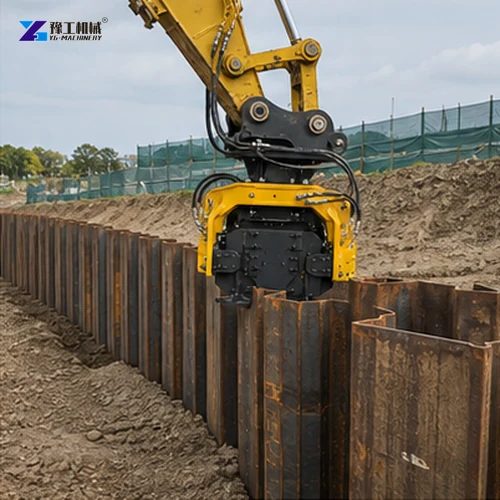
When Is A Side-Grip Clamp More Useful?
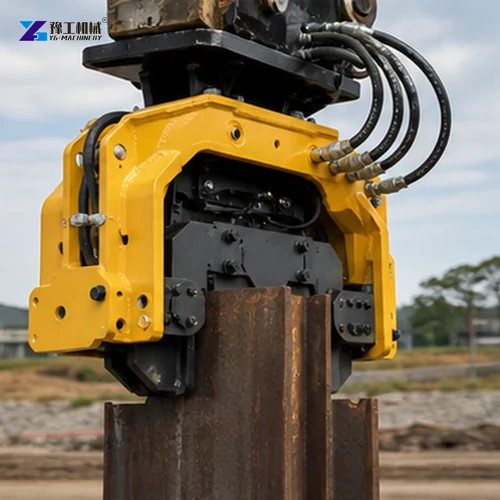
A side-grip driver can pick a horizontal pile, raise it and begin installation where overhead clearance or crane access is restricted. It reduces separate handling steps but requires a clamp and rotation arrangement designed for the pile.
Top grip remains practical when piles are already vertical and the site has adequate headroom and lifting support. The choice should follow the entire handling sequence, not only the final driving position.
Not sure which configuration fits your project? Send the working conditions and YG can review a practical Sheet Pile Driver For Excavator configuration for the actual job.
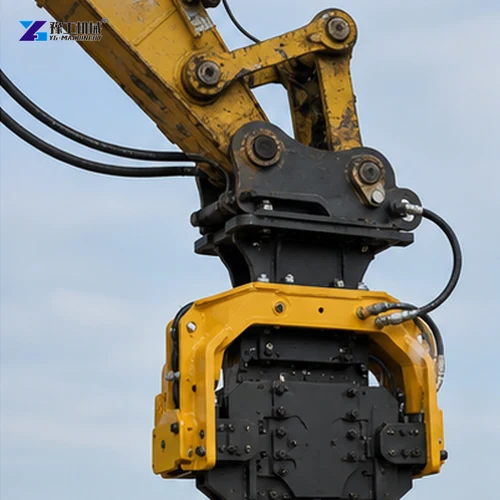
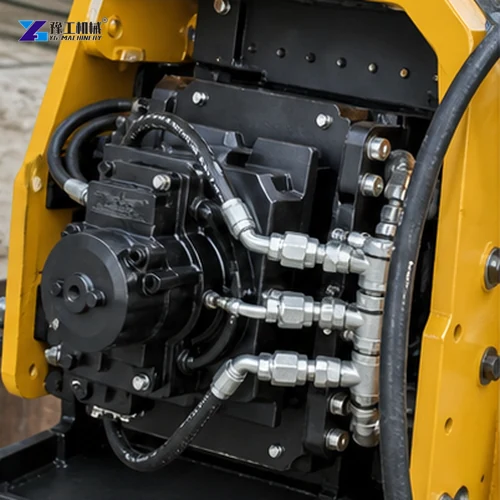
How Are Carrier Hydraulics And Mounting Verified?
Provide excavator model, weight, boom, coupler, auxiliary flow, operating pressure and return condition. The driver needs sufficient flow for vibration and clamp operation without excessive heat. Hose routing must allow rotation and full boom movement.
Check attachment mass, pile mass and working radius against the carrier load chart. Confirm bracket geometry and any rotation circuit. Stable ground and a level working platform are part of the compatibility assessment.
| Specification | Buyer Data | Why It Matters |
| Pile | Profile, length, weight and steel | Clamp jaws and handling |
| Method | Install, extract, side or top grip | Driver configuration |
| Carrier | Model, load chart and reach | Stability |
| Hydraulics | Flow, pressure and return | Vibration and clamp operation |
| Site | Ground, headroom and access | Positioning method |
| Output | Depth, quantity and shift | Duty and support package |
Installation quality depends on how the first piles are controlled. Establish line and level references, confirm interlock orientation and decide how verticality will be checked while the driver is vibrating. The clamp must remain fully engaged, but the carrier should not use boom force to correct a pile that has already deviated beyond the agreed tolerance.
A trial installation can verify the handling sequence, penetration response and extraction method before full production. Record time by depth, ground changes, clamp behavior, oil temperature and any refusal point. These observations help the team decide whether to adjust the driver setting, predrill, change the sequence or revise the support method without relying on an unsupported production promise.
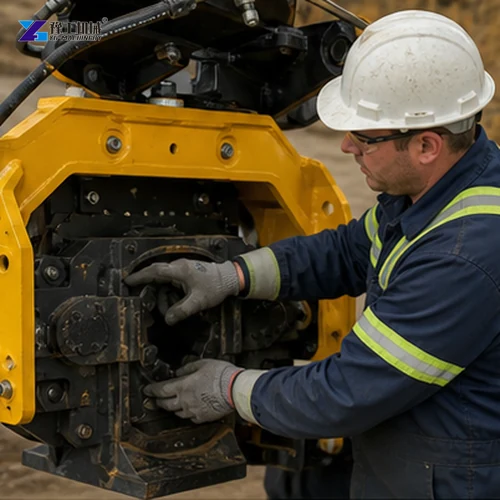
Also define the pile changeover process. Jaw inspection, clamp cleaning, interlock orientation and communication between the operator and ground team should occur from protected positions. A consistent changeover routine reduces handling delays and helps prevent damage that makes the next pile difficult to interlock. Include the approved jaw set in the shipment list.
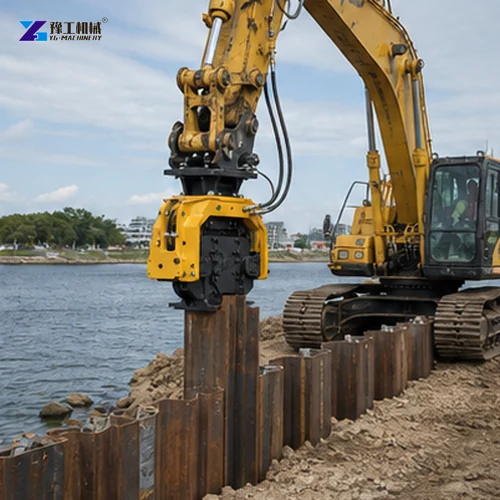
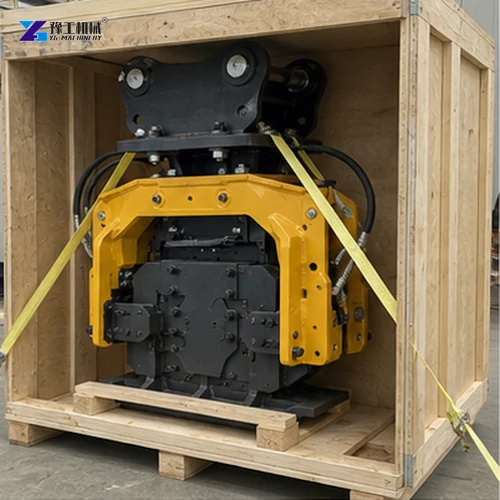
Which Driver And Clamp Specifications Belong In The Offer?
The quote should identify suitable carrier range, attachment weight, vibration frequency, centrifugal force, hydraulic flow and pressure, rotation, clamp force, accepted pile profiles, jaw set, mounting and hoses. Verified model values must be confirmed for the final YG configuration.
Use the table below to compare commercial offers without inventing performance figures. Ask whether side-grip, top-grip or interchangeable jaws are included and what spare wear parts are recommended.
Not sure which configuration fits your project? Send the working conditions and YG can review a practical Sheet Pile Driver For Excavator configuration for the actual job.
What Project Data Is Needed Before Shipment?
Send pile drawings, soil information, installation and extraction depth, alignment tolerance, wall layout, access, headroom, water or slope conditions, excavator data, destination and production target. Include the lifting and unloading plan.
Review YG information on the excavator pile driver, quick coupler and excavator attachments. These pages help define carrier mounting and the broader work sequence before the final driver is selected.
Sheet Pile Driver For Excavator FAQ
A suitable side-grip configuration can pick, raise and position approved pile profiles when the handling method and carrier are verified.
Many vibratory systems can support extraction, but clamp, force, soil resistance and carrier stability must be checked.
No. Attachment and pile mass, working radius, load chart, hydraulics, mounting and site support also matter.
Provide section/profile, width, thickness, length, weight, interlock and intended clamp area.
Driver, clamp and jaws, rotation, mounting, hoses, controls, spares, packing, delivery and support should be listed.
Prepare The Project Information For The Next Step
Before requesting a final offer, confirm the application, material or ground, required capacity or dimensions, carrier or power data, site access, destination and expected working schedule. A complete brief allows YG to review compatibility, included equipment, wear parts, transport and support without relying on assumptions.
Send the measured project conditions with photographs or drawings. The technical and sales teams can then prepare a configuration and quotation that reflects the actual work rather than a generic product listing.
Not sure which configuration fits your project? Send the working conditions and YG can review a practical Sheet Pile Driver For Excavator configuration for the actual job.