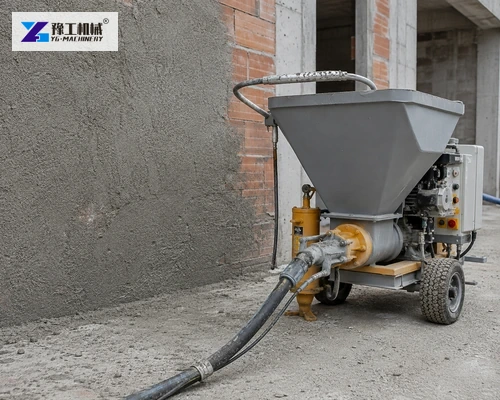
A mortar pump machine may have a published delivery figure, yet the wall area completed in one shift depends on far more than pump displacement. Material consistency, layer thickness, hose route, nozzle pattern, access, interruptions and rework determine accepted output. Buyers should separate theoretical material delivery from finished square metres that pass inspection.
This guide provides a transparent way to plan production and compare configurations. It uses published YG equipment data where the unit is clear and treats any ambiguous capacity notation as a point requiring supplier confirmation before a contractual target is set.

Define Accepted Output Before Comparing Machines
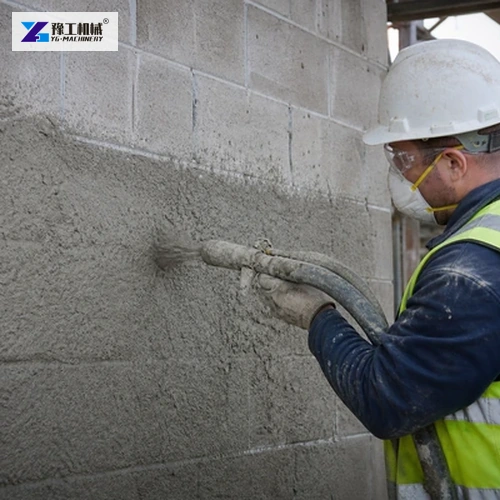
State the substrate, mortar formulation, required average thickness, allowable variation and finish. Separate wall, ceiling, corner and overhead work because access and application rates differ. Define whether output means material leaving the pump, material reaching the nozzle, area sprayed or area accepted after finishing.
Measure net work area after openings and exclusions. Divide the project into zones with similar thickness and access. A single average hides difficult details and makes later performance discussions unclear. Record shift duration and planned breaks separately from actual spraying time.
Prepare a zone schedule showing area, target thickness, substrate preparation and finish. This gives the supplier a realistic mix of easy and difficult work. It also prevents a small open test wall from being used as the sole basis for a project containing beams, corners and frequent scaffold moves.
Published Mortar Sprayer Parameters For Screening
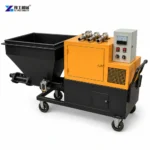
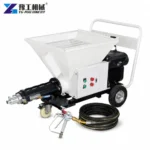
The mortar sprayer machine page lists four configurations. The source capacity row uses an area-based notation that should be clarified before it is used as a volumetric promise, so the table below retains only the unambiguous comparison data.
| Configuration | Material pressure | Power | Maximum particle size | Horizontal/vertical distance | Hopper | Hose | Weight |
| YG311 | 3 MPa | 4 kW | 4 mm | 30/20 m | 60 L | 32 mm | 200 kg |
| YG318 | 3 MPa | 7.5 kW | 8 mm | 50/30 m | 80 L | 32 mm | 320 kg |
| YG500 | 3 MPa | 8 or 12 hp | 8 mm | Confirm for project | 80 L | 32 mm | 320 kg |
| YG711 | 3 MPa | 7.5 kW | 8 mm | Confirm for project | 100 L | 32 mm | 320 kg |
Pressure alone does not define output. Maximum aggregate, hose diameter, route, material and nozzle arrangement must work together. Ask the supplier to state the test material and measurement basis behind any production figure.
Send mortar composition, particle size, layer thickness, hose route and target area so YG can compare a suitable pumping configuration.
CHECK MY MORTAR PUMP APPLICATION
Calculate Material Demand From The Wall
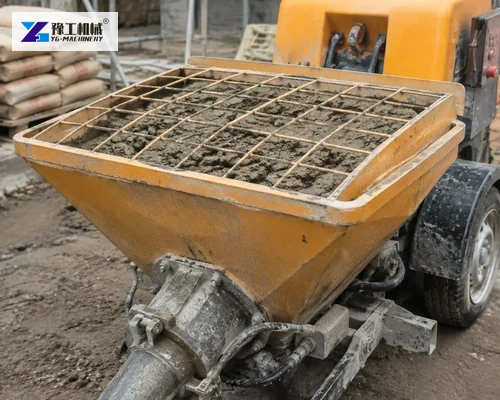
For planning, net area multiplied by average applied thickness gives wet placed volume. Use consistent units: 100 square metres at 10 millimetres average thickness equals 1.0 cubic metre before allowance for waste, rebound, priming and variation. This is an illustrative calculation, not a guaranteed output.
Add documented allowances separately. Keeping them visible helps the buyer understand whether improvement comes from the pump, material control or work method. Compare planned volume with batched and accepted volume during the trial, rather than estimating from bags opened.
Where dry material is purchased by mass, use the approved mix yield supplied for that material instead of applying a generic density. Record batch water and discarded material. The same number of bags can produce different usable wet volume if proportioning is not controlled.
Hose Route Changes Delivered Performance
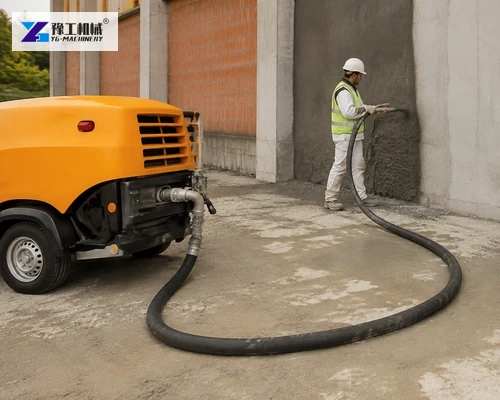
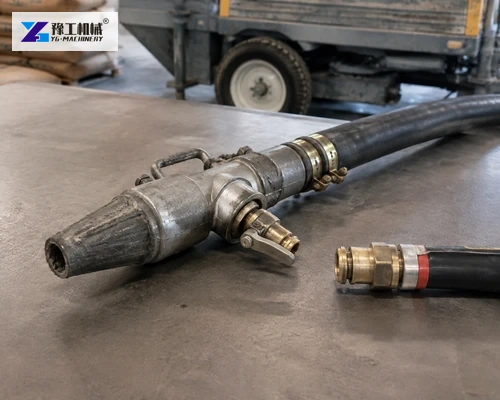
Longer hose, greater lift, tight bends, worn hose and restrictions increase resistance. Lay out the shortest safe route with broad curves, protected crossings and accessible connections. Confirm hose pressure rating and coupling compatibility. Never exceed the manufacturer’s approved length or operating settings to compensate for a poor route.
Priming and cleaning volumes affect daily material use. Define where wash water and waste will go before work starts. A route that cannot be cleaned safely will reduce productive time and may create blockages before the next shift.
Material Consistency At The Pump
Aggregate grading, moisture, mix time and admixtures affect pumpability and spray behavior. Use the approved recipe and control water addition. Screen material to the specified maximum particle size. Variability that reaches the hopper appears later as pressure fluctuation, nozzle interruption or an uneven wall.
Air And Nozzle Conditions
Compressed air shapes the stream at the gun for systems that use an air-assisted nozzle. Confirm delivered airflow and pressure at the nozzle under operating conditions. Nozzle wear, air cap condition and operator distance influence pattern and rebound, so they belong in the trial record.
Provide the planned hose length, lift, bends and material recipe so the delivery route can be reviewed with the pump and nozzle package.

Measure A Representative Production Trial
Choose a wall area that represents normal substrate, access and finishing requirements. Record material loaded, start and stop times, hose route, settings, crew roles and environmental conditions. Measure applied thickness at agreed points and identify all rejected or reworked areas.
Calculate three results: material delivery during active pumping, gross area sprayed during the shift, and net area accepted. The difference exposes stoppages and finishing losses. Repeat the trial long enough to include refilling, cleaning and normal operator movement.

Balance The Crew Around The Pump
Pump capacity cannot compensate for slow mixing, material transport, scaffold moves or finishing. Map each task and assign enough trained personnel so the nozzle receives consistent material without creating a backlog on the wall. Include inspection and correction time in the plan.
If the pump waits, record why. Separate scheduled pauses from blockages, empty hopper time, access changes and quality corrections. The most valuable equipment change may be a mixer, hose arrangement or work-platform improvement rather than a larger pumping unit.
Check that upstream mixing can supply the hopper without rushed batching and that downstream finishers can keep pace without damaging the applied layer. Define a minimum and normal crew arrangement. When labor availability changes, report it separately from equipment performance so future estimates remain usable.
For multi-level work, include the time and safe method for relocating hoses and equipment. A wheeled machine may still require a hoist, ramp or protected route. These logistics belong in the capacity plan and in the quotation scope.
Share the trial sheet with material, active pumping time and accepted area when you need help comparing practical configurations.
Acceptance And Maintenance Controls
Inspect guards, hopper grate, hoses, couplings, pressure devices and controls before operation. Use the approved start, stop, depressurization and cleaning procedures. Never open a pressurized line. Replace worn components using compatible rated parts.
Quality acceptance should cover thickness, bond, flatness or finish as specified by the project. Link test results to the machine settings and crew method used. This prevents a high gross area from being presented as productive output when substantial rework remains.
Send the project requirements and representative trial target when you are ready for a mortar pump machine configuration and quotation.
REQUEST A MORTAR PUMP CONFIGURATION
Mortar Pump Machine Planning FAQ
No. Finished output includes layer thickness, active time, access, operator method, finishing and accepted quality.
Not safely by assumption. The pump, hose and material limits must be respected. Review route resistance and the approved configuration.
Record volume delivered, gross area sprayed and net accepted area. Using all three makes losses and interruptions visible.
Provide material recipe, particle size, area, thickness, hose route, lift, power supply, finish, work platform, crew and destination.