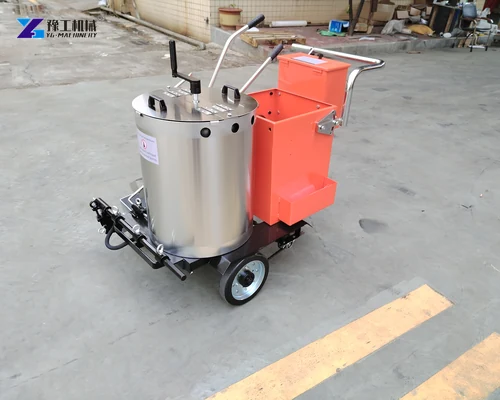
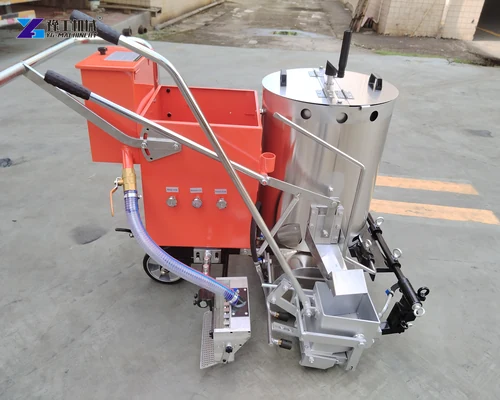
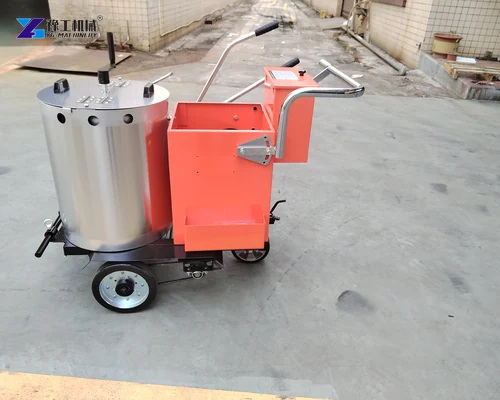
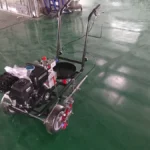
The hopper, bead system and applicator must work as one package.
A thermoplastic road marking machine should be selected around the marking specification and the crew that will feed it. Highway centre lines, edge lines and crossings can require different shoes, line widths and refill patterns. The applicator is only one part of the system: molten material must arrive at a stable condition, glass beads must be delivered consistently, and the operator must be able to hold the approved speed through the marked section.
YG’s compact hand-push configuration provides a practical starting point for road contractors that already plan the preheating and material-transfer steps. The decision depends on required width, deposited thickness, daily marking length, bead requirement, road access and traffic-control window. Recording those inputs before quotation prevents a suitable machine from being paired with the wrong hopper shoe or an undersized preheater package.
Where a Thermoplastic Road Marking Machine Fits Highway Work
Thermoplastic equipment suits projects that specify hot-applied material and a defined deposited thickness. Typical work includes highway lane lines, urban road boundaries, zebra crossings and other markings that benefit from a durable layer and embedded reflective beads. Confirm the approved material system first. A cold-paint contract needs a pump and spray gun rather than the heated-material path used here.
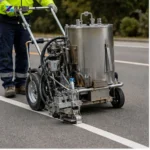
Project geometry changes the useful configuration. Long straight runs reward steady material supply and operator pace, while arrows, crossings and frequent starts require easier manoeuvring and controlled material release. Measure the narrowest access, turning space and transport method. A hand-push unit may suit broken work zones even when a larger driven machine appears faster on an uninterrupted road.
Send the main project dimensions and material requirement for a model review.
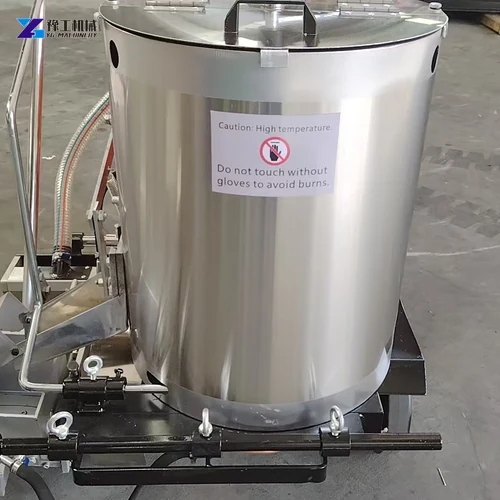
Hopper capacity affects refill planning and machine balance.
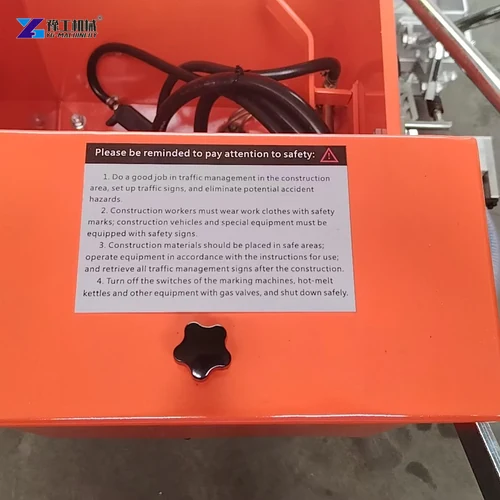
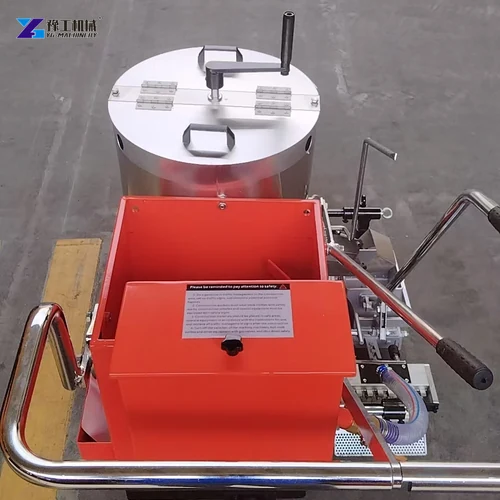
Safety labels and controls must remain visible during operation.
How the 120 kg Hopper Shapes Thermoplastic Road Marking Machine Work
The published YG reference lists a 120 kg paint bucket and a 25 kg glass-bead capacity. These are equipment capacities, not guaranteed coverage. Actual distance per fill depends on line width, deposited thickness, material density, bead rate and material left in the system. Use the contract quantities and the material supplier’s data to calculate a refill plan instead of converting hopper mass directly into kilometres.
A larger fill reduces refill frequency but also changes pushing effort, warm-up coordination and the amount of hot material held near the work zone. Plan how prepared thermoplastic moves from the preheater to the applicator. The transfer route should keep workers clear of traffic and avoid delays that allow material condition to drift before application.
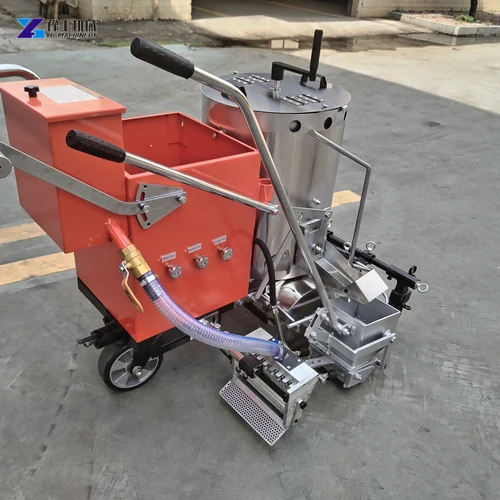
The marking shoe controls the selected line width and thickness.
Match Thermoplastic Line Width and Thickness to the Contract
The thermoplastic road marking machine lists optional hopper widths of 10, 15, 20, 30, 40 and 45 cm, an adjustable marking width of 100–450 mm and an adjustable thickness range of 1.8–3.0 mm. Treat these values as a selection window. The final shoe, adjustment and trial strip must reproduce the dimensions required by the road authority or project specification.
Wider or thicker lines consume more material per metre and may slow the practical work cycle. Symbols and crossings also create more starts, turns and transfers than a continuous edge line. Prepare a line schedule by width and type, then confirm the shoe set needed for the largest share of work. Extra shoes can be quoted for recurring secondary widths rather than forcing one setup to cover every task.
Thermoplastic machine parameter
YG product value
Paint bucket capacity
120 kg
Glass-bead capacity
25 kg
Hopper width options
10 / 15 / 20 / 30 / 40 / 45 cm
Adjustable marking width
100–450 mm
Adjustable marking thickness
1.8–3.0 mm
Machine weight
110 kg
Machine dimensions
1000 × 900 × 1100 mm
Separate controls help coordinate material release and bead application.
Inspect the hopper and lid before loading prepared material.
Build the Preheater and Glass Bead Package
A thermoplastic road marking machine receives material that has already been heated and mixed in a compatible preheater. The quote should therefore state whether the buyer already owns a preheater, how much material must be prepared per shift and how the hot material will be transferred. Preheater output should support the applicator without creating long idle periods or excess held material.
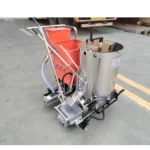
Reflective glass beads need their own storage and delivery check. The published 25 kg bead capacity helps plan refills, but bead type and application rate come from the marking specification. Inspect the dispenser, opening response and distribution across the line. A measured trial strip should confirm line width, thickness, edge shape and bead coverage before production marking begins.
Check Thermoplastic Machine Access and Crew Flow
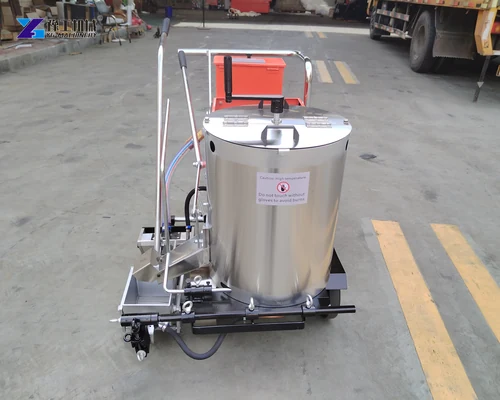
The published machine reference is 1000 × 900 × 1100 mm and 110 kg before project-specific loading. Confirm vehicle space, loading method and any ramps or lifting points needed at the job site. Also check whether the operator can turn at line ends, work beside barriers and maintain a safe position relative to moving traffic and the hot-material transfer route.
Assign clear roles for heating, transfer, application, bead monitoring and inspection. The crew should agree on stop signals and the maximum safe holding interval for the selected material. Keep a shift record of material batch, heating history, shoe, width setting, thickness check, bead setting and accepted trial strip. That record makes repeat work more predictable than relying on an operator’s memory.
Share the intended equipment scope so YG can check the configuration and included accessories.
Side clearance matters for transport, turning and edge-line work.
Prepare a Thermoplastic Road Marking Machine Quote
Send YG the material type, required widths, thickness range, glass-bead requirement, daily marked distance, line pattern, road gradient, available fuel, transport limits and target delivery location. State whether the scope needs only the applicator or a complete package with preheater, shoes, bead dispenser, tools and recommended wear parts.
A useful thermoplastic road marking machine quotation identifies what is included, which values still require confirmation and how the machine will be tested before shipment. Ask for operating instructions and the list of consumable or wear components. These details allow procurement teams to compare complete working packages rather than comparing one machine price with another supplier’s machine-plus-accessories offer.
Provide the final site and delivery details when you are ready for a complete quotation.