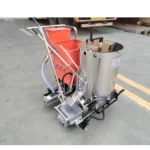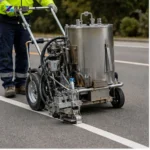

A highway crew needs more than a hand-push applicator to place an accepted hot-melt line. Thermoplastic road marking equipment includes the material applicator, a compatible preheater, glass-bead delivery, marking shoes, transfer tools and the transport arrangement that keeps the work zone supplied. Each item should be sized from the approved coating and line schedule.
YG’s published YG-380 product table lists a 100 kg double-stainless-steel material tank, a 10 kg glass-bead box, marking thickness of 1 to 2.5 mm and optional widths from 50 to 450 mm. These are model-specific machine values for configuration review, not promises of daily coverage. Material density, line width, thickness, bead rate and refill timing determine actual production.
Compare the single applicator in the thermoplastic road marking machine page, then use the road marking machine price guide to check which package items drive the final quotation.
Thermoplastic Road Marking Equipment for Highway Work
Start with the contract line schedule. Separate edge lines, centre lines, crossings, arrows and short detail sections. Record each width, required deposited thickness, bead specification and total distance. Long straight runs need stable material supply, while intersections and symbols place more emphasis on control, turning and repeated starts.
Confirm traffic-control windows and the route between preheater, applicator and refill point. The crew should transfer molten material without crossing uncontrolled traffic or carrying it farther than the site plan allows. Include the narrowest gate, turning area, loading ramp and storage condition when the supplier reviews the thermoplastic road marking equipment package.
Send the project material, dimensions and work-zone conditions for an initial model review.

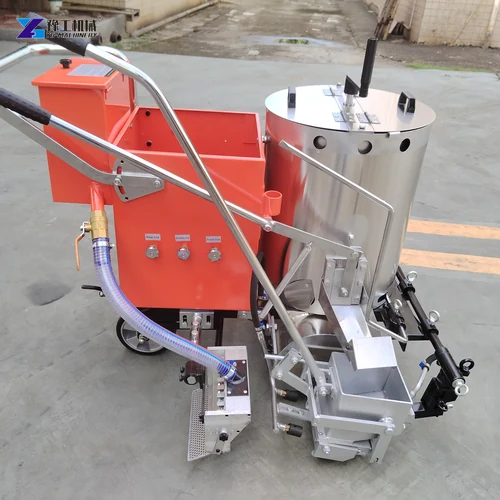
Match the Thermoplastic Applicator to Line Dimensions
The published YG-380 table lists optional marking widths of 50, 100, 150, 200, 250, 350, 400 and 450 mm. The standard marking mould is 150 mm, and the listed marking-thickness range is 1 to 2.5 mm. The final mould and adjustment must reproduce the project dimensions on a measured trial strip.
Wider or thicker lines consume more material per metre and change the refill cycle. List the normal width and every secondary width instead of ordering only the widest shoe. Ask the quotation to name each supplied shoe, its intended line and the tools needed to change or adjust it safely.
Use Verified Hopper and Bead Capacity Data
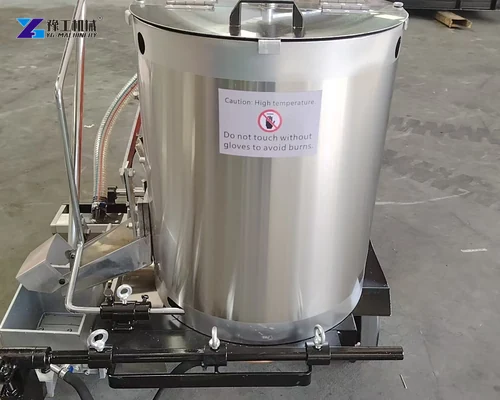
The YG-380 thermoplastic road marking equipment table lists a 100 kg double-stainless-steel heating and insulation tank with a plug-in manual mixer, plus a 10 kg glass-bead box. Do not convert those capacities directly into kilometres. Coverage also depends on coating density, line geometry, deposited thickness, leftover material and the actual bead application rate.
Build a refill calculation from the approved material data sheet. Check the bead dispenser opening, distribution across the line and shutoff response. During the trial, measure width and thickness, then inspect edge shape and bead coverage before the crew starts production marking.
| YG-380 product parameter | Published value |
| Thermoplastic paint tank | Double stainless-steel heating and insulation tank; 100 kg; plug-in manual mixer |
| Glass-bead box | 10 kg |
| Glass-bead spreader | Synchronized with line; adjustable 50-200 mm |
| Standard marking mould | 150 mm |
| Marking thickness | 1-2.5 mm |
| Optional marking widths | 50/100/150/200/250/350/400/450 mm |
| Heating method | Liquefied petroleum gas |
| Dimensions | 1200 x 900 x 950 mm |
| Machine weight | 100 kg |
Parameter source checked against the thermoplastic road marking machine range. Confirm the final ordered model and revision in the signed quotation.
Share the required model scope so YG can verify the product data and included components.


Size the Thermoplastic Road Marking Equipment Preheater
The applicator receives material that a separate thermoplastic preheater has melted and mixed. Ask whether the buyer already owns a compatible preheater. Provide the daily material requirement, expected batch size and transfer rhythm so YG can review whether the selected preheater can support the marking cycle.
The quote should identify heating method, material capacity, mixing arrangement, temperature indication, safety equipment and the transfer tools included. Final heating temperatures and handling procedures come from the coating manufacturer and local safety rules. They should not be inferred from the applicator specifications.
Provide the accessory and utility requirements for a complete working-package review.

Review Thermoplastic Road Marking Equipment Transport
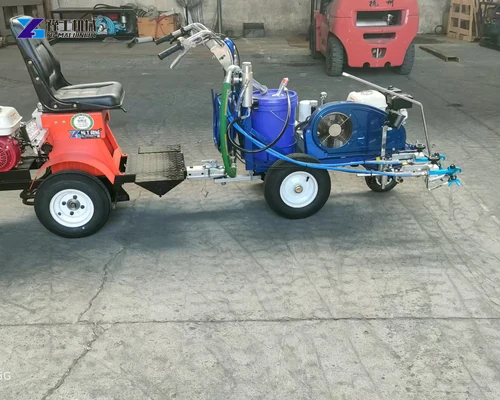
A driver or assist unit can reduce pushing on long routes, but it must match the applicator interface, site gradient and turning space. The published YG-380 dimensions are 1200 by 900 by 950 mm, with a listed machine weight of 100 kg. Request final packed dimensions and gross weight for every main item.
YG source photographs show a real pre-shipment inspection with different marking machines and a driver unit arranged together. The evidence supports equipment-combination checks only. It does not identify a destination or prove post-delivery performance. Use the inspection to verify controls, wheels, interfaces, supplied accessories and packing list against the order.
Request a Complete Thermoplastic Equipment Quote
Send the coating specification, line widths, thickness, bead requirement, daily distance, road gradient, work-zone access, crew plan, destination and required delivery date. State which preheater, driver or transport equipment the buyer already owns and provide interface photographs where equipment will be combined.
Ask the quotation to separate applicator, preheater, shoes, bead system, transfer tools, driver, spares, factory test, documents and packing. Confirm model-specific data in the final technical sheet. A complete scope makes thermoplastic road marking equipment easier to compare and prevents the lowest total from omitting an essential machine.
Send the final site, quantity and destination details for a configured quotation.
Thermoplastic Road Marking Equipment FAQ for Highway Crews
Not automatically. The quotation should state whether a compatible preheater and transfer tools are included.
Calculate coverage from material density, line width, thickness, bead rate and residual material. Tank mass alone is insufficient.
The published options are 50, 100, 150, 200, 250, 350, 400 and 450 mm; confirm the ordered mould.
Check the ordered machines, controls, interfaces, accessories, trial result, documents and packing list.