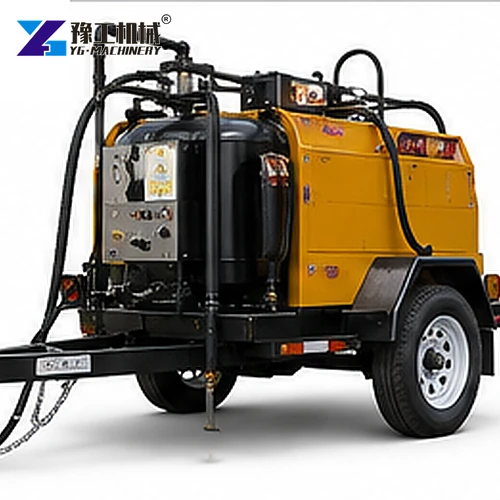
Asphalt crack repair equipment must support the entire sealing sequence: traffic control, crack inspection, routing where specified, cleaning, drying, material heating, controlled placement and finishing. A heated kettle alone cannot create a durable repair if debris or moisture remains on the crack faces. The crack type also matters. Working cracks may suit flexible sealant, while widespread fatigue cracking or structural movement requires pavement repair rather than cosmetic filling.
YG offers 50, 80 and 100 L configurations with different heating, discharge and mixing systems. The right model depends on the approved sealant, daily crack length, mobilization, crew size and lane-closure window. This guide maps those decisions so asphalt crack repair equipment is selected around a repeatable workflow and verified machine limits, not hopper volume alone.
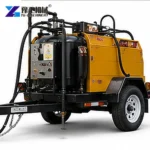
For active sealing work, the heating and delivery choices described here correspond to YG asphalt crack filling machines
; a mini road roller serves the separate compaction stage after a patch is placed.Which Cracks Should Be Routed, Sealed Or Rejected?
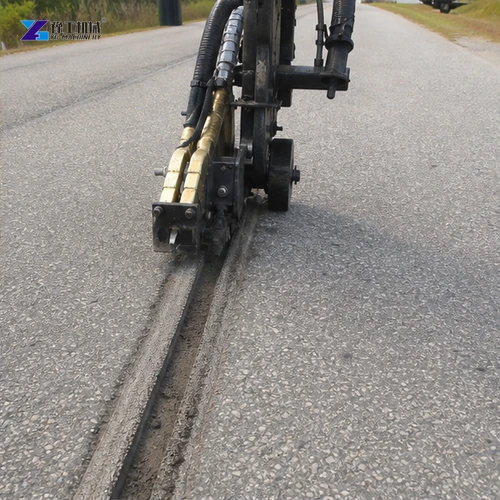
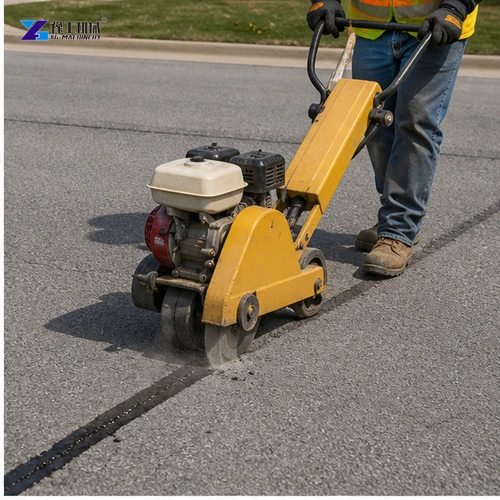
Survey crack width, depth, movement, edge condition, contamination and surrounding pavement. Routing can create a uniform reservoir for selected working cracks, but it should follow the project specification and should not be used blindly on every defect.
Alligator cracking, settlement and failed edges indicate a deeper pavement problem. Mark these areas for patching or structural review before the sealing crew mobilizes.
Choose a reservoir geometry and sealant compatible with expected movement and climate. Record whether cracks are transverse, longitudinal or random and whether prior material must be removed. A small trial section can confirm routing quality, cleaning method, application temperature and surface finish before production. The approved method becomes the crew’s reference.
Map the crack network before mobilization and separate moving cracks from fatigue failure, settlement and broken edges. Routing and sealing cannot correct a failed pavement structure. Mark rejected areas for patching so the sealing crew does not cover evidence or waste hot material.
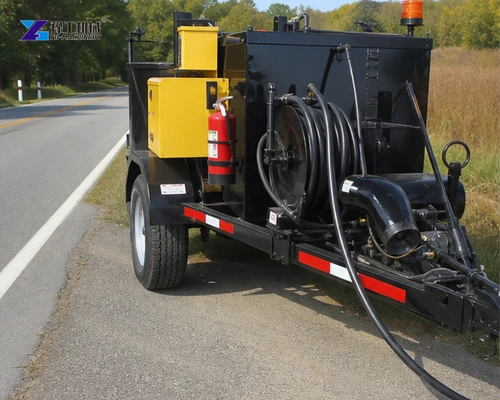
Send crack photos, approximate widths and pavement condition. YG can help determine whether routed sealing equipment suits the repair scope before capacity is discussed.
How Should Cracks Be Cleaned And Dried Before Sealing?
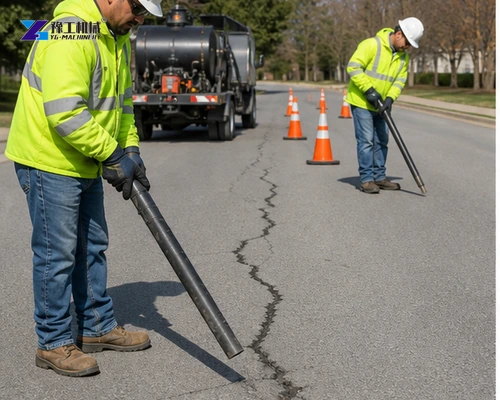
Routing dust, loose aggregate, vegetation and old sealant prevent adhesion. Use the specified mechanical cleaning and oil-free compressed air, then inspect both faces.
If moisture is present, use an approved drying method without overheating or damaging the asphalt. The applicator should not outrun the cleaning crew; a clean crack that sits open in traffic can become contaminated again.
Organize the lane so debris is removed away from prepared work and the sealing hose does not drag through dust. Test compressed-air quality and provide eye, hearing and respiratory protection for the preparation task. Surface dryness should be verified immediately before placing hot material, especially after rain or in shaded sections.
Inspect both crack faces after routing and cleaning. Dust, vegetation, moisture and old sealant interfere with adhesion. Coordinate cleaning and application pace so prepared cracks are not left open to traffic contamination, and document the approved drying method for damp or shaded areas.
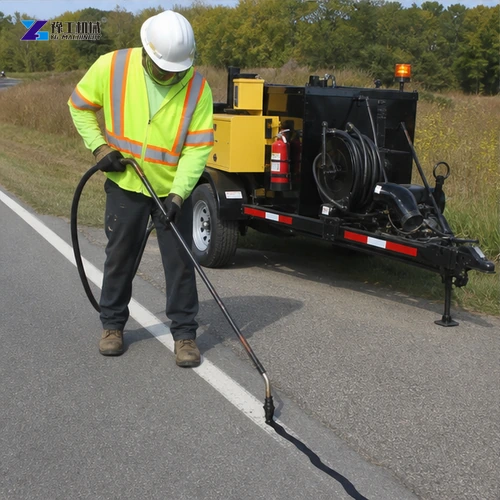
How Is Hot Sealant Temperature Controlled Safely?
Follow the sealant manufacturer’s installation and safe-heating range. Heat-transfer oil provides indirect heating, but the material still requires mixing and calibrated temperature sensing.
Avoid prolonged heating, local scorching and repeated reheating of leftover material unless explicitly permitted. Record batch, temperature and placement time so a failed section can be traced.
Inspect burner, hoses, valves, pump and applicator before each shift. Keep fire protection and PPE accessible, establish a hot-zone around the kettle and prevent hose trip hazards. The crew should know the shutdown procedure for loss of circulation, burner fault or blocked applicator. Safe handling is part of equipment capacity because an overheated batch cannot be used.
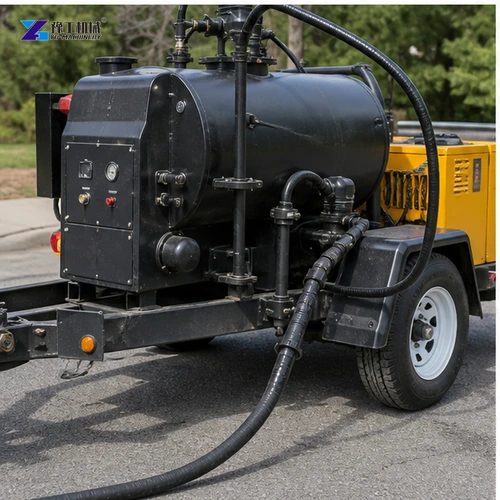
Which Hopper, Heating And Delivery Data Match The Crew Workflow?
YG-50L, YG-80L and YG-100L provide 50, 80 and 100 L hoppers with published filling speeds of 10, 15 and 20 m/min.
The smallest model uses gravity flow and LPG heating. YG-80L adds asphalt-pump feed and heat-transfer oil, while YG-100L uses a diesel burner, automatic temperature control, electric stirring and a five-meter hand-held hose.
| Model | YG-50L | YG-80L | YG-100L |
| Hopper volume | 50 L | 80 L | 100 L |
| Discharge | Gravity flow | Asphalt pump | Asphalt pump and hand-held hose |
| Heating | LPG | LPG and heat-transfer oil | Diesel burner and heat-transfer oil |
| Temperature control | 180°C sensor alert | 180°C sensor alert | Automatic control |
| Filling speed | 10 m/min | 15 m/min | 20 m/min |
| Mixing | Manual | Manual | Electric |
| Travel | Push type with brake | Push type with brake | Push type and trailer |
| Dimensions | 1200×700×1200 mm | 1200×700×1200 mm | 1750×786×1200 mm |
| Weight | 120 kg | 150 kg | 220 kg |
The larger model improves continuous delivery but weighs 220 kg and requires a trailer-capable mobilization plan. Smaller push units can suit short scattered repairs. Verify sealant compatibility, melting time, operating temperature and cleanup before using speed figures in a daily estimate. The crack geometry and preparation rate often control production more than pump output.
Match hopper, heating and delivery capacity to the approved sealant and lane-closure window. Larger volume may reduce refills but increases warm-up, cleanup and mobilization needs. Calculate production from preparation through reopening rather than quoting only pump speed.
Estimate daily output from measured preparation and cooling times as well as application speed. Include traffic-control moves and material replenishment. This gives the buyer a realistic fleet and crew requirement instead of a theoretical metres-per-minute figure.
Share the daily closure window, sealant data and preparation sequence so hopper and delivery capacity can be matched to the crew workflow.
What Should A Routed-Sealing Trial Prove Before Production?
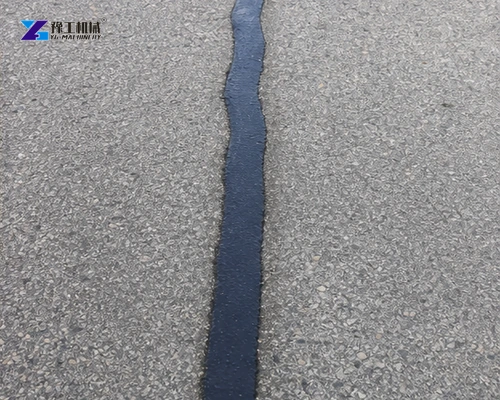
A trial section should record reservoir geometry, material batch, temperature history, placement method and surface finish. Inspect adhesion and tracking after cooling. Use the accepted trial as the crew standard and keep batch and temperature records for each production area.
Use the trial to check the complete crew sequence rather than only material delivery. Record how preparation, heating and placement are coordinated, and whether the completed seal follows the approved reservoir detail. If application waits on another task, include that delay in the equipment decision instead of using the catalogue filling speed as daily output.
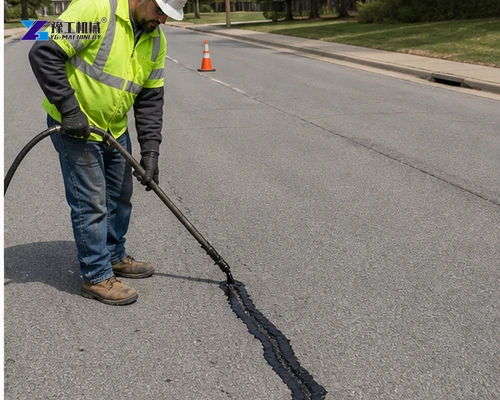
Inspect the cooled result under the project acceptance method and identify any areas needing correction before traffic is released. Keep the material batch and temperature record linked to the location. This makes it possible to distinguish preparation, application and material-history issues if a later section does not perform like the trial.
What Equipment And Consumables Must Arrive With The Sealing Crew?
Coordinate sealant supply, fuel, cleaning tools, routing cutters, traffic control and waste handling. Missing preparation equipment can idle a fully heated melter and waste the closure window.
Match the quotation to the approved process: preparation tools, heating arrangement, delivery method and the items needed to service them during the closure. Identify what the owner already supplies. A larger hopper does not make up for a missing drying, cleaning or traffic-control resource.
Provide the trial-section requirements and expected daily quantity to receive an equipment recommendation based on the full repair cycle.
Asphalt Crack Repair Equipment Buyer FAQ
No. Structural failure, alligator cracking and failed edges need repair beyond surface sealing.
No. Routing follows crack movement, geometry, sealant and the project specification.
Dust, moisture and old material prevent the sealant from bonding to sound crack faces.
Only if preparation, material heating, lane access and crew workflow can support continuous placement.
Use the sealant manufacturer’s verified installation range and monitor material temperature throughout the shift.
Send the crack survey, approved sealant and expected closure window below. The aim is a repair package that can repeatedly prepare, fill and finish the selected cracks, with structural defects kept outside that sealing scope.