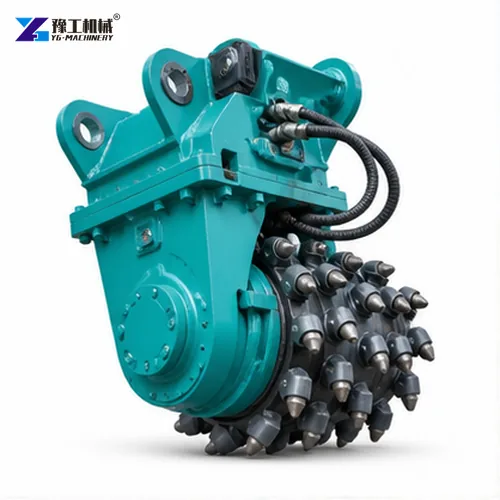
A drum cutter for excavator work removes material with rotating picks rather than the repeated single-point impacts of a breaker. The excavator positions the attachment and supplies hydraulic power; the cutting head converts that power into successive local cuts. This makes the attachment useful for controlled rock or concrete removal where the required profile matters alongside excavation volume.
Its performance still depends on the material. Intact hard rock, jointed rock and abrasive concrete create different cutting and wear conditions. Understanding the cutting action, carrier hydraulics and pick condition gives a more realistic picture than treating excavator weight or maximum torque as a complete selection rule.
How A Drum Cutter For Excavator Converts Hydraulic Power Into Cutting
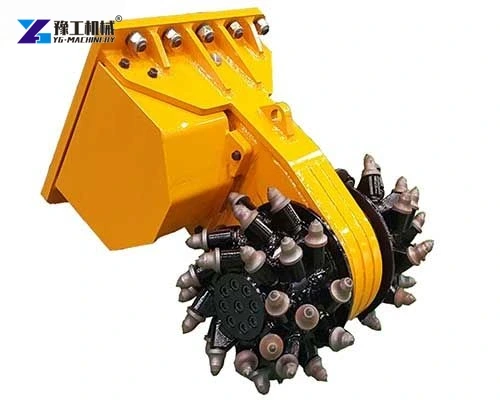
Hydraulic oil from the excavator powers the attachment’s motor. The drive turns the cutting drums, bringing successive picks into contact with the material. Each pick concentrates force over a small contact area, creating local fractures or chips. Continued rotation removes material progressively as the operator moves the head across the face.
The excavator’s role is therefore more than carrying the attachment. Its linkage controls the head’s position and engagement, while its auxiliary circuit must support the motor’s operating requirements. A cutter that is mechanically mountable can still be hydraulically unsuitable. Conversely, adequate hydraulic supply does not make every cutting approach accessible to the head.
The depth and direction of engagement affect how many picks work at once. Forcing too much of the drum into resistant material can overload the cutting action or stall rotation. A controlled pass is different from using the boom to push a stationary tool through the face. The attachment’s operating method must keep cutting and carrier movement coordinated rather than substitute excavator force for rotating pick action.
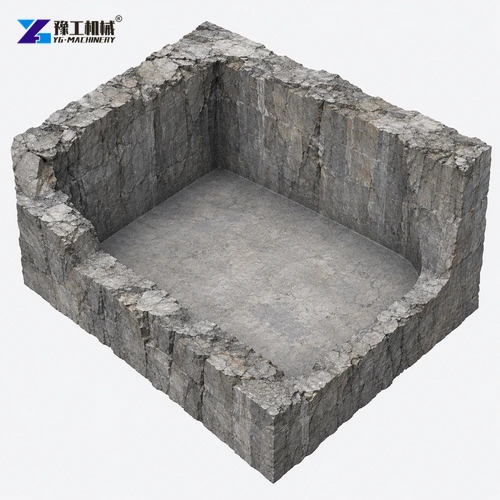
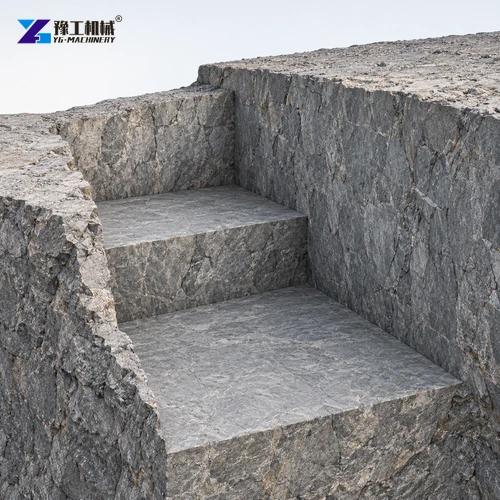
Because removal occurs across a rotating tool, the head leaves a profile related to its shape and movement. A curved drum cannot be assumed to produce a perfectly square internal corner. Where an excavation has narrow recesses or stepped benches, the attachment body and mounting also need clearance. The drawing of the finished foundation is not automatically a drawing of what one pass of the cutter will create.
The YG drum cutter product range provides the equipment-family context. A drum cutter for excavator use should be considered as a working combination of rotating tool, carrier motion and hydraulic supply, not as a powered bucket that also collects the spoil.
Match the cutting action and head geometry with the excavation you need to produce.
Rock Structure And Pick Action With A Drum Cutter For Excavator
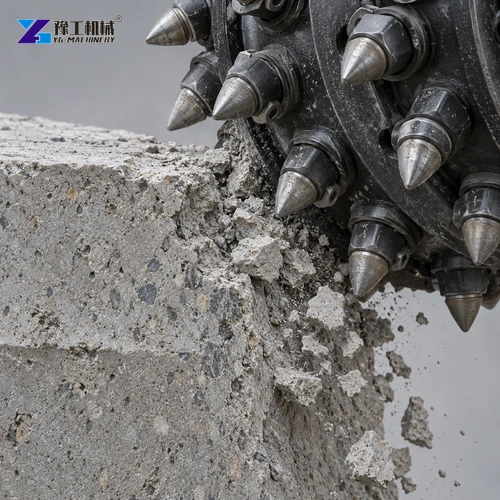
Rock strength influences the force needed to remove material, but strength alone does not describe cutting behaviour. Fractures, bedding and changes in material can determine how pieces detach. In jointed rock, a local cut can release material along an existing weakness. In more intact rock, the picks may need to create much more of the fracture themselves.
This distinction matters near a retained edge. The operator may intend to remove a thin layer, yet a joint extending behind that layer can release a larger fragment. The resulting profile is not controlled simply by the visible drum position. Geological structure and the required remaining surface need to inform the excavation sequence, especially around thin projections or corners.
Abrasivity creates a separate issue. A material need not be the hardest material on the site to cause substantial pick wear. Abrasive constituents can shorten useful tooling life even where penetration initially appears satisfactory. Cutting effort and wear therefore need to be assessed separately; an attractive initial removal rate does not establish the ongoing consumable requirement.
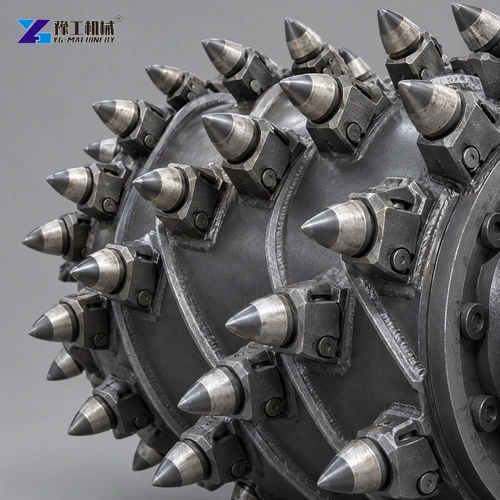
Pick geometry and condition influence the contact with the face. Suitable tooling needs to match the attachment and material rather than assuming one pick design is best for every rock or concrete task. Replacing a pick with a similar-looking item can alter fit and cutting behaviour. The correct part and retention arrangement belong to the specified cutting system.
For a drum cutter for excavator comparison, these relationships are more useful than an unsupported claim that it cuts every rock type. A representative material assessment and, where appropriate, a properly controlled trial can help establish suitability. No unverified YG rock-strength limit or fixed cubic-metres-per-hour promise is implied here.
Rock structure and abrasivity affect cutting response and tooling needs.
YG140 And YG160 Drum Cutter Specifications
The two YG configurations below differ in carrier range, hydraulic demand and attachment dimensions. H, W and D retain the published axis labels; a dimensioned attachment drawing is needed to relate them to a particular working approach.
| Parameter | YG140 | YG160 |
| Published H | 650 mm | 820 mm |
| Published W | 410 mm | 650 mm |
| Published D | 390 mm | 460 mm |
| Excavator weight | 5–10 t | 10–15 t |
| Maximum power | 22 kW | 45 kW |
| Speed | 0–120 r/min | 0–100 r/min |
| Flow | 40 L/min | 100–110 L/min |
| Maximum torque | 3,200 N·m | 5,400 N·m |
The YG160’s larger torque figure accompanies a different carrier band and flow requirement. It should not be treated as a drop-in higher-output replacement on a carrier arranged for the YG140. The motor, circuit, mounting and operating limits have to match as a whole. Maximum values in different rows are not proof that every listed maximum occurs simultaneously at the cutting face.
Attachment geometry also affects access. A wider or larger cutting arrangement may suit an open face while being less useful in a restricted step. The published dimensions describe the equipment, not a guaranteed finished trench width or excavation tolerance. The linkage position and the path used to move the head determine which surfaces the picks can actually reach.
For foundation work, this connects product choice to the profile that must remain. Open wall milling, a narrow inside return and a stepped bearing surface are different tasks even within one excavation. A drum cutter for excavator work can handle the accessible material while a separately approved finishing method addresses a local detail that the rotating head cannot produce.
Excavator Hydraulic Supply For A Drum Cutter
The available auxiliary flow influences the motor’s operating speed, while the pressure difference across the motor supports torque. Both must remain within the attachment’s permitted operating conditions. More flow or pressure is not automatically beneficial: a setting beyond the specified range can increase heat or damage components rather than improve useful cutting.
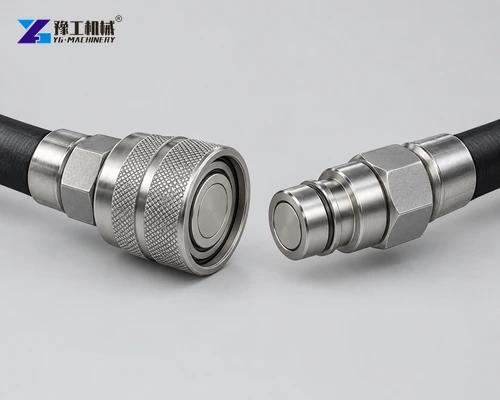
The carrier must be assessed at the attachment circuit, not merely by the excavator’s main-pump catalogue figure. Other functions, circuit restrictions and the selected operating mode can affect what reaches the tool. Couplings, hose sizes and return arrangements are part of that path. A suitable mass range is a starting point for matching the carrier, not evidence that the circuit is already correct.
Return pressure and any required drain arrangement need particular attention. The attachment documentation determines the allowable conditions and connections; they must not be improvised from a generic diagram. A hydraulic motor can be exposed to damaging conditions even though the pressure supply appears adequate. The responsible installer should confirm the complete circuit before operation.
Continuous cutting also creates a thermal duty different from occasional bucket movement. The oil and cooling system must remain within the carrier’s permitted working conditions. If temperature rises or the tool repeatedly stalls, simply continuing at the same setting does not resolve the cause. Material engagement, hydraulic matching and equipment condition need investigation together.
Hydraulic maintenance requires isolation and pressure relief under the supplied procedures. Leaks must not be searched for by hand, and a stopped drum does not prove that the circuit is depressurized. A drum cutter for excavator installation needs the correct mechanical attachment, protected hose routing and verified hydraulic connections before any cutting trial.
The selected carrier needs a compatible complete auxiliary hydraulic circuit.
Drum Cutter Pick Care, Spoil Removal And Surface Inspection
Pick inspection should identify missing, damaged or excessively worn tooling and problems with its holder or retention. Some round-shank pick systems rely on the permitted movement of the pick in its holder to distribute wear; the supplied design determines the correct condition. Do not assume a seized or unevenly worn pick is harmless because the other picks still cut.
Uneven tooling can change how load is distributed around the drum. Continued operation may then affect holders and adjacent components as well as cutting quality. The appropriate replacement procedure and compatible parts should be established for the actual attachment. Maintenance intervals or lubricant quantities from a different cutter model should not be transferred without confirmation.
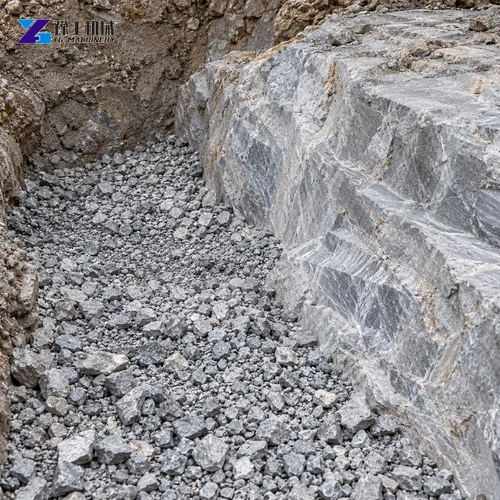
The material produced by cutting needs its own removal operation. A cutter separates material but does not replace a collection bucket. Spoil can accumulate in a pocket, obscure a bearing surface or fall from an upper bench into the next working area. A surface should be exposed and suitably cleared before judging whether it meets the project requirement.
The drum cutter and breaker comparison gives related tool-choice context. Milling, clearing and inspecting are separate stages. Keeping those distinctions clear helps avoid overcutting a hidden surface or mistaking the top of loose chips for the underlying formation.
Flying fragments, moving drums, dust and unstable material remain hazards that need the specified guarding, exclusion arrangements and site controls. A drum cutter for excavator work is not automatically dust-free, vibration-free or harmless to nearby structures. Appropriate assessment and operating methods remain necessary even where progressive cutting provides more control than a different excavation tool.
A useful attachment package includes suitable tooling and a workable maintenance arrangement.
Drum Cutter For Excavator FAQs
It uses rotating picks to remove material progressively, while a breaker delivers repeated impacts through a tool. The appropriate choice depends on the material, required profile and working conditions.
No. Mounting, available auxiliary flow, operating pressure, return conditions, hose routing and any drain requirement must also match the selected attachment.
Not necessarily. Strength affects cutting effort, while abrasivity also affects wear. Jointing and pick selection further influence performance.
No such assumption should be made. A rotating head has a physical envelope, and restricted intersections may need a separate verified finishing method.
Do not treat it as a loading bucket. A suitable clearing operation exposes the underlying surface for inspection and further cutting.
Tell us the carrier model, material and required excavation profile to discuss an appropriate cutting attachment.