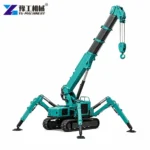
A useful spider crane price cannot be separated from the lift plan. Two machines with the same headline capacity may have different performance at the required radius, different transport widths and different supplied controls. The cheaper quotation can become unusable if the crane cannot enter the site, deploy its outriggers or lift the object at the planned hook position.
YG therefore needs the load, radius, hook height, access route and ground conditions before a model and scope can be confirmed. This guide does not publish a generic price list because freight, electrical or engine configuration, accessories and destination requirements vary. It explains what changes the offer and what evidence allows buyers to compare quotations on the same basis.
What Must Be Known Before Requesting A Price?
Start with the lifted object. State maximum operating weight, dimensions, lifting points and whether the load can rotate or catch wind. Add the required horizontal radius from crane center to hook and the hook height at the final position. The crane’s rated capacity at that working point matters more than its maximum capacity at minimum radius.
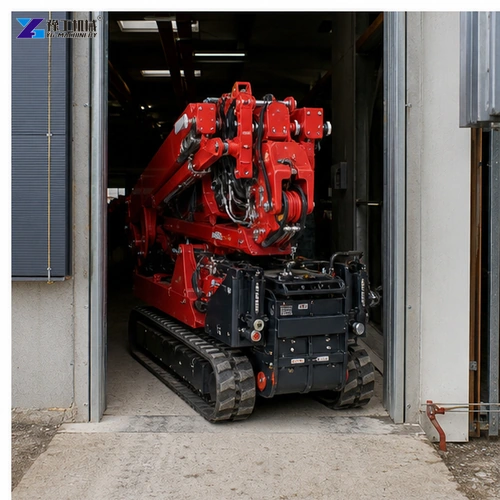
Next, map the complete route from delivery vehicle to setup location. Record doorway width and height, slopes, turning space, floor capacity, steps and overhead services. Show where outriggers can open and what lies beneath each support. A crane that fits through a door may still be unable to turn, deploy or maintain clearance around the load.
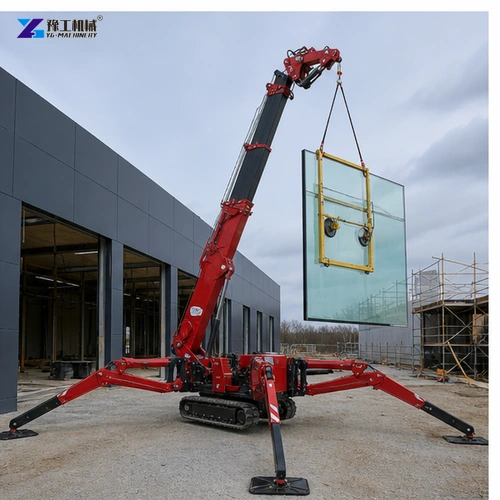
The operating environment changes the configuration. Indoor work may impose ventilation, noise or emissions restrictions. Facade installation may need a glass handler or other lifting accessory. Industrial maintenance may require precise placement in a narrow aisle. These differences explain why a spider crane price based only on tonnage is not a reliable purchasing figure.
Send the lift weight, radius, height and access measurements. YG can check the working point against available models before optional equipment is priced.
Which Published Capacities Frame The Model Choice?
The published YG tracked mini crane range below provides preliminary operating and transport data. Capacity must still be checked against the full load chart, boom position, outrigger setup and site conditions for the planned lift.
| Published Parameter | YG-3 | YG-5 | YG-8 |
| Maximum Lifting Capacity | 3 t | 5 t | 8 t |
| Published Maximum Working Radius | 8.83 m × 0.15 t | 14 m × 0.5 t | 16.5 m |
| Published Maximum Hook Height | 9.9 m × 0.7 t | 16.8 m | 18 m |
| Hook Lifting Speed | 0–8 m/min | 12 m/min | 12 m/min |
| Wire Rope | φ8 mm × 45 m | φ11 mm × 80 m | φ11 mm × 80 m |
| Boom Form | Five-section pentagonal | Five-section pentagonal | Five-section pentagonal |
| Boom Length And Extension Time | 3.1–9.2 m / 20 s | 12.3 m / 54 s | 12.3 m / 54 s |
| Boom Angle And Raise Time | 0–78° / 13 s | 0–78° / 13 s | 0–78° / 13 s |
| Slewing Range And Time | Continuous 360° / 60 s | Continuous 360° / 38 s | Continuous 360° / 38 s |
| Walking Speed | 0–2.5 km/h | 0–2.5 km/h | 0–2.5 km/h |
| Gradeability | 36% / 25° | 36% / 25° | 36% / 25° |
| Operation | Manual / remote optional | Manual / remote optional | Manual / remote optional |
| Transport Dimensions | 2950 × 980 × 1560 mm | 5000 × 1500 × 1900 mm | 5000 × 1600 × 2180 mm |
| Machine Weight | 2700 kg | 6200 kg | 7200 kg |
Do not read the maximum radius and maximum capacity as simultaneous values unless the chart states that working point. The YG-3 line, for example, explicitly pairs 8.83 m with 0.15 t and 9.9 m hook height with 0.7 t. Every project should be checked at its actual radius, boom angle and height.
Transport dimensions affect delivery, doorway access and floor routing, while machine weight influences trailer selection and floor assessment. Remote control is listed as optional and should be stated in the quotation. For a more detailed method, use the spider crane lifting capacity guide to prepare the working-point check before asking suppliers to finalize scope.
Which Configuration Items Change Spider Crane Price Most?
The base model is only one part of the offer. Control mode, power source, lifting accessories, hook blocks, wire-rope arrangement and safety or monitoring equipment can change the supplied package. Destination electrical standards, documentation language and local certification requirements should be stated at the beginning rather than added after production.
Does Remote Control Belong In The Base Scope?
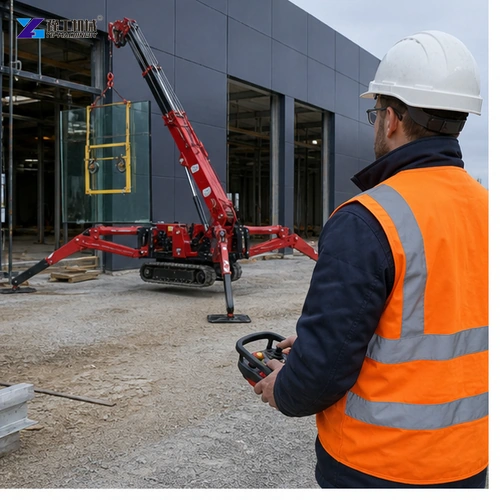
The published table identifies manual or remote operation as an option. Remote control can improve the operator’s viewing position in confined placement work, but the proposed system, controls and charging or battery arrangement should be listed. Buyers should not assume that two quotations include the same control package because both use the word “remote.”
Which Lifting Accessories Need Separate Verification?
Glass handling, vacuum devices, spreader beams, slings and custom lifting frames introduce their own capacity, compatibility and safety requirements. State the accessory weight because it reduces the remaining load available at the hook. YG should confirm what is included, what is supplied by others and which party is responsible for the final lifting method.
If the task, accessory and destination requirements are defined, YG can separate necessary configuration from optional additions and prepare a comparable equipment scope.
COMPARE MY CRANE CONFIGURATION
How Do Access And Site Setup Affect Total Cost?
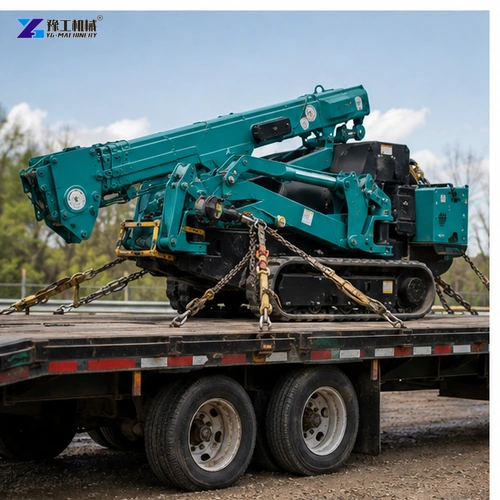
Delivery cost depends on machine dimensions and weight, route, destination and unloading plan. A compact crane may reduce building disruption, but a difficult site can still need permits, lifting aids, mats or temporary access work. The quotation should identify the shipping basis, packing, inland delivery responsibility and unloading requirements.
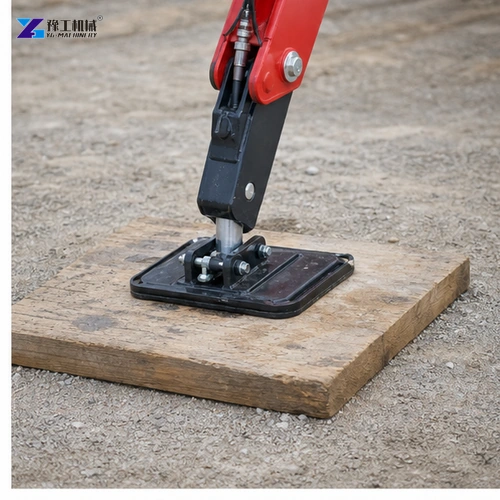
At the work area, outriggers need adequate space and support. Ground bearing, floor slab capacity and underground services must be assessed by responsible site personnel. The crane’s compact body does not remove these obligations. A restricted-access lifting plan helps separate equipment capability from site engineering and prevents a machine offer from implying approval of an unverified floor.
Commissioning, operator familiarization and inspection may also vary by destination. Ask whether the price includes setup checks, test lifting, documentation, spare parts and training. Clarify travel and accommodation if field service is required. These items can materially change total landed and ready-to-work cost.
What Should Be Compared Beyond The Purchase Figure?
Estimate cost over the intended work mix. Include transport between jobs, setup labor, routine inspection, wear items, wire rope, power or fuel, maintenance access and downtime support. A smaller unit can be less expensive to move but may need more setup positions; a larger unit may exceed the access route. The lowest spider crane price is not automatically the lowest cost per completed lift.
Utilization also matters. A contractor moving the crane daily needs quick loading, secure transport points and a practical setup routine. A factory using the crane indoors may value precise control, clean power and maintenance access. Compare the features that shorten the buyer’s actual cycle instead of paying for capacity that cannot be used at the site.
Request an itemized proposal. It should list model, boom and hook data, control mode, power configuration, included accessories, spare parts, packing, freight basis, documentation, commissioning and exclusions. The tracked mini crane range provides product context, but the final commercial comparison should use the exact project scope.
Provide the destination, delivery term, expected annual use and service expectations so YG can explain the complete ownership boundary.
What Evidence Should Be Confirmed Before Ordering?
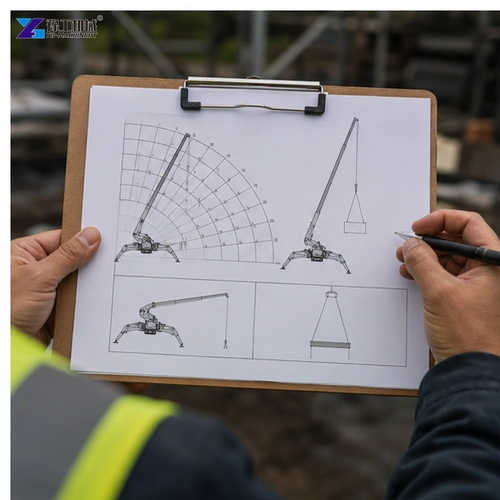
Prepare a lifting worksheet showing the maximum load, accessory weight, radius, hook height, boom clearance and setup position. Attach route dimensions and photographs. YG can check a proposed model against published data and identify where a detailed load-chart review or site engineering decision remains necessary.
The order document should record the selected configuration and the evidence used to accept it. Verify model plate information, control functions, boom movement, hook operation, emergency stops, travel and supplied accessories during inspection. Confirm manuals, maintenance schedule, spare parts and packing before shipment.
No supplier should replace the responsible lift planner. Equipment selection supports the task, while the site controls lifting procedure, ground assessment, operator competence and local compliance. Keeping these responsibilities clear makes the quoted scope more accurate and the eventual lift safer.
Once the worksheet and commercial boundaries are complete, YG can prepare a project-specific spider crane price rather than an unsupported figure.
Spider Crane Price FAQ
Model, working point, controls, accessories, destination, freight, documentation and commissioning scope differ between projects.
Usually not. Capacity changes with radius and configuration, so check the full load chart at the actual working point.
No. The published YG table lists manual or remote operation as optional, so the selected control package must appear in the quotation.
Send doorway width and height, turns, slopes, floor limits, overhead clearance, travel distance and the available outrigger footprint.
Use the same model duty, accessory list, destination standard, freight basis, documentation, commissioning and exclusions.
A meaningful spider crane price is the cost of a machine and support scope that can reach the site and perform the defined lift. Establish the working point first, verify access and setup, then compare itemized offers. This sequence avoids paying for headline capacity while leaving critical controls, transport or accessories outside the quotation.