An excavator screening bucket separates material that is already present in different sizes. A crusher bucket reduces the size of suitable feed by breaking it. The distinction is simple, but it changes the equipment needed for a recycling or backfill task. Separating small aggregate from larger pieces is not the same operation as manufacturing smaller aggregate from oversized rubble.
Decide the processing sequence before choosing the attachment: which material will be sorted, screened, crushed and placed in each stockpile? If usable fines are already mixed into a pile, screening can recover them without processing every piece through a crusher. If the useful material remains locked in oversized fragments, a screen alone leaves those fragments oversized. Some jobs need both operations, with sorting and inspection around them.
Screening Separates; Crushing Changes Particle Size
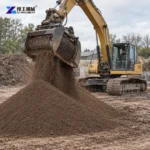
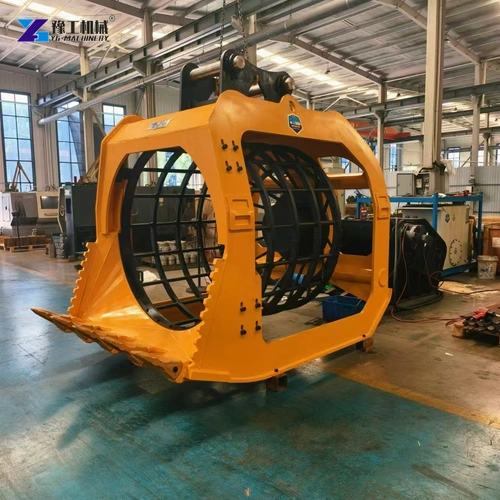
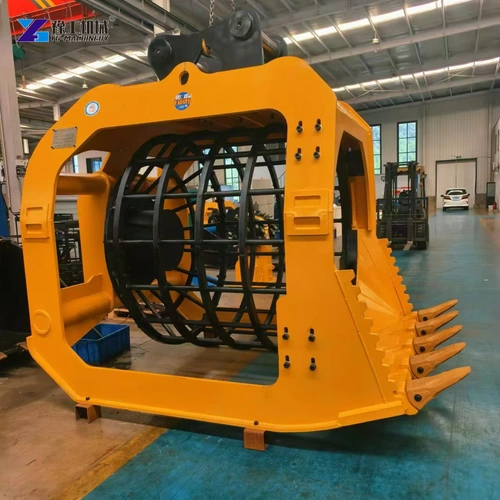
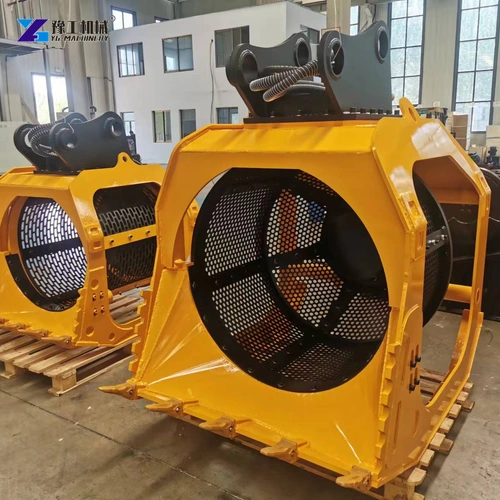
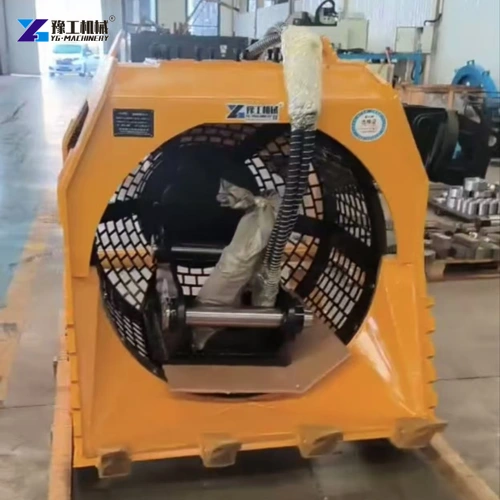
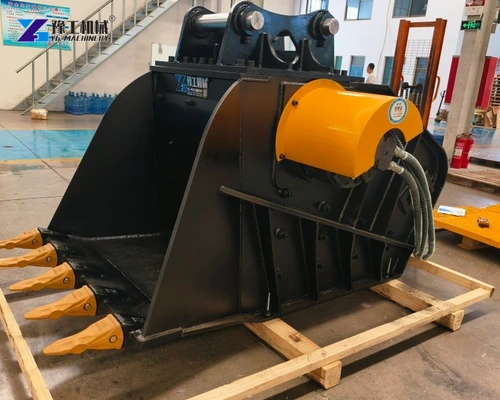
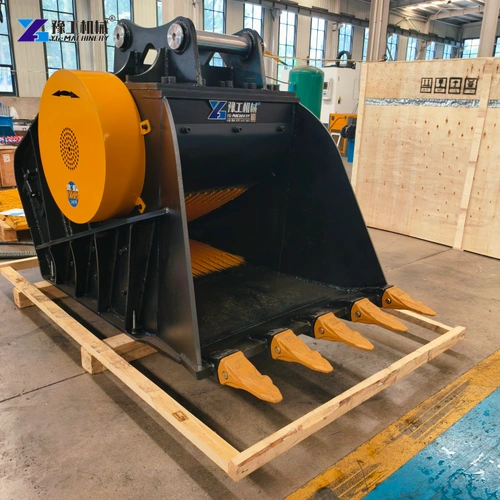
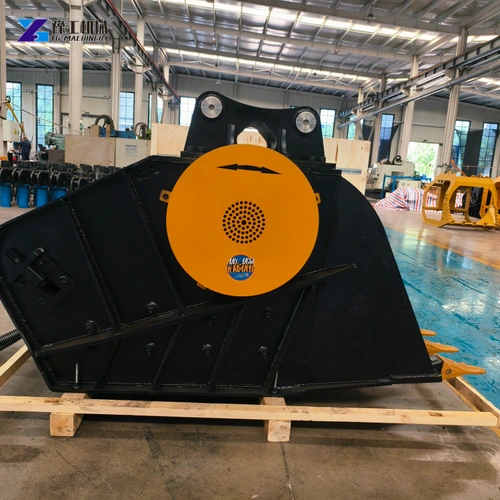
A rotary screening bucket turns a basket containing the feed. Material encounters the screen openings as the load tumbles. Particles that can pass through the openings fall out, while retained material is discharged separately. The process classifies the material rather than applying a controlled crushing gap to every retained piece.
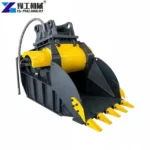
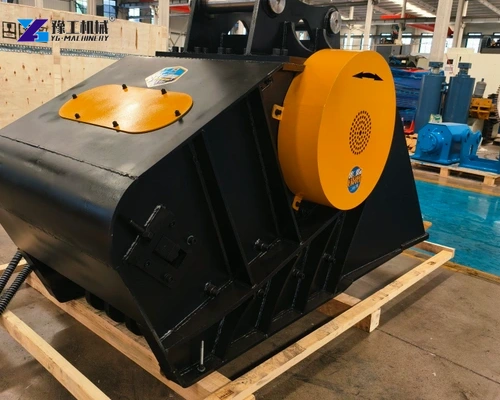
A jaw-type crusher bucket applies force between crushing surfaces to fracture suitable material. The adjustable gap at the jaw discharge sets the opening through which crushed material leaves. Changing that gap changes the size-reduction setting; particle shape and material fracture also affect the resulting size distribution. Feed condition, shape and material behaviour influence the actual product, so an output setting and a finished grading specification are not interchangeable descriptions.
This difference matters when the pile contains several useful fractions. Screening preserves larger material for a separate decision: reuse it as it is, send it for crushing or reject it. Crushing the whole pile first can change material that did not need size reduction. Conversely, repeatedly screening a pile cannot make sound oversized rock pass through a smaller opening.
Identify whether the feed needs separation, size reduction or both.
Decide Whether Screening Belongs Before Or After Crushing
Pre-screening can separate an existing fine fraction from suitable material selected for later crushing. This gives the crusher a more defined task instead of asking it to handle every component of an unsorted mixture. The benefit depends on what the feed actually contains and whether the recovered fraction meets its intended use.
Post-screening separates the crusher’s output into material passing the chosen opening and retained oversize. The passing fraction goes to its designated stockpile; suitable oversize can return for further size reduction. This creates a controlled processing loop instead of repeatedly mixing finished material with pieces that still need crushing. Particle shape, contamination and the project’s grading requirements determine which stockpile can be used for the intended construction task.
Consider a mixed pile containing small mineral particles, larger sound concrete fragments and pieces of timber. Sorting removes unsuitable foreign material. Pre-screening separates the existing smaller fraction for assessment, while suitable oversized concrete is considered for crushing. After size reduction, screening can separate processed product from remaining oversize for a further decision. The first screened fraction still needs to meet the project’s grading and contamination requirements. This illustrates a processing route; it is not a claim that every demolition pile needs the same sequence.
Base the actual route on samples from the real feed, not just a photograph. Assess fine and oversized fractions separately so that a sorting task is not confused with a breaking task, and keep unsuitable fines out of the accepted stockpile.
Describe the incoming fractions and required recovered product.
YG Rotary Screening Bucket Parameters
The current YG rotary-screening range includes the following configurations. These values describe the screening attachment; they should not be used as crusher-bucket capacities or as guaranteed processed output.
| Parameter | YGGTS-03 | YGGTS-06 | YGGTS-12 |
| Excavator reference range | 5–10 t | 10–18 t | 18–25 t |
| Attachment weight | 500 kg | 950 kg | 1,320 kg |
| Bucket capacity | 0.3 m³ | 0.6 m³ | 1.2 m³ |
| Operating pressure | 20 MPa | 20 MPa | 20 MPa |
| Recommended flow | 60 L/min | 80 L/min | 100 L/min |
| Published mesh-size range | 5–50 mm | 5–80 mm | 5–100 mm |
Carrier tonnage is an initial matching reference. The attachment, its contained material and the operating position form a working load that the excavator must support. Hydraulic compatibility also requires more than identifying an auxiliary port: the offered installation must match the specified flow, pressure and connection requirements.
Mesh selection should follow the intended fraction rather than the largest opening available for a model. A different opening changes what can pass through and what stays in the basket. Capacity describes the attachment’s nominal container volume, not how many cubic metres of accepted product it will deliver each hour.
Match the screening model to the carrier and intended separation.
Four Material Decisions Before Selecting The Attachment
- Existing fine fraction. Identify material already small enough to pass through the proposed opening, then assess its suitability for the intended use. Recovery and approval are separate decisions: dirty or unsuitable fines remain a reject stream even when they pass through the selected mesh.
- Oversized but suitable material. Identify larger pieces that could become useful after size reduction. A crusher may have a role here, provided its permitted feed and operating limits match those pieces.
- Unsuitable contaminants. Timber, plastic, metal and other foreign material require a defined sorting and handling route. A screen does not reliably classify all contamination by composition, and a crusher does not turn unsuitable material into acceptable aggregate.
- Material that resists clean separation. Moisture and cohesive fines can bind particles together or obstruct openings. Assess the actual material condition rather than assuming that the stated mesh size will reproduce the same separation in every pile.
The intended use gives these decisions a practical order. Backfill beside services may require a selected fine material around the installation, while a specified construction layer may require a controlled combination of particle sizes. General fill has its own project limits. Define the required fraction and contamination limits first, then select the screen opening and any crushing stage needed to produce it; retain the specified testing and approval before use.
Arrange Separate Stockpiles Around The Processing Sequence
Recovered material needs a destination that preserves the separation just achieved. If screened fines fall onto unsorted rubble, the next handling operation can mix them again. Separate positions for incoming feed, recovered product, oversize and rejected material make the processing route visible and easier to control.
The excavator’s movements connect those positions. It must be able to load the attachment, perform the processing task and place each fraction without crossing an impractical path. A small nominal attachment can be the more useful choice on a restricted site if it allows an orderly route; a larger basket cannot solve a stockpile arrangement that repeatedly remixes material.
Where screening and crushing share one carrier, attachment changes are part of the working schedule. Processing suitable batches can reduce unnecessary changes, but the batch size must fit the available stockpile area. Compare that complete sequence before assuming that buying both attachments will automatically increase daily output.
Compare Accepted Material At The End Of The Route
A meaningful trial follows feed material through the proposed sequence. Record the quantity and condition of the incoming load, the separated fractions and any reprocessing required. Inspect the intended product rather than judging success only from how rapidly material leaves a bucket.
For a screening-only proposal, examine whether the recovered fraction meets the task and what happens to the oversize. For a combined route, assess the crusher’s suitable feed and the product after the required separation stage. This reveals whether the next investment should be a screen, a crusher or a different handling arrangement.
Review the rotary screening bucket range alongside the excavator rock crusher bucket when defining the equipment package. The useful quotation assigns each machine a clear material job instead of presenting the two attachments as interchangeable ways to process any pile.
Provide representative feed and the required product to discuss an equipment route.
Excavator Screening Bucket FAQs
No, not when material needs to be broken into smaller pieces. A rotary screening bucket separates particles by their ability to pass through its openings. Choose it for separation; use an appropriate crusher when suitable oversized material needs size reduction.
No universal sequence applies. Pre-screening is worth assessing when an existing fine fraction can be recovered separately. The feed and required product determine the sequence.
No. It defines the screening opening. The resulting material must also meet the project’s requirements for grading, contamination and other relevant properties.
They prevent recovered fractions from being mixed back into incoming feed or rejected material during the next handling operation.
Measure the incoming feed, recovered fractions, oversize and any reprocessing. Judge the material accepted at the end of the route, not only the apparent bucket cycle speed.
Send the incoming material, contamination, required recovered fraction and excavator details to discuss screening and crushing equipment.