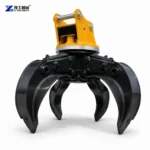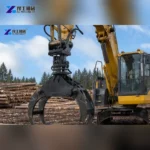
A hydraulic log grapple has two related but separate handling jobs: closing around timber and controlling the direction in which the timber points during placement. The jaw cylinders create the gripping movement. Where a hydraulic rotator is supplied, it adds controlled rotation between the mounting bracket and grab. A fixed arrangement leaves more of that orientation task to the excavator’s position and boom movements.
This difference matters when logs must enter a truck body lengthways or lie parallel on a stack. It matters less where pickup and release occur along a convenient, repeated alignment. Compare the movements the work requires before selecting a rotating arrangement merely because it has an additional function.
Hydraulic Log Grapple Jaw Movement and Rotation
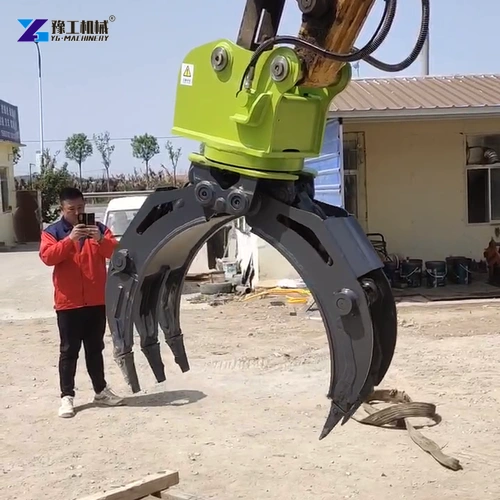
The jaws open to approach the timber, then close around its section. Their curved profiles bring the material into a contained position. A larger opening creates approach space, but the shape of the timber determines where the jaws actually touch. A tapered trunk and a bundle of thin branches can therefore behave differently inside the same opening.
Rotation acts above that gripping assembly. It changes the heading of the closed grab and material relative to the excavator attachment mount. The excavator’s own slew, by contrast, moves the boom and attachment around the machine. These motions can work together, but they do not have the same effect on the position of a long log.
Think of placing a log beside parallel timbers. Slewing the excavator brings the load toward the stack. A separate rotator, when specified, can help align its length with the timber stack without requiring exactly the same change in the carrier’s position. The benefit is controlled alignment, not a higher excavator lifting capacity.
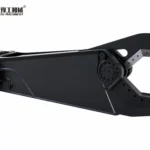
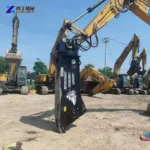
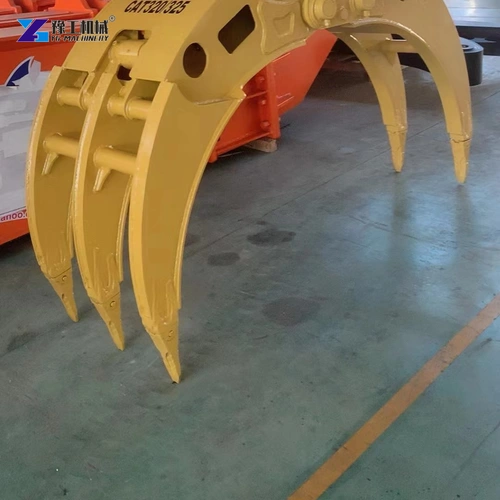
The mechanical grabs shown next use a linkage to transmit movement from the carrier arrangement to their jaws. A hydraulic jaw drive instead uses its cylinders to produce the closing movement. This comparison concerns how the jaws operate. A fixed mount, passive articulation and a powered rotator describe a separate question: how the held timber can rotate relative to the excavator.
Match the jaw arrangement to the timber and receiving position.
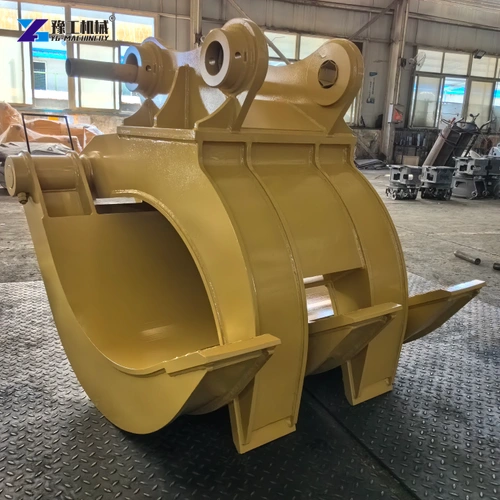
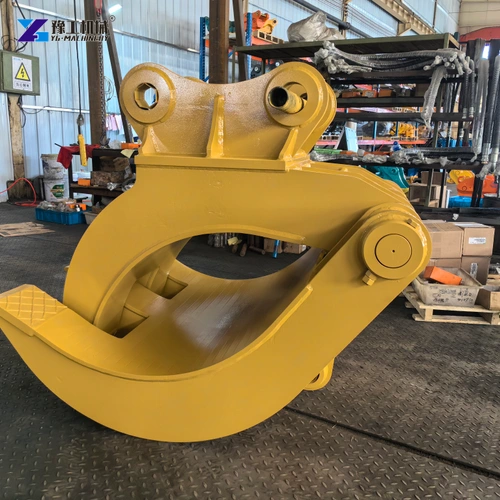
When a Fixed Grab Can Suit Repeated Timber Handling
A fixed-heading hydraulic grab can suit repeated transfers where the logs are already presented in a convenient direction and the destination timber stack has an open approach. The carrier can follow a similar pickup-to-release path on successive loads. This makes a simple mounting arrangement useful when the work does not require frequent changes in the direction of the logs.
A yard with several stacks at different angles presents another task. Achieving each alignment through carrier positioning may require additional manoeuvring space. Powered rotation provides an adjustment at the attachment, which can be valuable when placing timber lengthways into a vehicle or approaching a stack from changing directions. Its practical benefit depends on the arrangement of the truck body or timber stacks, rather than on the number of functions listed for the grab.
The mounting type also affects how the held timber responds. A non-rotating mounting connection prevents the grapple from turning relative to its mount; a free-swinging connection allows passive movement under load forces; a powered rotator provides commanded adjustment. Passive articulation is therefore different from operator-controlled rotation and should be identified separately when comparing assemblies.
Evaluate the final approach as well as the pickup. A stack may accept timber from an open side, while a vehicle body requires it to pass within a more confined opening. Those unloading-space constraints determine the practical value of independent rotation of the grapple.
Compare the required alignment movements before choosing the rotation option.
Hydraulic Log Grapple Applications by Placement Task
Three common handling patterns make the comparison more concrete:
- Loading timber lengthways into a truck body. The jaws need a secure contact position that keeps the log balanced as its ends enter the available space. A tapered trunk may balance away from its geometric midpoint. During placement, the timber needs a stable resting position before the jaws release it; orientation control helps align the load but does not increase the carrier’s permitted lifting capacity.
- Sorting logs into parallel groups. Logs of different length or diameter need stable supports and sufficient space between timber stacks. A rotating assembly can align each piece with its row, while jaw contact and the position of the grip control how the piece is carried. The entire log, not only the grab body, must clear neighbouring stacks throughout the movement.
- Clearing irregular timber and branches. Thin branches rearrange as the jaws close, so the contact pattern changes within the bundle. A gap between the jaw tips can let small pieces escape even when the outside of the bundle fits within the opening. Jaw shape and the range of material sizes are the main containment questions here; rotation addresses placement direction, not loose-piece retention.
Timber length makes control of log orientation particularly important. Turning a long log moves its ends through a much larger swept area than the grab body itself. The operator needs clearance for that full movement and a grip that contains the timber at the selected contact position. In an irregular bundle, individual pieces can also move relative to one another as the bundle turns.
Describe the pickup and placement pattern for the proposed attachment.

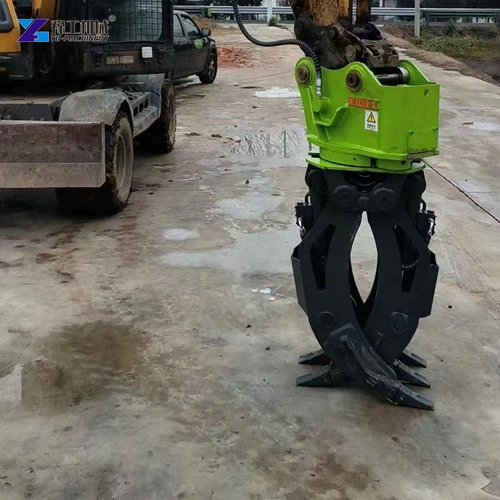
YG Hydraulic Log Grapple Parameters
The YG hydraulic-grab series below compares attachment mass, hydraulic pressure and listed carrier class. It is a base attachment comparison, not a fixed-versus-rotating model chart. Specify the timber jaws, mounting connection and any powered rotator separately when defining the installed log-handling assembly.
| YG hydraulic grab model | YG02 | YG04 | YG06 | YG08 |
| Listed excavator weight | 5 t | 8 t | 12 t | 20 t |
| Attachment weight | 300 kg | 370 kg | 660 kg | 1060 kg |
| Oil pressure | 110–140 bar | 120–160 bar | 150–170 bar | 160–180 bar |
Carrier weight is a product-family matching reference. Available lifting capacity changes with working radius, height, slew direction and setup. The mass of the grab, mount and any connection equipment must be considered within the carrier’s requirements. A heavier attachment uses part of the capacity that would otherwise be available for timber.
Pressure acts through the jaw cylinders and their mechanical linkage to create closing force. The resulting grip depends on that geometry and the timber contacts, while suspended-load capacity also involves the attachment and carrier limits. The selected package needs its hydraulic settings and control functions matched to those components.
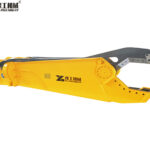
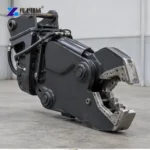
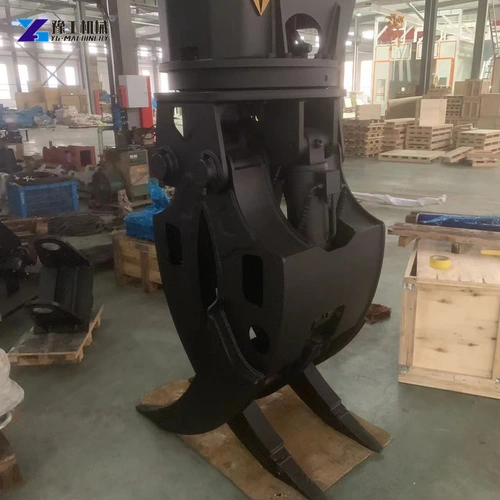
The pictured grabs have different jaw profiles and upper mounting constructions. Curved jaws contain the timber, their pivots provide the closing movement, and the upper connection carries the assembly. For the dimensions and carrier-interface questions accompanying a specific attachment, see the existing excavator log grapple guide.
Rotation Changes the Hydraulic and Mechanical Package
Adding controlled rotation changes the complete installed arrangement, not just the operator’s list of movements. The rotation function needs the supplied motor or actuator, its control components and suitable hydraulic connections. Jaw operation remains a separate function that must also be controlled correctly.
Rotation requires hoses and connections that accommodate the attachment’s specified angular movement. Depending on the assembly, a rotary connection or a defined range of hose movement manages oil supply as the grab turns. Poor routing can pull a hose tight or bring it against moving parts. The available rotation range and hose arrangement should therefore be compared as part of the supplied mechanism, not as separate accessories.
The mount must also allow the grab to work without unintended interference. Include a quick coupler, if used, when reviewing the attachment’s geometry and mass. The quick-coupler guide explains why pin fit and positive retention are different parts of that connection.
For the final purchase, identify the regular timber sizes, pickup presentation and receiving alignment together. Those facts determine whether a fixed hydraulic log grapple is sufficient or whether controlled rotation adds a useful motion. Request the jaw, rotator, mount and controls as one defined arrangement rather than comparing an incomplete attachment price.
Request the jaw, mounting, rotation option and controls as one defined supply.
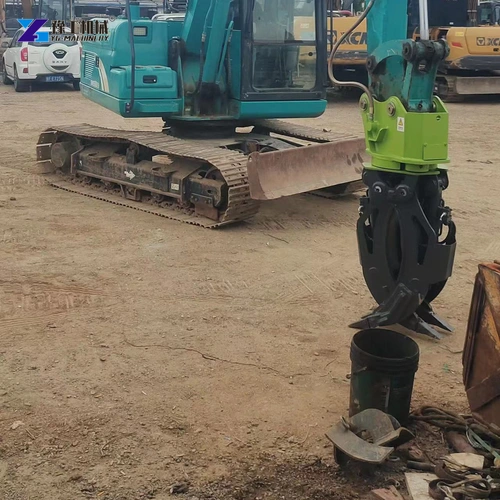
Hydraulic Log Grapple FAQs
No. Hydraulic jaw operation and powered rotation are separate functions. The supplied configuration must identify the available movements and their control arrangement.
Excavator slew moves the boom and attachment around the carrier. Grab rotation changes the timber’s heading relative to the attachment mount. Using the two motions together allows the operator to approach a receiving position and align the material for placement.
The curved jaw profile brings the bundle into a contained section, but thin pieces can rearrange as the jaws close. Tip clearance, contact positions and the range of piece sizes influence what remains contained. Assess representative branches as a bundle rather than treating their combined width as one solid trunk.
Yes, where the permitted carrier and attachment movements can achieve the required alignment. A rotating configuration may be useful when that alignment changes frequently or access makes repositioning difficult.
Jaw cylinders provide opening and closing through their pivots and linkage. Where specified, a separate rotator controls heading. The mount carries the assembly, while the control valves and hydraulic connections direct the two functions within the supplied operating limits.
Tell us the typical log diameter and length, the excavator used, and whether the timber is being loaded, sorted or cleared. These details help define the jaws, mount and useful rotation arrangement.