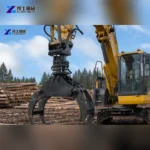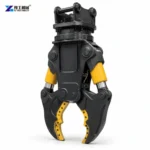
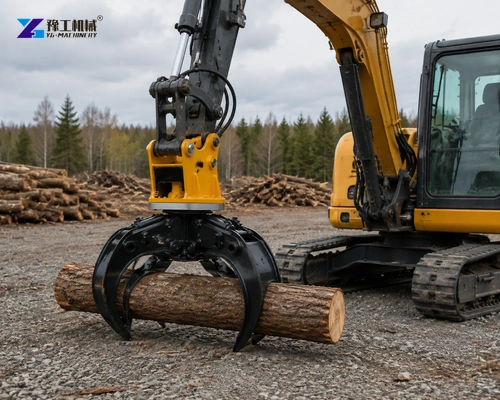
An excavator log grapple must fit both the timber and the machine carrying it. A grab that closes around a trunk may still be unsuitable when the log is long, the unloading point is distant or the attachment consumes too much of the carrier’s available capacity. For contractors handling felled timber and site-clearance material, these constraints matter more than opening width alone.
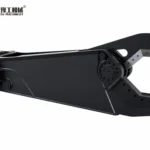
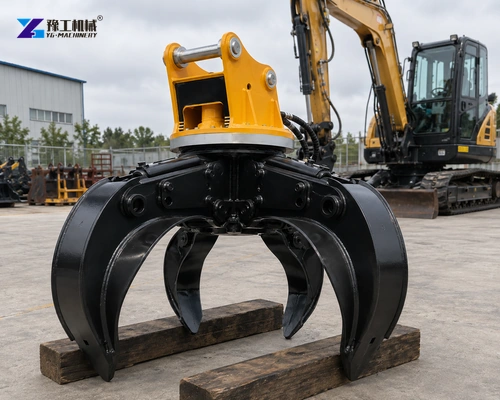
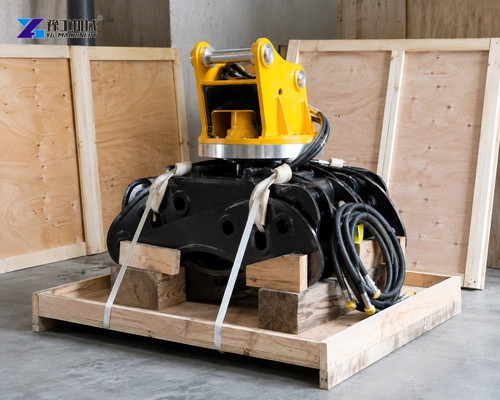
YG’s 60AY is a rotating grapple configuration for 6–9 tonne carriers, with a 1400 mm maximum opening and a 120 mm minimum gripping diameter. This page brings its dimensions, hydraulics and mounting information into one purchasing decision. It is a handling attachment, not a felling head: cutting, gripping and carrying remain separate equipment functions.
What Can An Excavator Log Grapple Hold Securely?
Start with the smallest and largest pieces normally handled, not an unusually convenient demonstration log. The opening establishes the space available to approach material; it does not prove that the jaws can contain every shape inside that space. Tapered trunks, projecting branches and irregular bundles can contact only part of the jaw profile. Record diameter at the intended gripping point and show the material from more than one angle.
The 120 mm minimum gripping diameter is equally important. Small branches may pass through a jaw arrangement intended for larger timber, while a loosely gathered bundle can change shape as individual pieces move. Do not treat several thin branches as one solid log simply because their combined width is large. Separate handling methods may be needed for fine brush, trunks and mixed demolition debris.
Send representative timber photos, the diameter range and usual piece length. YG can check whether the jaw geometry suits your material before selecting the mounting arrangement.
Does The 60AY Fit Your Excavator And Load Route?
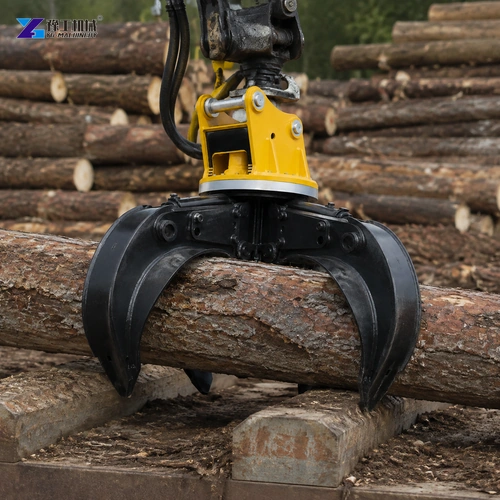
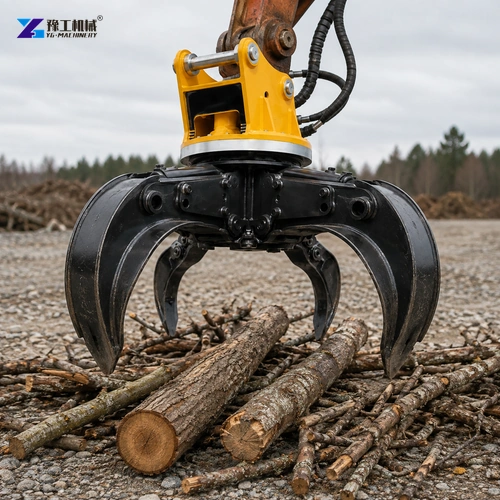
Use the following 60AY specifications to shortlist the excavator log grapple, then evaluate the complete installed combination. The carrier range is a starting point, not permission to handle the maximum stated load at every radius. Log length, attachment mass, coupler mass and the direction of movement all affect the practical operating envelope.
| Parameter | 60AY Configuration |
| Overall Dimensions | 1430 × 600 × 400 mm |
| Wooden Packing Case Dimensions | 1500 × 800 × 800 mm |
| Pallet Dimensions | 1000 × 550 mm |
| Total Weight | 435 kg |
| Maximum Opening | 1400 mm |
| Minimum Gripping Diameter | 120 mm |
| Rotation Diameter | 360 mm |
| Working Flow | 100 L/min |
| Working Pressure | 200–240 kg/cm² |
| Motor Displacement | 625 mL/rev |
| Hose Connection Specification | G 1/2 |
| Cylinder Diameter | 75 mm Bore / 95 mm External Diameter |
| Cylinder Rod Diameter | 50 mm |
| Gripping Force | 30 kN |
| Maximum Gripping Load | 800 kg |
| Suitable Carrier Weight | 6–9 t |
| Dipper / Linkage Inside Width | 150–240 mm; Customizable |
| Mounting Pin Center Distance | 310 mm; Customizable |
The 800 kg maximum gripping load and 30 kN gripping force describe different limits; neither replaces the excavator manufacturer’s load chart. Establish the permitted load for the actual radius, height, slew direction and machine setup. Deduct the installed attachment and connection equipment as required by that chart. A log that is manageable near the tracks may become unsuitable at the far side of a truck.
Map the route from pickup to receiving position, including obstructions and ground conditions. Measure the longest reach rather than estimating it from the nearest stack. The carrier considerations in YG’s US log-grapple application are useful when checking how timber length and placement needs interact. Choose a workable route before attempting to solve every limitation with a larger grab.
Which Connections Must Be Agreed Before Ordering?
Hydraulic Supply And Rotation
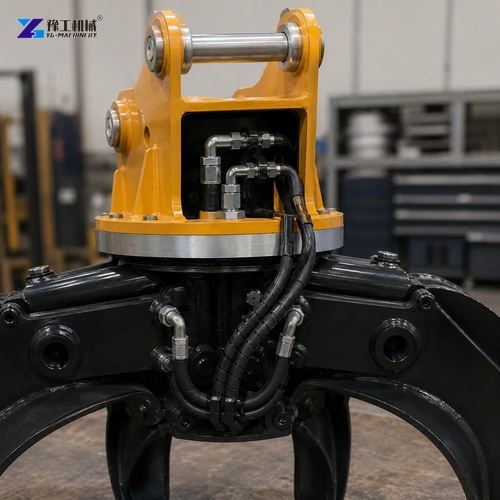
For this excavator log grapple, compare the stated 100 L/min working flow and 200–240 kg/cm² pressure range with the carrier’s auxiliary circuit information. Confirm available settings, return arrangement and controls with YG and the carrier supplier. A pump’s total output is not automatically the flow available to the attachment during simultaneous movement. Do not raise relief settings simply to pursue a faster cycle.
The rotating grapple also needs an agreed control arrangement for jaw movement and rotation. Confirm the supplied valves, connection count and hose routing before shipment. G 1/2 identifies a connection specification, not a guarantee that every existing hose will fit. Check mating thread, sealing arrangement and clearance; hoses must accommodate the intended motion without twisting, rubbing or becoming taut.
Mounting Geometry And Clearance
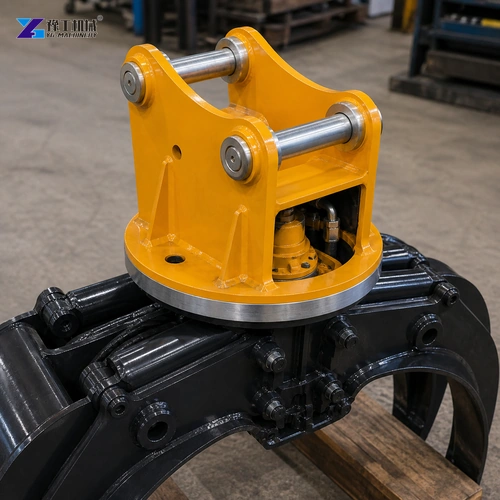
Send pin diameter, pin-center distance, inside bracket width and clear photos of the dipper and linkage. The 150–240 mm inside-width range and 310 mm center distance can be customized, so the final drawing must match the specific carrier. Check the attachment through its permitted articulation, including hose clearance and interference with the dipper.
If a coupler sits between the machine and grab, include its dimensions and weight in the same review. YG’s quick-coupler selection and locking guide explains why pin compatibility alone is insufficient. A connection that physically engages still requires correct retention, clearance and an approved operating check.
Share the carrier model, auxiliary-circuit data and mounting measurements together. YG can review the hydraulic and mechanical interfaces as one configuration rather than quoting an incomplete attachment.
How Does The Grapple Change A Timber Handling Cycle?
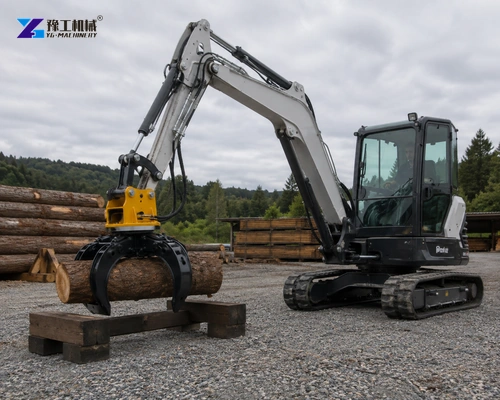
A useful cycle moves material to an organized destination with minimal repositioning. Plan the receiving supports and clear the route before pickup; repeatedly rotating a long trunk to avoid obstructions wastes time and increases the area that must remain clear. The excavator log grapple should help control orientation, not compensate for an unsuitable yard layout.
- Present accessible timber so the jaws can approach the intended gripping point without disturbing an unstable pile.
- Establish a secure grip and controlled movement under the machine’s operating instructions; stop if the material shifts or the available clearance is insufficient.
- Place timber onto prepared supports and establish stability before releasing the jaws. Keep people outside the operating and material-movement area.
Where one carrier also digs, grades or clears brush, compare attachment-change time with the frequency of each task. The mini-digger attachment planning guide helps separate these functions. A dedicated timber-handling period may reduce changes, but only if storage space and the wider site sequence allow it.
What Should The Excavator Log Grapple Quotation Include?
Ask for a defined supply package: 60AY grab, agreed upper mount, pins and retention parts, hoses and fittings, control components, and any carrier-side work excluded from the price. Identify wear parts and service information needed for the proposed duty. A lower attachment price is not a saving if essential interfaces remain unspecified.
Confirm packing dimensions, final shipping weight, unloading arrangements and destination requirements separately from working capacity. The packing case and pallet dimensions serve different purposes and should not be interchanged when estimating freight or receiving space. Request the approved mounting drawing and itemized packing list with the same configuration revision.
Once the carrier interfaces and material range are agreed, send the destination and required supply scope. YG can prepare an itemized proposal covering the grab, connections and packing.
REQUEST AN ITEMIZED GRAPPLE QUOTE
Excavator Log Grapple Buyer Questions
Its stated minimum gripping diameter is 120 mm. Smaller pieces and loose bundles require a separate suitability review; do not assume that closing the jaws will retain them.
No. Opening width is a geometric limit. Material shape, length, mass, jaw contact and carrier capacity must also be checked.
No. The grab’s maximum gripping load does not override the carrier load chart, attachment deductions, ground conditions or operating instructions.
No cutting function is specified for this configuration. A rotating grapple handles suitable material; it is not a substitute for a saw-equipped felling attachment.
The right excavator log grapple is the one that closes securely around the actual material, connects correctly to the carrier and works within the complete machine’s limits. For a 60AY review, provide timber dimensions and photos, carrier details, hydraulic information, mounting measurements and the longest working reach. These inputs let the final configuration address the job rather than only the headline opening size.