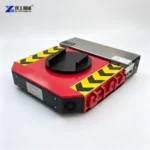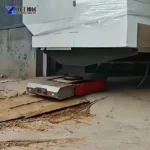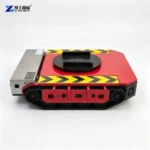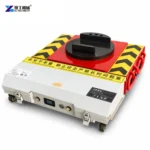
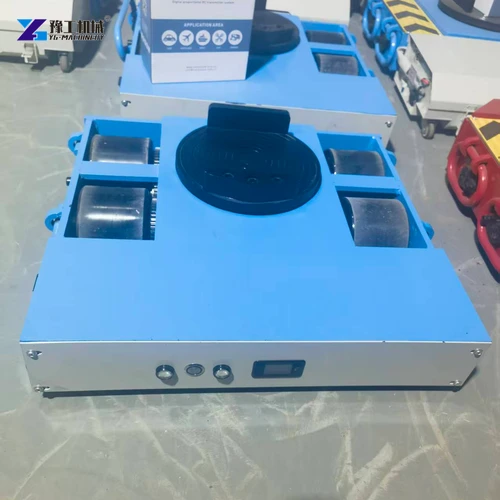
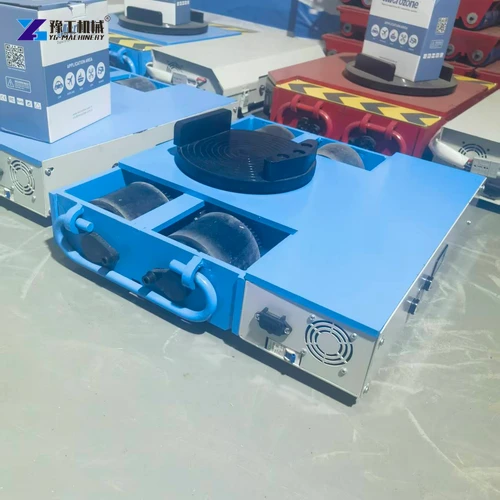
Heavy equipment moving rollers support industrial machinery close to floor level while it moves into position. A manual roller system and a powered skate can both carry a heavy machine, but they obtain movement in different ways. The useful buying question is who or what supplies the driving force, how the load changes direction and whether the arrangement suits occasional positioning or repeated relocation.
For a short, straightforward move, an appropriate manual set may provide the rolling support required. Where pushing effort, repeated starts or controlled powered movement becomes a practical constraint, a battery-driven unit deserves comparison. Neither choice removes the need for suitable support points and a floor capable of carrying the wheel reactions.
Heavy Equipment Moving Rollers: Manual Force Or Powered Drive
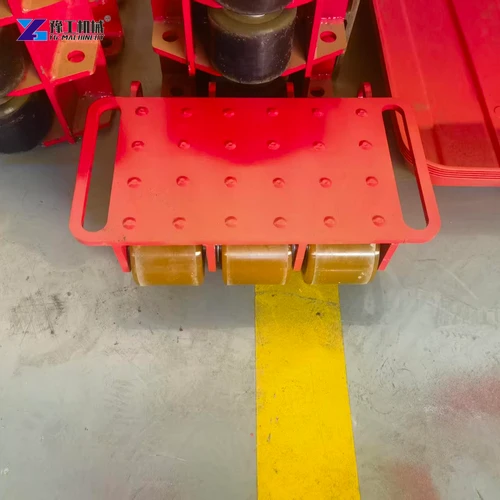
An unpowered roller reduces the resistance associated with sliding a machine across the floor. Its wheels rotate as an external force moves the load. Depending on the equipment and lifting plan, that force may come from a suitable pushing or pulling arrangement. The roller’s capacity describes support capability; it does not tell the buyer how easily the complete machine can be started or steered.
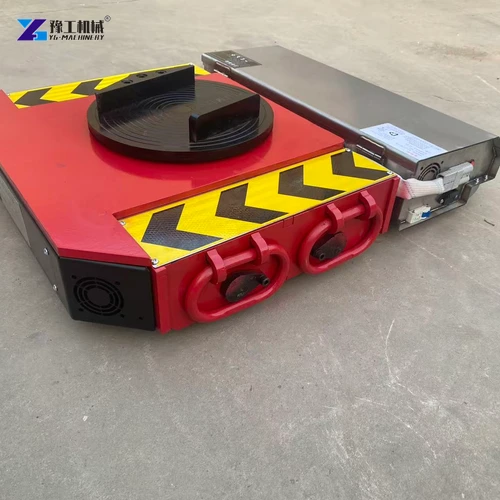
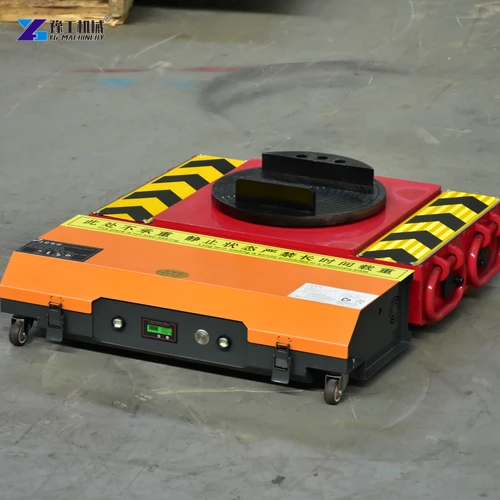
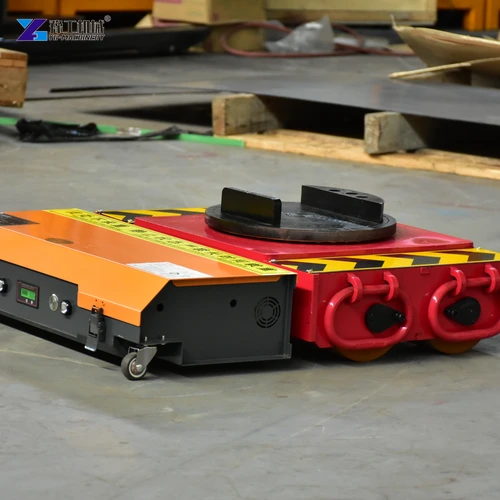
A powered skate incorporates a drive system that produces movement at its running wheels. Battery energy passes through the controller and motors to the mechanical drive. The operator commands movement rather than applying all the horizontal effort directly. This changes the handling method, especially when a machine must be repositioned repeatedly or moved in carefully controlled increments.
The distinction matters most at the difficult parts of a move. Starting a loaded system, changing heading and crossing a joint can require different effort from steady straight travel. A manual arrangement that works comfortably on one smooth section may become awkward when several direction changes are required. Conversely, adding a motor cannot make an obstructed route or unsuitable support arrangement acceptable.
Low rolling resistance is not a braking function. A manual arrangement still needs an appropriate means of controlling both movement and stopping; it must not depend on people physically holding an unexpectedly moving load. Powered drive changes where the horizontal effort comes from, but its permitted stopping and holding behaviour remains a specification of the supplied system.
Compare heavy equipment moving rollers by the movement they must provide, rather than choosing solely from a capacity label. A powered unit is useful when its drive and controls solve an actual handling problem. A manual system remains relevant where external movement is practical and the selected equipment is suitable for the job.
Compare manual movement and powered drive for the starting effort and frequency of your machinery moves.
Heavy Equipment Moving Rollers Specifications
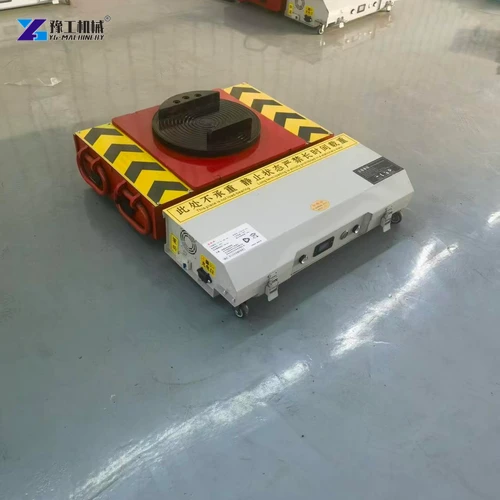
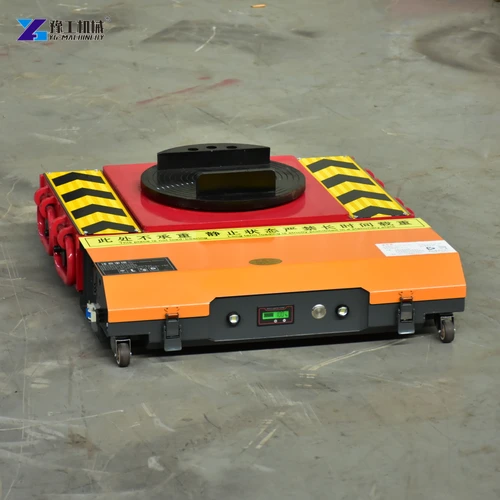
The YG configurations below provide a powered alternative within this comparison. Each has a rotating upper support and a compact chassis. The listed moving rating must be considered alongside the load carried by that individual powered unit.
| YG configuration | 20T | 40T | 60T |
| Listed towing weight | 20 metric tons | 40 metric tons | 60 metric tons |
| Powered-unit load capacity | 10 metric tons | 20 metric tons | 30 metric tons |
| Motor arrangement | 750 W × 2 | 1500 W × 2 | 3000 W × 2 |
| Battery | 48 V, 60 Ah | 48 V, 120 Ah | 48 V, 120 Ah |
| Dual-channel controller | D2T80A | D2T200A | D2T220A |
| Chassis dimensions | 670 × 620 × 165 mm | 810 × 800 × 182 mm | 1110 × 800 × 185 mm |
The 60T configuration illustrates why the two weight rows cannot be combined into one claim. Its listed towing weight is 60 metric tons, while its powered-unit load capacity is 30 metric tons. Additional support may be needed to carry the remaining machine reactions. The complete system also depends on the capacity and arrangement of those other supports.
With manual rollers, a kit capacity likewise needs to be understood in relation to its individual components and specified arrangement. An uneven machine does not automatically place equal weight on every roller. A heavy gearbox, counterweight or other concentrated component can move the centre of gravity away from the geometric centre of the base.
For either type, select heavy equipment moving rollers around the supported reactions as well as the total machine weight. Equipment must contact structural parts of the machine base, and its support arrangement must remain appropriate during movement.
Use the machine weight and support positions to discuss towing and individual carried-load ratings.
Turning Effort Changes The Manual And Powered Comparison
Straight-line rolling is only one part of machinery positioning. Fixed rollers have a preferred rolling direction. Steerable supports or turntables allow a change of heading, but the remaining supports must still follow a compatible path. The width of the machine and the positions of its supports affect that path.
During a turn, an outside support travels farther than an inside support. If a wheel is forced sideways instead of rolling in its intended direction, resistance and surface marking can increase. A powered drive provides movement but does not make every follower arrangement suitable for every turn. A visibly rotating support pad also does not prove that the whole machine can turn within the chassis footprint.
- Distinguish a straight transfer from a move that includes corners, rotation or sideways correction. These are different demands on the support arrangement.
- Identify which support changes heading and how the remaining rollers follow it. A steering handle or remote control should correspond to an understood mechanical movement.
- Check the clearance swept by the entire machine, including projections. Chassis dimensions alone do not describe that envelope.
In a manual-versus-powered roller enquiry, identify who or what applies the moving force and how the proposed arrangement controls its direction and stopping. A support-capacity figure cannot answer those three operating questions.
Describe the required direction changes to compare steering and follower arrangements.
Floor Contact And Frequency Determine Practical Fit
Heavy equipment moving rollers transmit load through relatively small contact areas. Wheel material, wheel arrangement and the condition of the running surface affect performance. A finished factory floor, a jointed slab and a surface containing metal debris create different operating conditions even when the machine weight is unchanged.
A powered unit needs adequate contact to transmit driving force. Oil, loose debris or a damaged running surface can interfere with that contact. Manual equipment also depends on freely rolling wheels; extra pushing effort is not a reliable remedy for a blocked or damaged wheel. Assess the underlying condition before changing the handling method.
Frequency changes the ownership comparison. An occasional move may justify a compact manual set that is inspected and stored between jobs. Repeated installation or maintenance work can make powered movement worthwhile, particularly where the same handling difficulty recurs. Battery charging, drive maintenance and availability of the correct controller become part of that choice.
Avoid promising a universal labour saving or faster installation from either equipment type. The machine base, floor, transfer stages and required precision determine the actual work. The better comparison is which arrangement provides suitable support and controlled movement with equipment the crew can operate correctly.
Match wheel contact and powered-drive requirements to your factory floor and moving frequency.
Buying Heavy Equipment Moving Rollers As A Complete System
A useful quotation identifies what supplies support, what supplies movement and what provides the initial lift. These functions may involve different pieces of equipment. Roller capacity does not specify jack capacity, and a low chassis does not eliminate the need to transfer weight onto it correctly.
For a powered package, identify the main unit, matched controls and charger, follower supports and any supplied connecting components. For a manual package, identify the fixed and steerable components, handles and connection arrangements. Do not assume an accessory shown alongside a machine is included or compatible with every model.
An installer moving several different machines may benefit from flexible support arrangements. A plant moving one repeated load may place more value on a consistent setup and straightforward servicing. In both situations, heavy equipment moving rollers should be selected for the actual machine-moving task, with the equipment scope clearly agreed before purchase.
Heavy Equipment Moving Rollers FAQs
No. The term includes unpowered rollers and powered machinery-moving systems. Manual rollers need an appropriate external movement method, while a powered skate supplies drive at its running wheels.
It may. The answer depends on the machine base, weight distribution and the powered unit’s carried-load rating. A complete moving arrangement must support all required reactions throughout the move.
Motor power does not establish floor capacity or remove obstructions. Wheel contact, surface condition, structural capacity and changes in level require separate assessment for the selected equipment.
A suitable manual set can be considered where the load can be moved and steered using an appropriate external arrangement. Compare the actual starting effort, turns and work frequency before choosing it over powered equipment.
Its listed towing weight is 60 metric tons and its powered-unit load capacity is 30 metric tons. These are different ratings; the supported reaction and complete moving arrangement must respect the applicable limits.
Describe the load, external pushing or pulling arrangement and turning duty so YG can discuss whether powered movement would address the handling requirement.