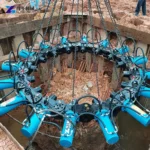
A concrete pile breaker removes surplus concrete from a pile head using hydraulically driven breaking points arranged around the pile. Its purpose is to expose the required reinforcement and prepare the head for the next structural connection, while retaining the concrete and steel required by the design. It is not a steel-cutting attachment or a substitute for the project’s pile-head acceptance requirements.
The product is best understood through how its cylinders, modules and breaking points work together. Concrete condition, reinforcement, hydraulic supply and the condition of the finished head all affect the operation. A diameter match is necessary for the selected ring, but does not explain those other functions.
How A Concrete Pile Breaker Fractures The Pile Head
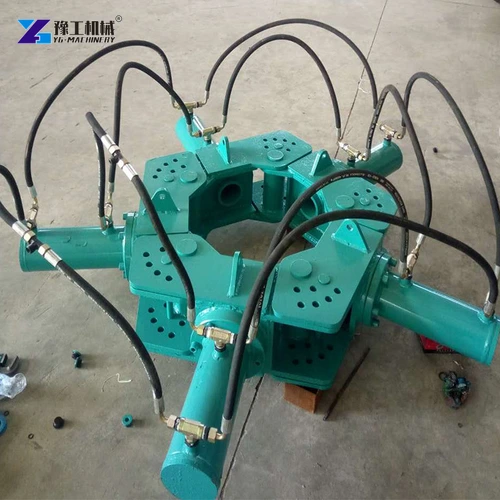
Hydraulic cylinders drive breaking points into the surplus concrete from positions around the head. The applied forces create local stresses and fractures, allowing unwanted concrete to separate. The ring provides a coordinated arrangement of those working points instead of relying on an operator repeatedly striking the head with a single impact tool.
The action is still concrete breaking rather than sawing. A fracture can follow material weaknesses and interact with the reinforcement embedded in the head. A ring does not produce a machined plane simply because it surrounds a circular pile. The intended cut-off level and final surface condition therefore need to remain visible in the project method and inspection.
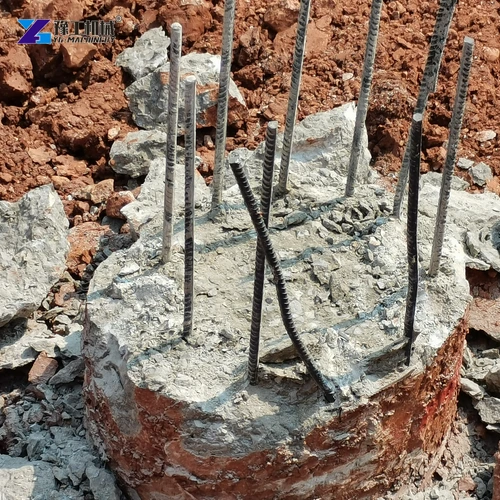
Reinforcement has a different role from the concrete being removed. Bars needed for the connection should remain in the specified condition and position. Breaking the surrounding concrete is not permission to bend, cut or pull the bars out of the way. The selected tool and method must suit the pile’s actual reinforcement arrangement rather than assuming all reinforced heads behave alike.
The breaking ring should also not be confused with a general concrete grab. Fracturing a head and safely handling released pieces are separate operations. The tool’s hydraulic action does not establish a lifting approval for an unspecified block caught among the bars or resting against the ring.
This distinction makes the product useful to understand before discussing claimed speed. A sound result is the required remaining head and reinforcement, not simply a large piece coming free quickly. The hydraulic pile-cutter overview provides related equipment-family information without replacing the project-specific method.
The breaking arrangement must remove surplus concrete while respecting the required remaining head.
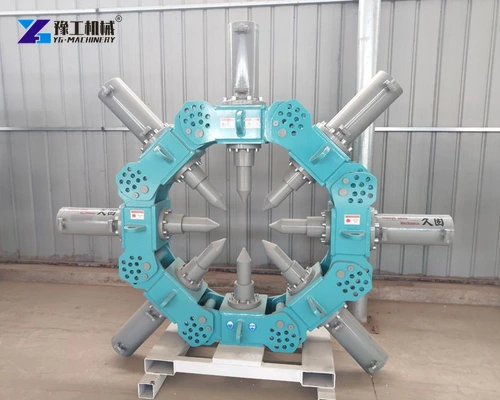
Concrete Pile Breaker Modules And YG Configuration Parameters
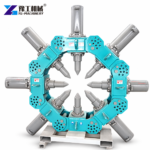
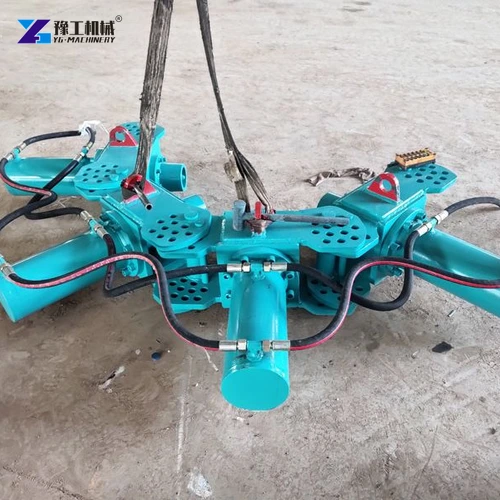
The ring is assembled from connected modules. Changing the approved module arrangement changes the working opening, number and position of breaking components, and combined mass. Modules must be assembled under the actual manufacturer’s instructions; modular does not mean that any improvised combination is acceptable.
YG lists the following circular pile-head configurations by module count rather than a separate invented model code.
| Module count | Combined mass | Pile diameter range |
| 4 | 1,600 kg | 400–600 mm |
| 8 | 2,640 kg | 600–800 mm |
| 9 | 2,970 kg | 800–1,000 mm |
| 10 | 3,300 kg | 1,000–1,150 mm |
| 11 | 3,630 kg | 1,150–1,300 mm |
| 12 | 3,960 kg | 1,300–1,500 mm |
| 13 | 4,290 kg | 1,500–1,650 mm |
| 14 | 4,620 kg | 1,650–1,800 mm |
| 15 | 4,950 kg | 1,800–1,970 mm |
| 16 | 5,280 kg | 1,970–2,200 mm |
| 17 | 5,610 kg | 2,200–2,360 mm |
| 18 | 5,940 kg | 2,360–2,500 mm |
These rows identify assemblies, not just opening sizes. Moving from one row to another can change the handling load substantially. The actual ring, suspension arrangement and working radius need to be assessed together. An excavator’s nominal operating mass is not its permitted lifting capacity at every position.
The central opening is also smaller than the overall working envelope. Module bodies, cylinders, joints and hoses occupy space outside the pile. Neighbouring cages and excavation boundaries can obstruct positioning even where the pile itself falls within the listed diameter band. A useful equipment drawing shows the whole assembly, not only a circle around the pile.
The module-count and pile-diameter article explains that selection relationship separately. Here the important product point is that the modular ring changes as an assembly when modules change. Mass, connections and handling need to follow the selected configuration rather than remain assumptions carried over from a smaller ring.
Match module count and assembly mass with the actual pile and handling arrangement.
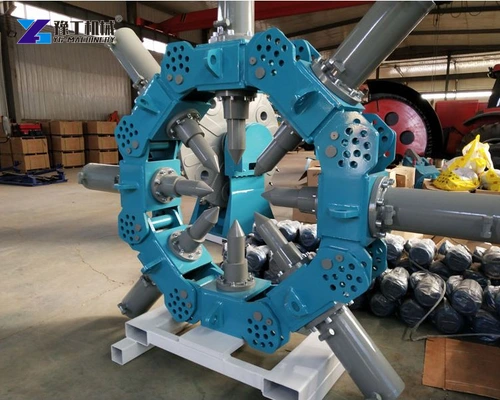
Concrete Strength And Reinforcement During Pile Breaking
Concrete does not have one fixed response at every pile head. Strength development, aggregate, defects and the condition of the surplus material affect how it fractures. The permitted stage for head removal must follow the project specification and approved method. Neither fresh concrete nor fully hardened concrete should be assumed to suit every tool setting without assessment.
The height of material being removed also matters. A tall surplus head may require a different sequence from a small residual projection. Trying to detach an arbitrarily large length at once can create a handling and reinforcement problem even if the tool can initiate cracks. The machine’s approved working increments and the project’s method govern the operation; this article does not prescribe a universal layer thickness.
Reinforcement can hold fractured material in place after the concrete has cracked. A piece that looks separated may still be connected or trapped around bars. Pulling indiscriminately can transfer force into reinforcement or retained concrete. Released material needs to be assessed and removed through the planned operation rather than assuming that every cracked section is already free.
Irregular pile geometry can affect how the breaking points contact the head. Local high spots or existing damaged areas may create uneven contact. The operator should not use higher hydraulic pressure as a universal answer to poor engagement. The correct response depends on the approved setup, actual geometry and equipment condition.
For a concrete pile breaker, these are operating differences rather than reasons to promise damage-free results in every situation. Project inspection remains necessary. Statements such as zero dust, zero vibration or guaranteed absence of cracks should not replace assessment of the actual pile and completed head.
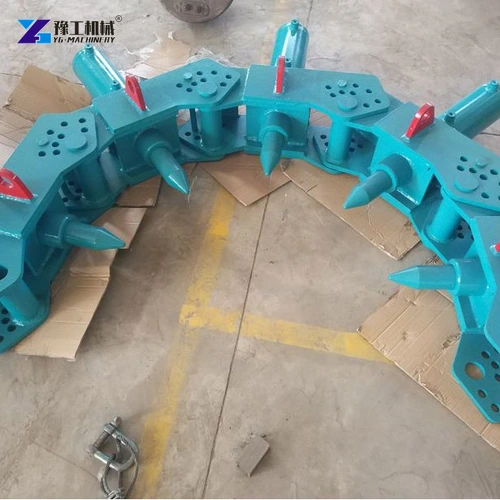
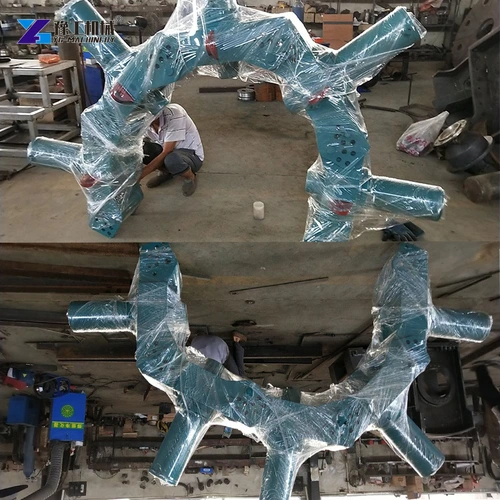
Concrete Pile Breaker Hydraulic Supply And Handling
The hydraulic source must supply the pressure, flow and control arrangement specified for the chosen assembly. Pressure supports cylinder force, while flow influences movement and cycle behaviour. A pump with a large headline flow is not automatically compatible, and a cylinder-force claim does not establish the acceptable settings of the complete circuit.
Hoses, couplings and control components need compatible ratings and the correct connection arrangement. Their routing must accommodate approved ring movements without being trapped, stretched or used as lifting restraints. The fact that a coupling connects physically is not proof that the pressure, return path and operating control are correct.
The carrier and suspension system have their own limits. The ring must be supported and positioned by an approved arrangement that accounts for its mass and the actual working position. The method should keep people outside dangerous areas beneath suspended equipment and away from moving breaking components. Projecting reinforcement and nearby piles can reduce access during transfer.
Breaking and clearing may require separate machine movements or equipment. A carrier holding the ring cannot automatically perform every debris-removal task at the same time. The work sequence needs to account for the fractured concrete and a clear destination for it. Moving debris into the next pile’s working area simply transfers the obstruction.
A concrete pile breaker is useful when its hydraulic and handling functions are integrated without confusing them. Hydraulic capacity does not establish lifting capacity, and a suitable lifting arrangement does not establish hydraulic compatibility. Both need their own verified limits for the selected assembly.
Hydraulic supply and lifting suitability require separate, compatible specifications.
Concrete Pile Breaker Inspection And Finished-Head Quality
Before operation, the assembled ring needs the inspections specified for its modules, joints, retention components and hydraulic circuit. Missing or damaged connection parts can affect the whole assembly rather than only one breaking point. Wear, leakage or abnormal movement should be investigated before they become a repeated feature of the working cycle.
Maintenance requires isolation and release of stored hydraulic energy under the supplied procedure. A cylinder that has stopped moving is not proof that the circuit is depressurized. Hoses must not be loosened to diagnose a restriction while pressure may remain, and the ring must be safely supported before work on connections or modules.
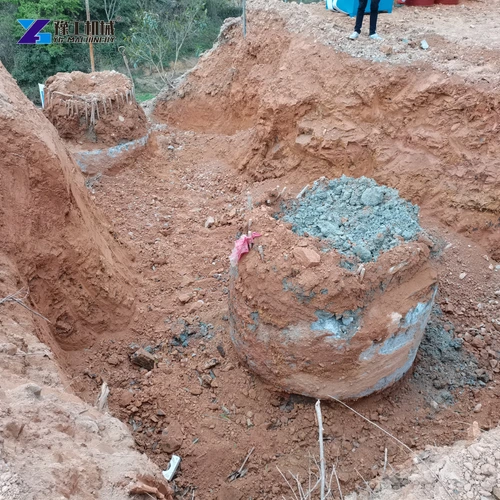
After surplus concrete is removed, the remaining pile head needs to be exposed sufficiently for inspection. Loose fragments and debris can hide damaged or unsuitable material. The required cut-off elevation, soundness of retained concrete and condition of reinforcement come from the design and acceptance requirements, not from whether the tool completed a breaking cycle.
Unexpected cracking, damaged bars or a surface that does not meet the required condition need the project’s engineering assessment. Further breaking should not be used to conceal a problem or lower the head without authorization. A concrete pile breaker assists the preparation method; it does not decide what remaining structural condition is acceptable.
The practical benefit is a repeatable equipment action supported by correct assembly, suitable hydraulics and proper inspection. Keeping those functions separate makes the tool easier to specify and use. It also avoids treating module count or an advertised cycle time as a guarantee of the quality of every completed pile head.
Include assembly inspection and the required finished-head condition in the equipment discussion.
Concrete Pile Breaker FAQs
Its intended task here is breaking surplus concrete while retaining the reinforcement required by the design. Steel cutting is a different operation and must not be assumed part of the ring’s function.
No. Module arrangement, assembly mass, outside envelope, hydraulics and handling also need to match the actual pile and working conditions.
Do not assume so. Concrete condition, head height, reinforcement and the approved tool procedure determine the working sequence. No universal layer thickness is established here.
No. Permitted lifting depends on the actual machine, working position, arrangement and applicable limits. Assess the assembled ring and suspension for the intended operation.
The exposed remaining head, cut-off level and retained reinforcement need inspection against the project requirements. A completed machine cycle alone does not establish structural acceptance.
Tell us the pile diameter, reinforcement arrangement and available carrier to discuss a suitable modular breaking assembly.