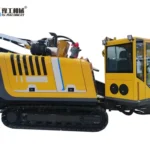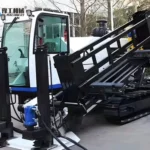
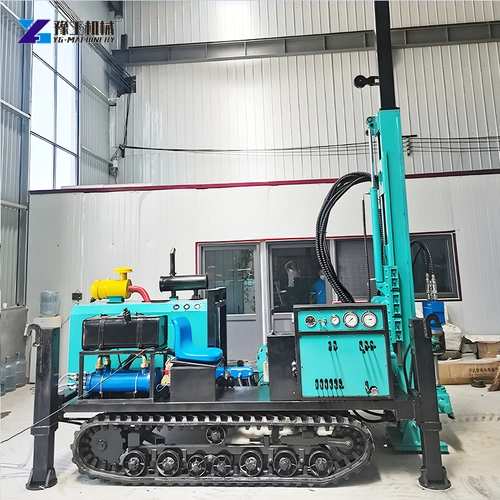
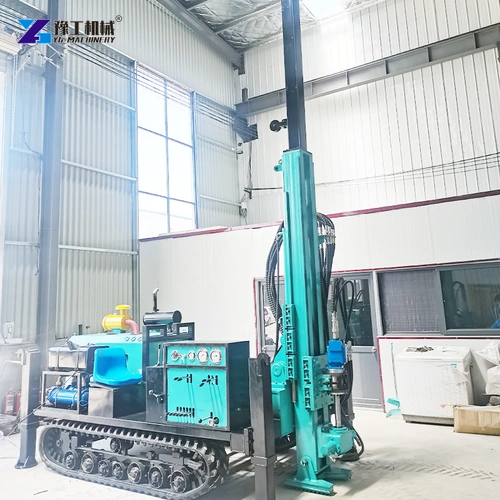
A mineral exploration hole is valuable because of the geological evidence recovered from it. A core drilling machine for mining cuts around a cylinder of rock so that the sample can be brought to the surface and examined. The drilling rig supplies controlled rotation, feed and lifting. The core barrel and retrieval equipment perform the separate task of collecting and recovering that sample.
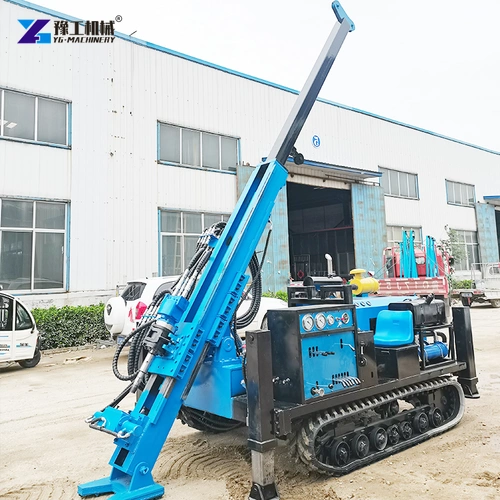
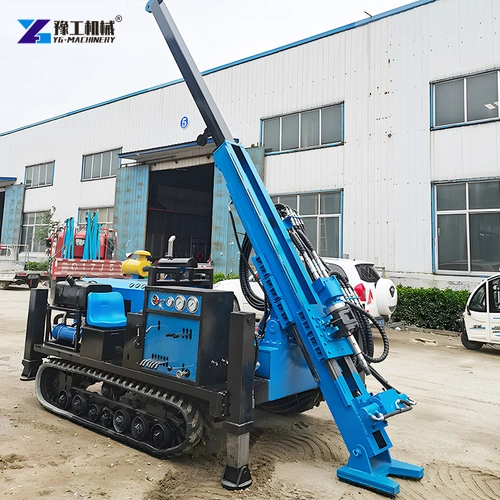
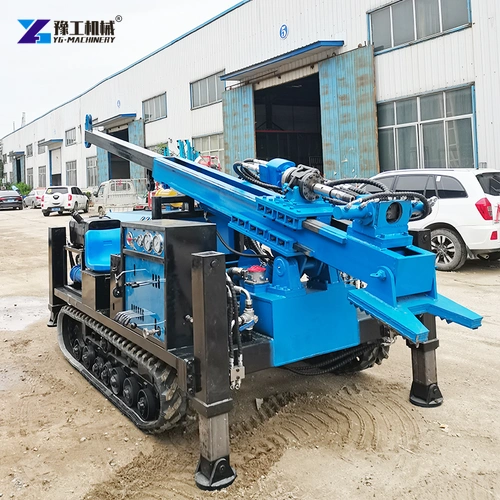
That distinction matters when comparing machines. Engine power and depth capability describe important parts of the equipment, but they do not independently establish sample quality. The drilling method, tools, circulation and ground conditions all affect what reaches the core tray. YG full-hydraulic rope-coring rigs provide a crawler-mounted platform for this work, with model choices for different exploration depths and handling requirements.
The Sample Is the Purpose of a Mining Core Drill
Core drilling preserves a continuous or partly continuous rock sample rather than deliberately reducing all the drilled material to loose cuttings. A geologist can examine rock types, contacts, mineralization and fractures in the recovered material. Those observations support the exploration program. The drilling machine does not determine the mineral resource by itself, and an intact-looking cylinder does not replace geological logging or laboratory analysis.
A core drilling machine for mining must therefore support two connected objectives: advance the hole and recover material that remains useful for interpretation. Excessive disturbance, incomplete recovery or poorly identified runs can weaken the value of the samples. Faster penetration is not automatically better when it makes the recovered evidence harder to interpret.
The practical workflow connects the drill crew to the geological team. Hole and run identification should remain associated with the recovered material as it moves from the inner tube to the trays. That handling process is outside the engine-power figure, yet it is part of getting useful information from the drilling program.
Hydraulic Rotation, Feed and Lifting Have Different Roles
The power head rotates the drill string so the cutting tools can work against the rock. Feed advances the assembly along the mast, while lifting withdraws or positions the string and tools. These motions need to work together. Increasing one setting without considering the others can change tool loading, stability and the way the drilling system responds to the formation.
Hydraulic control gives the operator a way to manage these movements as drilling conditions change. It does not remove the need to select appropriate tools or observe the response at the hole. A core drilling machine for mining encounters different conditions as formations change, so the suitable operating approach is not one fixed speed applied from the collar to the bottom.
The mast also establishes the drilling direction mechanically. An inclined hole creates a different setup from a vertical hole, even when the intended drilled length is similar. Platform stability, drill alignment and handling space belong in the setup discussion. The foundation and drilling equipment range includes machines with other purposes; a foundation hole-making rig should not be treated as interchangeable with a sample-recovery rig.
Wireline Retrieval Separates Core Recovery from Rod Removal
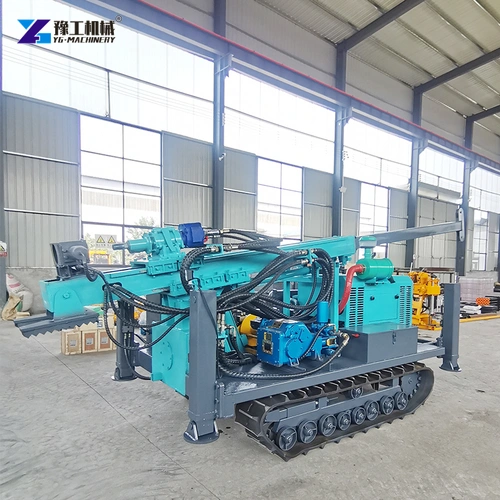
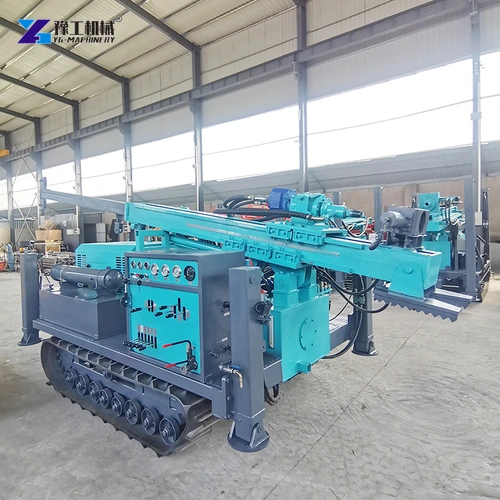
A wireline system retrieves the core-bearing inner tube through the drill string. A retrieval assembly connects to that inner assembly, allowing it to be lifted to the surface without removing the entire string for each normal recovery run. This is the important distinction from a process that repeatedly withdraws all the rods simply to reach the sample.
It also explains why the rig and tooling must be discussed together. The inner tube, outer barrel, retrieval equipment and rods need compatible dimensions and connections. A core drilling machine for mining does not turn arbitrary drill rods and an unrelated barrel into a working wireline system. Tool compatibility supports the retrieval method, while the rig supplies the required motions and handling capacity.
Routine recovery still interrupts drilling. The sample must be brought up, handled appropriately and the assembly returned to its working position before the next run. Wireline retrieval reduces a particular rod-handling requirement; it does not mean that drilling and recovery continue simultaneously without interruption. Bit changes and other conditions can still require the string to be withdrawn.
Discuss the intended core size and retrieval method with YG so the rig, rods and core barrel can be considered as one drilling system.
YG Hydraulic Core Drilling Rig Specifications
| Specification | YG-400 | YG-600 | YG-800 | YG-1000 |
| Overall weight | 5.3 T | 6.7 T | 8.1 T | 9.2 T |
| Drilling diameter | 60–110 mm | 60–110 mm | 60–110 mm | 60–110 mm |
| Traveling speed | 2.5 km/h | 2.5 km/h | 2.5 km/h | 2.5 km/h |
| Mud pump model | BW90-3 | BW90-3 | BW90-3 | BW160-10 |
| Drill pipe length | 1.5 m | 1.5 m | 1.5 m | 1.5 m |
| Lifting force | 10 T | 10 T | 12 T | 14 T |
| Dimensions | 4500 × 1950 × 2150 mm | 4600 × 2000 × 2350 mm | 5100 × 2200 × 2350 mm | 5150 × 2100 × 2150 mm |
| Drilling depth | 400 m | 600 m | 800 m | 1000 m |
| Maximum climbing ability | 30° | 30° | 30° | 30° |
| Drilling angle | 45°–90° | 45°–90° | 45°–90° | 45°–90° |
| Main machine power | 75 kW | 96 kW | 118 kW | 132 kW |
| Slewing speed | 0–1200 rpm | 0–1200 rpm | 0–1200 rpm | 0–1200 rpm |
Depth capability helps shortlist the model, while lifting capacity and the chosen tooling affect how the hole is handled. Overall dimensions and weight influence the working platform and transport arrangement. These are separate considerations, not values to combine from different models into a higher-capacity machine that does not exist.
For a core drilling machine for mining, the target hole and sample program should guide that shortlist. A nameplate depth is not a promise that every ground condition, hole diameter and tool combination will reach that depth. The complete drilling system has to fit the program rather than being selected from the largest number in one row.
Circulation and Ground Conditions Affect the Recovered Core
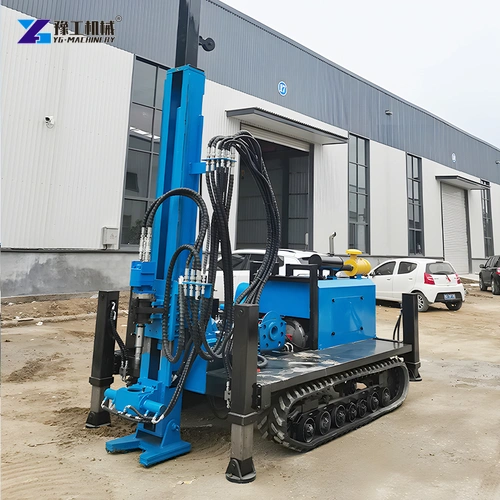
Circulation supports drilling by moving fluid through the system and helping remove cuttings from the working area. Its role is different from lifting the core-bearing inner tube. The pump, fluid path and downhole tools have to operate together so that drilling conditions remain manageable. More fluid is not automatically a solution to every change in the formation.
Fractured or weak ground can make sample recovery more difficult than competent, consistent rock. Tool selection and the drilling approach must respond to that difference. A core drilling machine for mining provides the mechanical platform, but sample recovery also depends on the barrel arrangement and the condition of the material entering it. An unsuitable approach can disturb material that the investigation needs to examine.
This is also why the drilling record matters. Changes in penetration, circulation or recovered material need to remain associated with their location in the hole. The crew and geological team can then interpret what happened during the run rather than treating every missing or broken interval as the same problem.
The target depth and formation description help YG compare the hydraulic rig models with the drilling and recovery task.
Mineral Exploration Tasks That Need Rock Evidence
Mineral prospecting uses recovered cores to investigate rock sequences and mineralized zones below the exposed surface. Follow-up exploration can examine the continuation of a target or improve understanding between existing investigation points. In both situations, the drilling task is linked to a planned geological question, not simply to making the deepest available hole.
Geotechnical investigations can also require rock samples to understand the material below an engineering site. The required observations and sampling standards differ from an ore-exploration program, even if some drilling equipment is related. A core drilling machine for mining should be configured for the intended investigation rather than being advertised as one universal machine for every underground task.
Other drilling methods solve different problems. Rotary drilling equipment serves foundation construction, while horizontal directional drilling equipment supports trenchless utility installation. Those distinctions help keep equipment selection tied to the material and information the project actually needs.
Core Drilling Machine for Mining FAQs
Mineral exploration coring recovers rock samples from geological formations. Concrete drilling addresses a different material and task, so its portable tools and operating assumptions should not be substituted for an exploration rig.
Wireline recovery retrieves the normal core-bearing inner assembly through the string. Bit changes, tooling work and other drilling conditions can still require rod removal.
Drilling depth describes a machine capability, not daily advance. Formation response, tooling, recovery cycles and interruptions affect how much drilling a crew completes in a shift.
They establish the working and retrieval system down the hole. Their dimensions, connections and compatibility must suit the intended sample and the rig’s operating and handling capacities.
Engine power is only one equipment characteristic. Ground condition, tool arrangement, operating control and sample handling also influence the usefulness of the recovered material.
Match the Rig to the Investigation
A core drilling machine for mining should be selected around the required hole, the sample that must be recovered and the complete tooling system. Then evaluate the platform, hydraulic functions and recovery cycle as parts of that task. The strongest equipment proposal explains how the rig supports the geological program, rather than relying on depth or power alone.
Describe the investigation objective, target depth, required sample size and ground conditions for a core-drilling equipment proposal.