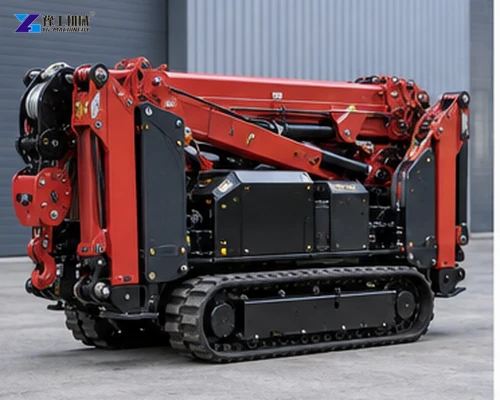
A mini spider crane purchase should begin with the lift location, route and handling method, not with a generic capacity label. Restricted access projects often involve a narrow gate, a finished floor, a roof opening, a courtyard or a plant room where conventional lifting equipment cannot be positioned. The commercial question is whether the complete machine can arrive, set up and perform the planned picks with evidence that your project team can review.
Prepare a short buyer brief before requesting a quotation. Include the heaviest load, pick radius, required hook height, lifting frequency, access measurements, unloading point, ground or floor condition and the preferred delivery date. This lets a supplier discuss a suitable whole-machine configuration and identify unknowns instead of treating an ambitious application as a guaranteed result.
Share the load, radius, hook height and site photographs so the first machine discussion is tied to a real restricted-access requirement.
Define the restricted-access job before comparing cranes
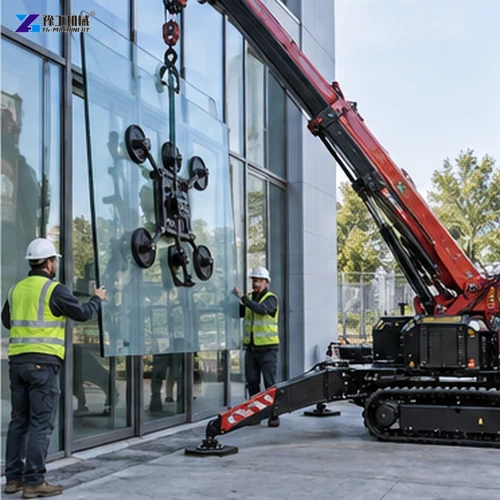
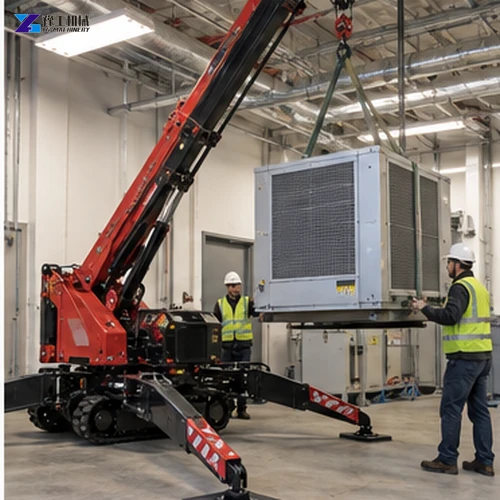
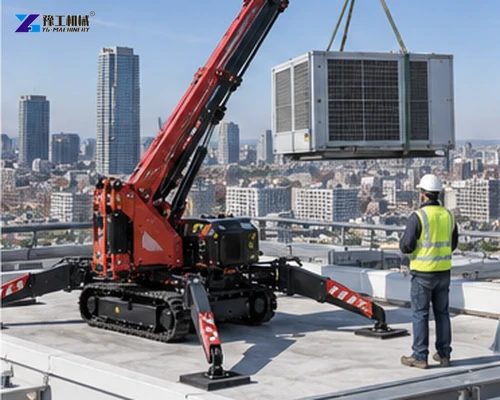
Describe the work as a sequence of picks. Note where the machine will enter, where it will be positioned, what must be lifted, where the load will land and how the crane will be removed. A project may need repeated glass-panel placement, plant installation, steel positioning or maintenance lifting; each application creates different demands on reach, visibility, setup time and handling. A mini spider crane is valuable when its compact transport condition and deployed working arrangement both suit that sequence. For commercial buyers, the mini spider crane should be judged by repeatable task fit, not appearance alone.
Separate confirmed facts from estimates. Mark measured clearances, documented load weights and known floor restrictions as evidence. Mark assumed dimensions, uncertain packaging weights and future tasks for supplier review. This distinction prevents a buyer from choosing a machine based on a best-case diagram that does not represent the delivered equipment or the actual work area.
Measure the route, unloading point and setup footprint
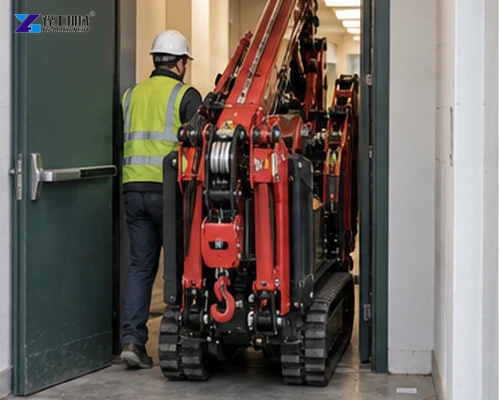
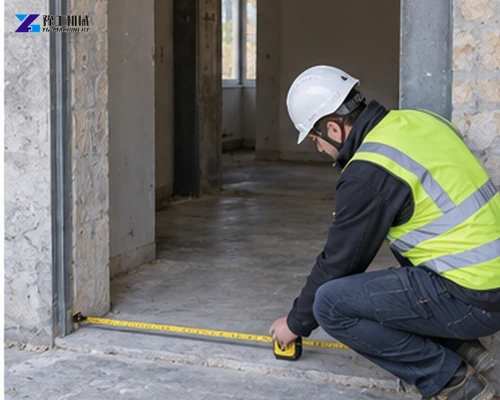
Measure every stage between the delivery vehicle and the first lift: gate clear width and height, turns, slopes, overhead obstructions, thresholds, ramps, floor transitions and the stopping space available for unloading. Photograph corners and doorways with a scale reference. A straight-line measurement is not enough if the machine must turn inside a passage or reverse onto a prepared surface.
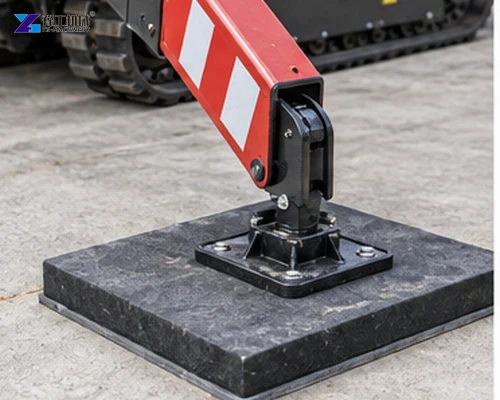
Then repeat the survey for operation. The folded transport envelope does not define the deployed footprint. Allow room for supports or outriggers, boom movement, the load path, operator access and a controlled exclusion zone. Check slab edges, drains, covers, voids and finished surfaces with the responsible site engineer or contractor. Tracked travel may help positioning, but it does not remove the need to verify ground bearing and setup conditions.
Match load geometry to the selected machine
Capacity is only one line in the buying decision. Record the load mass including lifting accessories, the horizontal radius from the relevant center, the required hook height, the landing direction and whether the pick is repeated. Packaging, rigging and the position of the load center can change the working condition. Ask for the applicable load chart and make the supplier confirm the exact boom, support and operating assumptions for the proposed whole machine. This is how a mini spider crane shortlist becomes an evidence-based purchase review.
Do not infer a permitted load at maximum radius from a headline capacity. A credible review places the actual pick on the supplied chart and records the margin, setup arrangement and any restrictions. The related spider crane lifting capacity and working-radius guide can help organize that evidence before a formal quotation.
| Buyer question | Evidence to prepare | Decision it supports |
| Can the machine reach the work area? | Clear widths, heights, turns, slopes and overhead notes | Transport and unloading feasibility |
| Can it perform the heaviest pick? | Load mass, radius, hook height and rigging weight | Load-chart review and model shortlist |
| Can the site support setup? | Floor or ground condition, edges, drains and support area | Positioning method and site controls |
| Can the project operate it productively? | Pick sequence, cycle expectations, operator access and removal plan | Whole-machine fit and commercial scope |
Use the table as a quotation checklist rather than a substitute for engineering review. A supplier should be able to show which submitted fact supports each conclusion and which item still requires confirmation. That makes competing offers easier to compare because the decision is based on route, geometry and operating evidence rather than an isolated number.
Send the load mass, radius, hook height and support-area notes so YG can frame the model conversation around the actual pick.
Verify controls, power and operator workflow
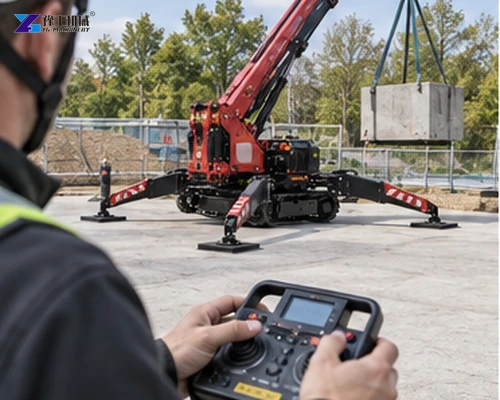
Ask how the operator controls travel, positioning, supports and lifting in the proposed configuration. Confirm the control location, visibility of the load, communication method and emergency arrangements for the intended site. If the work is indoors, discuss ventilation, noise, exhaust restrictions and the available power arrangement with the supplier; do not assume an energy source or operating mode that has not been specified in writing.
The commercial scope should also state what arrives with the machine and what the buyer supplies: lifting accessories, ramps, mats, barriers, commissioning support, training and spare parts. Clear boundaries reduce delays at delivery and expose costs that a low headline price may hide.
Plan delivery, commissioning and acceptance
A purchase plan should cover transport restraint, unloading equipment, route protection, setup supervision and inspection on arrival. Ask for manuals, maintenance instructions, parts identification and the recommended commissioning sequence. Record the machine identity, visible condition, included items and any open issue before the first production lift.
Acceptance should use an agreed, observable lift or movement task. Check controls, support deployment, travel response, lifting response and shutdown procedure under the approved site plan. Keep the test proportional to the project and do not describe an unverified demonstration as a certification, guarantee or universal case study.
Send the unloading method, route protection plan and acceptance checklist so the machine arrives with the site team ready to work.
Build a supplier comparison that protects the budget
Compare quotations on delivered scope, not only purchase price. Put model, transport condition, included accessories, support arrangement, documentation, lead time, payment stages and after-sales contact into one review sheet. Ask each supplier to list assumptions about route, surface, load geometry, operator and utilities. An offer that answers fewer questions may create more project cost later. The best mini spider crane quote makes those boundaries visible before an order is placed.
For product-family context, review the tracked mini crane product range. For a route-led preparation checklist, use the restricted-access lift planning guide. Keep the final offer tied to your measurements and the supplier’s written confirmation.
Attach your route drawing and lift brief and request a quotation that clearly separates included equipment, site assumptions and buyer-supplied items.
REQUEST A COMPLETE-MACHINE QUOTE
Make the purchase decision reviewable
Before approval, place the selected machine’s transport information beside the measured route and its applicable lifting evidence beside the planned pick. Add setup, operator, delivery and acceptance notes. If any critical item is still an estimate, make it a written condition of the next review. This record helps purchasing, logistics, site management and lifting personnel reach the same decision.
The right mini spider crane is the machine that fits the complete project brief: it can be delivered through the available route, positioned on the prepared surface and matched to the real load geometry. Request the final configuration only after the supplier has reviewed those facts, and retain the quotation, chart, manuals and acceptance record with the project file. That discipline turns interest in a mini spider crane into a defensible commercial decision.
Mini Spider Crane buying FAQ
Send the heaviest load, radius, hook height, rigging weight, pick sequence, route measurements, unloading point, setup area and photographs with scale references. Note floor or ground restrictions and the required delivery timing.
No. Check turns, overhead clearance, slopes, unloading space and the deployed support and boom footprint. A route can accept the folded machine but still lack room for safe setup and operation.
Use the applicable load chart for the actual radius, hook height, support arrangement and load including rigging. Never calculate a permitted pick from maximum capacity alone.
That requires a site-specific review. Confirm bearing, edges, slopes, drains, protection and support requirements with the responsible site professional and the supplier before delivery.
It should identify the complete machine, transport condition, included accessories, documentation, commissioning or training scope, lead time, assumptions and buyer-supplied site items.
Agree an observable task that checks delivery condition, controls, supports, travel or positioning, lifting response and shutdown under the approved site plan. Record results and open items.