How Is Breaker Weight Matched To The Carrier?
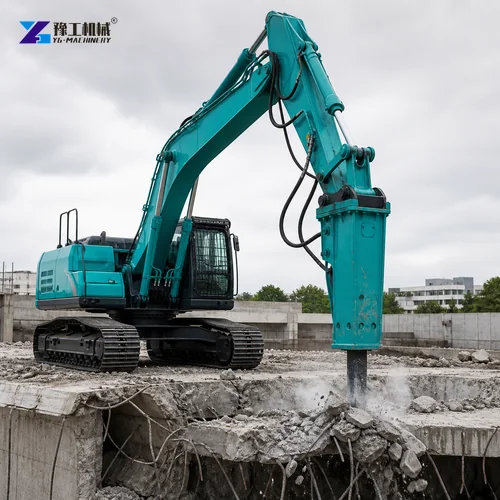
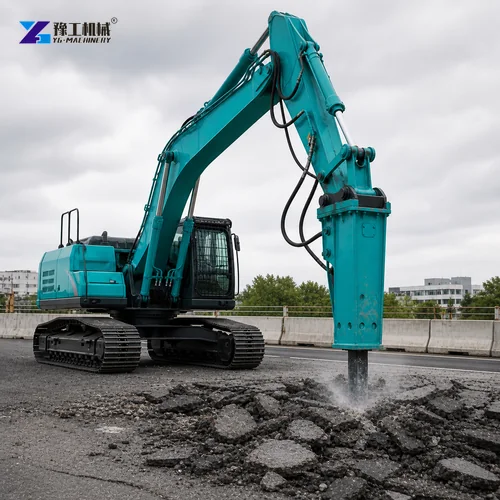
The attachment must remain within the excavator manufacturer’s approved working range. An undersized breaker may not deliver the required production; an oversized unit can affect stability, linkage loads and controllability. Carrier weight narrows the model range, but boom configuration, working radius and the position of the job also matter.
Check whether work is performed below grade, overhead or at an extended reach. The operator should be able to keep the tool aligned without relying on excessive boom force. The correct match allows the breaker to work through repeated impacts while the excavator maintains a stable, controlled position.
Published Hydraulic Breaker Attachment Reference Models
| Model | Chisel | Carrier | Breaker Weight | Pressure | Oil Flow | Frequency |
| YG1650 | 165 mm | 30–40 t | 1438 kg | 180–200 bar | 200–260 L/min | 250–400 bpm |
| YG1650P | 165 mm | 30–40 t | 1586 kg | 180–200 bar | 200–260 L/min | 250–380 bpm |
| YG1750 | 175 mm | 35–40 t | 1929 kg | 180–200 bar | 210–290 L/min | 200–350 bpm |
| YG1850 | 185 mm | 35–45 t | 2411 kg | 190–220 bar | 220–270 L/min | 200–250 bpm |
| YG1990 | 190 mm | 40–55 t | 2626 kg | 190–220 bar | 220–290 L/min | 180–200 bpm |
| YG2100 | 210 mm | 60–80 t | 3396 kg | 200–240 bar | 290–350 L/min | 150–200 bpm |
How Are Oil Flow, Pressure And Return Conditions Checked?
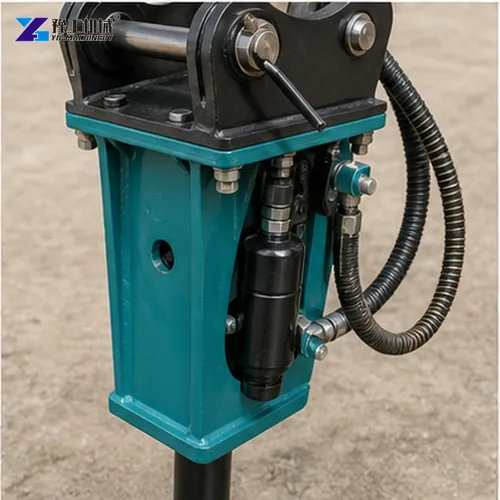
Compare the excavator’s auxiliary flow range with the breaker requirement and confirm the available pressure setting. Flow that is too low reduces blow rate; excessive flow can overspeed the attachment and generate heat. The relief setting must be checked with the actual circuit, not assumed from the excavator’s main-pump rating.
The return path should be correctly sized and routed with minimal restriction. Excessive back pressure raises oil temperature and affects seals and performance. Confirm hose diameter, couplings, filtration and whether a direct tank return is required. Clean installation practice is essential because contamination introduced during hose work can damage both the attachment and carrier circuit.
Inspect The Hydraulic Installation Before Working
After mounting, check hose clearance through the full boom and tool movement. Verify that connections do not rub, twist or tighten at maximum reach. Start at a controlled setting, watch for leaks and abnormal hose movement, and confirm stable oil temperature. Record the approved excavator settings so another operator does not unknowingly change the circuit.
Which Breaker Tool Suits The Material?
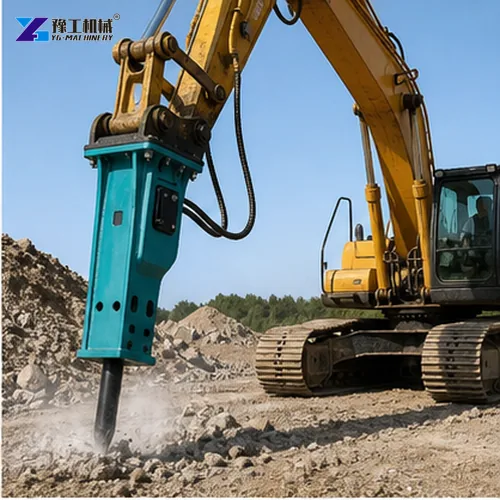
A moil point concentrates force for general breaking and penetrating hard material. A chisel provides a defined cutting edge for trenching, concrete and selected rock work. A blunt tool transfers energy across a broader face for secondary breaking and compact material. Tool choice should follow the fracture method required at the work face.
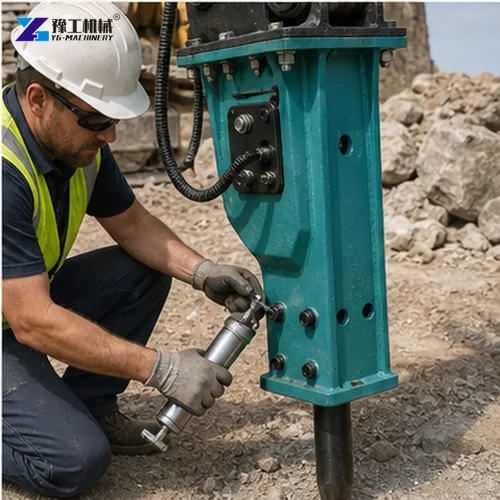
Whatever the tool, the operator should keep it aligned with the breaker body and avoid long blank-firing periods. Reposition when the material does not fracture instead of holding one point indefinitely. Correct lubrication at the recommended interval protects the tool and bushings, while daily inspection reveals abnormal wear before it becomes downtime.
What Must Be Inspected After Installation?
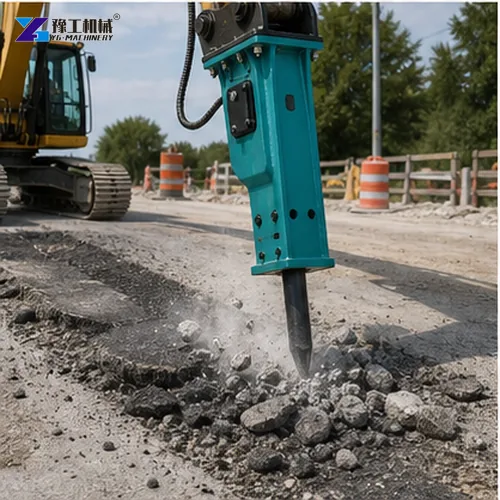
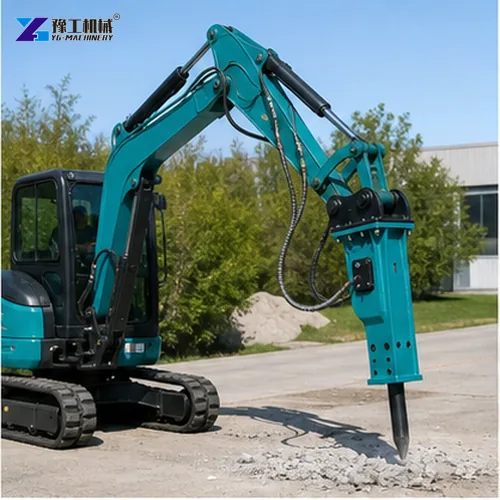
Check bracket bolts, retaining pins, tool condition, bush clearance, hose connections and grease supply. Confirm that the operator understands down pressure, working angle, repositioning and blank-firing prevention. Reinspect after the first working period because a new bracket and hose arrangement may settle as the equipment begins service.
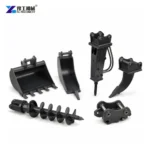
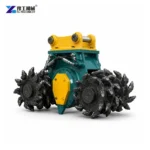
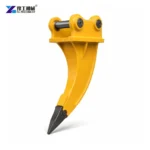
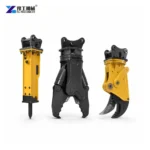
For a quotation, send excavator data, linkage dimensions, auxiliary flow and pressure, return-line details, job material, required tool, working position and destination. Review the YG concrete breaker attachment for the product range, the excavator pulverizer for secondary concrete reduction and rebar separation, and the excavator ripper where the job is ground loosening rather than impact demolition. These internal paths help buyers select the attachment according to the actual work stage.
Hydraulic Breaker Attachment FAQ
No. Carrier weight narrows the range, but oil flow, operating pressure, return conditions, linkage dimensions and the work material must also be checked.
Excessive flow, restricted return, incorrect relief settings, undersized hoses, contamination and long continuous operation can raise temperature. Check the complete auxiliary circuit.
A chisel or moil point may suit concrete depending on the member and fracture method. Reinforcement, thickness and access should be described before selection.
Blank firing sends impact energy through the attachment without material resistance, increasing unnecessary stress on internal parts and retainers.
Provide pin diameter, pin-center distance, inside ear spacing and photographs of the current linkage or quick coupler.
Request A Verified Breaker Match
A successful breaker setup depends on verified carrier hydraulics, a correctly fitted bracket and a tool selected for the material. Send the complete compatibility data to YG so the proposed model, installation details and operating guidance can be reviewed together before delivery.