

Commercial EV charger installation is a coordinated site project involving the utility, electrical designer, civil contractor, network provider, charger supplier and operator. Selecting the charger before confirming service capacity, parking circulation and duty cycle can create an expensive redesign. The correct starting point is an operating brief: vehicle types, battery sizes, dwell times, daily energy, arrival pattern, number of bays and the consequence of a charger being unavailable.
YG lists 60, 80 and 120 kW DC charger configurations with 200–750 VDC output and IP54 enclosures. These are hardware reference points, not permission to connect a chosen quantity to any service. The final installation must be designed, permitted, protected, installed and tested by qualified parties under the rules that apply at the destination.
The installation sequence below uses the available power and enclosure data for YG commercial car chargers; sites that need resilience should separately assess a commercial diesel generator rather than treating backup power as part of the charger rating.
What Must The Site Survey Resolve Before Layout?
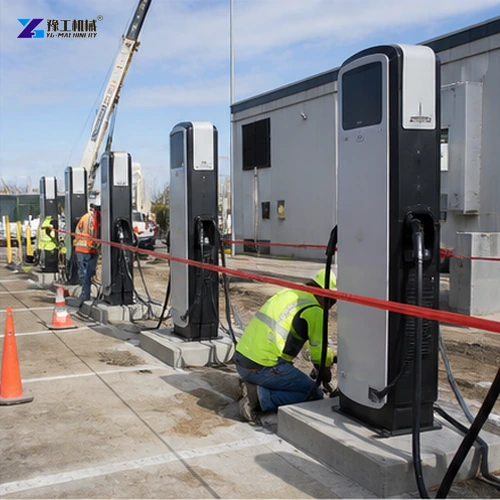
Map incoming service, transformer and switchboard, cable route, drainage, vehicle paths, accessible bays, fire routes, lighting, communications and future expansion. Confirm where foundations and bollards can be installed without conflicting with utilities.
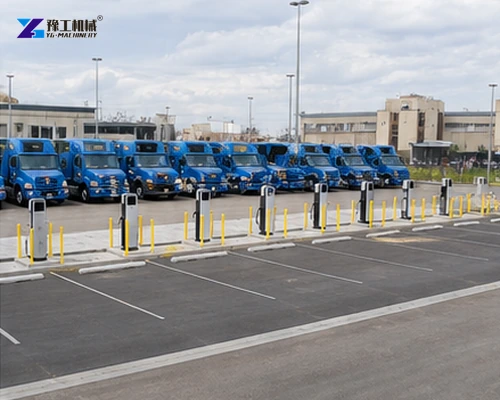
Measure cable reach to the vehicle inlet and model turning movements for the longest vehicle. A charger placed neatly on a drawing may fail operationally if a parked van blocks circulation or the connector cannot reach without crossing a walkway.
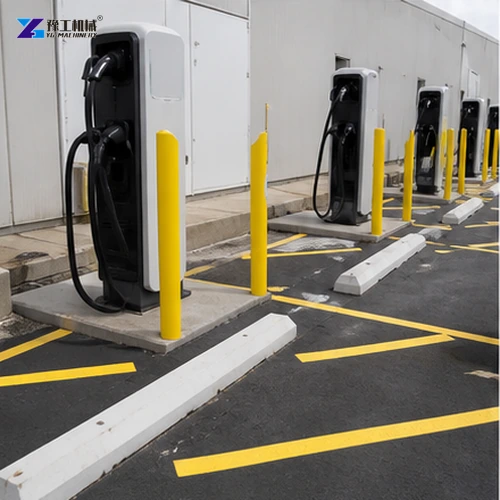
Survey the full vehicle route, not just the charger footprint. Check turning, connector reach, accessible bays, pedestrian crossings, wheel stops, bollards, drainage and service clearance. A technically powered cabinet can still be unusable when vehicles block one another or cables cross a walkway.
Send the parking layout, vehicle mix and expected dwell times. YG can help identify charger locations and operating constraints before the electrical design is fixed.
Send the parking layout, vehicle mix and operating plan so the first installation constraints can be reviewed.
How Are Electrical Capacity And Protection Confirmed?
Start utility coordination with measured building demand and the proposed charging duty. Confirm transformer, service and switchboard constraints before fixing the civil layout. Managed charging can limit demand only when its control logic, communications failure mode and vehicle priorities are documented.
Build a load schedule from existing demand and proposed charging duty, then have the responsible electrical professional calculate service, transformer, feeder, voltage drop, short-circuit duty, protective coordination, earthing and surge protection.
Diversity or managed charging may reduce simultaneous demand, but the control strategy must be documented and fail safely. Utility approval can govern lead time, so obtain the required application and metering scope before civil work locks the layout.
Separate the charger supplier inputs from the electrical designer decisions in the project schedule. Output voltage, connector compatibility and cabinet power describe hardware; the site professional determines how that hardware can be supplied and protected. Unresolved service capacity should remain an open project gate before equipment quantities are committed.
Which YG Charger Data Affect The Installation Scope?
The 60, 80 and 120 kW units use AC380V ±20% input at 45–65 Hz and provide 200–750 VDC output. Published maximum single-gun current is 112, 150 and 160 A.
| Model | YG-60KW | YG-80KW | YG-120KW |
| Rated power | 60 kW | 80 kW | 120 kW |
| Input | AC380 V ±20% | AC380 V ±20% | AC380 V ±20% |
| Output voltage | 200–750 VDC | 200–750 VDC | 200–750 VDC |
| Maximum single-gun current | 112 A | 150 A | 160 A |
| Efficiency | ≥94.5% | ≥94.5% | ≥94.5% |
| Power factor | ≥0.99 at ≥50% load | Same | Same |
| Protection | IP54 | IP54 | IP54 |
| Cooling | Forced air | Forced air | Forced air |
| Cable | 5 m | 5 m | 5 m |
Floor-standing cabinets use a five-meter cable, seven-inch display, forced-air cooling and IP54 protection, with an ambient range of -25°C to +50°C. Verify connector, protocol, payment, cable arrangement and local compliance in the quotation because regional configuration changes the deliverable.
Share the measured building demand, service information and planned charging duty so the available charger range can be checked against the site limit.
Provide the transformer rating, available feeder capacity and demand profile to check the electrical basis before equipment selection.
What Civil And Communications Work Should Be Coordinated?
Civil construction and the operating network have different deliverables, but both must be coordinated before installation is closed out. Assign responsibility for each rather than treating communications as an accessory to a completed electrical job.
Foundations, Conduits And Physical Protection
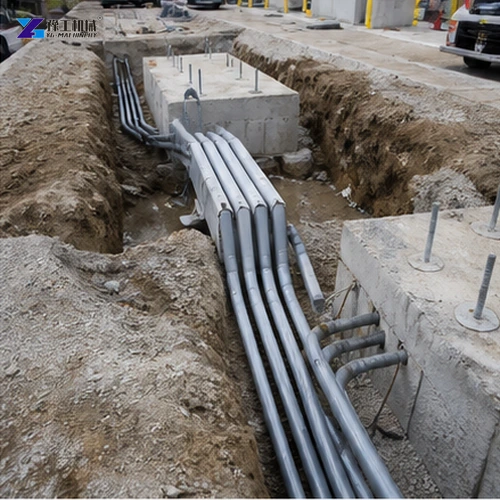
Issue one coordinated drawing for foundations, conduits, pits, feeder cables, data links, drainage, wheel stops, protective bollards and markings. Maintain cabinet ventilation and service clearances.
Record cable routes, foundation interfaces and service clearances on the coordinated drawing. Changes after foundations or surfaces are completed can affect access, drainage and vehicle positioning at once. Check the proposed cabinet arrangement against the actual parking operation before accepting the civil layout.
Network Accounts And Session Operation
Seal conduits against water and pests and label both ends before cables are pulled. For networked or paid charging, define SIM or Ethernet responsibility, back-office account, tariff logic, user authorization and offline behavior. A powered charger is not operational until these systems are commissioned.
Name the party that owns the communications service and operating account. Define what users will see if a network or authorization service is unavailable, and include that behavior in commissioning. Hardware that is energized but cannot start the intended session has not completed operational handover.

How Is The Charger Installed And Commissioned?
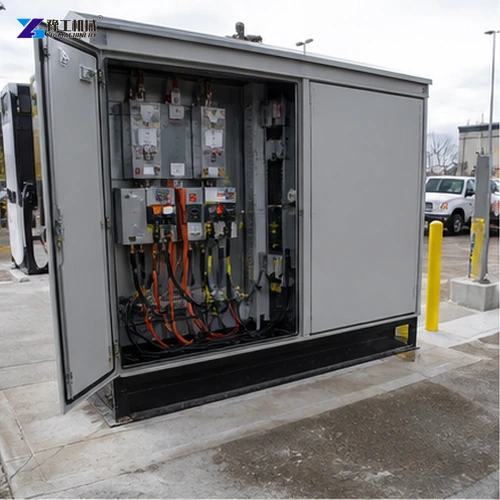
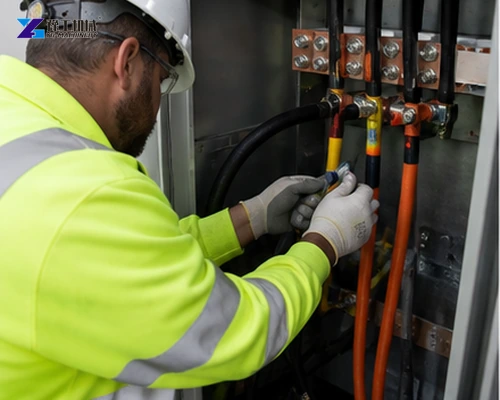
Inspect delivery damage and serial records before positioning. Verify foundation level, anchor torque, protective devices, cable terminations, phase sequence, insulation, earthing and enclosure seals under the approved method.
Commission network, authentication, payment and load management, then perform controlled charging with a compatible vehicle or simulator. Record voltage, current, alarms, emergency stop, communication and recovery after interruption. Handover should include settings, drawings, certificates, warranties and escalation contacts.
Plan isolation, signage, emergency response and maintenance access before opening the site. Operational ownership should be assigned for bay control, cable inspection, software accounts and fault escalation.
Share civil, protection, communications and commissioning requirements so the supplied and site-work scope can be separated clearly.
What Operating Plan Prevents Avoidable Downtime?
Assign ownership for bay enforcement, connector inspection, cleaning, filter service, software accounts, fault response and energy reporting. Keep impact protection visible and replace damaged cables promptly.
Review charging sessions against fleet departures; poor utilization may be a scheduling problem rather than a hardware fault. The procurement package should state spare parts, remote support, response time and who can safely isolate equipment before technicians arrive.
Estimate energy, demand charges, software fees, maintenance and support across the operating life. Installation price alone can favour a configuration that is difficult to expand or manage. Record which assumptions belong to the site owner and supplier. Confirm the planned review date after commissioning.
Compare measured utilization, peak demand and failed sessions at that review so later expansion is based on operating evidence rather than the original forecast alone.
What Must Be Reserved For A Later Charging Expansion?
A staged delivery can reduce risk when the final fleet is larger than initial operation. The first stage may install the verified service, spare conduits, communications backbone and foundations while commissioning only chargers supported by current demand. Expansion points should be documented and protected. This approach works only when the electrical and civil design genuinely allows later load; empty conduit does not reserve utility capacity. Keep future charger assumptions in approved drawings and review them whenever vehicle duty or building demand changes. Before each expansion, repeat the demand study, utility check, protection review and parking-layout test using current fleet records. Update training and emergency isolation labels when the operating arrangement changes.
The procurement scope should distinguish charger hardware, electrical works, civil works, networking, payment service, permits, commissioning, training and support so no responsibility remains assumed.
Provide the coordinated civil, electrical, network and commissioning scope when you are ready to compare a commercial charging proposal.
Submit the confirmed site data and preferred rollout schedule for a project-specific charger quotation.
Commercial Ev Charger Installation Buyer Questions
The responsible local utility, authority and qualified electrical professionals determine the required approvals.
Sometimes, but only when the verified demand profile and control design support it.
No. Flooding, heat, salt, dust, impact and local rules still need site-specific review.
Provide as-built drawings, settings, test records, accounts, warranties, training and fault contacts.
Submit the coordinated layout and division of responsibilities with the vehicle duty and service information. The installation proposal should make clear which tasks belong to YG, the site owner and qualified local contractors, and which approvals are outstanding before construction.