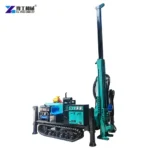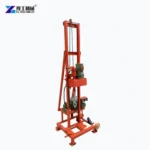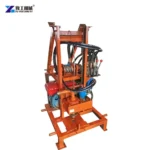
A yard or farm borehole needs equipment that can reach the intended location, work with the ground and form a hole suitable for the well design. The smallest-looking frame does not answer those questions by itself. A compact electric rig combines a guided drilling assembly with rods, tools and water circulation, and each part contributes to the drilling task.
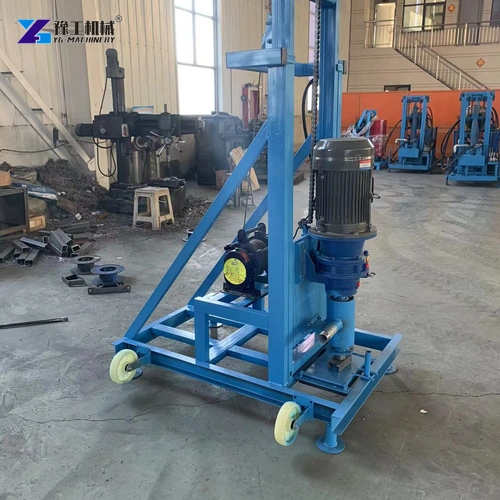
Small water well drilling rigs for sale include several different machine types. The compact HY electric configurations discussed here should be distinguished from larger diesel crawler rigs and mineral exploration coring equipment. Their value is in a defined small-well application, with the drilling diameter, intended depth, available electrical supply and ground conditions considered together.
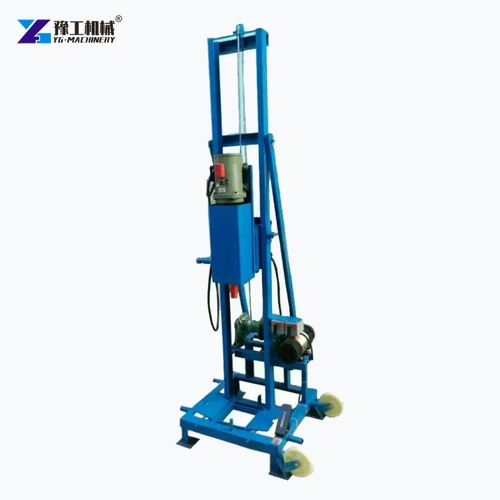

Match the Small Well Drill to the Borehole Task
A water-well drill forms the borehole. It does not establish that usable groundwater will be found at a particular depth, and it does not automatically install the complete pumping and water-supply system. Those distinctions matter when planning a household, farm or small-project water source. The machine has a drilling role within a larger well-construction task.
The hole also has to serve the intended well design. Drilled diameter, casing size and the equipment later installed in the well are related but different dimensions. Selecting a drill from its maximum opening size alone can miss the space required by the actual construction arrangement. Ground stability and the need for appropriate casing also affect how the borehole can be developed.
When comparing small water well drilling rigs for sale, keep the formation and the intended well together. Soil, sand, weathered material and competent rock do not behave identically under the bit. A compact frame and a light transport arrangement can be useful, but they do not demonstrate suitability for every hard-rock or deep-well project.
Provide the intended borehole, expected ground and access conditions to review the drilling task.
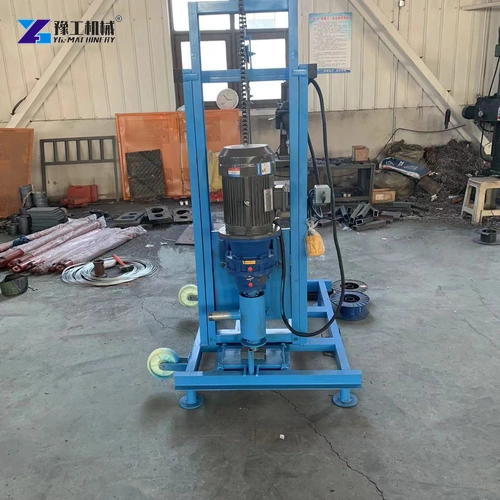

Electric Models of Small Water Well Drilling Rigs for Sale
| Specification | HY-180B | HY-240E |
| Opening hole diameter | 80–200 mm | 0–260 mm |
| Drilling depth | 80–100 m | 120 m |
| Drill pipe diameter | φ42 mm | φ51 mm |
| Drill pipe length | 1.5 m | 1.5 m |
| Motor power | 1.5–2 kW | 4 kW |
| Pump power | 2.2 kW | 2.2 kW |
| Voltage | 220 V | 220 V |
| Lifting force | 500 kg | 800 kg |
| Dimensions | 700 × 700 × 2500 mm | 800 × 700 × 2500 mm |
| Weight | 120 kg | 200 kg |
The larger configuration changes more than one parameter: its rod, power and lifting characteristics differ as well as its drilling envelope. Treat each column as one configuration. The motor and circulation pump are separate power items, so the motor entry alone does not describe the entire electrical arrangement needed at the site.
These small water well drilling rigs for sale have defined model capabilities, not guaranteed well outcomes. The depth figure does not establish the depth at which water will be encountered. Likewise, the opening-diameter range does not identify the final internal diameter of an installed well casing. The actual drilling program and selected tools determine how the specification is used.
Send the hole and tooling requirements to compare the HY electric configurations.
Rotary Motion, Rod Handling and Water Circulation
Electric Rotation and Guided Head Travel
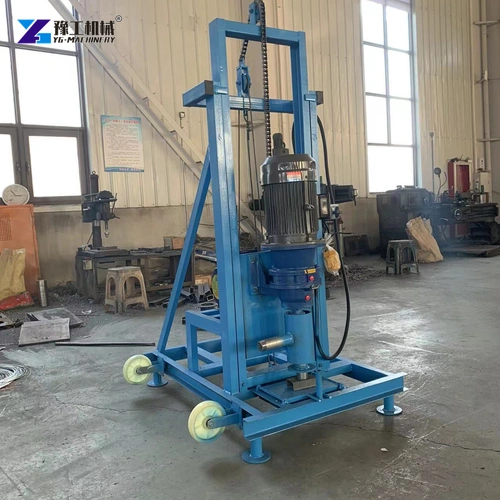
The rotary drive turns the drill rod and bit, while the guided assembly controls the working position along the mast. Rotation and vertical movement are different functions. The rod string transmits the action to the downhole tool, and additional rods extend its reach as the hole advances. An electric motor rating should not be interpreted as a direct measure of drilling speed in every formation.
Lifting is another part of the cycle. The assembly and rods need to be handled using the machine’s designated arrangement and operating method. Buyers reviewing small water well drilling rigs for sale should distinguish drilling capability from lifting capacity, rather than using either value as a substitute for the other. Guards, controls and safe handling space belong to the equipment setup, not to an improvised method of changing rods.
Circulation and Cuttings Return
In a compatible water-circulation drilling arrangement, fluid travels to the working area through the rod system and returns with cuttings through the surrounding space in the borehole. Removing cuttings allows drilling to continue without treating the hole as a container for all the material being broken at the bottom. The circulation path and the rotary action therefore support different parts of the same process.
The supply and return arrangement needs suitable connections and somewhere for returning fluid and solids to be managed. A circulation pump is not the same as the pump later used to extract water from a completed well. Its presence does not establish the yield or water quality of that well. Ground conditions can also affect fluid behavior, so drilling response should be assessed by trained operators rather than assumed from a simple circulation sketch.
Describe rod handling and the supply-and-returns water circuit to clarify the operating package.


Domestic, Agricultural and Small-Project Well Applications
For domestic water-source development, a compact rig may be considered where access and the planned borehole suit the machine. Work in a yard can require attention to overhead clearance, working space and the route used to bring in rods and equipment. Small dimensions are helpful only when the equipment can operate and be handled correctly after it reaches the location.
On a farm, the well-construction objective may be irrigation or livestock supply. The required water demand belongs in the well-design discussion, but it cannot be calculated from the drill’s motor power. A machine can form a hole without proving that the surrounding formation will supply the required water. That separation helps keep the equipment decision realistic.
Small water well drilling rigs for sale can also serve appropriately scoped borehole work for small facilities or project sites. They should not be described as foundation piling rigs or guaranteed universal rock drills. The foundation and drilling equipment collection includes equipment for different tasks, so the working objective must remain clear when comparing machines.
Power, Water and Working Space Around the Electric Rig
An electric configuration needs a supply and connections suitable for its motor, pump and control equipment. A voltage label does not establish that any nearby domestic outlet can support the complete installation. The electrical arrangement should be prepared for the actual equipment and site conditions, rather than assembled after drilling is expected to start.
The working area also includes rods, tools, circulation equipment and returning fluid. Keeping these functions organized makes the equipment easier to operate and observe. The machine footprint alone does not describe the full space required by the task. Personnel should be able to use the designated controls and handling positions without standing in moving or suspended-component areas.
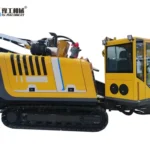
For small water well drilling rigs for sale, these conditions make the comparison practical: suitable ground, a compatible borehole design and a workable supply arrangement. A horizontal utility crossing calls for a different method, such as horizontal directional drilling equipment, rather than turning a vertical well drill into an unrelated installation machine.
Include site power, water and working-space constraints when requesting a complete drilling arrangement.
Small Water Well Drilling Rigs for Sale FAQs
The circulation pump supports drilling-fluid movement during borehole construction. Water extraction from a completed well is a separate task requiring equipment suited to the well and water-supply design.
The depth is a drilling-equipment capability, not a groundwater guarantee. The location and behavior of the water-bearing formation are separate from the machine’s motor and depth specification.
They perform different functions and are separate electrical loads. The site arrangement must support the complete installation rather than considering only the rotary motor’s rating.
The configurations also differ in drilling envelope, rod diameter, motor power, lifting force, dimensions and weight. Compare the complete model rather than selecting isolated values from both columns.
The appropriate machine depends on the borehole, ground and working conditions. Compact electric configurations should be selected for their own application envelope, not assigned the capabilities of a larger, differently powered rig.
Compare the Complete Well-Drilling Arrangement
Comparing small water well drilling rigs for sale becomes more useful when the drill is considered with its rods, tools, circulation and working space. Choose the configuration around the intended borehole and the ground, then connect it to the rest of the well-construction plan. That keeps a compact machine’s practical advantages separate from promises about groundwater or finished water supply.
Tell YG about the planned borehole, ground conditions and available electrical supply for an electric well-drilling equipment proposal.